
What Is a Storage Rack Upright?
FLUID HANDLING EXPERTS

Blog, all our news

What Is a Storage Rack Upright?

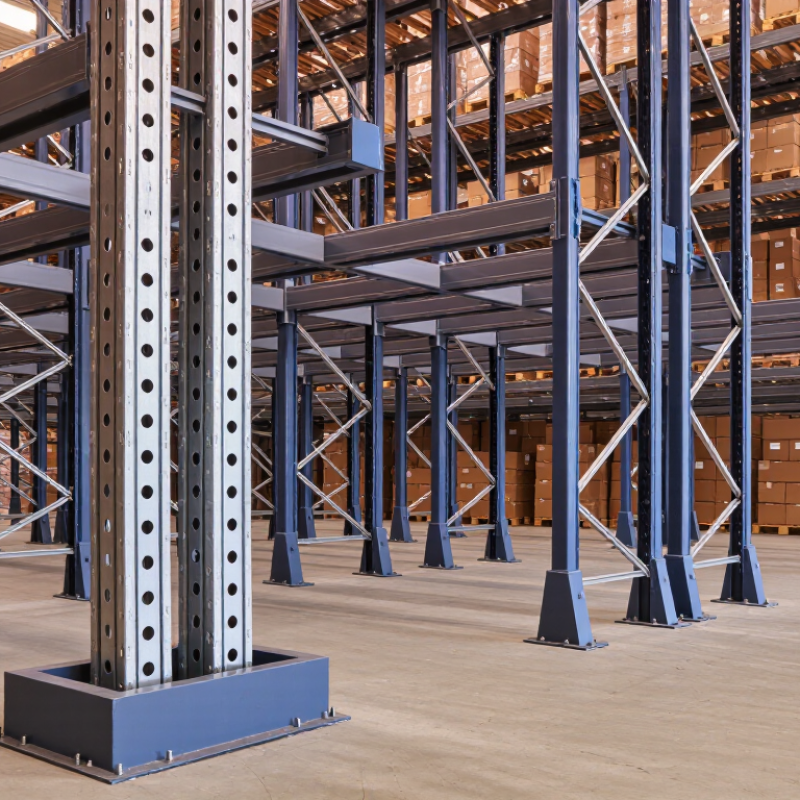
A Storage Rack Upright is the vertical, load-bearing frame member that supports horizontal beams and transfers stored weight to the floor. In a warehouse aisle, it is the perforated steel column you see behind each beam connector. Its holes allow adjustable beam heights; its base plate anchors the frame. Small details matter. A bent flange, damaged connection, or poorly protected foot can affect the whole bay.

Design is not guesswork. The Rack Manufacturers Institute’s ANSI MH16.1 specification addresses the design, testing, and use of industrial steel storage racks. MHI’s 2024 Annual Industry Report also documents the growing importance of resilient, well-managed supply chains, where dependable storage infrastructure plays a practical role. These sources provide useful context, but they do not replace a site-specific engineering assessment. Loads, rack height, beam configuration, floor conditions, and impact exposure all shape upright performance.

A simple rule: inspect what carries the load. The supplied material does not identify a verifiable individual expert or provide an exact quotation, so attributing a quote would risk inventing one. That matters. This guide explains what an upright does, how it connects to beams and bracing, and what to examine before selecting or inspecting a rack system. Expect practical details—not just a parts list.
What Is a Storage Rack Upright?

Definition and Purpose of a Storage Rack Upright

A storage rack upright is the vertical steel column that supports the horizontal beams in a pallet-rack frame. Rows of punched slots let workers adjust beam height, while a baseplate transfers loads to the floor. Together, uprights and beams create the frame’s load path: pallets press down on beams, and the frame carries that weight toward the floor. That is the purpose—not simply to hold shelves in place.

The Rack Manufacturers Institute’s ANSI MH16.1 specification sets engineering criteria for industrial steel storage racks. In practice, an upright’s capacity depends on its design, height, bracing, connections, and installation. A bent post is not just an ugly post. The U.S. Bureau of Labor Statistics recorded 73 fatal occupational injuries involving forklifts in 2022; that figure does not mean all involved rack impacts, but it highlights a real hazard in busy storage areas. Check for dents, twists, cracked welds, or loose anchors, especially near floor level. Small damage can be easy to dismiss. It shouldn’t be. Follow the rack’s approved load limits and have questionable damage assessed by a qualified professional.

Key Components and Structural Design

What Is a Storage Rack Upright?

Key Components and Structural Design

A storage rack upright is the vertical frame that supports beams and transfers stored loads toward the floor. It usually consists of two steel columns joined by horizontal and diagonal braces. These braces help the frame resist sideways movement. Perforations along the columns let compatible beams connect at different heights. Small details matter: damaged holes or bent braces can affect how securely parts fit together.

The upright’s design balances strength, stability, and practical adjustability. Column shape and steel thickness influence its resistance to bending, while brace spacing helps control sway. At the base, a footplate spreads the load across the floor and may be anchored where the installation design requires it. Capacity depends on the full rack configuration, including beam levels, connections, and floor conditions. An upright alone does not tell the whole story.

Tips: Check frames for dents, corrosion, loose anchors, and distorted connections. Keep loads within the system’s documented limits. If a frame has been struck, don’t assume it is safe because it still stands. Have the damage assessed by a qualified professional; visual checks can miss weaknesses.

How an Upright Supports a Storage Rack

A storage rack upright is the vertical frame member that gives a rack height and carries loads toward the floor. It is usually made of steel, with regularly spaced holes for connecting beams at different levels. The upright works with a matching frame: horizontal beams span between them and support pallets or shelves. Cross-bracing helps the frame resist sideways movement. Small details matter. A bent foot or damaged connection hole can change how forces travel through the frame.

When a loaded pallet rests on a beam, its weight passes through the connectors into the uprights, then down to the base plates and floor. Uprights also face forces from handling, uneven loading, and impacts. Rack capacity depends on the full setup, including beam height, frame depth, bracing, floor condition, and installation. It cannot be judged by the steel column alone. Check that connectors are fully seated and frames remain plumb. Do not guess from appearance. Follow the rack’s load information, and ask a qualified person to assess visible damage. A small dent may look harmless, but its effect is not always obvious. Regular checks still matter.

Common Upright Types and Materials

What Is a Storage Rack Upright?
Common Upright Types and Materials

A storage rack upright is the vertical frame member that supports beams and transfers their load to the floor. Its profile and hole pattern determine which beams fit, so similar-looking frames are not always interchangeable. Roll-formed uprights are made from shaped sheet steel, often with open or partly closed profiles. They are relatively light and have punched slots for beam connectors and braces. Structural uprights use heavier steel channels, commonly bolted or welded into a frame. They can resist impact and deformation well, but add weight and cost. Some systems use welded box sections for added stiffness or particular layouts. Fit matters.

Steel is the most common upright material because it provides strength and predictable performance. Protective finishes vary: painted steel helps guard against everyday scratches, while galvanized coatings can suit damp or corrosive environments. A coating is not a substitute for checking the actual conditions around the rack. When comparing uprights, look beyond steel thickness alone; profile shape, connection design, frame bracing, and rated capacity all matter. Confirm that beams and frames are approved for use together, and follow the supplier’s load ratings. Rust starts quietly. Scratches near the floor or at beam connections deserve attention, since small damage can be easy to overlook during a busy shift.

What Is a Storage Rack Upright? — Common Types and Materials

A storage rack upright is the vertical frame member that supports the beams and transfers loads to the floor. Common designs include roll-formed open C-shaped sections, closed or boxed sections, and welded structural sections. Steel grade affects strength, but upright capacity also depends on the section shape, thickness, connections, and rack design.

Representative Minimum Yield Strength of Structural Steel Grades

These values are approximate conversions from the specified minimum yield strengths of the listed ASTM grades. They describe steel properties—not the load capacity of a rack upright.

Choosing and Inspecting an Upright Safely

A storage rack upright is the vertical frame that supports beams and transfers stored loads to the floor. Choose one designed for the rack’s beam lengths, spacing, and rated capacity; matching dimensions alone is not enough. Check the rack documentation and account for the actual pallet weight and load arrangement. A tall, lightly braced frame may behave differently from a shorter one. Details matter.

Before use, inspect the upright from floor level to the top connection. Look for bends, dents, cracked welds, loose anchors, missing braces, and damaged beam connectors. A small dent near the base can be easy to overlook. Check that the frame stands plumb and that floor anchors are secure, without assuming a visual check proves capacity. I might miss something during a quick walk-through; use a competent inspector when damage or uncertainty appears. Keep the affected area clear, follow site procedures, and do not straighten or weld a damaged upright without qualified engineering direction. A repair that looks neat may still leave the steel weakened.

Copyright 2025 Fluidra S.A. | Created by BCM Marketing Agencia Privacy Policy Legal note | Cookie policy |

Technical cookies are strictly necessary for our website to work and you can navigate through it. These types of cookies are those that, for example, allow us to identify you, give you access to certain restricted parts of the page if necessary, or remember different options or services already selected by you, such as your privacy preferences. Therefore, they are activated by default, your authorization not being necessary in this regard. Through the configuration of your browser, you can block or alert the presence of this type of cookies, although such blocking will affect the proper functioning of the different functionalities of our website.


The analysis cookies allow us to study the navigation of the users of our website in general (for example, which sections of the page are the most visited, which services are used most and if they work correctly, etc.). From the statistical information on navigation on our website, we can improve both the operation of the page itself and the different services it offers. Therefore, these cookies do not have an advertising purpose, but only serve to make our website work better, adapting to our users in general. By activating them you will contribute to this continuous improvement. You can enable or disable these cookies by checking the corresponding box, being disabled by default.


Functionality cookies allow us to remember your preferences, to personalize certain characteristics and general options of our website, every time you access it (for example, the language in which the information is presented to you, the sections marked as favorites, your browser type, etc.) Therefore, this type of cookies does not have an advertising purpose, but by activating them you will improve the functionality of the website (for example, adapting to your type of browser) and the customization of it based on your preferences (for example, by presenting the information in the language that you have chosen in previous occasions), which will contribute to the ease, usability and comfort of our page during your navigation. You can enable or disable these cookies by checking the corresponding box, being disabled by default.


Advertising cookies allow us to manage the advertising spaces included in our website based on criteria such as the content shown or the frequency in which the ads are displayed. For example, if you have been shown the same ad several times on our website, and you have not shown a personal interest by clicking on it, it will not appear again. In summary, by activating this type of cookies, the advertising shown on our website will be more useful and diverse, and less repetitive. You can enable or disable these cookies by checking the corresponding box, being disabled by default.


Behavioral advertising cookies allow us to obtain information based on the observation of your browsing habits and behaviors on the web, in order to show you advertising content that best suits your personal tastes and interests. To understand it in a very simple way, we will give you a fictitious example: if your last searches on the web were related to suspense literature, we would show you advertising about suspense books. Therefore, activating this type of cookies, the advertising that we show you on our website will not be generic, but will be oriented to your searches, tastes and interests, therefore adjusting exclusively to you. You can enable or disable these cookies by checking the corresponding box, being disabled by default.
To understand it in a very simple way, we will give you a fictitious example: if your last searches on the web were related to suspense literature, we would show you advertising about suspense books. Therefore, activating this type of cookies, the advertising that we show you on our website will not be generic, but will be oriented to your searches, tastes and interests, therefore adjusting exclusively to you. You can enable or disable these cookies by checking the corresponding box, being disabled by default.

SAVE

We use our own and third-party cookies to ensure the proper functioning of the website and to analyse our services, improve your experience on our website and show you advertisements related to your interests according to profiling based on your browsing habits (e.g. websites visited). You can accept all cookies by clicking "ACCEPT" or set or reject them by clicking here. If you would like to know more about the use of cookies, please see our COOKIE POLICY.


ACCEPT ALL
Reject no essentials


