
Steel structure corrosion protection should start with one basic question: what environmental conditions will the building face throughout its service life? A coating system that performs well in a dry industrial area may not offer the same protection in a tropical coastal region or a warehouse exposed to heavy snow. The difference matters because corrosion does more than affect appearance. It can increase maintenance costs, complicate repairs, and shorten the useful life of structural components.
Two projects from different climates illustrate why corrosion protection needs to follow local conditions rather than rely on a standard specification.
The Philippines presents several challenges for steel buildings. High humidity, frequent rainfall, strong winds, and exposure to tropical storms create conditions that can accelerate corrosion. For industrial facilities and logistics centers, these factors deserve attention from the beginning of the structural design.
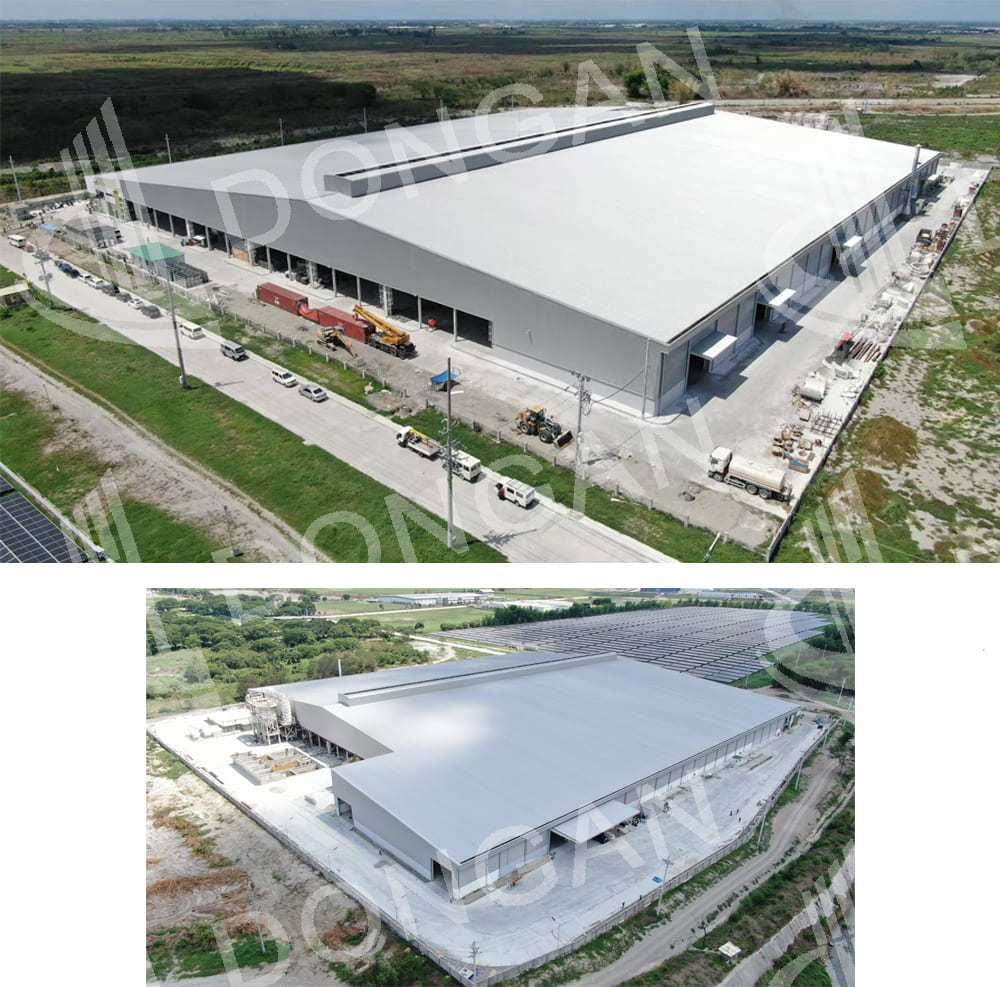
In a logistics center project in the Philippines, DongAn considered the local climate when arranging corrosion protection for the steel components. The objective was not simply to apply a thicker coating. Instead, the treatment needed to address prolonged moisture exposure and the possibility of damage during severe weather.
Humidity and rainwater can gradually affect vulnerable areas, particularly around bolted connections, welds, cut edges, and other details where water may accumulate. Strong winds during typhoons add another concern. Wind-driven rain can reach joints and exposed surfaces that ordinary rainfall may not affect as directly.
For this type of project, surface preparation plays an important role. Proper cleaning and rust removal help establish a reliable foundation for subsequent coating applications. The coating system should also provide suitable adhesion, moisture resistance, and durability under the expected exposure conditions.
Drainage and detailing deserve equal attention. Roof edges, wall connections, gutters, and exposed steel interfaces should prevent unnecessary water retention. Even a suitable coating system may struggle when the building repeatedly traps moisture around vulnerable connections.
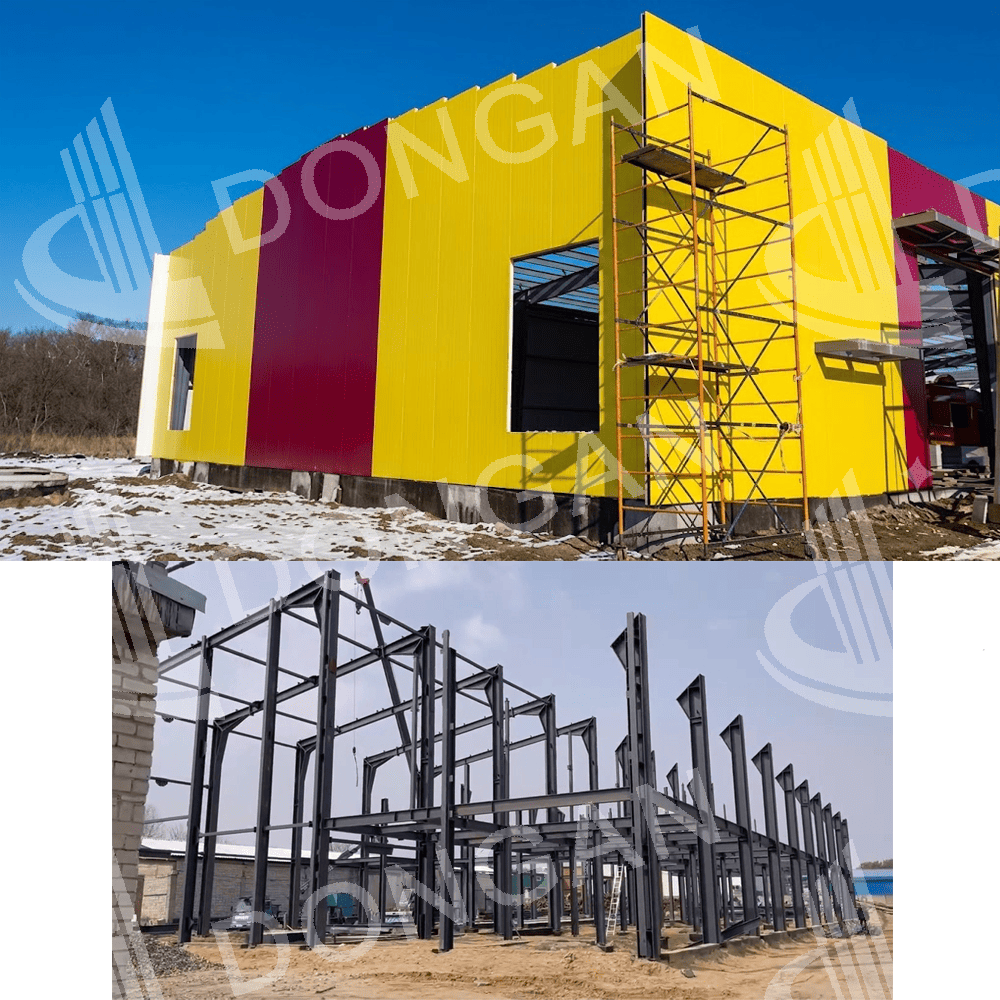
A different set of conditions applies to large warehouse projects in Russia. Low temperatures and heavy snowfall create a distinct combination of environmental and structural challenges.
When snow accumulates on a roof for extended periods, the building must withstand substantial snow loads. At the same time, roof surfaces and wall connections face prolonged exposure to moisture from melting snow, freezing, and repeated temperature changes.
These conditions influence corrosion protection in several ways. Snow accumulation increases the importance of reliable roof drainage and connection detailing. During thaw periods, meltwater may collect around roof joints, gutters, and drainage outlets. If these areas contain gaps or poorly protected steel surfaces, moisture can gradually create corrosion problems.
Structural deformation also deserves consideration. Heavy snow loads can increase stress on roof members and connections. Although the coating itself does not determine structural capacity, the design must account for how movement and connection details affect coating integrity.
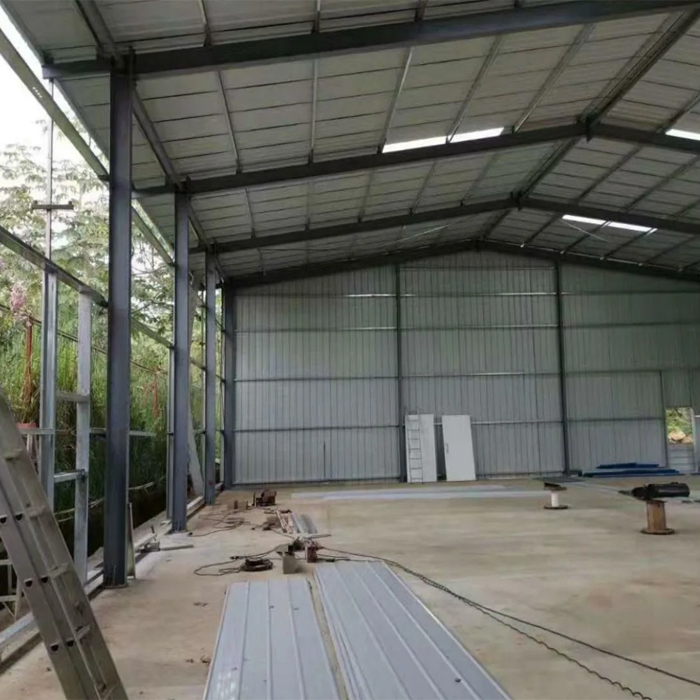
For large Russian warehouse projects, DongAn considers these conditions when optimizing the rust-prevention treatment. The focus extends beyond the exposed surfaces to include roof framing, connection areas, and other components that may experience prolonged moisture exposure.
This approach also highlights an important distinction: corrosion protection and waterproofing serve different purposes. A protective coating helps prevent steel corrosion, while roof cladding, flashing, sealants, and drainage details control water penetration. Both systems need to work together.
There is no single coating specification that suits every steel building. The appropriate system depends on several factors, including humidity, rainfall, atmospheric pollutants, coastal salt exposure, temperature variations, and the expected maintenance schedule.
Surface preparation should come first. For example, abrasive blast cleaning can remove mill scale, rust, and surface contaminants before painting. Depending on the project specification, preparation grades such as Sa 2½ may provide the required cleanliness for a protective coating system.
The next step involves selecting a suitable primer and topcoat combination. Different coating technologies offer different levels of corrosion resistance, weatherability, and chemical protection. The required dry film thickness also depends on the exposure category and the expected service life.
However, more coating does not always mean better value. An unnecessarily expensive system can increase initial project costs without delivering meaningful benefits under the actual operating conditions. Conversely, reducing coating requirements too aggressively may create higher maintenance expenses later.
A practical specification should balance protection performance, material costs, application conditions, and future maintenance. It should also consider whether the steel components will receive their coatings in a controlled factory environment or require additional treatment after transportation and site installation.
The real objective of corrosion protection is not to achieve the highest possible coating specification. It is to provide reliable protection at a reasonable cost throughout the building’s service life.
A logistics center in the Philippines and a large warehouse in Russia face very different environmental pressures. One must account for tropical humidity, heavy rainfall, and typhoons. The other must consider prolonged snow accumulation, roof moisture, and repeated freeze-thaw cycles.
These differences should influence coating selection, surface preparation, structural detailing, and maintenance planning. They also show why early coordination matters. Adjusting the protection system during the design and fabrication stages usually offers more flexibility than dealing with corrosion after the building enters operation.
For each steel structure project, the most economical solution is the one that matches the actual environment and operating requirements. A well-considered protection system helps control long-term maintenance costs while supporting the building’s intended service life.

Cepex is the brand for the fluid handling market belonging to the Fluidra group. One of the leading european manufacturer of valves and fittings in thermoplastic materials.
Dedicated to the swimming pool, irrigation and industrial markets, we distribute our products worldwide with the Fluidra commercial network and presence in 46 countries with 136 sales branches.


