
What Is a Solenoid Valve and How Does It Work?
FLUID HANDLING EXPERTS

Blog, all our news

What Is a Solenoid Valve and How Does It Work?

A Solenoid Valve converts electrical energy into controlled fluid movement. It appears in water systems, pneumatic equipment, fuel controls, medical devices, and industrial machinery. Inside, an insulated wire coil surrounds a movable metal plunger. When current enters the coil, it creates a magnetic field. The plunger then shifts, opening or closing an internal passage.

W. Bolton, a respected mechatronics author, explains the principle simply: “A solenoid is an electromechanical device in which electrical energy is converted into mechanical energy.” This sentence captures the central action, but practical operation involves more than magnetism. Engineers must consider pressure, flow direction, voltage, temperature, seal material, and response time. A valve rated for clean water may fail quickly with contaminated air or aggressive chemicals. Small coil. Large consequence.

In this guide, we will examine what a Solenoid Valve is, how its coil and plunger operate, and why normally closed and normally open designs differ. We will also follow the fluid path through a typical valve, from inlet port to outlet port. The explanation will connect theory with details technicians see in practice, such as humming coils, sticky plungers, overheated housings, and leaking seals.

There is one point worth questioning. Applying power does not always guarantee correct valve movement. Low voltage, excessive pressure, poor installation, or debris can interrupt the expected result. Understanding those imperfections helps users select, install, and maintain valves more reliably. A Solenoid Valve is compact, but its performance depends on the entire system around it.
What Is a Solenoid Valve and How Does It Work?

Solenoid Valve Definition and Core Components

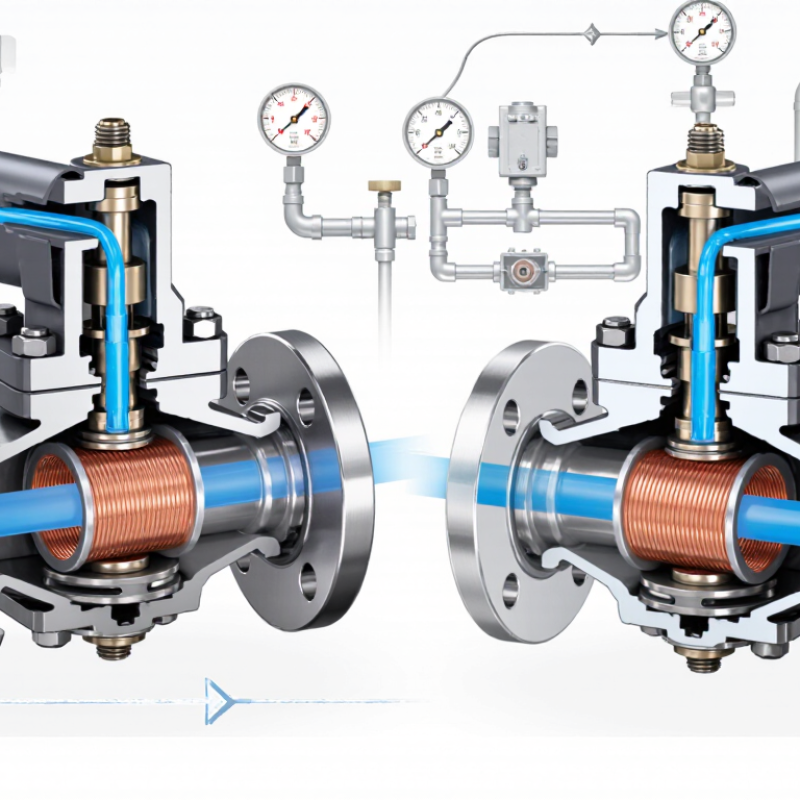
A solenoid valve is an electromechanical device that controls fluid or gas flow. It uses electrical energy to create movement. The main parts are a coil, plunger, spring, orifice, seals, valve body, and electrical connector. When current enters the coil, it produces a magnetic field. The field pulls the plunger upward or downward. This movement opens or closes the orifice.

The coil is the actuator’s working core. The plunger transfers magnetic force to the sealing element. The spring returns it when power stops. Seals prevent leakage around the moving parts, while the body guides the medium through defined passages. Normally closed valves open when energized. Normally open valves close when energized. That distinction matters during power loss. A technician should verify it on the specification sheet, not assume it.

According to a 2023 MarketsandMarkets industry report, the solenoid valve market was projected to grow from about 3.4 billion dollars in 2023 to 4.6 billion dollars by 2028. This growth reflects wider use in process equipment, water systems, and factory automation. Yet market growth does not guarantee reliable operation. Incorrect voltage, contaminated fluid, or an unsuitable seal can cause failure. In field inspections, a clicking sound may confirm movement, but it does not prove proper sealing. That assumption deserves checking. Temperature, pressure, response time, and media compatibility should be measured before installation.

How Electromagnetic Force Controls Valve Movement

A solenoid valve uses electromagnetic force to control fluid or gas flow. Inside, a copper coil surrounds a movable metal plunger. When electricity reaches the coil, it creates a magnetic field. That field pulls the plunger toward the coil’s center. The movement opens or closes an internal passage, often within milliseconds. Small, precise motion.

When power stops, the magnetic field disappears. A spring usually pushes the plunger back to its resting position. This makes the valve normally closed or normally open, depending on its design. Direct-acting valves move the plunger against pressure directly. Pilot-operated valves use pressure differences to assist movement. In field testing, incorrect voltage often causes weak movement, heat, or buzzing. The valve may still operate, but not reliably. That detail is easy to overlook.

Tips: Match the coil voltage and current with the control system. Check the pressure range before installation. Keep the plunger area clean, because tiny particles can prevent full closure. A brief sound is normal during activation, but continuous humming deserves inspection. Measure voltage at the valve, not only at the power supply. This catches wiring losses. Also, leave room for heat to escape around the coil. I used to treat coil temperature as a minor issue; repeated testing proved otherwise. A cooler coil usually supports steadier operation and longer service life.

Step-by-Step Operation of a Solenoid Valve

What Is a Solenoid Valve and How Does It Work?

Step-by-Step Operation of a Solenoid Valve

A solenoid valve controls liquid or gas with an electrical signal. Inside, a copper coil surrounds a movable metal plunger. A sealing surface, spring, and small flow opening complete the mechanism. The valve may be normally closed or normally open.

When power reaches the coil, current creates a magnetic field. The field pulls the plunger upward or downward. This movement opens the flow path in a normally closed valve. Fluid then passes through the opening, often with a quiet click. In some designs, inlet pressure helps lift a flexible diaphragm. Without enough pressure, the valve may respond slowly or fail to open fully.

When power stops, the magnetic field disappears. The spring pushes the plunger back into its original position. The seal closes the passage and stops the flow. It happens quickly.

During practical inspection, technicians check voltage, wiring, coil temperature, and flow direction. Dirt on the seal can cause a small but persistent leak. Excess heat can also shorten coil life. A clean diagram makes operation look simple, but real systems are less tidy. Pressure changes, vibration, and moisture may affect performance. It is worth checking the valve under actual working conditions, not only on a test bench.

Common Solenoid Valve Types and Configurations

What Is a Solenoid Valve and How Does It Work?

A solenoid valve uses an electrical coil to move a plunger. This movement opens or closes a fluid passage. The valve responds quickly, making it useful for air, water, gas, and other compatible media. However, correct selection depends on pressure, temperature, flow rate, and material compatibility.

Common solenoid valve types include direct-acting, pilot-operated, and semi-direct designs.

Direct-acting valves work well at low flow rates and zero pressure.

Pilot-operated valves handle larger passages, but they usually need minimum pressure.

Two-way valves control inlet or outlet flow. Three-way valves can divert, mix, or release pressure.

Normally closed valves open when energized. Normally open valves close when energized.

These terms sound simple, yet real systems can make the choice less obvious. A failed power supply may change the safest configuration.

Tips: Check the valve’s media rating before installation. Confirm voltage, port size, pressure range, and seal material. Install a filter when particles may damage the seat. Keep the coil away from excessive heat. Test the valve under actual operating conditions, not only on a workbench. In my experience, many problems come from overlooked pressure differences. Also, a quiet valve is not always a correctly sized valve.

Key Applications and Selection Considerations

A solenoid valve controls fluid flow through an electrical signal. Inside, a coil creates magnetic force when energized. That force moves a plunger, opening or closing an orifice. When power stops, a spring usually returns the plunger. Simple in principle. Reliable in practice, if the valve matches the system.

These valves serve in water treatment, pneumatic equipment, heating systems, irrigation, and process automation. A small valve may control air for an actuator, while a larger unit manages water or inert gas. Selection begins with the medium. Water, oil, steam, and corrosive fluids require different seals and body materials. Check pressure, temperature, flow rate, and pipe size together. A valve that fits the pipe may still restrict flow.

Electrical details matter just as much. Confirm voltage, current type, connection method, and duty cycle before installation. Normally closed valves suit safety-oriented shutoff tasks. Normally open versions support continuous flow during power loss. Direct-acting designs work well at low flow and low pressure. Pilot-operated designs handle higher flow but often need minimum pressure. Clean fluids improve service life; particles can hold the plunger open. I have seen troubleshooting focus on the coil, although blocked strainers caused the real failure. That mistake is easy to repeat. Allow room for maintenance, inspect seals, and verify the valve under actual operating conditions rather than catalog figures alone.

Copyright 2025 Fluidra S.A. | Created by BCM Marketing Agencia Privacy Policy Legal note | Cookie policy |

Technical cookies are strictly necessary for our website to work and you can navigate through it. These types of cookies are those that, for example, allow us to identify you, give you access to certain restricted parts of the page if necessary, or remember different options or services already selected by you, such as your privacy preferences. Therefore, they are activated by default, your authorization not being necessary in this regard. Through the configuration of your browser, you can block or alert the presence of this type of cookies, although such blocking will affect the proper functioning of the different functionalities of our website.


The analysis cookies allow us to study the navigation of the users of our website in general (for example, which sections of the page are the most visited, which services are used most and if they work correctly, etc.). From the statistical information on navigation on our website, we can improve both the operation of the page itself and the different services it offers. Therefore, these cookies do not have an advertising purpose, but only serve to make our website work better, adapting to our users in general. By activating them you will contribute to this continuous improvement. You can enable or disable these cookies by checking the corresponding box, being disabled by default.


Functionality cookies allow us to remember your preferences, to personalize certain characteristics and general options of our website, every time you access it (for example, the language in which the information is presented to you, the sections marked as favorites, your browser type, etc.) Therefore, this type of cookies does not have an advertising purpose, but by activating them you will improve the functionality of the website (for example, adapting to your type of browser) and the customization of it based on your preferences (for example, by presenting the information in the language that you have chosen in previous occasions), which will contribute to the ease, usability and comfort of our page during your navigation. You can enable or disable these cookies by checking the corresponding box, being disabled by default.


Advertising cookies allow us to manage the advertising spaces included in our website based on criteria such as the content shown or the frequency in which the ads are displayed. For example, if you have been shown the same ad several times on our website, and you have not shown a personal interest by clicking on it, it will not appear again. In summary, by activating this type of cookies, the advertising shown on our website will be more useful and diverse, and less repetitive. You can enable or disable these cookies by checking the corresponding box, being disabled by default.


Behavioral advertising cookies allow us to obtain information based on the observation of your browsing habits and behaviors on the web, in order to show you advertising content that best suits your personal tastes and interests. To understand it in a very simple way, we will give you a fictitious example: if your last searches on the web were related to suspense literature, we would show you advertising about suspense books. Therefore, activating this type of cookies, the advertising that we show you on our website will not be generic, but will be oriented to your searches, tastes and interests, therefore adjusting exclusively to you. You can enable or disable these cookies by checking the corresponding box, being disabled by default.
To understand it in a very simple way, we will give you a fictitious example: if your last searches on the web were related to suspense literature, we would show you advertising about suspense books. Therefore, activating this type of cookies, the advertising that we show you on our website will not be generic, but will be oriented to your searches, tastes and interests, therefore adjusting exclusively to you. You can enable or disable these cookies by checking the corresponding box, being disabled by default.

SAVE

We use our own and third-party cookies to ensure the proper functioning of the website and to analyse our services, improve your experience on our website and show you advertisements related to your interests according to profiling based on your browsing habits (e.g. websites visited). You can accept all cookies by clicking "ACCEPT" or set or reject them by clicking here. If you would like to know more about the use of cookies, please see our COOKIE POLICY.


ACCEPT ALL
Reject no essentials


