
Why Choose a Single Line Single Hose LNG Dispenser?
FLUID HANDLING EXPERTS

Blog, all our news

Why Choose a Single Line Single Hose LNG Dispenser?

A Single-Line and Single-Hose LNG Dispenser can be a practical choice for sites with steady, predictable fueling demand. Its straightforward layout gives operators one dispensing point to monitor, maintain, and explain to drivers. In a compact station, fewer hoses can also make the fueling area easier to organize. The benefit is clear. But simplicity alone does not guarantee better performance.

LNG is stored at cryogenic temperatures, so the dispenser must be designed for compatible materials, secure connections, accurate metering, and controlled operation. Operators should assess expected vehicle volume, fueling time, storage capacity, and maintenance access before selecting a configuration. A single hose may suit a fleet with consistent vehicle requirements, yet it can limit flexibility when several vehicles need service at once. Small details matter: hose reach, connector handling, clear operating instructions, and accessible emergency shutoffs all affect daily use. These are not decorative features.

This guide considers where a single-line, single-hose design fits, what trade-offs deserve attention, and which technical questions buyers should raise with qualified suppliers. Product specifications and site conditions vary, so claims about efficiency or cost should be checked against real operating data. There is room for doubt. A well-matched dispenser can support reliable service, but the right choice depends on the station—not just the equipment.
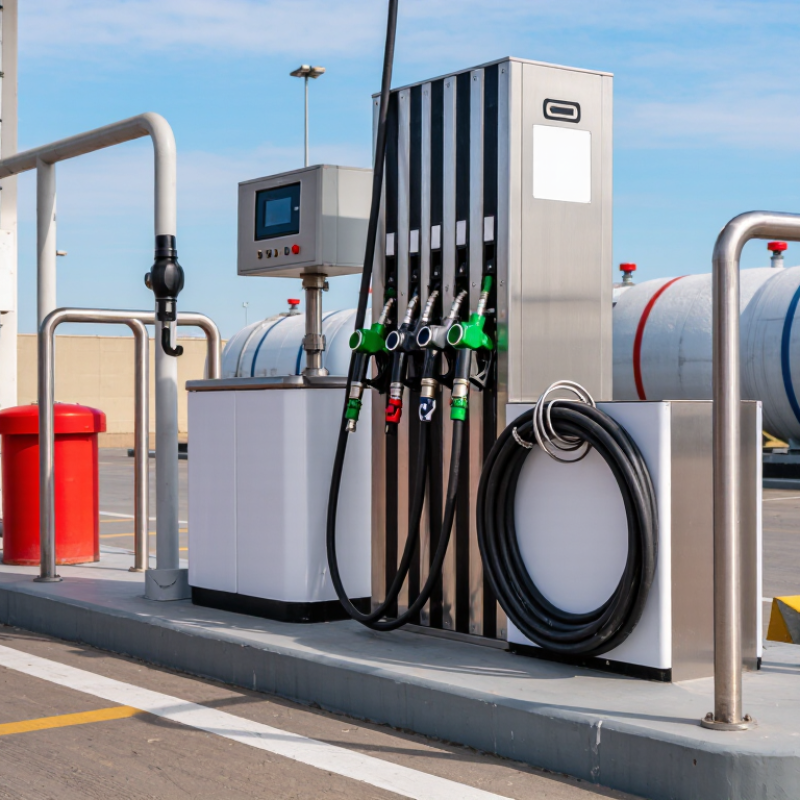
Why Choose a Single Line Single Hose LNG Dispenser?

What Is a Single-Line, Single-Hose LNG Dispenser?

A single-line, single-hose LNG dispenser delivers liquefied natural gas through one supply path and one fueling hose. The hose is insulated to limit heat transfer, and its coupling is designed for cryogenic service. During fueling, an operator connects the nozzle to the vehicle’s receptacle, checks the connection, and starts the dispensing sequence.

One hose, one connection.

The exact arrangement of valves, meters, and return paths varies by equipment design, so “single-line” should not be taken to mean every dispenser works identically.

This layout can make the fueling area easier to navigate, with fewer hoses to position around a vehicle. It can also simplify routine tasks such as inspecting the hose and keeping the nozzle stored correctly.

Still, simplicity is not the same as risk-free operation. LNG is extremely cold, and a damaged seal or poorly connected coupler can create a serious hazard. Operators need clear procedures, suitable protective equipment, and regular checks of the hose, fittings, and safety controls.

A single-hose unit serves one vehicle connection at a time; that may suit a modest fueling site, but it can limit throughput when several vehicles arrive together. The best choice depends on actual demand, vehicle compatibility, and the dispenser’s documented operating limits.

How the Dispenser Transfers LNG to a Vehicle

Why Choose a Single Line Single Hose LNG Dispenser?
How the Dispenser Transfers LNG to a Vehicle

A single-line, single-hose dispenser moves LNG from the station’s storage system into a vehicle’s cryogenic tank. The operator connects the cold-rated nozzle to the vehicle receptacle and checks that the coupling is secure. A pump then drives the fuel through the insulated hose, while metering and shutoff controls help manage the fill. The connection looks straightforward. The details matter.

The U.S. Department of Energy’s LNG basics guidance notes that LNG occupies about 1/600 the volume of natural gas in its gaseous state. That compactness makes controlled transfer important. In a single-hose setup, there is no separate dispenser hose for returning vapor; pressure management depends on the compatible vehicle and station design. Equipment and procedures vary, so operators should follow the dispenser maker’s instructions and the vehicle’s fueling guidance. Small details count.

Tips: Check the connector and seal before fueling, and never force a coupling that does not seat smoothly. Watch the meter and follow the station’s stop signal. Cold equipment can be unforgiving; a quick visual check is worth the extra moment.

Why Choose a Single-Line, Single-Hose LNG Dispenser?

How the dispenser transfers LNG to a vehicle

LNG travels from the storage tank through the dispenser and into the vehicle through a single liquid path and one vehicle-side hose. Fewer transfer connections can make the refueling layout straightforward. The chart shows component counts, not flow rate; equipment details vary by system.

Key Components and Safety Features

A single-line, single-hose LNG dispenser keeps the fueling connection straightforward, but safety depends on the complete system. The main components typically include a cryogenic-rated hose, insulated piping, a dispensing nozzle, metering equipment, and pressure-relief devices.

LNG is near minus 162°C, so compatible materials and sound seals matter: a small leak can create a cold vapor cloud and frost nearby surfaces. The nozzle should lock securely, while a breakaway coupling can limit damage if a vehicle moves before disconnection. Configurations vary, so verify the equipment design and operating procedure rather than assuming every dispenser has the same features.

Emergency controls deserve close attention. An accessible emergency shutdown should stop flow, and suitable sensors or inspection procedures can help identify leaks. Pressure relief protects sections where liquid may become trapped and warm. Operators should check hose wear, coupling condition, and nozzle seals before service; routine visual checks are useful, but they cannot replace scheduled maintenance.

One detail is easy to miss. A single hose reduces connection steps, not the need for training. GIIGNL’s Annual Report 2024 records 401.4 million tonnes of LNG traded globally in 2023, underscoring the scale of LNG handling. That figure is not a dispenser-safety measure; site-specific hazard reviews and applicable technical standards remain essential.

Operational Benefits of a Single-Line, Single-Hose Design

A single-line, single-hose LNG dispenser keeps the transfer path straightforward. Operators handle one hose and one connection point, rather than coordinating multiple product lines. That can make routine setup easier, especially in busy areas where hose routing and clear access matter. Fewer connections may also mean fewer fittings to inspect, though every component still needs scheduled checks.

The simpler layout can support a more consistent fueling routine. Staff can check the coupling, position the hose, and follow the site’s approved transfer procedure without switching between hoses. Small details matter: a hose resting on the ground can collect dirt or suffer damage, while a poorly aligned connection can slow the task. Clear signage and regular inspection help keep the workflow predictable. Still, simpler is not effortless. LNG is cryogenic, so the dispenser, hose, seals, and operating procedures must suit the service conditions. A single hose may also limit flexibility when a site needs different transfer arrangements. That trade-off deserves a practical review before equipment is selected.

Applications and Factors to Consider When Choosing One

A single-line, single-hose LNG dispenser can suit a site that fuels a small, predictable fleet. Examples include a depot with scheduled vehicle returns or a private fueling area serving one vehicle at a time. The layout may simplify equipment placement and routine checks. One vehicle at a time. For busy public or multi-bay operations, however, a single hose can create queues during shift changes. Estimate peak demand, not just daily fuel use.

Check that the dispenser’s rated flow, hose reach, connection type, and control system match the vehicles and site. Confirm how the installation manages cryogenic transfer, emergency shutdowns, and relevant vapor-handling requirements. These details depend on the system design. Ask a qualified LNG system designer to review the proposed layout, operating procedures, and maintenance access. Leave clear space around the dispenser; a hose that barely reaches can become a daily nuisance. Also consider cold-weather conditions, staff training, inspection frequency, and whether future fleet growth could exceed the unit’s capacity. A smaller setup may seem efficient now, but replacing it later can be costly.

Tips: Map vehicle movements during the busiest hour. Check hose reach with vehicles parked in their actual fueling positions. Record expected fuel demand and revisit the estimate after operations begin.

Why Choose a Single Line Single Hose LNG Dispenser? - Applications and Factors to Consider When Choosing One

Dimension Typical Application or Feature What to Consider When Choosing
Configuration One dispensing line and one LNG delivery hose serve one vehicle fueling position at a time. Confirm that single-position service meets expected traffic and fueling demand; consider queueing and future expansion.
Suitable applications Fleet depots, truck stops, and other sites fueling LNG-powered heavy-duty vehicles. Check vehicle tank and nozzle compatibility, site layout, operating hours, and the number of vehicles fueled per shift.
Operational simplicity A single fueling point can simplify day-to-day operation compared with a multi-hose dispenser. Assess whether a simpler setup offsets the reduced ability to fuel multiple vehicles simultaneously.
Fuel characteristics LNG is cryogenic; it is commonly stored near its atmospheric boiling point of about −162°C, with actual conditions depending on pressure and composition. Equipment, hose, seals, fittings, and procedures must be suitable for the specified LNG service and operating conditions.
Metering and records Dispensing systems may use mass-flow measurement and can provide transaction data for operational or commercial records. Verify measurement method, required accuracy, calibration arrangements, units, display, and compliance with local legal-metrology rules.
Flow and throughput Delivery rate and fueling time depend on dispenser design, supply-system capacity, vehicle tank conditions, and operating procedure. Request rated operating ranges and confirm that the complete LNG supply system—not just the dispenser—can meet the required throughput.
Hose and vehicle interface The hose and coupling connect the dispenser to the vehicle’s LNG receptacle; designs and connection requirements can vary. Match the coupling to the vehicle fleet and check hose reach, routing, handling, inspection, and replacement requirements.
Vapor management Vapor-return arrangements are system-dependent and are not guaranteed by a single-hose configuration. Determine whether the vehicle and station require vapor return, and confirm how the complete system manages pressure and vapor.
Safety provisions LNG installations typically require appropriate emergency shutdown arrangements and controls for cryogenic-fluid hazards; exact provisions depend on design and jurisdiction. Review applicable codes, hazardous-area requirements, emergency procedures, operator training, and any required breakaway or interlock devices with qualified professionals.
Site and installation The dispenser must integrate with the LNG storage, transfer equipment, vehicle access, foundations, and site utilities. Plan for vehicle turning and stopping, equipment clearances, drainage, maintenance access, power and controls, and local permitting before purchase.
Maintenance and support Routine inspection and service help maintain safe, reliable operation of cryogenic equipment and metering components. Compare service access, spare-part availability, maintenance intervals, documentation, and staff training requirements.
When this option makes sense A single line and hose can suit a site with one fueling bay, predictable demand, and no need for concurrent dispensing. Choose it after comparing expected peak demand and lifecycle costs with a multi-position layout; have the final design reviewed for local requirements.
Copyright 2025 Fluidra S.A. | Created by BCM Marketing Agencia Privacy Policy Legal note | Cookie policy |

Technical cookies are strictly necessary for our website to work and you can navigate through it. These types of cookies are those that, for example, allow us to identify you, give you access to certain restricted parts of the page if necessary, or remember different options or services already selected by you, such as your privacy preferences. Therefore, they are activated by default, your authorization not being necessary in this regard. Through the configuration of your browser, you can block or alert the presence of this type of cookies, although such blocking will affect the proper functioning of the different functionalities of our website.


The analysis cookies allow us to study the navigation of the users of our website in general (for example, which sections of the page are the most visited, which services are used most and if they work correctly, etc.). From the statistical information on navigation on our website, we can improve both the operation of the page itself and the different services it offers. Therefore, these cookies do not have an advertising purpose, but only serve to make our website work better, adapting to our users in general. By activating them you will contribute to this continuous improvement. You can enable or disable these cookies by checking the corresponding box, being disabled by default.


Functionality cookies allow us to remember your preferences, to personalize certain characteristics and general options of our website, every time you access it (for example, the language in which the information is presented to you, the sections marked as favorites, your browser type, etc.) Therefore, this type of cookies does not have an advertising purpose, but by activating them you will improve the functionality of the website (for example, adapting to your type of browser) and the customization of it based on your preferences (for example, by presenting the information in the language that you have chosen in previous occasions), which will contribute to the ease, usability and comfort of our page during your navigation. You can enable or disable these cookies by checking the corresponding box, being disabled by default.


Advertising cookies allow us to manage the advertising spaces included in our website based on criteria such as the content shown or the frequency in which the ads are displayed. For example, if you have been shown the same ad several times on our website, and you have not shown a personal interest by clicking on it, it will not appear again. In summary, by activating this type of cookies, the advertising shown on our website will be more useful and diverse, and less repetitive. You can enable or disable these cookies by checking the corresponding box, being disabled by default.


Behavioral advertising cookies allow us to obtain information based on the observation of your browsing habits and behaviors on the web, in order to show you advertising content that best suits your personal tastes and interests. To understand it in a very simple way, we will give you a fictitious example: if your last searches on the web were related to suspense literature, we would show you advertising about suspense books. Therefore, activating this type of cookies, the advertising that we show you on our website will not be generic, but will be oriented to your searches, tastes and interests, therefore adjusting exclusively to you. You can enable or disable these cookies by checking the corresponding box, being disabled by default.
To understand it in a very simple way, we will give you a fictitious example: if your last searches on the web were related to suspense literature, we would show you advertising about suspense books. Therefore, activating this type of cookies, the advertising that we show you on our website will not be generic, but will be oriented to your searches, tastes and interests, therefore adjusting exclusively to you. You can enable or disable these cookies by checking the corresponding box, being disabled by default.

SAVE

We use our own and third-party cookies to ensure the proper functioning of the website and to analyse our services, improve your experience on our website and show you advertisements related to your interests according to profiling based on your browsing habits (e.g. websites visited). You can accept all cookies by clicking "ACCEPT" or set or reject them by clicking here. If you would like to know more about the use of cookies, please see our COOKIE POLICY.


ACCEPT ALL
Reject no essentials


