
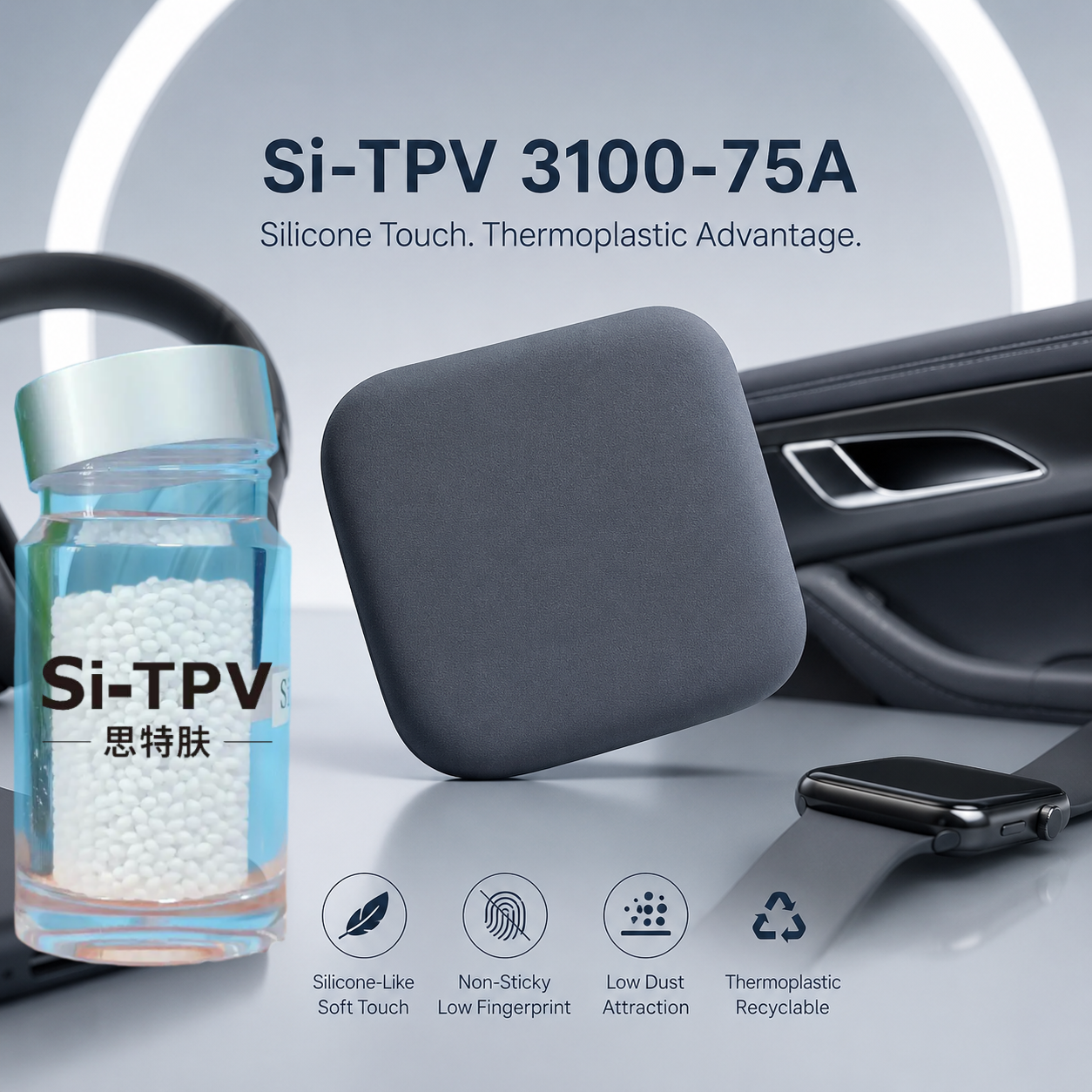
Increasing Interest in Silicone-Like Thermoplastic Materials
As consumer electronics, automotive interiors, wearable devices, and ergonomic products continue evolving toward more refined tactile experiences, material developers are increasingly exploring alternatives to conventional soft PVC, coated TPU compounds, SEBS-based TPEs, and liquid silicone rubber systems.
Against this backdrop, has introduced , a thermoplastic silicone-based elastomer that may offer a different approach to balancing surface comfort, durability, and manufacturing adaptability.
According to information published by SILIKE, the Si-TPV 3100 Series utilizes a dynamic vulcanization structure in which fully cross-linked silicone rubber particles are dispersed within a TPU continuous phase. This hybrid morphology could enable the material to combine silicone-like tactile behavior with the processing characteristics commonly associated with thermoplastic elastomers.
Matte Surface Texture and Dry-Touch Performance
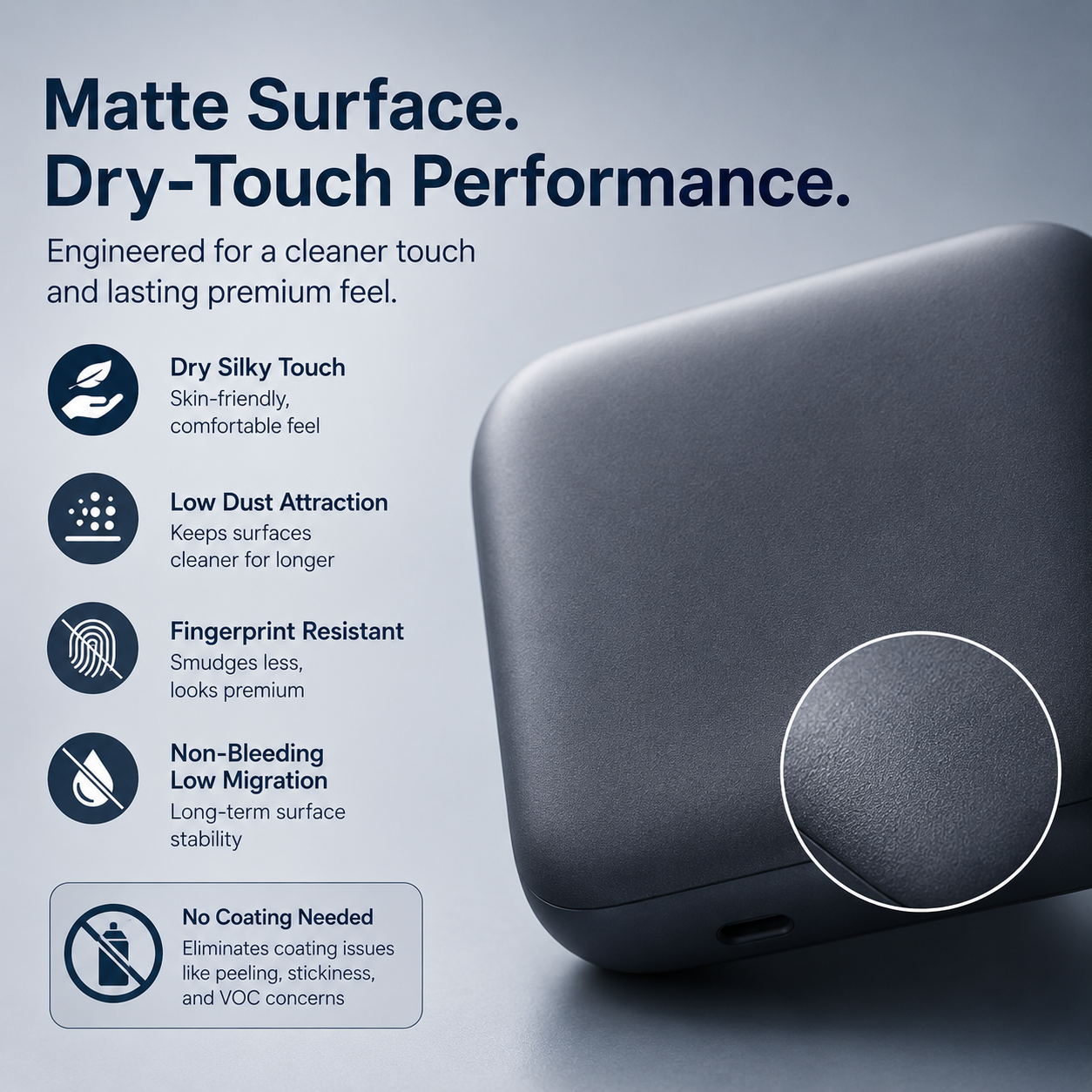
Rather than relying heavily on spray coatings, soft-touch paints, or additional surface finishing treatments, Si-TPV 3100-75A appears designed to generate its tactile profile directly through material architecture. This direction may help reduce concerns often linked to secondary coating operations, including peeling, sticky aging effects, inconsistent surface appearance, or VOC-related processing challenges.
The material is frequently associated with descriptions such as “dry silky touch,” “skin-friendly texture,” and “matte surface effect.” Unlike certain soft elastomers that may gradually develop an oily or tacky feel during long-term use, Si-TPV 3100-75A could maintain a cleaner surface character due to its non-bleeding and low-migration design approach.
Reduced dust attraction and lower fingerprint visibility may also support premium-looking finishes in consumer-oriented applications where tactile perception and visual appearance are closely connected.
Potential Applications Across Wearables, Automotive, and Overmolding
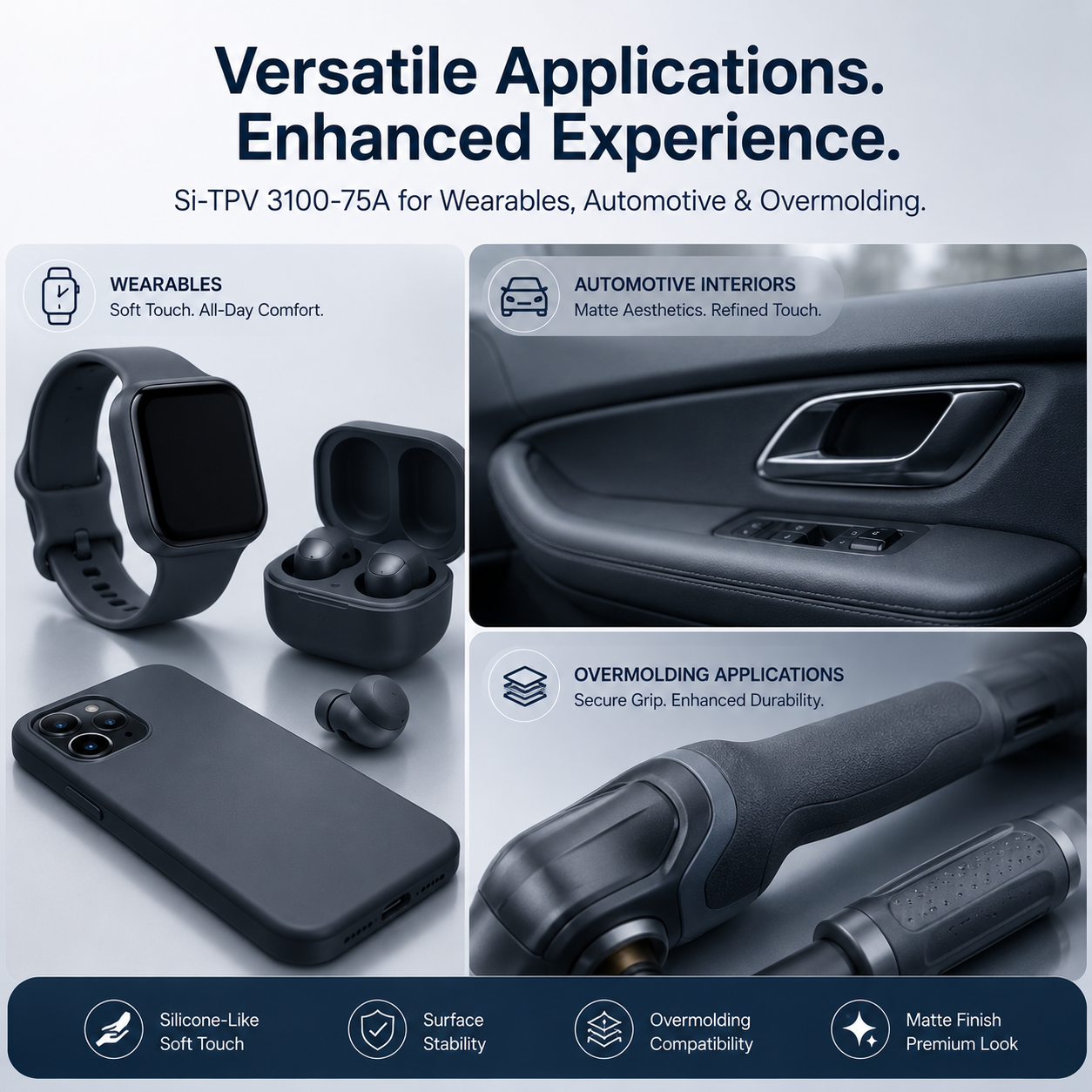
Within wearable electronics, manufacturers increasingly seek soft-touch thermoplastic elastomers capable of combining comfort with surface stability. Smart accessories, earbud components, handheld devices, and flexible electronic housings often require materials that not only feel soft, but also maintain consistent tactile properties during repeated handling and skin contact.
Si-TPV 3100-75A may align with these evolving requirements while still supporting conventional thermoplastic processing methods. Its silicone-like touch and matte appearance could contribute to a more refined user experience without depending heavily on external coatings or soft-touch paint systems.
The material may also support soft-touch overmolding structures involving commonly used engineering substrates. In ergonomic handles, consumer electronics, and industrial grip components, the combination of tactile softness, structural flexibility, and matte texture could help create a more comfortable handling experience.
Automotive interior development may represent another important direction. As vehicle interiors increasingly move toward low-gloss finishes and tactile differentiation, manufacturers continue exploring alternatives to painted soft-touch systems that may wear unevenly during extended use. Si-TPV 3100-75A could offer a thermoplastic route toward soft-contact interior surfaces while supporting contemporary matte aesthetic trends.
Processing Flexibility and TPU Modification Possibilities
Published technical information suggests that the material maintains a medium-soft hardness profile around the upper Shore A range, potentially positioning it between ultra-soft wearable elastomers and more rigid structural compounds. This balance may allow it to support both tactile comfort and dimensional stability in applications where excessive softness could negatively affect durability or handling precision.
The material also appears compatible with thermoplastic processing technologies including injection molding, extrusion, co-extrusion, and overmolding. Compared with thermoset silicone systems, this approach may simplify manufacturing workflows while supporting recyclability and shorter production cycles.
In addition to functioning as a standalone thermoplastic elastomer, Si-TPV 3100-75A may also serve as a tactile modifier for TPU-based systems. Blending approaches involving TPU compounds could potentially improve dry-touch characteristics, flexibility, and surface appearance while preserving thermoplastic processing efficiency.
This capability may create opportunities in flexible cable systems, soft-contact consumer products, and specialty extrusion applications where silicone-like surface behavior is increasingly requested.

Silicone-Based Thermoplastic Elastomers May Continue Expanding
The demand for soft-touch materials continues to grow across consumer electronics, automotive interiors, wearable devices, and ergonomic industrial products. As design priorities shift toward improved tactile comfort and long-term surface stability, manufacturers are increasingly exploring alternatives to conventional coated elastomers and plasticized soft materials.
Coating-based systems such as soft-touch paints can deliver an initial premium feel, but they may also face challenges related to wear resistance, aging, and process complexity. Against this background, silicone-based thermoplastic elastomers are gaining attention as materials that integrate tactile performance directly into the polymer structure, reducing reliance on secondary surface treatments.
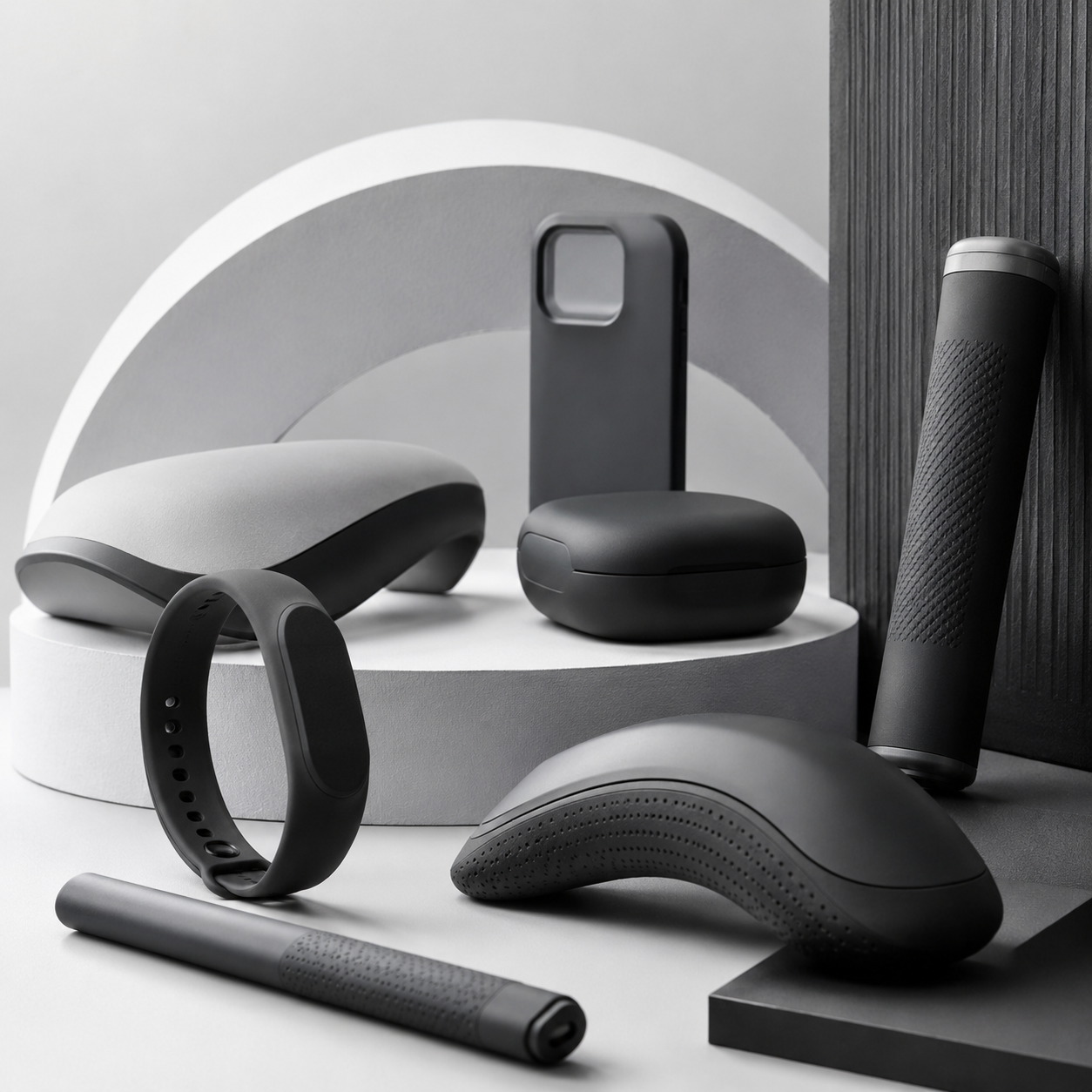
Within this context, from appears positioned as a platform material combining matte aesthetics, silicone-like touch, and thermoplastic processability. Its hybrid structure may help support more stable surface behavior while reducing issues such as migration, stickiness, and surface aging.
Overall, this material direction reflects a broader shift toward integrating comfort, durability, and processing efficiency in a single elastomer system, supporting evolving requirements in modern product design.
FAQ
1. What is Silicone thermoplastic compound Si-TPV 3100-75A?
Si-TPV 3100-75A is a thermoplastic silicone-based elastomer developed by SILIKE. The material combines silicone rubber characteristics with thermoplastic processing capability through a dynamic vulcanization structure. It may provide silicone-like touch performance while supporting injection molding and overmolding applications.
2.How does Thermoplastic silicone elastomer Si-TPV 3100-75A differ from conventional TPE materials?
Compared with some traditional TPE compounds, Si-TPV 3100-75A may offer a drier and more matte tactile experience. The material is also associated with lower migration tendencies and reduced surface tackiness, which could help minimize dust attraction and oily surface appearance during long-term use.
3.What types of applications may use Silicone-based thermoplastic elastomer Si-TPV 3100-75A?
The Silicone-based thermoplastic elastomer may be suitable for wearable electronics, soft-touch overmolding, automotive interior components, ergonomic handles, consumer accessories, and flexible cable systems. Applications requiring matte aesthetics and skin-friendly tactile properties may particularly benefit from this type of thermoplastic silicone elastomer.
4.What surface characteristics are commonly associated with Si-TPV 3100-75A?
The material is frequently described using terms such as dry silky touch, matte surface effect, skin-friendly texture, and non-sticky tactile behavior. It may also demonstrate lower fingerprint visibility and reduced dust attraction compared with certain conventional soft elastomer systems.
As product design trends continue shifting toward softer tactile experiences and cleaner surface aesthetics, thermoplastic silicone-based elastomers such as Si-TPV 3100-75A may represent a developing direction in material innovation. The combination of thermoplastic processability and silicone-like surface characteristics could support evolving requirements in consumer, automotive, and industrial applications, where both performance consistency and user experience are increasingly prioritized.
Contact
For more technical information, material guidance, or application support regarding Si-TPV 3100 Series materials, please contact:
SILIKE Silicone Materials Team
Website: www.si-tpv.com
Email: sale@rellytool.com



