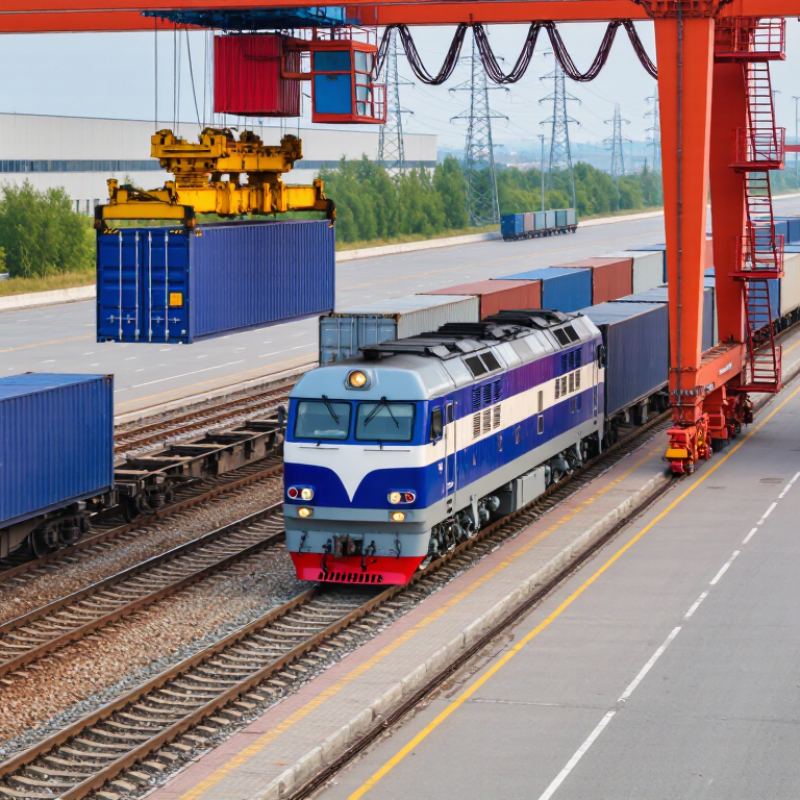
In 2026, shipping by Rail Freight is not simply a matter of booking a train. It means matching cargo, route, terminals, and delivery dates. A container may travel hundreds of miles by rail, yet still need a truck at both ends. Those transfers matter.
The International Energy Agency’s The Future of Rail report estimates that rail carries about 7% of global freight while using roughly 2% of transport energy. The Association of American Railroads reports that U.S. freight trains move one ton of freight nearly 500 miles per gallon of fuel. These figures offer useful context, not a guarantee for every shipment. Distance, load, network, and handling all affect real-world performance.
AAR President and CEO Ian Jefferies has described freight rail as “the most fuel-efficient way to move goods over land.” That advantage deserves attention. So do service schedules, terminal access, equipment needs, and the cost of first- and last-mile trucking. A low line-haul quote can become less attractive when a container waits several days for a connection. Small details count.
This guide explains how to assess a shipment, request comparable quotes, prepare cargo, and track delivery. It also looks at where rail may not fit. Rail is not automatically the greener or cheaper choice for every route; the comparison depends on actual distances and transfers. A little imperfect planning is normal. Better questions, asked early, can prevent expensive surprises.
Assessing rail freight starts with the route, shipment size, and delivery window. Rail often suits heavy, bulky cargo moving long distances, especially when both ends connect efficiently to rail terminals. AAR’s 2024 Railroads and the Environment fact sheet reports that freight rail is, on average, three to four times more fuel-efficient than trucking. That advantage may matter for large, regular shipments. It does not guarantee a lower total cost.
Check the full journey, not just the rail leg. A pallet may need a truck to reach the terminal, sit during transfer, then travel by truck again. Ask carriers about schedules, terminal handling, equipment availability, and expected transit-time variability. Compare door-to-door quotes with your shipment’s actual weight and dimensions. Rail may be a poor fit for urgent, small, or irregular loads. I would also allow buffer time; published schedules can look more precise than real operations.
Tips: Map both terminal drays before booking. Confirm loading limits and transfer arrangements. Request recent performance data for your route, then compare it with your delivery window. Keep a fallback plan for delays.
Prepare Cargo, Packaging, and Shipping Documents
Rail freight rewards careful preparation before a wagon is loaded. Start by recording each package’s dimensions, gross weight, and handling needs. These figures help the carrier plan space and prevent weight from concentrating on one pallet. Protect goods from vibration with suitable cushioning, and secure cartons so they cannot shift during transfers. Use sturdy, correctly sized pallets. Keep labels visible on more than one side, with handling instructions that match the cargo. Small details matter. A loose strap or unreadable mark can slow a handover.
Prepare the shipping documents from one consistent set of shipment details. The commercial invoice and packing list should agree on package counts, descriptions, weights, and declared values. Complete the rail consignment note using the route and consignee information confirmed for the booking. Add permits or product certificates only when the cargo and destination require them. Requirements can vary by corridor, terminal, and service, so confirm them with the carrier or freight forwarder before dispatch. Keep copies. One point worth checking twice: teams sometimes reuse an old packing list, even when a single carton has changed. Reconcile the final loaded cargo against the documents, then send the approved files before the stated cutoff.
Choose a Rail Route and Compare Freight Quotes
How to Ship by Rail Freight in 2026?
Choosing a rail route starts with the shipment, not the map. Record the origin, destination, cargo dimensions, total weight, and preferred loading date. Then compare routes by terminal access, departure frequency, estimated transit time, and required transfers. A route with fewer rail miles may still take longer if it has infrequent departures or slow terminal handling. Small gaps matter. Check whether the quote includes pickup and final delivery, or only movement between rail terminals. Also ask about transfer points, where a container may be unloaded or moved between trains. These details can affect timing and cargo handling.
Compare at least two quotes using the same shipment details and service scope. Separate the rail charge from terminal fees, local trucking, fuel adjustments, and optional cargo coverage. Ask how long the price remains valid and whether capacity is confirmed or estimated. A low quote is not necessarily a better fit. One may assume flexible dates, while another includes a tighter delivery window. I would double-check every assumption; quotes can look precise while leaving important questions unanswered. Note what is still uncertain, especially around seasonal schedules and delivery appointments. That small record makes the final choice more defensible.
Book the Shipment and Arrange Cargo Handover
Once the route and service are confirmed, book with the rail operator or freight forwarder using the cargo’s exact weight, dimensions, packaging, and ready date. Rail capacity is planned around specific wagons and terminals, so estimates can cause delays. Eurostat reported 378 billion tonne-kilometres of rail freight movement across the EU in 2022, a reminder that shipments enter a busy, coordinated network. Keep it practical. Ask for the booking reference, departure terminal, cutoff time, and the latest date for cargo acceptance.
Before handover, match every package mark to the booking and shipping documents. Photograph the sealed cargo, note visible damage, and record the number of pallets or containers with the receiving team. Confirm who handles loading, weighing, and any terminal-specific checks; assumptions here can leave a shipment waiting. The World Bank’s 2023 Logistics Performance Index assessed 139 countries and includes tracking and tracing as a core measure of logistics performance. Request milestone updates and verify how exceptions are reported. A handover receipt is useful, but it may not capture every detail. Check that its time, piece count, and condition notes match what actually left your facility.
Track the Consignment and Coordinate Final Delivery
Rail freight tracking is most useful when it connects shipment updates to decisions. Record the rail reference, container or wagon number, origin, destination, and expected arrival date in one shared log. Check for key milestones: departure, interchange, arrival at the destination terminal, and release for collection. Updates may not appear instantly, so confirm important changes with the carrier or freight coordinator.
A status marked “arrived” does not always mean the load is ready to collect. The terminal may still need time to unload, process paperwork, or assign a pickup slot. Small delays matter. Share the latest estimated release time with your road carrier, then confirm the truck’s arrival window and the receiver’s opening hours. Check that unloading equipment and a suitable delivery space are available. A missed booking can leave a truck waiting while storage charges accumulate.
Keep the delivery contact details and handling instructions with the shipment record. If an update stops changing, ask who owns the next action and when they will verify it. One practical lesson: a tidy tracking screen can create false confidence. Terminal congestion, weather, or a missed connection may shift the schedule without much notice. Build in a modest time buffer, and tell the receiver promptly when the plan changes.
Cepex is the brand for the fluid handling market belonging to the Fluidra group. One of the leading european manufacturer of valves and fittings in thermoplastic materials.
Dedicated to the swimming pool, irrigation and industrial markets, we distribute our products worldwide with the Fluidra commercial network and presence in 46 countries with 136 sales branches.
Your data will be processed by CEPEX S.A., with address at C. Lluís Companys, 51-53, 08400, Granollers (Barcelona), and C.I.F. nº A-08928707, to send you communications about our products based on your interests. You can consult more information about the processing of your data and how to exercise your rights as described in the Privacy Policy.
Technical cookies are strictly necessary for our website to work and you can navigate through it. These types of cookies are those that, for example, allow us to identify you, give you access to certain restricted parts of the page if necessary, or remember different options or services already selected by you, such as your privacy preferences. Therefore, they are activated by default, your authorization not being necessary in this regard. Through the configuration of your browser, you can block or alert the presence of this type of cookies, although such blocking will affect the proper functioning of the different functionalities of our website.
The analysis cookies allow us to study the navigation of the users of our website in general (for example, which sections of the page are the most visited, which services are used most and if they work correctly, etc.). From the statistical information on navigation on our website, we can improve both the operation of the page itself and the different services it offers. Therefore, these cookies do not have an advertising purpose, but only serve to make our website work better, adapting to our users in general. By activating them you will contribute to this continuous improvement. You can enable or disable these cookies by checking the corresponding box, being disabled by default.
Functionality cookies allow us to remember your preferences, to personalize certain characteristics and general options of our website, every time you access it (for example, the language in which the information is presented to you, the sections marked as favorites, your browser type, etc.) Therefore, this type of cookies does not have an advertising purpose, but by activating them you will improve the functionality of the website (for example, adapting to your type of browser) and the customization of it based on your preferences (for example, by presenting the information in the language that you have chosen in previous occasions), which will contribute to the ease, usability and comfort of our page during your navigation. You can enable or disable these cookies by checking the corresponding box, being disabled by default.
Advertising cookies allow us to manage the advertising spaces included in our website based on criteria such as the content shown or the frequency in which the ads are displayed. For example, if you have been shown the same ad several times on our website, and you have not shown a personal interest by clicking on it, it will not appear again. In summary, by activating this type of cookies, the advertising shown on our website will be more useful and diverse, and less repetitive. You can enable or disable these cookies by checking the corresponding box, being disabled by default.
Behavioral advertising cookies allow us to obtain information based on the observation of your browsing habits and behaviors on the web, in order to show you advertising content that best suits your personal tastes and interests. To understand it in a very simple way, we will give you a fictitious example: if your last searches on the web were related to suspense literature, we would show you advertising about suspense books. Therefore, activating this type of cookies, the advertising that we show you on our website will not be generic, but will be oriented to your searches, tastes and interests, therefore adjusting exclusively to you. You can enable or disable these cookies by checking the corresponding box, being disabled by default. To understand it in a very simple way, we will give you a fictitious example: if your last searches on the web were related to suspense literature, we would show you advertising about suspense books. Therefore, activating this type of cookies, the advertising that we show you on our website will not be generic, but will be oriented to your searches, tastes and interests, therefore adjusting exclusively to you. You can enable or disable these cookies by checking the corresponding box, being disabled by default.
We use our own and third-party cookies to ensure the proper functioning of the website and to analyse our services, improve your experience on our website and show you advertisements related to your interests according to profiling based on your browsing habits (e.g. websites visited). You can accept all cookies by clicking "ACCEPT" or set or reject them by clicking here. If you would like to know more about the use of cookies, please see our COOKIE POLICY.