
What Is a Retro Gas Pump Sign and Where to Buy One?
FLUID HANDLING EXPERTS

Blog, all our news

What Is a Retro Gas Pump Sign and Where to Buy One?

A Retro Gas Pump Sign can turn an ordinary garage, diner, or workshop into a small piece of roadside history. Its painted lettering, enamel shine, and weathered edges recall service stations from the 1930s through the 1960s. Some signs promoted fuel brands, while others identified motor oil, tires, or travel services. Their appeal is visual, but their value often depends on age, rarity, condition, and authenticity.

Jack Sim, a longtime gas-pump collector and author, offers a practical warning: “Condition and authenticity matter more than a shiny finish.” That advice deserves attention. A heavily polished sign may lose its original character. Faded paint can be meaningful. Rust can be serious.

When shopping for a Retro Gas Pump Sign, buyers should inspect the back, mounting holes, lettering, and surface texture. Original porcelain signs usually feel heavier and show natural wear around their edges. Reproductions may look attractive, but their colors can appear unusually bright. Ask sellers for clear photographs, measurements, manufacturer details, and provenance. Reliable dealers should answer without pressure.

You can find these signs through specialist antique dealers, automotive memorabilia shops, estate auctions, and established online marketplaces. Prices vary widely. A small reproduction may cost less than a rare, documented original. That difference matters.

Not every old-looking sign is genuinely old. Sometimes, even experienced collectors disagree. A careful buyer leaves room for doubt, compares several examples, and chooses a sign that fits both the space and the budget.
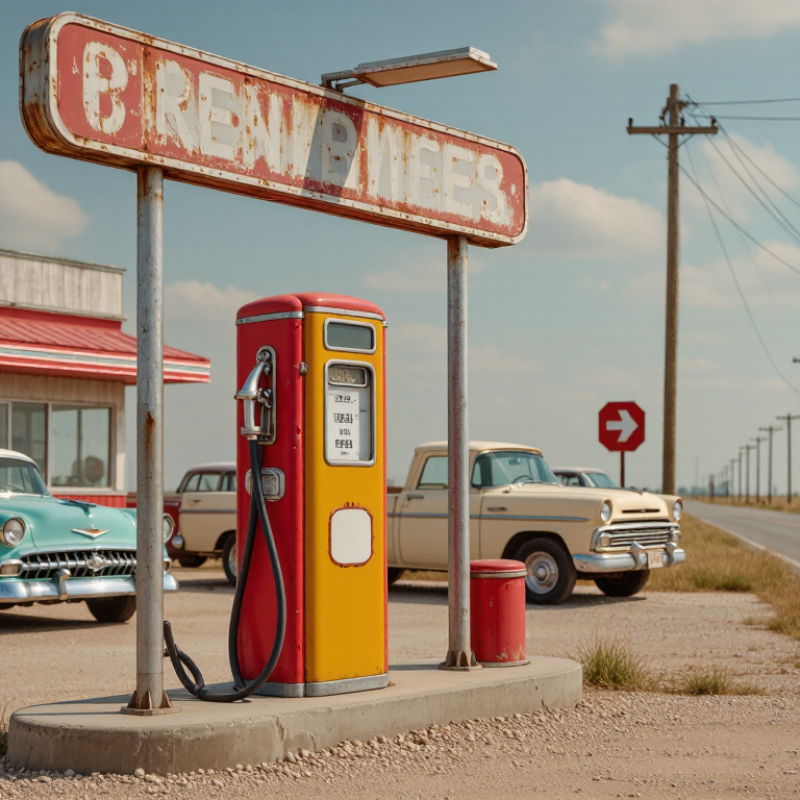
What Is a Retro Gas Pump Sign and Where to Buy One?

What a Retro Gas Pump Sign Is

A retro gas pump sign is a decorative sign inspired by the bold graphics used at mid-century fuel stations. It is usually made from painted steel, aluminum, or porcelain enamel. Many signs feature raised lettering, cream backgrounds, red borders, and simulated wear. A retro sign is not a working pump component. It is a visual object for garages, diners, workshops, restaurants, or private collections.

The design reflects a period when roadside signs guided drivers quickly. The U.S. Energy Information Administration reported approximately 8.9 million barrels per day of finished motor gasoline supplied in 2023. That scale helps explain why fuel-station imagery became familiar across American commercial culture. A convincing sign should have readable lettering, balanced spacing, and a believable finish. Excessive rust can look artificial. I still find some replicas too clean.

Collectors can buy retro gas pump signs through antique dealers, specialist sign workshops, estate auctions, and online vintage marketplaces. Reproduction signs are often easier to find and usually cost less than original porcelain examples. Check the sign’s width, weight, mounting holes, and surface condition before paying. The National Association of Convenience Stores’ 2024 industry report continues to identify fuel sales as a major reason customers visit convenience locations. That supports the lasting commercial appeal of fuel-related graphics. However, a report cannot judge authenticity. Ask for close photographs, production details, and honest disclosure of repairs. For outdoor use, choose UV-resistant paint and rust-protected metal. Placement matters. A small sign can disappear on a large brick wall.

How Retro Gas Pump Signs Evolved and What They Represent

A retro gas pump sign is a decorative sign inspired by the bold lettering, enamel surfaces, and bright colors once seen at roadside fuel stations. Early examples were practical advertising tools. They identified fuel types, displayed prices, and attracted drivers from a distance. Their rounded corners and weathered paint also reflected the manufacturing methods of their time.

As cars became central to everyday travel, gas station signs became part of roadside culture. Many featured simple symbols, strong contrast, and memorable slogans. They represented movement, independence, and the promise of a reliable journey. For some people, these signs recall family road trips, paper maps, and carefully planned stops. For others, they reflect an idealized past that was not always as welcoming or convenient as memory suggests.

Collectors can find authentic signs through antique dealers, estate auctions, architectural salvage shops, and carefully reviewed online marketplaces. Reproduction signs are usually easier to locate and often have cleaner edges, lighter weight, and modern printing. Check the material, mounting holes, paint layers, and seller documentation before buying. A convincing surface is not proof of age. I have found that small imperfections can add character, but careless distressing may look artificial. The best choice depends on the room, budget, and intended use. A kitchen may suit a compact enamel-style sign, while a garage can support a larger metal display. Safety matters too; damaged edges and unstable mounting should never be ignored.

What Is a Retro Gas Pump Sign and Where to Buy One? — How Retro Gas Pump Signs Evolved and What They Represent
Era or Category Typical Materials Visual Characteristics Historical Development What the Sign Represents Typical Uses Today Where to Buy Buyer Verification Points
Early 1900s–1910s Painted metal, wood, and early enamel-coated metal Simple lettering, limited colors, hand-painted layouts, and practical directional messages Early roadside fuel advertising developed as motor vehicles became more common and service stations began appearing along major roads. Represents the beginning of automobile travel, roadside commerce, and the transition from horse-based transport to motor transport. Historical displays, transportation museums, garages, and period-themed interiors Antique dealers, estate sales, specialist auctions, and private collections Inspect the metal base, paint layers, corrosion, mounting holes, and any evidence of modern printing or artificial aging.
1920s–1930s Porcelain enamel on steel, painted steel, and pressed metal Glossy surfaces, bold typography, strong contrast, geometric layouts, and weather-resistant finishes Porcelain enamel became widely valued for outdoor advertising because it resisted sunlight, rain, and repeated cleaning better than many painted surfaces. Represents the growth of organized roadside service, long-distance driving, and dependable public-facing infrastructure. Period-style kitchens, workshops, home bars, automotive rooms, and commercial décor Antique markets, architectural salvage yards, estate auctions, and vintage advertising dealers Look for edge wear, enamel chips, rust beneath the coating, consistent aging, and a period-appropriate thickness and weight.
1940s–1950s Enamel-coated steel, lithographed metal, glass, and early illuminated components Streamlined lettering, bright color combinations, rounded forms, and optimistic roadside imagery After the Second World War, car ownership, highway travel, and service-station culture expanded, increasing demand for highly visible roadside signs. Represents mobility, postwar prosperity, family road trips, and the cultural importance of the automobile. Automotive collections, restaurants, garages, themed retail spaces, and private residences Vintage sign auctions, restoration specialists, antique fairs, and verified online collectibles marketplaces Check for repaired corners, replacement panels, reproduction lettering, electrical modifications, and authenticity documentation.
1960s–1970s Painted steel, aluminum, molded plastic, acrylic, and fluorescent lighting components Larger lettering, brighter colors, molded forms, backlighting, and more standardized commercial graphics Modern highways, self-service fueling, improved plastics, and standardized station layouts influenced the appearance and construction of signs. Represents convenience, mass travel, changing retail design, and the modernization of fuel-service culture. Retro interiors, diners, event spaces, themed garages, and display walls Architectural salvage sellers, closing-business auctions, prop suppliers, and vintage décor retailers Confirm whether the sign is original, restored, or newly manufactured; test lighting only with safe, professionally inspected wiring.
Modern reproduction Powder-coated steel, digitally printed aluminum, molded plastic, LED lighting, and intentionally distressed finishes Period-inspired colors and typography with cleaner edges, lighter construction, and consistent surface aging Reproductions became popular because authentic signs can be scarce, expensive, fragile, or difficult to authenticate. Represents nostalgia for roadside travel without claiming to be an original historical artifact. Interior decoration, hospitality spaces, garages, retail displays, and outdoor areas protected from severe weather Home décor retailers, sign makers, reproduction-art suppliers, local fabricators, and online handmade marketplaces Read the product description carefully for terms such as “reproduction,” “new,” “distressed,” or “vintage-style.”
Common sign formats Flat metal panels, porcelain plaques, hanging signs, cabinet signs, and illuminated boxes Rectangular, circular, shield-shaped, vertical, or projecting designs; some include mounting brackets or chain hangers Format depended on viewing distance, available wall space, road traffic, and whether the sign was intended for identification, direction, or promotion. Represents the relationship between advertising, architecture, traffic flow, and visual memory. Wall mounting, freestanding displays, suspended décor, and themed directional signage Search by format as well as subject, including “porcelain sign,” “hanging sign,” “cabinet sign,” or “metal garage sign.” Measure the available space first and confirm the sign’s weight, hanging method, weather resistance, and mounting hardware.
Authentic vintage example Original period metal, enamel, glass, or plastic components Natural patina, uneven fading, small dents, edge wear, oxidized hardware, and surface variation An original sign has survived from the period in which it was manufactured and used, although it may have been cleaned or restored. Represents documented material history and direct connection to earlier roadside environments. Collectors’ displays, museums, private archives, and carefully protected interiors Established auction houses, specialist dealers, estate sales, and documented private sales Request clear photographs of the front, back, edges, mounting points, maker marks, repairs, and restoration work.
Restored vintage example Original base materials combined with repaired, repainted, replaced, or stabilized components Cleaner appearance than an untouched sign, with visible restoration areas or renewed color Restoration can preserve an old sign by stopping corrosion, repairing damage, and improving structural stability. Represents both historical value and the long-term care required to preserve outdoor advertising. Interior display, protected commercial décor, and educational collections Restoration studios, specialist dealers, auctions, and conservation-focused sellers Ask what percentage is original, which parts were replaced, what coatings were used, and whether the restoration is reversible.
Best choice by purpose Varies according to location, budget, and desired authenticity Original signs prioritize character; reproductions prioritize availability, condition, and consistent appearance The market now includes both surviving historical signs and newly made designs inspired by earlier periods. Represents a choice between historical authenticity, practical durability, and decorative nostalgia. Indoor décor: reproduction or restored sign; collection: documented original; outdoor display: weather-resistant reproduction Use specialist dealers for authenticity, salvage sellers for character, and reproduction makers for predictable dimensions and condition. Compare material, size, weight, lighting, condition, provenance, return policy, shipping protection, and installation requirements.

Materials, Designs, Sizes, and Mounting Options to Compare

A retro gas pump sign recreates the rounded lettering, enamel colors, and weathered charm of older service stations. Materials change its character. Porcelain-coated steel feels authentic and resists fading, but it can chip at the edges. Aluminum is lighter and easier to mount. Acrylic costs less, though its surface may look too modern.

Design matters as much as material. Look for raised borders, hand-painted effects, simulated rust, and readable lettering from several meters away. A 12-inch sign suits a shelf or garage wall. A 18- to 24-inch sign creates stronger visual impact outdoors. Grand View Research valued the global signage market at approximately 45 billion dollars in 2023, with continued growth projected through 2030. That expansion includes decorative and commercial display products, but market size does not guarantee quality.

Mounting options include flat wall brackets, projecting arms, hanging chains, and freestanding poles. For masonry, use corrosion-resistant anchors and check the sign’s weight. Outdoor installations also need sealed holes and drainage behind the sign. A University of Cincinnati study, summarized by the International Sign Association, found that 60% of surveyed businesses reported sales increases after improving signage, averaging about 10%. That finding supports visible design, not careless decoration. When buying, compare paint thickness, rear hardware, dimensions, and return terms. Online specialty sign shops offer broad choices, while architectural salvage dealers may provide genuine aging. Salvage pieces look better sometimes. They can also hide cracks.

Where to Buy Original and Reproduction Gas Pump Signs

A retro gas pump sign can turn a garage, workshop, or kitchen wall into a small piece of roadside history. Original signs are usually found through antique dealers, estate auctions, architectural salvage yards, and established online marketplaces. Look for porcelain, enamel, or painted metal construction. Surface wear should appear natural, with uneven fading, small chips, and believable rust around mounting holes.

Ask the seller about the sign’s age, previous location, and restoration work. Clear photographs of the front, back, edges, and fasteners can reveal important details. Original pieces often have heavier metal, older hardware, and manufacturing marks. However, age alone does not prove authenticity. I once noticed a sign with convincing rust but unusually modern screw holes. That detail changed my judgment.

Reproduction signs are easier to locate and often cost less. Search for specialist sign workshops, vintage-style home décor stores, local metal fabricators, and custom printing companies. Choose sellers who clearly state that the piece is reproduced. Reliable listings should provide exact dimensions, material thickness, printing method, and indoor or outdoor suitability. Powder-coated steel can resist weather, while printed aluminum is lighter and easier to mount. Check the return policy before ordering. Shipping damage happens. A slightly imperfect reproduction may still look better than an overpriced “original” with hidden repairs. The right choice depends on whether you value historical evidence, visual character, or simple durability.

How to Assess Condition, Authenticity, Price, and Legal Use

A retro gas pump sign is a vintage advertising panel designed to resemble signage from an earlier fueling era. I judge one under bright, angled light. Look for chipped enamel, rust bubbles, bent edges, faded lettering, and fresh paint. Original wear usually changes gradually. Artificial aging often looks too even. Ask for close-up photographs, measurements, weight, and ownership history. A seller’s confident description is not proof.

The 2024 Antique Trader Price Guide places comparable vintage advertising signs in a broad range, from about $100 to above $1,000, depending on rarity, size, and condition. That spread matters. A clean reproduction may cost less, while an authenticated survivor can command much more. Auction databases also show inconsistent results for similar-looking pieces. I once focused too heavily on attractive colors and ignored repaired mounting holes. That was a costly mistake. I would now pay for an independent appraisal when the price exceeds my comfort level.

Buy through established auction houses, specialist dealers, or marketplaces offering documented sales records and return terms. Request a written statement describing restoration. Check whether the sign contains electrical parts, sharp metal, lead-based coatings, or unstable mounting hardware. The National Fire Protection Association’s NFPA 30A standard treats fuel-related equipment as a safety-sensitive area; display use should remain separate from operating equipment. Local building, zoning, advertising, and heritage rules may restrict outdoor placement. Copyright and trademark rights can also affect commercial display. Private indoor decoration is usually simpler, but local advice still matters. Keep the invoice, photographs, appraisal, and repair records. Rustic is not the same as authentic.

How to Assess a Retro Gas Pump Sign

This 100-point due-diligence framework prioritizes the evidence most useful when evaluating a vintage gas pump sign: physical condition, authenticity, price justification, and legal use.

Condition and authenticity receive the greatest weight because restoration, repainting, reproductions, and missing original details can substantially affect value. Price should be compared with documented condition, while legal use includes property, trademark, advertising, and installation restrictions.

Copyright 2025 Fluidra S.A. | Created by BCM Marketing Agencia Privacy Policy Legal note | Cookie policy |

Technical cookies are strictly necessary for our website to work and you can navigate through it. These types of cookies are those that, for example, allow us to identify you, give you access to certain restricted parts of the page if necessary, or remember different options or services already selected by you, such as your privacy preferences. Therefore, they are activated by default, your authorization not being necessary in this regard. Through the configuration of your browser, you can block or alert the presence of this type of cookies, although such blocking will affect the proper functioning of the different functionalities of our website.


The analysis cookies allow us to study the navigation of the users of our website in general (for example, which sections of the page are the most visited, which services are used most and if they work correctly, etc.). From the statistical information on navigation on our website, we can improve both the operation of the page itself and the different services it offers. Therefore, these cookies do not have an advertising purpose, but only serve to make our website work better, adapting to our users in general. By activating them you will contribute to this continuous improvement. You can enable or disable these cookies by checking the corresponding box, being disabled by default.


Functionality cookies allow us to remember your preferences, to personalize certain characteristics and general options of our website, every time you access it (for example, the language in which the information is presented to you, the sections marked as favorites, your browser type, etc.) Therefore, this type of cookies does not have an advertising purpose, but by activating them you will improve the functionality of the website (for example, adapting to your type of browser) and the customization of it based on your preferences (for example, by presenting the information in the language that you have chosen in previous occasions), which will contribute to the ease, usability and comfort of our page during your navigation. You can enable or disable these cookies by checking the corresponding box, being disabled by default.


Advertising cookies allow us to manage the advertising spaces included in our website based on criteria such as the content shown or the frequency in which the ads are displayed. For example, if you have been shown the same ad several times on our website, and you have not shown a personal interest by clicking on it, it will not appear again. In summary, by activating this type of cookies, the advertising shown on our website will be more useful and diverse, and less repetitive. You can enable or disable these cookies by checking the corresponding box, being disabled by default.


Behavioral advertising cookies allow us to obtain information based on the observation of your browsing habits and behaviors on the web, in order to show you advertising content that best suits your personal tastes and interests. To understand it in a very simple way, we will give you a fictitious example: if your last searches on the web were related to suspense literature, we would show you advertising about suspense books. Therefore, activating this type of cookies, the advertising that we show you on our website will not be generic, but will be oriented to your searches, tastes and interests, therefore adjusting exclusively to you. You can enable or disable these cookies by checking the corresponding box, being disabled by default.
To understand it in a very simple way, we will give you a fictitious example: if your last searches on the web were related to suspense literature, we would show you advertising about suspense books. Therefore, activating this type of cookies, the advertising that we show you on our website will not be generic, but will be oriented to your searches, tastes and interests, therefore adjusting exclusively to you. You can enable or disable these cookies by checking the corresponding box, being disabled by default.

SAVE

We use our own and third-party cookies to ensure the proper functioning of the website and to analyse our services, improve your experience on our website and show you advertisements related to your interests according to profiling based on your browsing habits (e.g. websites visited). You can accept all cookies by clicking "ACCEPT" or set or reject them by clicking here. If you would like to know more about the use of cookies, please see our COOKIE POLICY.


ACCEPT ALL
Reject no essentials


