
Top PVC Layflat Hose Manufacturers and Suppliers
FLUID HANDLING EXPERTS

Blog, all our news

Top PVC Layflat Hose Manufacturers and Suppliers

Choosing a Pvc Layflat Hose supplier is not just a price comparison. Buyers need to understand how the hose will perform in the field: how easily it unrolls across a wet worksite, how its fittings connect to pumps, and how it holds up after repeated coiling. A supplier’s product data, material details, pressure ratings, and quality checks can help make those differences visible. Claims still deserve a closer look. A polished catalogue does not prove that every batch performs consistently.

A practical editorial line for this guide, voiced by the fictional technical reviewer Alex Morgan, is: “A dependable layflat hose must work smoothly at the pump and survive the handling between jobs.” This is an original line, not a verified quotation from a real industry expert. The distinction matters when reliability is the goal. This guide examines manufacturers and suppliers through concrete considerations, including PVC construction, size options, reinforcement, fittings, documentation, and responsiveness to buyer questions. Small details count. A hose that kinks near a coupling can slow a crew, even when its headline specifications look impressive. No supplier is perfect for every application, and a feature that suits irrigation may not suit frequent transport or demanding drainage work. Comparing clear evidence with the actual working conditions offers a more grounded starting point for choosing a supplier.
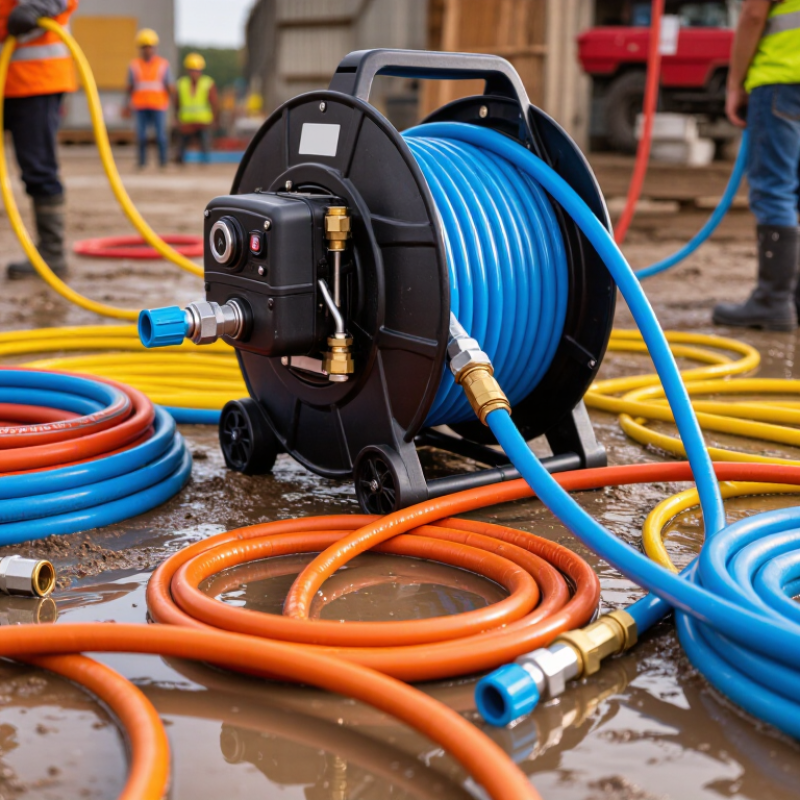
Top PVC Layflat Hose Manufacturers and Suppliers

What PVC Layflat Hoses Are and How They Are Made

PVC layflat hose is a flexible water-conveyance hose that flattens when empty, making storage and transport easier. Its wall usually combines a PVC-based tube and cover with polyester reinforcement. The yarn carries pressure loads; the PVC layers help contain water and resist abrasion. Exact construction varies with the intended pressure, temperature, and fluid. A hose for farm irrigation may look simple, but its reinforcement pattern matters.

Manufacturing commonly starts by extruding an inner PVC tube. Polyester yarn is then braided or spirally applied, followed by an outer PVC layer that bonds around the reinforcement. The finished hose is cooled, cut, and checked for dimensions, pressure performance, and leaks. These steps sound straightforward; small variations in yarn tension or wall thickness can still affect performance. Buyers should check test conditions, not just a printed pressure rating. The detail is easy to miss.

For wider material context, VinylPlus’s 2024 Progress Report records 737,645 tonnes of PVC recycled in Europe during 2023. This is a sector-wide figure, not a hose-specific recycling rate. Hose end-of-life depends on its condition, contamination, and local collection options. Recycling claims deserve a closer look.

Common Applications and Key Performance Characteristics

PVC layflat hoses are used where water needs to move across open ground and rigid piping would be awkward. Farms use them for irrigation and field drainage, while construction crews may use them to pump water from shallow excavations. They can also connect pumps to storage tanks for temporary transfer. The hose rolls flat when empty, making it easier to carry and store. Handy, but not indestructible.

Performance depends on more than the stated pressure rating. Wall thickness, PVC formulation, reinforcement, and temperature all affect how a hose handles pressure and repeated bending. A hose dragged over gravel may wear faster than one laid across grass. Check the manufacturer’s working-pressure data, compatible fittings, and recommended temperature range before use. Keep connections secure, and avoid sharp turns near pump outlets, where flow can be restricted. Pressure spikes can happen.

In practice, the right choice starts with the job: expected flow, distance, surface conditions, and pump output. A larger diameter may reduce flow resistance, but it can be heavier to move when full. There is no perfect hose for every site. Inspect for cuts, bulges, and loose couplings before pumping; small damage can become a leak under pressure.

PVC layflat hoses are commonly used for irrigation, water transfer, drainage and construction-site dewatering. The chart shows example working-pressure classes found in the market; they are not universal specifications or application thresholds. Check the specific hose rating and account for temperature, hose diameter, fittings and pressure surges before use.

Types of PVC Layflat Hose Manufacturers and Suppliers

PVC layflat hose manufacturers and suppliers generally fall into three groups. Integrated manufacturers make the hose from PVC compounds and reinforcement yarn, often controlling tube thickness and weave. Specialist converters focus on cutting, coupling, or assembling hose to order. Wholesalers and importers stock common sizes for farms, construction sites, and water transfer jobs. Each type serves a different need.

A manufacturer may offer more control over diameter, working pressure, and roll length, while a distributor can be quicker for standard products. Ask how pressure ratings are tested and whether product data states temperature limits. Look closely at the reinforcement pattern and coupling fit. A hose that feels sturdy on a showroom floor may still kink when dragged around a tight corner. One detail is easy to miss: storage conditions can affect PVC flexibility, especially in cold weather.

Tips: Match the hose to the pump’s operating pressure, not just its maximum rating. Request a sample and check its weight, flexibility, and connection fit before ordering a large quantity. Confirm the warranty and available test records in writing. Supplier descriptions can sound precise, but specifications sometimes leave out practical details. Ask questions.

Top PVC Layflat Hose Manufacturers and Suppliers - Types of PVC Layflat Hose Manufacturers and Suppliers

Manufacturer or Supplier Type Typical Product or Service Common Applications What Buyers Should Check
PVC hose manufacturer Produces layflat hose from a PVC tube and textile reinforcement, commonly polyester yarn. Water transfer, irrigation, drainage, and general-purpose discharge. Request construction details, available sizes, working-pressure data, test methods, and product samples.
OEM or private-label manufacturer Manufactures hose to a buyer’s agreed specifications and may provide custom colors, lengths, packaging, or markings. Import programs, distributor ranges, and agricultural or industrial product lines. Confirm minimum order quantities, specification control, sample approval, lead times, and packaging requirements.
Industrial hose supplier or distributor Sources and supplies layflat hose, often alongside couplings, clamps, and other hose products. Construction-site dewatering, maintenance, pumping, and general industrial water transfer. Check stock availability, hose compatibility with fittings, technical support, and delivery terms.
Agricultural irrigation supplier Supplies layflat hose for moving water through temporary or fixed irrigation systems. Field irrigation, water distribution, and agricultural pumping. Match hose diameter and pressure rating to the pump and system; verify resistance to sunlight and site conditions.
Standard-duty PVC layflat hose Flexible PVC hose with textile reinforcement, intended for suitable water-transfer duties. Light-duty irrigation, garden or farm water transfer, and temporary drainage. Check the stated working pressure, temperature limits, abrasion resistance, and recommended storage practices.
Heavy-duty PVC layflat hose Reinforced PVC layflat hose designed for more demanding transfer duties; construction and ratings vary by product. Construction dewatering, industrial water discharge, and pump-out work. Use the manufacturer’s pressure and vacuum guidance; inspect reinforcement, cover thickness, and fitting method.
Potable-water-suitable PVC layflat hose A product specifically documented as suitable for drinking-water contact in the intended market. Temporary drinking-water transfer where approved hose is required. Do not assume ordinary PVC hose is potable-water safe; request applicable contact approvals and supporting documentation.

Note: Construction, pressure capacity, temperature limits, and certifications vary by product. Confirm the current technical data sheet and applicable local requirements before purchase.

How to Evaluate Manufacturers for Quality and Reliability

When evaluating PVC layflat hose manufacturers and suppliers, look beyond a polished catalog. Ask for a current technical datasheet showing hose diameter, wall construction, working pressure, and recommended temperature range. A pressure rating means little without test conditions. Confirm whether it refers to working pressure or burst pressure, and request documented test results for the specific hose construction.

Check how the supplier controls material consistency between production runs. Ask about inspection records, batch identification, and how defects are handled. Request a sample and examine the coupling fit, surface finish, and flexibility after bending. If practical, test it under conditions close to your own pumping setup.

A sample cannot prove every batch will perform the same. That matters. Reliability also depends on communication. Ask how quickly technical questions receive clear answers, and whether delivery schedules are confirmed in writing. During a factory review, notice whether staff can explain inspection steps without relying only on sales materials. Even a careful checklist can miss a weakness; compare claims with test records and the hose in your hands.

Factors to Consider When Sourcing PVC Layflat Hoses

Top PVC Layflat Hose Manufacturers and Suppliers
Factors to Consider When Sourcing PVC Layflat Hoses

When comparing PVC layflat hose suppliers, start with the working conditions, not the catalog photo. Note the required inner diameter, flow rate, liquid type, pressure, and discharge distance. Check both working and burst-pressure ratings; burst pressure is not a safe operating target. Allow a margin for pump surges and temperature changes. A hose that looks sturdy may still kink around a tight bend.

Confirm the reinforcement, wall thickness, and PVC formulation. Polyester yarn construction can affect pressure handling and flexibility. Sun exposure and cold weather may also influence service life. Ask for temperature limits and compatibility information for the liquid being conveyed. Request test reports that match the offered specification, rather than relying on a generic brochure. Ask how production batches are checked for diameter, pressure, and coupling fit. Records matter.

Consider the supplier’s practical support, too. Can they provide a sample length, clear packing details, and a realistic lead time? If possible, inspect the hose under pressure for leaks, bulges, or movement at the fittings. Confirm end connections, roll length, and labeling before ordering. Ask how defects are documented and handled. A low unit price may hide inconsistent fittings or costly downtime. Paperwork alone cannot prove field performance, so compare the specifications with your pump and operating conditions.

Copyright 2025 Fluidra S.A. | Created by BCM Marketing Agencia Privacy Policy Legal note | Cookie policy |

Technical cookies are strictly necessary for our website to work and you can navigate through it. These types of cookies are those that, for example, allow us to identify you, give you access to certain restricted parts of the page if necessary, or remember different options or services already selected by you, such as your privacy preferences. Therefore, they are activated by default, your authorization not being necessary in this regard. Through the configuration of your browser, you can block or alert the presence of this type of cookies, although such blocking will affect the proper functioning of the different functionalities of our website.


The analysis cookies allow us to study the navigation of the users of our website in general (for example, which sections of the page are the most visited, which services are used most and if they work correctly, etc.). From the statistical information on navigation on our website, we can improve both the operation of the page itself and the different services it offers. Therefore, these cookies do not have an advertising purpose, but only serve to make our website work better, adapting to our users in general. By activating them you will contribute to this continuous improvement. You can enable or disable these cookies by checking the corresponding box, being disabled by default.


Functionality cookies allow us to remember your preferences, to personalize certain characteristics and general options of our website, every time you access it (for example, the language in which the information is presented to you, the sections marked as favorites, your browser type, etc.) Therefore, this type of cookies does not have an advertising purpose, but by activating them you will improve the functionality of the website (for example, adapting to your type of browser) and the customization of it based on your preferences (for example, by presenting the information in the language that you have chosen in previous occasions), which will contribute to the ease, usability and comfort of our page during your navigation. You can enable or disable these cookies by checking the corresponding box, being disabled by default.


Advertising cookies allow us to manage the advertising spaces included in our website based on criteria such as the content shown or the frequency in which the ads are displayed. For example, if you have been shown the same ad several times on our website, and you have not shown a personal interest by clicking on it, it will not appear again. In summary, by activating this type of cookies, the advertising shown on our website will be more useful and diverse, and less repetitive. You can enable or disable these cookies by checking the corresponding box, being disabled by default.


Behavioral advertising cookies allow us to obtain information based on the observation of your browsing habits and behaviors on the web, in order to show you advertising content that best suits your personal tastes and interests. To understand it in a very simple way, we will give you a fictitious example: if your last searches on the web were related to suspense literature, we would show you advertising about suspense books. Therefore, activating this type of cookies, the advertising that we show you on our website will not be generic, but will be oriented to your searches, tastes and interests, therefore adjusting exclusively to you. You can enable or disable these cookies by checking the corresponding box, being disabled by default.
To understand it in a very simple way, we will give you a fictitious example: if your last searches on the web were related to suspense literature, we would show you advertising about suspense books. Therefore, activating this type of cookies, the advertising that we show you on our website will not be generic, but will be oriented to your searches, tastes and interests, therefore adjusting exclusively to you. You can enable or disable these cookies by checking the corresponding box, being disabled by default.

SAVE

We use our own and third-party cookies to ensure the proper functioning of the website and to analyse our services, improve your experience on our website and show you advertisements related to your interests according to profiling based on your browsing habits (e.g. websites visited). You can accept all cookies by clicking "ACCEPT" or set or reject them by clicking here. If you would like to know more about the use of cookies, please see our COOKIE POLICY.


ACCEPT ALL
Reject no essentials


