
What Are PU Sandwich Panels and How Are They Used?
FLUID HANDLING EXPERTS

Blog, all our news

What Are PU Sandwich Panels and How Are They Used?

PU sandwich panels are engineered building components designed to combine insulation and structural efficiency in one product. They usually contain a rigid polyurethane foam core between metal facings, creating a lightweight panel with strong thermal resistance. The result is a wall or roof system that can be installed faster than many traditional assemblies. Less site work matters.

In practical construction, PU sandwich panels are widely used for cold rooms, food-processing facilities, warehouses, workshops, agricultural buildings, and modular structures. Their smooth surfaces are easier to clean, while their continuous insulation can reduce heat transfer through the building envelope. Installers must still seal panel joints carefully. Small gaps can cause condensation, air leakage, and unexpected energy loss.

Their performance depends on more than the foam core. Panel thickness, facing material, joint design, temperature differences, and installation quality all influence the final result. Engineers should review manufacturer test data, fire classifications, moisture resistance, and local building requirements before selecting a system. A higher insulation value does not automatically solve every building problem. That assumption can fail.

This guide explains how PU sandwich panels are made, how they work, and where they offer practical value. It also examines their limitations, including damage from poor handling, difficult repairs, and variation between products. Reliable specifications should come from established manufacturers and qualified professionals. Real projects often reveal overlooked details. A panel may look simple, yet its long-term performance depends on careful design, accurate installation, and regular inspection.
What Are PU Sandwich Panels and How Are They Used?

What PU Sandwich Panels Are

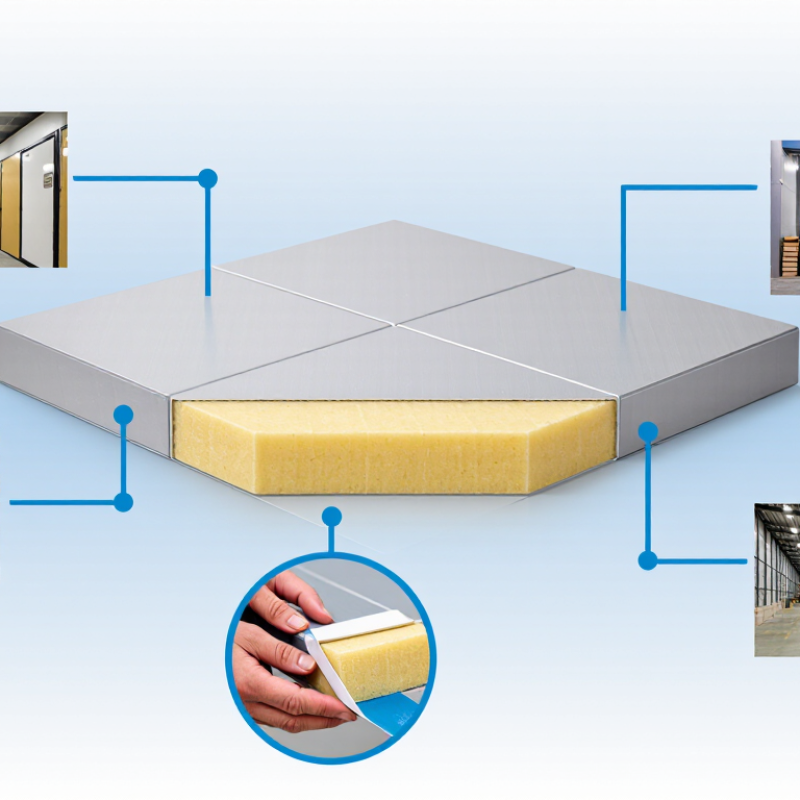
PU sandwich panels are prefabricated building components with three bonded layers. A rigid polyurethane foam core sits between two protective facings, often made from coated steel or aluminum. The core supplies insulation, while the facings provide strength and surface protection.

The panels are manufactured in controlled conditions, creating a continuous structure with fewer thermal bridges than many traditional wall systems. Their low weight can simplify handling and reduce installation time. They are commonly used for cold rooms, warehouses, clean areas, roofs, and temperature-controlled facilities. However, PU panels are not a universal solution. Fire performance, joint design, moisture exposure, and local building requirements must be checked before installation. A panel may look strong, yet poor connections can weaken the entire assembly.

Tips: Check the core density, facing thickness, fire classification, and declared thermal performance. Inspect panel joints carefully; small gaps can cause condensation and heat loss. Keep cut edges sealed and dry. This detail is easy to overlook. Also, avoid choosing panels by insulation value alone. Long-term performance depends on accurate measurement, careful storage, proper fasteners, and skilled installation. Product data should come from verified technical documents, not only sales descriptions. A thoughtful inspection before delivery can prevent expensive corrections later.

How PU Sandwich Panels Are Made

How PU Sandwich Panels Are Made

PU sandwich panels begin with two strong facing sheets and a polyurethane foam core. The core starts as liquid polyol and isocyanate. A controlled reaction creates foam, heat, and expansion. The mixture fills the space between the facings.

Manufacturers use continuous or discontinuous production lines. First, metal sheets are cleaned and positioned. Then, the liquid chemicals are poured or injected evenly. The foam expands against both surfaces. Pressure keeps the panel flat during curing. Cutting equipment produces specified lengths and joint profiles. Operators check density, thickness, adhesion, and surface defects. Small temperature changes can affect expansion. That detail is easy to underestimate.

According to the UNEP 2023 Global Status Report for Buildings and Construction, buildings consumed 34% of global energy in 2022. They also produced 37% of energy and process-related carbon emissions. This pressure explains the demand for efficient envelope materials. Properly made PU panels can achieve thermal conductivity near 0.022–0.028 W/m·K, depending on formulation and testing conditions.

Actual performance depends on joints, fasteners, aging, and installation quality. The factory process is precise, but it is not flawless. Poorly aligned edges can create thermal bridges. Excess foam can also distort the panel profile. Quality teams therefore combine laboratory testing with visual inspection and production records.

Key Materials and Structural Features

What Are PU Sandwich Panels and How Are They Used?

Key Materials and Structural Features

PU sandwich panels are lightweight building components made from a rigid polyurethane foam core between two protective facings. The core contains many closed cells, which reduce heat transfer and limit air movement. Steel is common for wall and roof surfaces, while aluminum may suit lighter applications. Each layer has a different job. The foam supports insulation, and the facings provide stiffness, impact resistance, and surface protection.

The panel edges usually include tongue-and-groove joints or overlapping profiles. These connections help reduce thermal bridges and improve airtightness when installed correctly. Adhesive bonding and mechanical fasteners hold the layers together, creating a composite structure. A typical panel can span between supports with less weight than traditional masonry. However, span capacity depends on thickness, support spacing, wind pressure, and fastening quality. Simple assumptions can cause expensive mistakes.

In practical installation, workers should protect the foam edges from damage and keep joints clean. A small gap can allow moisture and heat to pass through. The outer coating also needs selection for sunlight, humidity, chemicals, and expected impact. PU cores offer strong thermal performance, but they are not automatically suitable for every fire requirement. Fire behavior varies with the full assembly, including facings, joints, and installation details. Product test reports and local building requirements should guide specification. Even experienced teams sometimes underestimate joint detailing. That deserves careful review.

Where PU Sandwich Panels Are Used

What Are PU Sandwich Panels and How Are They Used?

Where PU Sandwich Panels Are Used

PU sandwich panels combine two protective facings with a rigid polyurethane insulation core. Their lightweight structure supports fast installation and stable indoor temperatures. On construction sites, workers commonly use them for warehouse walls, industrial roofs, and modular buildings. The panels arrive as finished sections, reducing wet trades and installation time.

Their strongest application is temperature-controlled construction. Cold rooms, frozen-food storage areas, pharmaceutical facilities, and refrigerated logistics centers require continuous insulation. PU panels help limit heat transfer across large wall and ceiling surfaces. Small errors matter here. Gaps around doors, joints, or fasteners can reduce real performance.

Cleanrooms and food-processing spaces also use PU panels because their smooth surfaces are easier to wash and maintain. Agricultural buildings, workshops, and temporary offices use them for similar reasons. They are practical, not magical.

The wider need is significant. The 2023 UNEP Global Status Report for Buildings and Construction states that buildings consumed about 34% of global energy and produced roughly 37% of energy- and process-related emissions in 2022. Better insulated envelopes can reduce operational demand, although panel selection alone cannot solve energy problems. Designers must check thermal bridging, moisture control, ventilation, and fire performance. Local codes and EN 14509-based testing should guide the final specification.

Benefits, Limitations, and Selection Factors

What Are PU Sandwich Panels and How Are They Used?

PU sandwich panels contain a rigid polyurethane foam core between two protective facings. They are used for cold rooms, warehouses, factories, and controlled-temperature spaces. Their low thermal conductivity helps reduce heat transfer through walls and roofs. The panels are also lightweight, so installation can require less structural support and fewer working hours. Clean surfaces and concealed joints can support good hygiene in food-processing areas.

However, performance depends heavily on installation quality. Small gaps around panel joints may cause condensation, air leakage, or hidden mold growth. Seal carefully. PU cores resist moisture better than many fibrous materials, but they are not automatically waterproof or fireproof.

Fire behavior depends on the complete panel system, including facings, joints, thickness, and tested classification. They can also suffer from impact damage, prolonged ultraviolet exposure, incompatible chemicals, and difficult end-of-life recycling. A panel that looks efficient on paper may disappoint on site.

Selection should begin with the building’s actual temperature range and local code requirements. Compare thermal conductivity, target U-value, panel thickness, fire test evidence, surface coating, joint design, span capacity, and acoustic needs.

For refrigerated rooms, inspect vapor barriers and door interfaces closely. For roofs, check drainage, wind uplift, and maintenance access.

In site reviews, the cheapest option often creates expensive sealing work later. I would also request documented test results, installation instructions, and supplier technical support before approval. Mistakes happen when appearance replaces measurement.

Copyright 2025 Fluidra S.A. | Created by BCM Marketing Agencia Privacy Policy Legal note | Cookie policy |

Technical cookies are strictly necessary for our website to work and you can navigate through it. These types of cookies are those that, for example, allow us to identify you, give you access to certain restricted parts of the page if necessary, or remember different options or services already selected by you, such as your privacy preferences. Therefore, they are activated by default, your authorization not being necessary in this regard. Through the configuration of your browser, you can block or alert the presence of this type of cookies, although such blocking will affect the proper functioning of the different functionalities of our website.


The analysis cookies allow us to study the navigation of the users of our website in general (for example, which sections of the page are the most visited, which services are used most and if they work correctly, etc.). From the statistical information on navigation on our website, we can improve both the operation of the page itself and the different services it offers. Therefore, these cookies do not have an advertising purpose, but only serve to make our website work better, adapting to our users in general. By activating them you will contribute to this continuous improvement. You can enable or disable these cookies by checking the corresponding box, being disabled by default.


Functionality cookies allow us to remember your preferences, to personalize certain characteristics and general options of our website, every time you access it (for example, the language in which the information is presented to you, the sections marked as favorites, your browser type, etc.) Therefore, this type of cookies does not have an advertising purpose, but by activating them you will improve the functionality of the website (for example, adapting to your type of browser) and the customization of it based on your preferences (for example, by presenting the information in the language that you have chosen in previous occasions), which will contribute to the ease, usability and comfort of our page during your navigation. You can enable or disable these cookies by checking the corresponding box, being disabled by default.


Advertising cookies allow us to manage the advertising spaces included in our website based on criteria such as the content shown or the frequency in which the ads are displayed. For example, if you have been shown the same ad several times on our website, and you have not shown a personal interest by clicking on it, it will not appear again. In summary, by activating this type of cookies, the advertising shown on our website will be more useful and diverse, and less repetitive. You can enable or disable these cookies by checking the corresponding box, being disabled by default.


Behavioral advertising cookies allow us to obtain information based on the observation of your browsing habits and behaviors on the web, in order to show you advertising content that best suits your personal tastes and interests. To understand it in a very simple way, we will give you a fictitious example: if your last searches on the web were related to suspense literature, we would show you advertising about suspense books. Therefore, activating this type of cookies, the advertising that we show you on our website will not be generic, but will be oriented to your searches, tastes and interests, therefore adjusting exclusively to you. You can enable or disable these cookies by checking the corresponding box, being disabled by default.
To understand it in a very simple way, we will give you a fictitious example: if your last searches on the web were related to suspense literature, we would show you advertising about suspense books. Therefore, activating this type of cookies, the advertising that we show you on our website will not be generic, but will be oriented to your searches, tastes and interests, therefore adjusting exclusively to you. You can enable or disable these cookies by checking the corresponding box, being disabled by default.

SAVE

We use our own and third-party cookies to ensure the proper functioning of the website and to analyse our services, improve your experience on our website and show you advertisements related to your interests according to profiling based on your browsing habits (e.g. websites visited). You can accept all cookies by clicking "ACCEPT" or set or reject them by clicking here. If you would like to know more about the use of cookies, please see our COOKIE POLICY.


ACCEPT ALL
Reject no essentials


