
What Is Process Water Treatment and How Does It Work?
FLUID HANDLING EXPERTS

Blog, all our news

What Is Process Water Treatment and How Does It Work?

Process Water Treatment is the controlled removal of contaminants from water used in manufacturing, energy, food production, and other industrial operations. It protects equipment, stabilizes production, and helps facilities reuse valuable water instead of treating every supply as disposable.

The scale is substantial. UNESCO’s United Nations World Water Development Report 2024 estimates that agriculture accounts for about 70% of global freshwater withdrawals, while industry and municipalities consume much of the remainder. Industrial demand is concentrated, however. A single factory can require thousands of cubic meters daily. That water may leave the process carrying oils, suspended solids, metals, salts, nutrients, or organic compounds.

Treatment usually begins with screening and equalization. These steps remove larger debris and balance changing flow conditions. Coagulation, clarification, and filtration then reduce particles. Biological systems can break down biodegradable pollutants. Membranes, activated carbon, ion exchange, or advanced oxidation may follow. Disinfection provides an additional barrier when water is reused or discharged.

The International Water Association emphasizes fit-for-purpose treatment and integrated water management. In practice, this means testing the water before selecting equipment. A clean-looking stream may still contain dissolved salts or trace chemicals. That is easy to underestimate.

Monitoring matters.

Operators typically track pH, conductivity, turbidity, chemical oxygen demand, flow, and specific contaminants. The U.S. Environmental Protection Agency identifies wastewater characterization, source control, and reliable monitoring as essential parts of industrial wastewater management. Yet no universal treatment train exists. Feedwater changes, production schedules, operating skill, and maintenance can alter performance. Effective Process Water Treatment therefore combines sound engineering with site experience, verified data, and continual review.
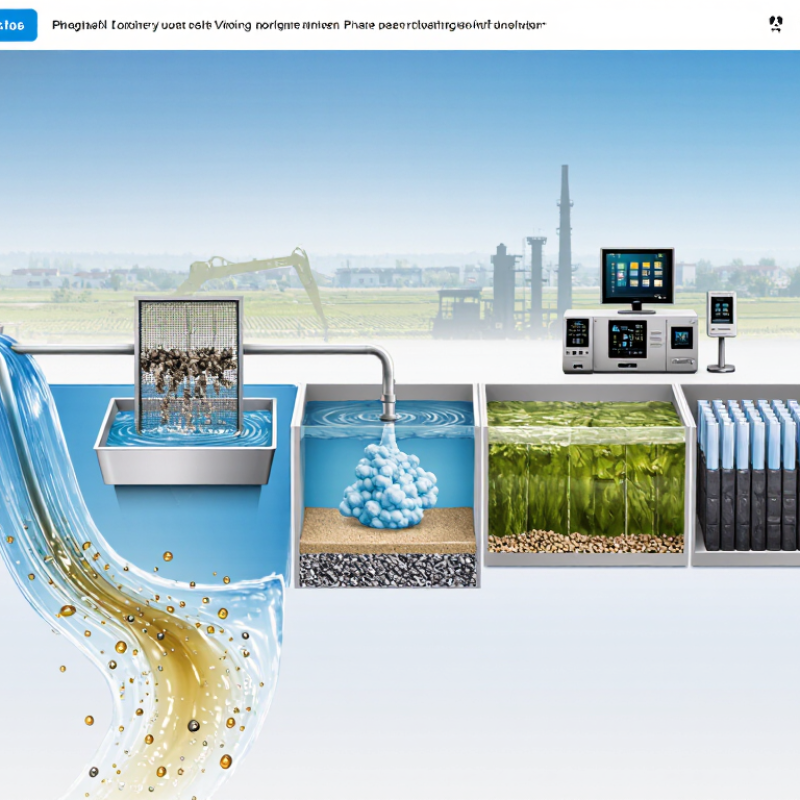
What Is Process Water Treatment and How Does It Work?

What Is Process Water and Why Does It Require Treatment?

Process water is water used inside an industrial operation, not simply water leaving a tap. It may cool machinery, carry heat, wash surfaces, mix ingredients, or transport particles. A cooling loop can collect scale and corrosion products. Rinse water may contain oils, metals, salts, or cleaning chemicals. Its condition changes with each production shift.

Treatment is necessary because these contaminants can damage equipment and disrupt production. High mineral levels may form hard deposits inside pipes. Suspended solids can block filters and reduce flow. Organic matter can support unwanted microbial growth. Discharge limits also require careful control. Operators usually begin with sampling and process mapping. One sample can mislead, though. Water quality often changes during startup, cleaning, and heavy production.

A treatment system may combine screening, equalization, coagulation, filtration, biological treatment, membranes, or disinfection. The right sequence depends on the water’s chemistry and the factory’s goals. For example, filters can remove larger particles, while membranes separate smaller dissolved substances. Sensors may track pH, conductivity, turbidity, and flow. Skilled operators compare these readings with laboratory results. Treatment is not a set-and-forget task. A system may work well for months, then require adjustment after a new chemical or material enters the process.

Which Contaminants Are Commonly Found in Process Water?

Process water can look clear and still contain troublesome contaminants. Its quality depends on the industry, raw materials, equipment, and cleaning methods used on site. In practical inspections, operators may notice a thin oil sheen, cloudy water, colored particles, or unusual odors. These signs are useful, but appearance alone cannot confirm water quality.

Suspended solids are among the most common pollutants. They may include grit, fibers, product residue, and corrosion particles. Oils and grease can coat pipes and interfere with biological treatment. Dissolved metals, such as iron, copper, zinc, or chromium, may enter through raw materials and machinery. Salts and minerals can raise conductivity and create scale inside heat exchangers. Organic compounds can increase chemical oxygen demand and reduce oxygen available to receiving waters. Nutrients, including nitrogen and phosphorus, may also cause excessive algae growth.

Microorganisms are another concern, especially where water contacts food materials, cooling systems, or organic waste. Some processes also generate solvents, detergents, or persistent chemicals that require specialized treatment. Testing usually includes pH, turbidity, conductivity, metals, oil content, and organic-load measurements. Sampling must represent real operating conditions. A single sample can mislead. That is an uncomfortable but important limitation. Treatment may combine screening, clarification, filtration, activated carbon, membranes, biological processes, or disinfection, depending on the contaminant profile.

How Does the Process Water Treatment System Work?

A process water treatment system begins with measurement, not machinery. Operators test flow, pH, temperature, conductivity, suspended solids, oils, and specific contaminants. This profile determines the treatment train. The UN World Water Development Report 2024 estimates that agriculture uses about 70% of global freshwater withdrawals, increasing pressure on industrial facilities to recover usable water.

Screening removes large debris first. Equalization tanks then balance sudden changes in flow and pollutant strength. Chemical adjustment may follow. Coagulants bind fine particles, while flocculation forms heavier clusters. Clarifiers or dissolved air flotation units separate these solids from the water.

The separated sludge needs controlled handling and regular testing.

More demanding applications use activated carbon, ion exchange, ultrafiltration, or reverse osmosis. Disinfection can include ultraviolet light or carefully controlled chemical dosing. Sensors track pressure, turbidity, conductivity, and microbial indicators before reuse or discharge.

The US EPA’s 2023 Water Reuse Action Plan emphasizes fit-for-purpose treatment, monitoring, and risk-based management.

No system is flawless. A membrane may remove salts efficiently, yet scaling can reduce performance within days. A sensor can drift unnoticed.

Operators therefore compare online readings with laboratory results and inspect pumps, valves, and tanks routinely. The weakest step often controls the whole process.

Which Treatment Technologies Are Used at Each Stage?

Process water treatment begins with a clear question: what must the water do next? The answer determines each technology. Screening removes rags, fibers, and coarse solids before pumps or tanks suffer damage. Equalization then steadies flow and pollutant strength. It is a quiet but important stage. Without it, downstream systems receive sudden chemical shocks.

pH adjustment and coagulation follow in many plants. Dosing chemicals neutralizes acidity and gathers fine particles into larger flocs. Dissolved air flotation or clarification removes these flocs. Biological treatment handles biodegradable organics, often through aeration tanks or attached-growth reactors. Operators watch dissolved oxygen, temperature, and sludge age closely. Small errors can reduce removal performance quickly. The 2024 UNESCO World Water Development Report notes that agriculture uses about 70% of global freshwater withdrawals, increasing pressure to recover suitable industrial water. Still, recovery is not automatically safe.

Ultrafiltration can remove suspended solids and many microorganisms. Reverse osmosis reduces dissolved salts, metals, and other small contaminants. Activated carbon may polish trace organics. Ultraviolet light or chemical disinfection provides a final microbial barrier. Process water intended for boilers may need demineralization and strict conductivity control. Cooling systems may require corrosion and scaling management instead. The World Bank report Quality Unknown: The Invisible Water Crisis links poor water quality with economic losses and health risks, showing why testing cannot stop after filtration. No treatment train is perfect. Membranes foul, sensors drift, and laboratory samples may miss short pollution spikes. Experienced operators therefore combine online monitoring, routine sampling, preventive maintenance, and periodic process reviews.

How Is Treated Water Monitored, Reused, or Discharged?

Process water treatment does not end when a filter runs clear. Operators monitor water before reuse or discharge. Samples may be collected from tanks, pipes, and final outlet points. Common checks include pH, temperature, turbidity, conductivity, suspended solids, and specific chemicals. Some facilities also test biological demand and metals.

Reliable monitoring combines calibrated instruments, laboratory testing, and documented sampling routines. Online sensors show rapid changes, while laboratory results provide a deeper check. Operators compare readings with permit limits, internal reuse targets, and historical trends. Small shifts matter. A rising conductivity value, for example, can signal salt buildup or treatment failure. Data should be time-stamped and linked to the exact sampling location. That detail helps investigators separate a process upset from a faulty sensor.

Treated water may return to equipment washing, cooling, dust control, or another suitable process step. Reuse requires consistent quality, because one contaminant can damage equipment or affect production. Before discharge, staff verify final results, inspect the outlet, and record the released volume. If results fall outside approved conditions, discharge should pause while the cause is investigated. Monitoring is not perfect. Sensors drift, samples can be mishandled, and operators may trust a familiar trend too quickly. Regular calibration, duplicate samples, and independent review reduce these blind spots. Still, every monitoring plan deserves periodic challenge.

Process Water Treatment: Quality Changes Through Each Stage

Representative industrial process-water values within commonly observed treatment ranges. Lower concentrations of total suspended solids (TSS) and chemical oxygen demand (COD) indicate improved water quality for reuse or controlled discharge.

Treatment systems commonly monitor flow, pH, turbidity, TSS, COD, conductivity, and specific contaminants. Water that meets internal reuse specifications may be recycled for cooling, washing, or production. Water intended for discharge is tested against applicable permit limits before release.

Copyright 2025 Fluidra S.A. | Created by BCM Marketing Agencia Privacy Policy Legal note | Cookie policy |

Technical cookies are strictly necessary for our website to work and you can navigate through it. These types of cookies are those that, for example, allow us to identify you, give you access to certain restricted parts of the page if necessary, or remember different options or services already selected by you, such as your privacy preferences. Therefore, they are activated by default, your authorization not being necessary in this regard. Through the configuration of your browser, you can block or alert the presence of this type of cookies, although such blocking will affect the proper functioning of the different functionalities of our website.


The analysis cookies allow us to study the navigation of the users of our website in general (for example, which sections of the page are the most visited, which services are used most and if they work correctly, etc.). From the statistical information on navigation on our website, we can improve both the operation of the page itself and the different services it offers. Therefore, these cookies do not have an advertising purpose, but only serve to make our website work better, adapting to our users in general. By activating them you will contribute to this continuous improvement. You can enable or disable these cookies by checking the corresponding box, being disabled by default.


Functionality cookies allow us to remember your preferences, to personalize certain characteristics and general options of our website, every time you access it (for example, the language in which the information is presented to you, the sections marked as favorites, your browser type, etc.) Therefore, this type of cookies does not have an advertising purpose, but by activating them you will improve the functionality of the website (for example, adapting to your type of browser) and the customization of it based on your preferences (for example, by presenting the information in the language that you have chosen in previous occasions), which will contribute to the ease, usability and comfort of our page during your navigation. You can enable or disable these cookies by checking the corresponding box, being disabled by default.


Advertising cookies allow us to manage the advertising spaces included in our website based on criteria such as the content shown or the frequency in which the ads are displayed. For example, if you have been shown the same ad several times on our website, and you have not shown a personal interest by clicking on it, it will not appear again. In summary, by activating this type of cookies, the advertising shown on our website will be more useful and diverse, and less repetitive. You can enable or disable these cookies by checking the corresponding box, being disabled by default.


Behavioral advertising cookies allow us to obtain information based on the observation of your browsing habits and behaviors on the web, in order to show you advertising content that best suits your personal tastes and interests. To understand it in a very simple way, we will give you a fictitious example: if your last searches on the web were related to suspense literature, we would show you advertising about suspense books. Therefore, activating this type of cookies, the advertising that we show you on our website will not be generic, but will be oriented to your searches, tastes and interests, therefore adjusting exclusively to you. You can enable or disable these cookies by checking the corresponding box, being disabled by default.
To understand it in a very simple way, we will give you a fictitious example: if your last searches on the web were related to suspense literature, we would show you advertising about suspense books. Therefore, activating this type of cookies, the advertising that we show you on our website will not be generic, but will be oriented to your searches, tastes and interests, therefore adjusting exclusively to you. You can enable or disable these cookies by checking the corresponding box, being disabled by default.

SAVE

We use our own and third-party cookies to ensure the proper functioning of the website and to analyse our services, improve your experience on our website and show you advertisements related to your interests according to profiling based on your browsing habits (e.g. websites visited). You can accept all cookies by clicking "ACCEPT" or set or reject them by clicking here. If you would like to know more about the use of cookies, please see our COOKIE POLICY.


ACCEPT ALL
Reject no essentials


