Why Are Pressure Fittings Essential for Plumbing and Industrial Applications
FLUID HANDLING EXPERTS

Blog, all our news

Why Are Pressure Fittings Essential for Plumbing and Industrial Applications

In today’s rapidly evolving plumbing and industrial sectors, the significance of pressure fittings cannot be overstated. These components are pivotal in ensuring fluid transfer systems operate efficiently and safely in a variety of applications, from residential plumbing to large-scale industrial operations. As industry expert Dr. Jonathan Lee, a recognized authority in fluid dynamics, aptly stated, “Pressure fittings are the backbone of reliable and secure piping systems.” His insights highlight the fundamental role these fittings play in maintaining system integrity and preventing leaks, which can lead to costly damages and safety hazards.

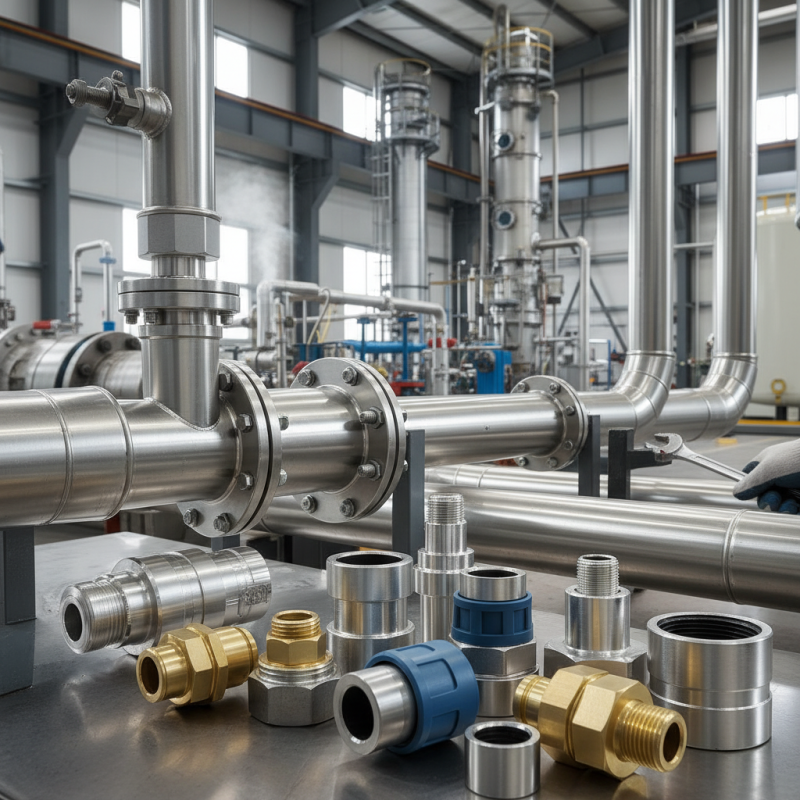
Pressure fittings serve as essential connectors that withstand high-pressure environments, making them crucial for diverse industries including oil and gas, pharmaceuticals, and manufacturing. The correct use of pressure fittings not only enhances the durability and efficiency of the systems they are a part of, but also contributes to overall operational safety. As we delve deeper into the various aspects of pressure fittings, we will explore their types, applications, and the reasons they are indispensable to modern plumbing and industrial frameworks. Each fitting is designed to meet specific pressures and temperatures, underscoring the importance of selecting the right fitting for any given application. Understanding these components is key to ensuring functional and safe operations.
Why Are Pressure Fittings Essential for Plumbing and Industrial Applications

Importance of Pressure Fittings in Plumbing Systems

Pressure fittings play a critical role in plumbing systems, ensuring secure and leak-free connections that are vital for both residential and commercial applications. According to the American Society of Plumbing Engineers (ASPE), improper fittings can lead to significant issues, including water leakage and system failures, which not only waste water but also incur high repair and maintenance costs. Research indicates that approximately 20% of plumbing leaks are attributed to faulty fittings, highlighting their importance in safeguarding the integrity of plumbing infrastructure.

In industrial applications, the need for reliable pressure fittings becomes even more pronounced. The International Society of Automation (ISA) reports that around 40% of industrial equipment failures stem from weak or unreliable connections in fluid systems. These failures can result in downtime and severe operational disruptions, costing businesses thousands of dollars. As industries continue to rely on complex piping systems, the use of durable and correctly installed pressure fittings is essential for maintaining efficient operations and preventing costly leaks or failures. The right pressure fittings not only enhance system reliability but also contribute to compliance with safety and environmental regulations.

Why Are Pressure Fittings Essential for Plumbing and Industrial Applications

Dimension Material Pressure Rating (psi) Application
1/2 inch Copper 1000 Residential plumbing
3/4 inch Brass 600 Hydraulic systems
1 inch PVC 320 Irrigation systems
1-1/4 inch Stainless Steel 1500 Industrial applications
2 inch Galvanized Steel 300 Fire protection systems

Role of Pressure Fittings in Industrial Applications

Pressure fittings play a crucial role in industrial applications by facilitating the safe and efficient transfer of fluids and gases under high pressure. These fittings are designed to withstand extreme forces and prevent leaks, ensuring that systems operate reliably. In industries such as oil and gas, chemical processing, and water treatment, the integrity of pressure fittings is paramount. They provide the necessary connections between pipes, valves, and other equipment, enabling the seamless functioning of complex systems while minimizing the risk of accidents and environmental hazards.

Moreover, the choice of pressure fittings impacts the overall efficiency of industrial processes. High-quality fittings reduce turbulence and pressure drops within the system, promoting better flow rates and energy savings. They also contribute to maintenance efficiency, as durable fittings require less frequent replacements and repairs.

This is particularly important in large-scale operations where downtime can lead to significant financial losses. In summary, pressure fittings are not merely connectors; they are vital components that enhance the reliability and efficiency of industrial systems. Their role cannot be overstated in maintaining operational excellence across various sectors.

Types of Pressure Fittings and Their Uses

Pressure fittings are crucial components in both plumbing and industrial applications, designed to ensure secure and leak-free connections between pipes. These fittings come in various types, each tailored to specific needs and materials. For instance, compression fittings are widely used in residential and commercial plumbing due to their ease of installation and reliability. According to industry reports, the global compression fittings market is expected to reach USD 2.5 billion by 2025, highlighting their importance in maintaining efficient fluid transport systems.

Another popular pressure fitting type is the socket weld fitting, commonly utilized in high-pressure and high-temperature applications in industries like oil and gas. These fittings allow for a seamless connection without the need for additional parts, streamlining the assembly process. The American Society of Mechanical Engineers (ASME) emphasizes that the failure rates for poorly applied fitting connections can exceed 60%, underscoring the critical role of choosing the right pressure fittings. Moreover, butt-weld fittings offer robust durability for heavy-duty applications, making them invaluable in sectors requiring strong pressure retention, such as chemical processing.

Understanding the diverse applications and merits of these pressure fittings can significantly enhance system performance and safety. As industries evolve, innovation in fitting designs continues to flourish, addressing the growing demand for more efficient and reliable plumbing solutions.

Benefits of Using Pressure Fittings for Leak Prevention

Why Are Pressure Fittings Essential for Plumbing and Industrial Applications

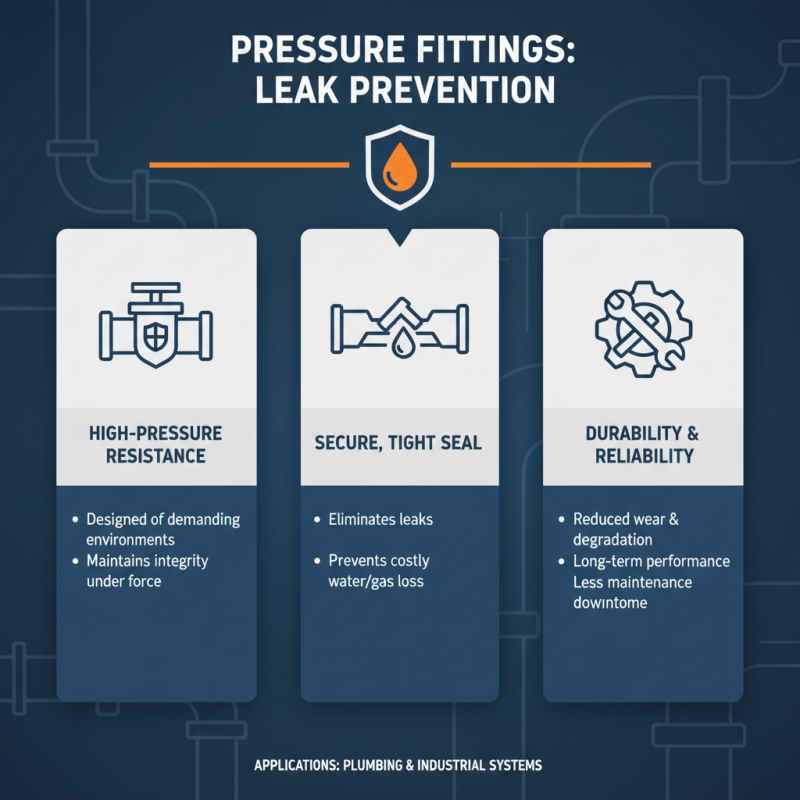
Pressure fittings play a crucial role in plumbing and industrial applications primarily due to their effectiveness in preventing leaks. These specialized connectors are designed to withstand high-pressure environments, ensuring a secure and tight seal. The robust construction of pressure fittings minimizes the chance of wear and degradation over time, which is particularly important in systems that transport liquids or gases. By using pressure fittings, professionals can significantly reduce the risk of leaks that could potentially lead to costly repairs and downtime.

Another key benefit of utilizing pressure fittings is their versatility across different materials and setups. Whether used in metal, plastic, or composite systems, pressure fittings can accommodate a variety of applications, making them an ideal choice for diverse industrial environments. Their design facilitates easy installation and maintenance, allowing for quick replacements without the need for extensive modifications. This flexibility not only enhances efficiency but also ensures that systems remain operational without significant interruptions, demonstrating the vital role pressure fittings play in leak prevention and overall system reliability.

Installation and Maintenance of Pressure Fittings

In plumbing and industrial applications, the installation and maintenance of pressure fittings play an integral role in ensuring system reliability and safety. Pressure fittings must be installed correctly to handle the stresses of high-pressure environments, which are commonplace in many industrial processes. A report from the American Society of Mechanical Engineers (ASME) indicates that improper installation can lead to a 30% increase in the risk of system failures, highlighting the necessity for skilled technicians to execute precise installations. This includes ensuring proper alignment and torque specifications to prevent leakage and potential catastrophic failures.

Regular maintenance is equally crucial for pressure fittings, as neglected fittings can degrade over time due to factors such as corrosion, vibration, and thermal expansion. The National Institute of Standards and Technology (NIST) emphasizes that routine inspections and timely maintenance can extend the life of pressure fittings by up to 40%. Implementing a proactive maintenance schedule not only enhances safety but also reduces costly downtime in industrial settings, where system reliability is paramount. Therefore, adherence to best practices in installation and ongoing maintenance is essential for maximizing the performance and longevity of pressure fittings in various applications.

Copyright 2025 Fluidra S.A. | Created by BCM Marketing Agencia Privacy Policy Legal note | Cookie policy |

Technical cookies are strictly necessary for our website to work and you can navigate through it. These types of cookies are those that, for example, allow us to identify you, give you access to certain restricted parts of the page if necessary, or remember different options or services already selected by you, such as your privacy preferences. Therefore, they are activated by default, your authorization not being necessary in this regard. Through the configuration of your browser, you can block or alert the presence of this type of cookies, although such blocking will affect the proper functioning of the different functionalities of our website.


The analysis cookies allow us to study the navigation of the users of our website in general (for example, which sections of the page are the most visited, which services are used most and if they work correctly, etc.). From the statistical information on navigation on our website, we can improve both the operation of the page itself and the different services it offers. Therefore, these cookies do not have an advertising purpose, but only serve to make our website work better, adapting to our users in general. By activating them you will contribute to this continuous improvement. You can enable or disable these cookies by checking the corresponding box, being disabled by default.


Functionality cookies allow us to remember your preferences, to personalize certain characteristics and general options of our website, every time you access it (for example, the language in which the information is presented to you, the sections marked as favorites, your browser type, etc.) Therefore, this type of cookies does not have an advertising purpose, but by activating them you will improve the functionality of the website (for example, adapting to your type of browser) and the customization of it based on your preferences (for example, by presenting the information in the language that you have chosen in previous occasions), which will contribute to the ease, usability and comfort of our page during your navigation. You can enable or disable these cookies by checking the corresponding box, being disabled by default.


Advertising cookies allow us to manage the advertising spaces included in our website based on criteria such as the content shown or the frequency in which the ads are displayed. For example, if you have been shown the same ad several times on our website, and you have not shown a personal interest by clicking on it, it will not appear again. In summary, by activating this type of cookies, the advertising shown on our website will be more useful and diverse, and less repetitive. You can enable or disable these cookies by checking the corresponding box, being disabled by default.


Behavioral advertising cookies allow us to obtain information based on the observation of your browsing habits and behaviors on the web, in order to show you advertising content that best suits your personal tastes and interests. To understand it in a very simple way, we will give you a fictitious example: if your last searches on the web were related to suspense literature, we would show you advertising about suspense books. Therefore, activating this type of cookies, the advertising that we show you on our website will not be generic, but will be oriented to your searches, tastes and interests, therefore adjusting exclusively to you. You can enable or disable these cookies by checking the corresponding box, being disabled by default.
To understand it in a very simple way, we will give you a fictitious example: if your last searches on the web were related to suspense literature, we would show you advertising about suspense books. Therefore, activating this type of cookies, the advertising that we show you on our website will not be generic, but will be oriented to your searches, tastes and interests, therefore adjusting exclusively to you. You can enable or disable these cookies by checking the corresponding box, being disabled by default.

SAVE

We use our own and third-party cookies to ensure the proper functioning of the website and to analyse our services, improve your experience on our website and show you advertisements related to your interests according to profiling based on your browsing habits (e.g. websites visited). You can accept all cookies by clicking "ACCEPT" or set or reject them by clicking here. If you would like to know more about the use of cookies, please see our COOKIE POLICY.


ACCEPT ALL
Reject no essentials