
10 Prefab House Buying Tips for Global Buyers
FLUID HANDLING EXPERTS

Blog, all our news

10 Prefab House Buying Tips for Global Buyers

Buying a Prefab House from another country can make a new home feel closer—and more complicated. The floor plan may look perfect online, but photos cannot show how a wall handles humid summers or how a delivery truck reaches your site. Small details matter.

Global buyers need to assess the home, the supplier, and the journey between them. Ask what the quoted price includes, from factory options to packing and shipping. Confirm dimensions, materials, insulation, and the documents provided for local review. Building requirements differ by location, so check plans with qualified local professionals before placing an order. Get important promises in writing.

Then look beyond the unit itself. Freight costs, unloading equipment, site preparation, utility connections, and installation can change the total budget. Delays may also affect schedules, especially when components travel long distances. Not every supplier explains these issues clearly. Ask direct questions, and keep the answers.

This guide shares ten practical buying tips for comparing manufacturers, reviewing specifications, planning logistics, and checking support after delivery. It cannot replace local technical advice, and no checklist can remove every risk. Even careful buyers miss something. That is why realistic timelines, documented decisions, and a contingency budget are useful. A well-chosen prefab home is not simply the cheapest model or the fastest promise. It is a home whose design, delivery plan, and ongoing responsibilities make sense for your site and circumstances.
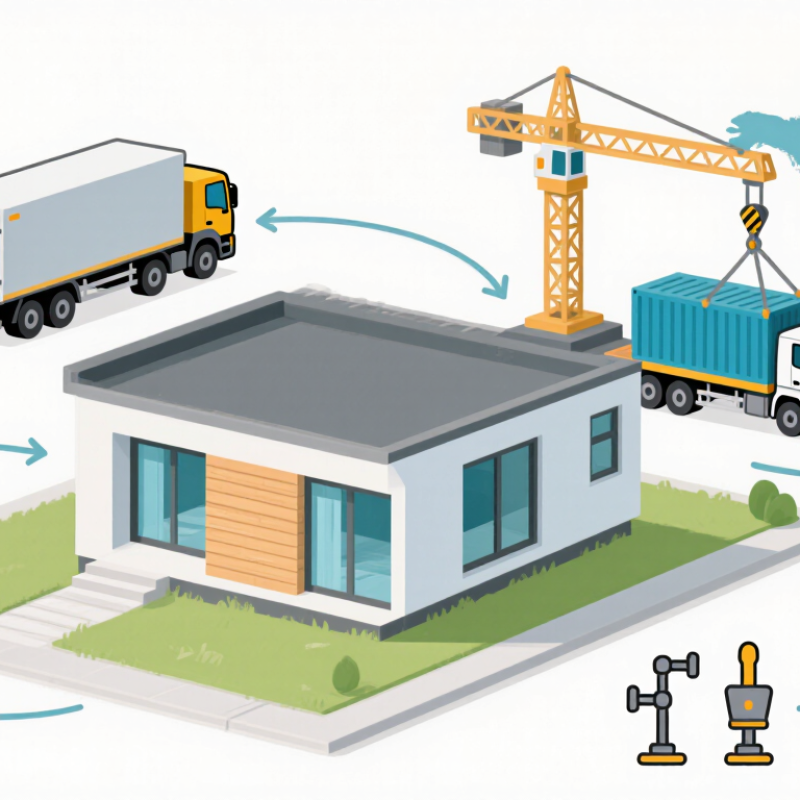
10 Prefab House Buying Tips for Global Buyers

Define Your Needs, Location, and Project Requirements

Define the job before choosing a house. List who will live there, how many rooms they need, and whether the layout must allow future expansion. Then describe the site: climate, ground conditions, access roads, and available utilities. A narrow rural road may prevent delivery of large modules. A soft, sloping plot can also change foundation costs. Small details matter.

Set performance requirements in writing. Specify insulation, ventilation, window placement, expected occupancy, and resistance to local wind, snow, or heat. Ask what the quoted price includes: design, foundations, transport, installation, and utility connections. McKinsey’s 2019 report, Modular Construction: From Projects to Products, estimated that modular construction can shorten schedules by 20–50% and reduce costs by up to 20% in suitable projects. These are potential gains, not promises. Site work, shipping distance, and late design changes can erode them. Even a tidy floor plan can prove impractical.

Before requesting bids, prepare a simple project brief with room dimensions, site photographs, access measurements, and a target completion date. Confirm which local technical requirements the design must satisfy, and ask for supporting drawings and specifications. A low price is not a complete requirement. I would leave room for uncertainty, too: ground conditions and delivery access are easy to misjudge from a map.

Compare Prefab House Types, Materials, and Building Systems

Prefab is not one product. Panelized homes arrive as flat wall and roof sections, while volumetric modules arrive as finished room-sized units. Kit homes ship components for more work on site. The right choice depends on transport access, crane availability, and how much finishing local crews can handle. McKinsey’s 2019 modular-construction report found that off-site building can shorten project schedules by 20–50 percent. That is a potential, not a promise; design changes and shipping delays can erase the gain.

Materials shape weight, durability, and upkeep. Timber panels are light and easy to modify, but moisture control needs careful detailing. Light-gauge steel resists rot, though thermal bridges need attention. Concrete offers mass and fire resistance, but adds transport weight. The 2023 UN Environment Programme and GlobalABC report attributed about 37 percent of global energy- and process-related CO2 emissions to buildings and construction. Ask suppliers for insulation values, material specifications, and an itemized estimate of operational energy needs.

Look closely at the joints. A small air leak can undermine a strong wall system.

Mechanical, electrical, and plumbing layouts matter too: confirm where ducts, wiring, and pipes run before production starts. I would still question any “maintenance-free” claim; every envelope needs inspection.

Verify Local Building Codes, Permits, and Import Rules

Before paying a deposit, ask the local building department which codes apply to a prefabricated home. Rules may cover structural design, fire safety, insulation, electrical systems, and plumbing. A factory certificate does not automatically replace local approval. Get requirements in writing, and confirm whether drawings need review by a locally licensed professional. Small details matter.

Check permits before production begins. The site may need zoning approval, a foundation permit, or separate utility clearances. Local officials may also require designs that account for heavy snow, strong winds, earthquakes, or flood exposure. A home built for one climate may need changes elsewhere. I would not rely on a seller’s general claim that a model meets “international standards”; that phrase can mean little without specific documents and local acceptance.

Import rules deserve the same attention. Ask customs authorities or a qualified broker what product descriptions, origin records, duties, and shipping documents are required. Confirm whether materials such as timber need additional inspection or documentation. Requirements can change, and the answer may depend on the exact components being shipped. Allow time for checks at the port and for missing paperwork. It is tempting to treat these steps as boring admin, but a delayed shipment can leave a finished foundation sitting empty. Verify details with the relevant local agencies before committing to delivery dates.

Prefab House Buying: Regulatory Checks in Sequence

A practical order for checking local requirements before committing to a prefab purchase.

The numbers indicate the recommended order of checks, not permit durations or a universal legal requirement. Confirm the rules with the relevant local authorities and customs officials.

Assess Suppliers, Product Quality, Contracts, and Total Costs

10 Prefab House Buying Tips for Global Buyers
Assess Suppliers, Product Quality, Contracts, and Total Costs

A reliable supplier should explain how its homes are made, packed, and inspected. Request recent project references, factory photos, and a detailed specification sheet. Check that drawings list actual wall, roof, window, and insulation dimensions. A polished render proves little. Ask how materials perform in the climate where the home will be installed, including local wind, snow, heat, or humidity conditions.

Inspect product quality before placing a large order. If possible, review a sample connection, window seal, or wall section. Confirm what inspections and test documents are available, and have a qualified local professional review technical claims. Small details matter. I would not assume that a standard model suits every site; foundation needs and utility connections can change the design.

Read the contract line by line. It should define materials, dimensions, delivery dates, packaging, payment stages, and remedies for defects or delays. Clarify who arranges shipping, unloading, installation, and damage checks. Then calculate the full landed cost, not just the factory price. Include freight, insurance, duties or taxes, port handling, crane hire, foundation work, installation, and utility connections. Ask for costs in writing and note exchange-rate risks. Leave a contingency; even careful estimates miss something. A clear spreadsheet helps compare offers on equal terms.

10 Prefab House Buying Tips for Global Buyers - Assess Suppliers, Product Quality, Contracts, and Total Costs

# Buying tip What to assess Evidence or questions to request Cost or risk to account for
1 Verify the supplier’s capability Confirm the supplier can manufacture the specified building type, materials, and order volume. Request a current business registration, factory address, production photos or live video tour, and references for comparable completed projects. Confirm who is responsible for design, manufacturing, and after-sales support. Third-party inspections or factory audits may add cost, but can help identify capacity or communication issues before a deposit is paid.
2 Check local code and permit requirements A building suitable for one market may not meet the codes, planning rules, or approval process in another. Ask the local building authority or a qualified local professional which drawings, structural calculations, energy documents, and product certifications are required. Confirm who prepares and pays for them. Design changes, engineering reviews, permit fees, and approval delays can affect both budget and schedule. Requirements vary by location and project.
3 Review the complete technical specification Check dimensions, structural system, materials, finishes, openings, electrical and plumbing scope, and what is excluded. Request dimensioned plans, elevations, material schedules, product data sheets, and a clear inclusions-and-exclusions list. Make sure the quotation and drawings describe the same configuration. Unspecified items can become variations or be omitted. Clarify whether appliances, fixtures, insulation, internal linings, and connection components are included.
4 Assess structural and climate suitability The design should account for the site’s wind, snow, seismic, rainfall, temperature, and corrosion conditions where relevant. Ask for project-specific structural calculations and confirmation of the design loads, material grades, protective coatings, and connection details. Have the documents reviewed locally where required. Reinforcement, upgraded coatings, or climate-specific detailing may increase the quoted price but can be essential for suitability and approval.
5 Evaluate insulation, moisture, and fire details Look beyond advertised insulation values: consider air sealing, vapor control, condensation risk, ventilation, and fire performance of relevant materials. Request insulation type and thickness, tested thermal data where available, wall and roof build-ups, ventilation details, and applicable fire-test documentation. Check suitability with local professionals. Climate-appropriate assemblies may require additional materials or detailing. Poor moisture management can lead to condensation, mold, or premature deterioration.
6 Set inspection and quality checkpoints Agree how materials, dimensions, workmanship, and packing will be checked before shipment. Define inspection stages, acceptance criteria, photo records, test reports, and the process for correcting defects. Consider an independent pre-shipment inspection for significant orders. Inspection fees and rework can affect timing. A clear inspection plan helps reduce disputes about visible defects or incomplete components.
7 Write a precise contract Make the contract consistent with the final drawings, specifications, delivery scope, and agreed project schedule. Include price and currency, payment milestones, production and delivery dates, change-order rules, inspection rights, remedies for nonconformity, warranty terms, and dispute procedures. Obtain legal advice for cross-border agreements if needed. Ambiguous scope or payment triggers can increase disputes. Avoid relying on informal messages where a signed contract and its attachments can define the agreement.
8 Clarify shipping and import responsibilities Identify the named delivery location, who arranges each transport stage, and who handles export and import formalities. Ask for packaging dimensions and weight, loading plan, estimated transit time, cargo insurance details, and the exact delivery term and named place under the agreed Incoterms® rule. Confirm customs documentation with a freight professional. Freight, port handling, duties, taxes, inspections, storage, inland transport, and demurrage may be outside the product price. Confirm costs and responsibilities in writing.
9 Plan the site, foundation, and installation A delivered kit still needs a suitable site, prepared foundation, access for unloading, and a coordinated assembly plan. Confirm foundation design responsibility, site survey needs, utility connections, lifting equipment, installation crew scope, tools, and assembly instructions. Check whether local trades or inspections are required. Groundworks, drainage, cranes, labor, utility connections, and travel can be significant project costs and are often not included in a factory quotation.
10 Compare total installed cost and after-sales support Compare complete project budgets rather than headline kit prices, and review how defects and replacement parts will be handled. Build a landed-and-installed cost estimate covering the kit, customization, engineering, permits, shipping, import charges, foundation, assembly, utilities, and contingency. Request written warranty coverage, exclusions, claim steps, and parts availability. Currency movements, local taxes, site work, and post-delivery service can change the final cost. Warranty coverage may be limited by location, installation method, or maintenance conditions.

Note: Building codes, permits, taxes, import rules, and certification requirements differ by country and project. Confirm applicable requirements with local authorities and qualified professionals before ordering.

Plan Shipping, Site Preparation, Installation, and After-Sales Support

10 Prefab House Buying Tips for Global Buyers

Plan shipping, site preparation, installation, and after-sales support before confirming a purchase. Ask for packed dimensions, total shipment weight, and a clear loading plan. These details help you compare freight quotes and check whether trucks can reach your site. Port handling can add time. Build a buffer for weather, inspections, and missed connections. Small details matter.

Prepare the site while the unit is in transit. Confirm ground conditions, drainage, access roads, and foundation measurements with qualified local professionals. A level pad is important, but soil that shifts after heavy rain can still cause trouble. Check where water, power, and other services will enter the house. Keep it realistic: site work often takes longer than expected.

Before delivery, agree on who unloads the modules and what lifting equipment is required. Make sure installers have current drawings, a parts list, and instructions they can understand. Keep the route to the foundation clear. Ask for a written installation schedule and a process for recording damage or missing parts. After handover, retain warranty details, maintenance guidance, and a contact for support across time zones. Response times should be stated, not assumed. A tidy plan helps, but leave room for adjustments when actual site conditions differ from the drawings.

Copyright 2025 Fluidra S.A. | Created by BCM Marketing Agencia Privacy Policy Legal note | Cookie policy |

Technical cookies are strictly necessary for our website to work and you can navigate through it. These types of cookies are those that, for example, allow us to identify you, give you access to certain restricted parts of the page if necessary, or remember different options or services already selected by you, such as your privacy preferences. Therefore, they are activated by default, your authorization not being necessary in this regard. Through the configuration of your browser, you can block or alert the presence of this type of cookies, although such blocking will affect the proper functioning of the different functionalities of our website.


The analysis cookies allow us to study the navigation of the users of our website in general (for example, which sections of the page are the most visited, which services are used most and if they work correctly, etc.). From the statistical information on navigation on our website, we can improve both the operation of the page itself and the different services it offers. Therefore, these cookies do not have an advertising purpose, but only serve to make our website work better, adapting to our users in general. By activating them you will contribute to this continuous improvement. You can enable or disable these cookies by checking the corresponding box, being disabled by default.


Functionality cookies allow us to remember your preferences, to personalize certain characteristics and general options of our website, every time you access it (for example, the language in which the information is presented to you, the sections marked as favorites, your browser type, etc.) Therefore, this type of cookies does not have an advertising purpose, but by activating them you will improve the functionality of the website (for example, adapting to your type of browser) and the customization of it based on your preferences (for example, by presenting the information in the language that you have chosen in previous occasions), which will contribute to the ease, usability and comfort of our page during your navigation. You can enable or disable these cookies by checking the corresponding box, being disabled by default.


Advertising cookies allow us to manage the advertising spaces included in our website based on criteria such as the content shown or the frequency in which the ads are displayed. For example, if you have been shown the same ad several times on our website, and you have not shown a personal interest by clicking on it, it will not appear again. In summary, by activating this type of cookies, the advertising shown on our website will be more useful and diverse, and less repetitive. You can enable or disable these cookies by checking the corresponding box, being disabled by default.


Behavioral advertising cookies allow us to obtain information based on the observation of your browsing habits and behaviors on the web, in order to show you advertising content that best suits your personal tastes and interests. To understand it in a very simple way, we will give you a fictitious example: if your last searches on the web were related to suspense literature, we would show you advertising about suspense books. Therefore, activating this type of cookies, the advertising that we show you on our website will not be generic, but will be oriented to your searches, tastes and interests, therefore adjusting exclusively to you. You can enable or disable these cookies by checking the corresponding box, being disabled by default.
To understand it in a very simple way, we will give you a fictitious example: if your last searches on the web were related to suspense literature, we would show you advertising about suspense books. Therefore, activating this type of cookies, the advertising that we show you on our website will not be generic, but will be oriented to your searches, tastes and interests, therefore adjusting exclusively to you. You can enable or disable these cookies by checking the corresponding box, being disabled by default.

SAVE

We use our own and third-party cookies to ensure the proper functioning of the website and to analyse our services, improve your experience on our website and show you advertisements related to your interests according to profiling based on your browsing habits (e.g. websites visited). You can accept all cookies by clicking "ACCEPT" or set or reject them by clicking here. If you would like to know more about the use of cookies, please see our COOKIE POLICY.


ACCEPT ALL
Reject no essentials


