What Are Pool Accessories and Which Ones Do You Need?
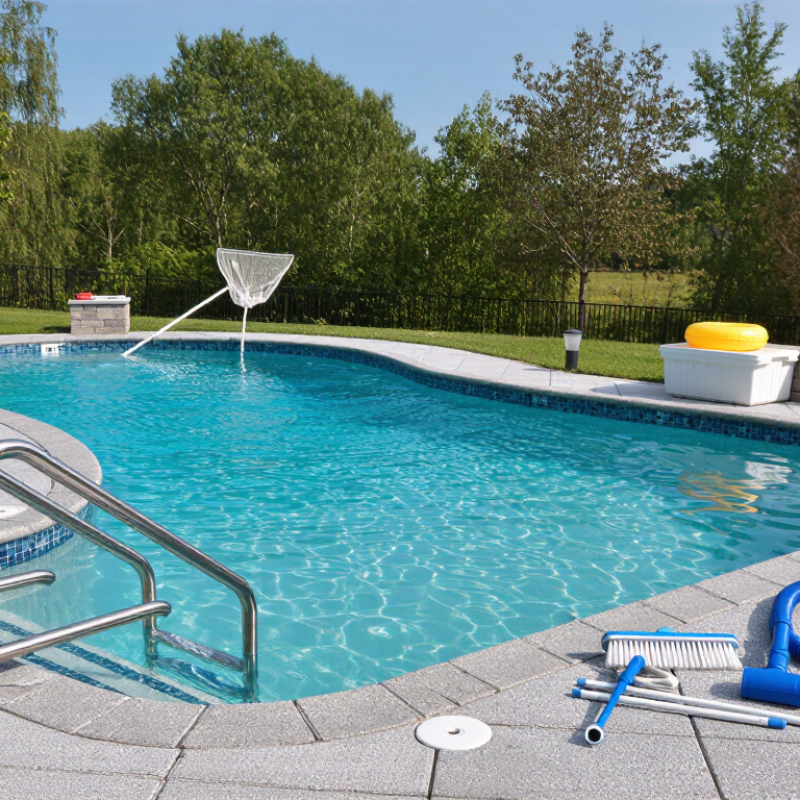
A swimming pool can look complete with water, coping, and a working pump. Yet daily comfort depends on the smaller details around it. Pool Accessories include cleaning tools, covers, ladders, lighting, heaters, storage solutions, and safety equipment. Each item solves a different problem. Some protect swimmers. Others protect the pool itself.
Rudy Stankowitz, a pool-industry educator and water-treatment expert, has said, “The pool is a system, not a single product.” That principle matters when choosing accessories. A telescopic pole may reach a deep corner, but it cannot replace balanced water chemistry. A pool cover can reduce debris and evaporation, but an unsuitable cover may create handling problems. Small choices become practical concerns.
This guide examines which Pool Accessories deserve attention and which ones may be unnecessary for your setting. It considers pool size, construction, climate, usage, maintenance habits, and household needs. A family pool may require secure access equipment and visible depth markers. A compact backyard pool may benefit more from a reliable test kit and a simple vacuum. Commercial facilities need stricter routines and more durable equipment.
Experience also teaches an uncomfortable lesson. The most expensive accessory is not always the best one. Some products look useful until they remain untouched in a storage box. Others fail because owners overlook compatibility, installation, or maintenance. We will question those assumptions carefully. The goal is not a crowded pool area. It is a safer, cleaner, and more manageable swimming environment.
What Pool Accessories Are and How They Improve Pool Use
What Are Pool Accessories and Which Ones Do You Need?
Pool accessories are practical tools that make swimming safer, cleaner, and more comfortable. They include covers, skimmer nets, brushes, thermometers, ladders, and water-testing tools. A sturdy cover limits leaves, sunlight, and accidental access when the pool is unused. A skimmer net removes floating insects before they sink. A pool brush helps loosen dirt along walls and steps. These simple tools reduce cleaning time and support more stable water quality. I have found that small tools matter.
Comfort accessories improve the way people use the pool. A floating thermometer shows whether the water feels suitable for children or older swimmers. Secure steps help users enter and exit without awkward movements. Non-slip surfaces are especially useful around wet pool edges. A shaded area can protect skin during long afternoons. However, more equipment does not always mean better use. Too many floats can block movement and hide swimmers from view. Convenience needs limits.
Filtration equipment and testing supplies support responsible pool care. A clean filter removes suspended particles more effectively. Test strips or liquid kits help check pH and sanitizer levels regularly. Reliable readings depend on correct storage, fresh materials, and careful instructions. Never treat clear water as proof that it is chemically balanced. I once ignored a slightly cloudy appearance, and cleaning became harder later. That mistake changed my routine. Storage bins also keep brushes, nets, and testing supplies dry, organized, and ready for use.
Essential Pool Accessories for Safety, Cleaning, and Maintenance
A pool needs more than water and a filter. The right accessories protect swimmers, surfaces, and equipment. A secure cover reduces debris and helps prevent unsupervised access. Use a properly fitted barrier around the pool, especially where children visit. Keep a reaching pole, approved flotation devices, and a first-aid kit nearby. Flotation toys are not lifesaving equipment. That distinction matters.
A skimmer net removes leaves before they sink and stain the surface. A telescopic pole lets you clean corners without leaning over the water. Brush the walls and floor regularly, then use a pool vacuum for settled dirt. Test strips can check sanitizer, pH, and alkalinity during routine inspections. Record the results, even when they seem normal. I once ignored slightly cloudy water, assuming the filter would correct it. It did not.
A pump timer, pressure gauge, and spare filter basket make maintenance more manageable. Clean the basket before debris restricts water flow. Inspect ladders, handrails, and drain covers for looseness or visible damage each week. Store cleaning chemicals in their original containers, away from heat, children, and incompatible substances. Never mix chemicals. Follow label directions and local safety guidance. Professional water testing is useful when readings remain unstable or irritation continues. Small checks often prevent expensive repairs, although even a careful routine can miss a developing problem.
Comfort and Convenience Accessories for Everyday Swimming
What Are Pool Accessories and Which Ones Do You Need?
Comfort and Convenience Accessories for Everyday Swimming
Pool accessories are not only decorative extras. The right items make daily swimming safer, cleaner, and less tiring. In my experience, a floating storage tray keeps drinks and towels within reach during relaxed sessions. A non-slip poolside mat also helps reduce wet footprints and uncomfortable slips near the water. Small changes matter.
Comfort often begins with better support. Adjustable swimming goggles can reduce eye irritation and improve visibility underwater. A soft, well-fitting swim cap keeps hair controlled and helps swimmers feel less distracted. For children or less confident swimmers, properly sized flotation equipment can provide support, but it should never replace close supervision. A waterproof timer is useful for tracking intervals without checking a phone.
Tips: Choose accessories based on how you actually swim. Measure goggles before buying them. Rinse equipment with fresh water after every use. Store wet items in a ventilated bag, not a sealed corner. I learned this the hard way after a damp towel developed an unpleasant smell. It was avoidable. Also, inspect straps, foam, and suction seals regularly. Even quality equipment can weaken with frequent sunlight and chlorine exposure. A simple maintenance routine usually improves comfort more than buying many unnecessary items.
Optional Pool Accessories for Fun, Exercise, and Customization
Optional pool accessories can turn a basic pool into a flexible space for play, exercise, and relaxation. Floating loungers, waterproof speakers, pool games, and adjustable lighting create different moods without permanent construction. Keep it simple.
The 2024 SFIA Topline Participation Report recorded more than 28 million U.S. swimming participants in 2023. That figure supports demand for practical exercise accessories, such as resistance bands, swim benches, lap lanes, and water dumbbells. These tools can add training variety, but they do not replace professional instruction. A resistance tool that feels light on land may become awkward in moving water.
Customization also depends on the pool’s depth, surface, storage space, and user age. A removable volleyball net suits an active family, while wide-entry steps and handrails improve everyday access. CPSC safety data reported about 379 annual fatal drownings among children under 15 in recent reporting years. Safety covers, alarms, clear depth markers, and reachable rescue equipment deserve priority, even when the goal is fun.
I have seen owners buy attractive accessories that remain unused after one season. That mistake is easy to repeat. Choose items that match actual habits, inspect them regularly, and remove damaged pieces quickly. Pool lighting should be rated for wet environments, while electrical equipment requires proper installation by a qualified professional. Some accessories look harmless but create clutter, blocked sightlines, or unexpected trip risks.
How to Choose the Right Accessories for Your Pool and Budget
What Are Pool Accessories and Which Ones Do You Need?
Pool accessories should solve real problems, not fill a storage box. Start with safety, water care, and daily maintenance. A fitted cover, reaching pole, skimmer net, and clear depth markers are practical choices. The U.S. Consumer Product Safety Commission reported an average of 358 fatal child drownings in pools and spas each year. That figure makes a properly maintained barrier and reliable rescue equipment worth prioritizing.
Budget choices should reflect pool size, use, and local climate. A small residential pool may need a manual vacuum, test strips, a thermometer, and a covered storage container. Larger pools can justify an automatic cleaner or a stronger filtration aid. The U.S. Department of Energy notes that ENERGY STAR certified pool pumps can use up to 65% less energy than standard models. Energy savings may matter more than a decorative float.
Buy replacements before failures become expensive. Keep spare test reagents, seals, and filter media nearby. Saltwater systems still require testing; they do not remove maintenance. I would not choose the cheapest cover without checking its fit, load rating, and warranty terms. That shortcut can become false economy. The CDC’s Model Aquatic Health Code also emphasizes consistent water testing and circulation. My own preference is simple: purchase one accessory, observe its value for a month, then expand carefully.
Cepex is the brand for the fluid handling market belonging to the Fluidra group. One of the leading european manufacturer of valves and fittings in thermoplastic materials.
Dedicated to the swimming pool, irrigation and industrial markets, we distribute our products worldwide with the Fluidra commercial network and presence in 46 countries with 136 sales branches.
Your data will be processed by CEPEX S.A., with address at C. Lluís Companys, 51-53, 08400, Granollers (Barcelona), and C.I.F. nº A-08928707, to send you communications about our products based on your interests. You can consult more information about the processing of your data and how to exercise your rights as described in the Privacy Policy.
Technical cookies are strictly necessary for our website to work and you can navigate through it. These types of cookies are those that, for example, allow us to identify you, give you access to certain restricted parts of the page if necessary, or remember different options or services already selected by you, such as your privacy preferences. Therefore, they are activated by default, your authorization not being necessary in this regard. Through the configuration of your browser, you can block or alert the presence of this type of cookies, although such blocking will affect the proper functioning of the different functionalities of our website.
The analysis cookies allow us to study the navigation of the users of our website in general (for example, which sections of the page are the most visited, which services are used most and if they work correctly, etc.). From the statistical information on navigation on our website, we can improve both the operation of the page itself and the different services it offers. Therefore, these cookies do not have an advertising purpose, but only serve to make our website work better, adapting to our users in general. By activating them you will contribute to this continuous improvement. You can enable or disable these cookies by checking the corresponding box, being disabled by default.
Functionality cookies allow us to remember your preferences, to personalize certain characteristics and general options of our website, every time you access it (for example, the language in which the information is presented to you, the sections marked as favorites, your browser type, etc.) Therefore, this type of cookies does not have an advertising purpose, but by activating them you will improve the functionality of the website (for example, adapting to your type of browser) and the customization of it based on your preferences (for example, by presenting the information in the language that you have chosen in previous occasions), which will contribute to the ease, usability and comfort of our page during your navigation. You can enable or disable these cookies by checking the corresponding box, being disabled by default.
Advertising cookies allow us to manage the advertising spaces included in our website based on criteria such as the content shown or the frequency in which the ads are displayed. For example, if you have been shown the same ad several times on our website, and you have not shown a personal interest by clicking on it, it will not appear again. In summary, by activating this type of cookies, the advertising shown on our website will be more useful and diverse, and less repetitive. You can enable or disable these cookies by checking the corresponding box, being disabled by default.
Behavioral advertising cookies allow us to obtain information based on the observation of your browsing habits and behaviors on the web, in order to show you advertising content that best suits your personal tastes and interests. To understand it in a very simple way, we will give you a fictitious example: if your last searches on the web were related to suspense literature, we would show you advertising about suspense books. Therefore, activating this type of cookies, the advertising that we show you on our website will not be generic, but will be oriented to your searches, tastes and interests, therefore adjusting exclusively to you. You can enable or disable these cookies by checking the corresponding box, being disabled by default. To understand it in a very simple way, we will give you a fictitious example: if your last searches on the web were related to suspense literature, we would show you advertising about suspense books. Therefore, activating this type of cookies, the advertising that we show you on our website will not be generic, but will be oriented to your searches, tastes and interests, therefore adjusting exclusively to you. You can enable or disable these cookies by checking the corresponding box, being disabled by default.
We use our own and third-party cookies to ensure the proper functioning of the website and to analyse our services, improve your experience on our website and show you advertisements related to your interests according to profiling based on your browsing habits (e.g. websites visited). You can accept all cookies by clicking "ACCEPT" or set or reject them by clicking here. If you would like to know more about the use of cookies, please see our COOKIE POLICY.