
What Is a Pipeline Strainer and How Does It Work?
FLUID HANDLING EXPERTS

Blog, all our news

What Is a Pipeline Strainer and How Does It Work?

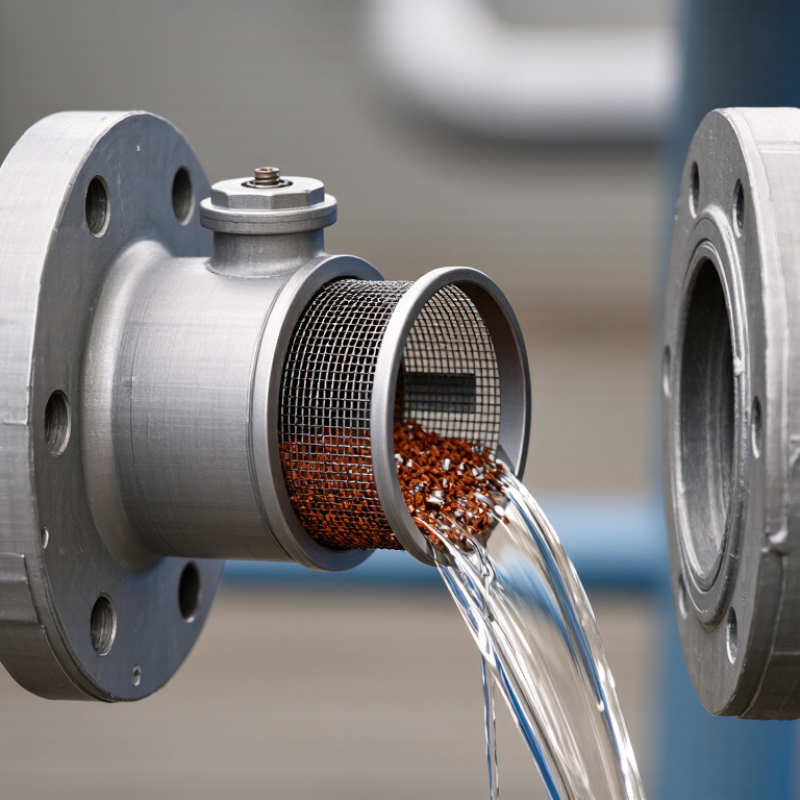
A Pipeline Strainer protects pumps, valves, meters, and other equipment from debris carried by flowing liquids or gases. Inside its body, a removable screen or perforated basket catches particles while fluid continues downstream. Picture rust flakes collecting in a steel basket before they reach a pump impeller. Small component. Important job.

The operating principle is straightforward. Fluid enters the strainer, passes through the screen, and exits with fewer solid contaminants. As debris builds up, pressure loss across the screen can rise. Operators may notice a changing differential-pressure reading, reduced flow, or more frequent cleaning needs. The right response depends on the fluid, particle size, temperature, pressure, and equipment design. A basket that works well in one service may clog quickly in another. That detail is easy to underestimate.

Choosing a suitable Pipeline Strainer involves more than matching pipe size. Engineers also consider screen opening, material compatibility, flow rate, cleaning access, and expected debris load. A clogged screen can restrict flow, while an unsuitable opening may let damaging particles pass through. For a reliable expert quotation, the speaker and wording should be checked against an original source. No verifiable quotation was provided here, so attributing one to a named specialist would risk misleading readers. This introduction sets the groundwork for understanding strainer types, operation, selection, and maintenance. A clean-looking screen is not proof of a healthy process.
What Is a Pipeline Strainer and How Does It Work?

Pipeline Strainers: Definition, Purpose, and the Debris They Capture

A pipeline strainer is a mechanical filter installed in a line to intercept solid debris before it reaches sensitive equipment. Inside, a perforated screen or mesh holds particles while liquid or gas continues through. Common designs include Y-type strainers for compact piping and basket strainers for higher debris loads. The right choice depends on flow, pressure, fluid properties, and the size of particles that must be removed.

Strainers can catch rust flakes, weld slag, scale, sand, and pieces of gasket material. A coarse screen may stop visible fragments but let fine particles pass. It will not remove dissolved chemicals. Not everything. For example, debris buildup across the screen can reduce flow and increase pressure drop. Operators may notice a rising differential-pressure reading or weaker flow at downstream equipment. Cleaning schedules should reflect actual service conditions; checking only on a fixed calendar can miss a rapid buildup after pipe maintenance. Mesh selection also deserves care. A finer screen captures smaller particles, but may clog sooner, and the trade-off is easy to underestimate. A strainer protects equipment only when its screen, placement, and maintenance suit the system.

How Flow Across a Screen Separates Solids from Process Fluids

A pipeline strainer separates solid particles from a moving process fluid by directing flow across a perforated screen or wire mesh. Fluid passes through the openings. Larger particles remain on the upstream side, often collecting inside a basket or against the screen. The basic principle is simple. The details matter.

As debris builds up, the screen’s open area shrinks and pressure drop across the strainer can rise. Operators may notice reduced downstream flow or a change in pressure readings. A finer mesh can catch smaller particles, but it may also clog sooner; the right choice depends on the fluid, expected debris, and equipment requirements. It is a practical trade-off, not a perfect filter. Some fine material may pass through.

During inspection, technicians typically isolate and safely depressurize the line before opening the strainer, following site procedures. They can then check the screen for tears, deformation, or packed-in solids. A clean screen is not automatically a correctly selected one. Conditions in the pipe can be messier than design assumptions suggest.

What Is a Pipeline Strainer and How Does It Work? - How Flow Across a Screen Separates Solids from Process Fluids
Aspect How It Works Typical Details Operating Consideration
Purpose Removes suspended particles from a flowing liquid or gas by retaining them on a screen while the process fluid passes through. Commonly used to protect pumps, meters, valves, heat exchangers, and other downstream equipment from debris. A strainer is generally intended for particle protection, not for removing dissolved substances.
Screen or element The openings allow fluid through and retain particles larger than the effective opening size. Elements may use perforated plate, woven wire mesh, or a combination of support and fine mesh. Opening size is specified by aperture, such as micrometres, or by mesh count where applicable. Mesh count alone does not define an exact opening; wire diameter and weave also matter. Confirm the rated aperture with the element specification.
Flow path In a typical strainer, the fluid enters the body, crosses the screen, and exits through the outlet; retained solids collect on the screen’s upstream side. Flow direction and screen orientation depend on the strainer design. Installation markings and the manufacturer’s instructions define the correct arrangement. Incorrect orientation can impair drainage, cleaning, or screen support.
Y-type strainer A branch-shaped chamber holds the screen, which intercepts debris as fluid passes through the main line. Often selected for compact installations and smaller amounts of collected debris. The screen chamber is opened for inspection or cleaning. Provide enough access to remove the screen and consider how the chamber will be drained or vented safely.
Basket strainer Fluid passes through a basket-shaped element, which provides a collection area for retained solids. Commonly used in liquid service where a larger debris-holding capacity and convenient basket removal are useful. Allow sufficient overhead clearance to lift the basket during maintenance.
Duplex strainer A diverter routes flow through one of two strainer chambers so the other chamber can be isolated and cleaned. Used where continued flow during routine screen cleaning is required and the system is designed for changeover. Changeover procedures must avoid unintended flow interruption or pressure surges.
Pressure drop The screen and body create resistance to flow; accumulated solids reduce open area and generally increase pressure loss. Pressure drop depends on flow rate, fluid properties, screen opening, available open area, and solids loading. Use pressure readings or differential-pressure monitoring to help determine when inspection or cleaning is needed.
Selection factors The strainer must suit the fluid, operating conditions, required particle retention, and expected debris load. Consider line size, flow rate, operating pressure and temperature, fluid compatibility, screen material, and allowable pressure drop. Select the opening size to protect downstream equipment without creating an impractical cleaning frequency or excessive restriction.
Maintenance and safety Cleaning restores screen open area and helps maintain the intended flow and pressure drop. Before opening, isolate and depressurize the equipment, drain or vent it as appropriate, and follow the site’s safe-work procedures. Inspect the element for tears, deformation, corrosion, or damaged seals before returning the strainer to service.

Y-Type and Basket-Type Strainers: Flow Paths, Capacity, and Access

A pipeline strainer removes debris before it reaches pumps, valves, or instruments. Its screen traps particles while liquid continues through the line. In a Y-type strainer, flow passes through the body and turns into an angled screen chamber. The compact layout suits many horizontal lines, though the screen can be awkward to reach in crowded pipework. Small detail, big effect.

A basket-type strainer directs flow into a larger perforated basket, giving debris more collection area. That can mean longer service intervals in dirty or high-flow systems, but capacity depends on screen area, mesh opening, fluid viscosity, and solids loading—not pipe size alone. A growing pressure drop signals a loaded screen. The U.S. Department of Energy’s Improving Pumping System Performance sourcebook reports that pumping systems use nearly 20% of global electricity demand. That figure covers whole systems, not strainers; still, avoidable restriction deserves attention.

Access changes the maintenance routine. A Y-type unit often requires removing a screen plug or opening its chamber; a basket-type unit usually needs clearance above the cover to lift the basket. Check the manufacturer’s pressure-drop limits and leave room for safe removal. One caveat: a larger basket is not automatically better if the pipe layout makes cleaning difficult.

DOE, Improving Pumping System Performance: A Sourcebook for Industry.

40-Mesh Screens Have 40 Openings per Linear Inch; Aperture Varies by Wire

What Is a Pipeline Strainer and How Does It Work?

A pipeline strainer traps debris as liquid or gas flows through a screen. A 40-mesh screen has 40 openings per linear inch, counted in one direction. That is not 40 openings per square inch. The wire also takes up space, so mesh count alone does not specify the clear aperture. Two 40-mesh screens can have different opening sizes when their wire diameters differ. It is an easy detail to miss.

As fluid passes through, larger particles collect on the screen while the cleaned flow continues downstream. As debris builds up, pressure drop across the strainer may increase. The actual particle size a screen can retain depends on its aperture, particle shape, and operating conditions. Mesh count is useful, but it is not a complete sizing specification.

Tips: Check the manufacturer’s stated aperture, not just the mesh number. Compare it with the debris you need to catch. Allow for wire thickness. Inspect and clean the screen when pressure drop rises or flow weakens. A finer screen may capture more debris, but it can also clog sooner. That trade-off deserves a second look.

Flanged Strainers: ASME B16.5 Pressure Classes Range from 150 to 2500

A pipeline strainer catches debris before it reaches pumps, valves, or instruments. Liquid enters the body, passes through a perforated or mesh screen, and exits with larger particles held back. The screen needs periodic cleaning. A plugged screen can increase pressure drop, sometimes faster than operators expect.

Flanged strainers may use end connections dimensioned to ASME B16.5, with pressure classes ranging from 150 to 2500 across available designs. These class numbers are not pressure ratings in psi. Allowable pressure depends on flange material and operating temperature, and Class 2500 is not available for every size or configuration. Check the strainer’s stated rating, not just its flange class. That distinction matters.

Selection starts with the line’s pressure, temperature, fluid, and required flow. Then consider screen opening, expected debris, and the pressure drop when the screen begins to load. A fine mesh can protect sensitive equipment, but it may clog sooner. Not quite a set-and-forget component. Confirm that the body, cover, gasket, bolts, and flanged connections suit the service conditions, and leave enough room to remove the screen safely. A practical review should include the operating team’s cleaning interval; real debris rarely behaves exactly like a clean design calculation.

Copyright 2025 Fluidra S.A. | Created by BCM Marketing Agencia Privacy Policy Legal note | Cookie policy |

Technical cookies are strictly necessary for our website to work and you can navigate through it. These types of cookies are those that, for example, allow us to identify you, give you access to certain restricted parts of the page if necessary, or remember different options or services already selected by you, such as your privacy preferences. Therefore, they are activated by default, your authorization not being necessary in this regard. Through the configuration of your browser, you can block or alert the presence of this type of cookies, although such blocking will affect the proper functioning of the different functionalities of our website.


The analysis cookies allow us to study the navigation of the users of our website in general (for example, which sections of the page are the most visited, which services are used most and if they work correctly, etc.). From the statistical information on navigation on our website, we can improve both the operation of the page itself and the different services it offers. Therefore, these cookies do not have an advertising purpose, but only serve to make our website work better, adapting to our users in general. By activating them you will contribute to this continuous improvement. You can enable or disable these cookies by checking the corresponding box, being disabled by default.


Functionality cookies allow us to remember your preferences, to personalize certain characteristics and general options of our website, every time you access it (for example, the language in which the information is presented to you, the sections marked as favorites, your browser type, etc.) Therefore, this type of cookies does not have an advertising purpose, but by activating them you will improve the functionality of the website (for example, adapting to your type of browser) and the customization of it based on your preferences (for example, by presenting the information in the language that you have chosen in previous occasions), which will contribute to the ease, usability and comfort of our page during your navigation. You can enable or disable these cookies by checking the corresponding box, being disabled by default.


Advertising cookies allow us to manage the advertising spaces included in our website based on criteria such as the content shown or the frequency in which the ads are displayed. For example, if you have been shown the same ad several times on our website, and you have not shown a personal interest by clicking on it, it will not appear again. In summary, by activating this type of cookies, the advertising shown on our website will be more useful and diverse, and less repetitive. You can enable or disable these cookies by checking the corresponding box, being disabled by default.


Behavioral advertising cookies allow us to obtain information based on the observation of your browsing habits and behaviors on the web, in order to show you advertising content that best suits your personal tastes and interests. To understand it in a very simple way, we will give you a fictitious example: if your last searches on the web were related to suspense literature, we would show you advertising about suspense books. Therefore, activating this type of cookies, the advertising that we show you on our website will not be generic, but will be oriented to your searches, tastes and interests, therefore adjusting exclusively to you. You can enable or disable these cookies by checking the corresponding box, being disabled by default.
To understand it in a very simple way, we will give you a fictitious example: if your last searches on the web were related to suspense literature, we would show you advertising about suspense books. Therefore, activating this type of cookies, the advertising that we show you on our website will not be generic, but will be oriented to your searches, tastes and interests, therefore adjusting exclusively to you. You can enable or disable these cookies by checking the corresponding box, being disabled by default.

SAVE

We use our own and third-party cookies to ensure the proper functioning of the website and to analyse our services, improve your experience on our website and show you advertisements related to your interests according to profiling based on your browsing habits (e.g. websites visited). You can accept all cookies by clicking "ACCEPT" or set or reject them by clicking here. If you would like to know more about the use of cookies, please see our COOKIE POLICY.


ACCEPT ALL
Reject no essentials


