
Top 10 Parcel Strapping Kits for Shipping and Packaging
FLUID HANDLING EXPERTS

Blog, all our news

Top 10 Parcel Strapping Kits for Shipping and Packaging

A Parcel Strapping Kit can look simple on a workbench: a coil of strap, a tensioner, seals, and a cutter. Yet each component affects how securely a parcel stays closed through sorting, loading, and delivery. The scale matters. Pitney Bowes’ 2023 Parcel Shipping Index reported 161 billion parcels shipped worldwide in 2022 and projected 256 billion by 2027. More parcels mean more opportunities for weak closures, damaged corners, and avoidable rework.

Packaging educator Walter Soroka describes packaging as “the science, art, and technology of enclosing or protecting products for distribution, storage, sale, and use.” That definition helps explain why choosing a strapping kit is not just a price comparison. Strap material, width, tension control, seal compatibility, and operator comfort all matter. A tight band can still be the wrong choice if it crushes a light carton or loosens during handling. Small details count.

This guide compares ten parcel strapping kits for shipping and packaging, focusing on practical features, suitable workloads, and ease of use. It draws on product specifications and established packaging principles, rather than treating one kit as best for every business. Some listings may not disclose enough testing detail; that deserves caution. Before buying, match the kit to parcel weight, carton shape, daily volume, and the space available at the packing bench. A careful fit beats a flashy specification.
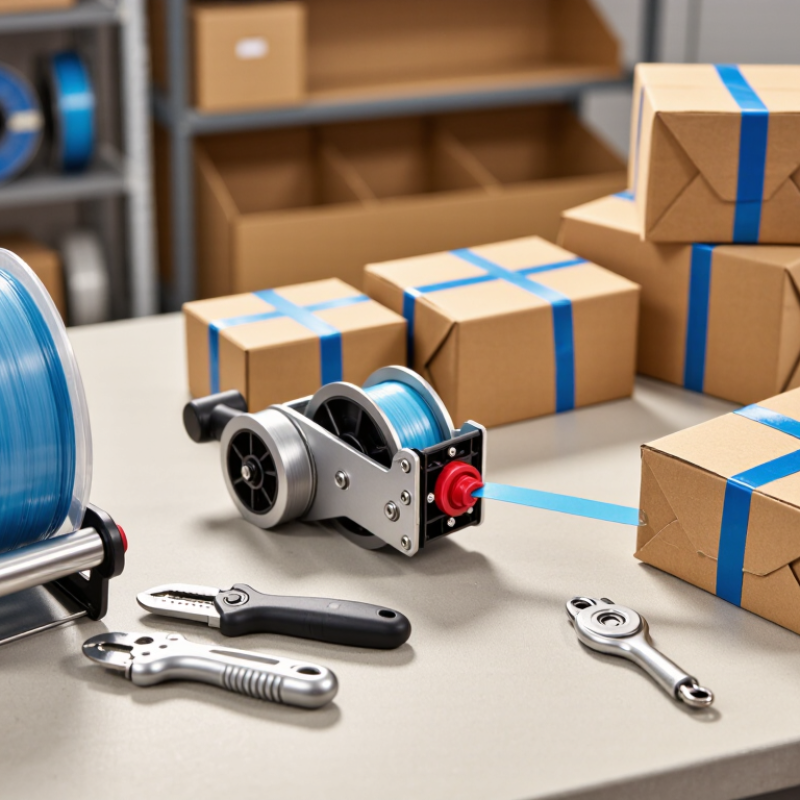
Top 10 Parcel Strapping Kits for Shipping and Packaging

Understanding Parcel Strapping Kits and Their Main Components

A parcel strapping kit brings together the tools and materials used to secure cartons, bundles, or small pallet loads. The strap holds the package together; a tensioner pulls it snug, while a sealer or buckle locks the joint. Some kits use plastic seals, and others rely on metal buckles. Check that the parts match the strap’s width and material. A mismatch can leave a loose joint or damage the strap.

For a typical kit, inspect the strap roll, dispenser, tensioning tool, and fastening pieces before packing. A dispenser keeps loose coils from springing across the floor. The tensioner should fit comfortably in the hand and move without sticking. Small details matter. On a carton of books, for example, place the strap around the box without crushing its corners, then secure the joint and trim excess material. Pull firmly, not blindly; too much tension may dent the carton. I’ve found that first-time users often overlook strap routing, and even experienced packers can rush it. That is worth checking again. Choose kit components for the package’s size, weight, and surface, and test the setup on a sample carton before a busy packing run.

How Parcel Strapping Kits Secure Packages for Shipping

Top 10 Parcel Strapping Kits for Shipping and Packaging

Parcel strapping kits help keep cartons closed and grouped during shipping. Most include strap, a tensioning tool, and buckles or seals. Tightening the strap creates a firm hold around the package, reducing movement when boxes are lifted or stacked. A secure band can also help keep loose flaps from catching during handling. It cannot fix a weak carton, though.

Tips: Choose a strap width and strength suited to the parcel’s weight. Center the band and keep it flat. Check the corners. Use edge protectors for crush-prone boxes, and pull the strap snug without denting the cardboard. Test the package with a gentle lift before dispatch.

The best result comes from matching the kit to the job, not simply pulling harder. For a small box, one well-positioned band may be enough; a heavier bundle may need two bands crossing at right angles. Inspect the closure and strap for slipping or damage. Even careful packing can miss something, so check the finished parcel again before it leaves.

Key Criteria for Comparing Parcel Strapping Kits

Comparing parcel strapping kits starts with the package, not the tool. Record the parcel’s weight, dimensions, and shape, then match strap width and material to the load. Polypropylene strapping suits many lighter cartons; polyester may be a better fit for heavier or more demanding loads. Check the manufacturer’s stated breaking strength and working limits rather than judging by strap thickness alone. Small details matter. A dispenser should feed the chosen coil smoothly, while the tensioner and sealer must fit the strap width and closure method. Test the complete setup on a packed carton: uneven tension can crush corners, and loose strapping can shift during handling.

Also compare refill availability, seal type, tool weight, and how often staff will use the kit. A manual kit may work well for occasional parcels, but repetitive packing can make tool comfort and cycle time more important. The U.S. Environmental Protection Agency’s 2018 Advancing Sustainable Materials Management report estimated that containers and packaging made up 82.2 million tons, or 28.1%, of U.S. municipal solid waste. That figure covers many packaging types, not strapping alone, but it reinforces the value of avoiding excess material. In practice, the lightest kit is not always the cheapest choice; a poor strap match can mean damaged cartons, rework, and wasted supplies. Be honest about the trade-off: no single kit suits every parcel size or workflow.

Top 10 Parcel Strapping Kits for Shipping and Packaging — Key Criteria for Comparing Parcel Strapping Kits

Configuration Typical Strap Material and Width Indicative Strap Break Strength Typical Package Use Joining Method Common Kit Components Key Advantage Important Limitation
1. Light-duty hand-buckle kit Polypropylene (PP), about 9 mm Approximately 100–250 lb (45–113 kg) Small cartons and light parcels, commonly under about 25 lb (11 kg) Reusable or single-use plastic buckles; strap is tensioned by hand PP strap coil, plastic buckles, cutter, and dispenser or carry box Low-cost and simple to use without a powered tool Hand tensioning is slower and less consistent than tool-assisted strapping
2. General-purpose hand-buckle kit PP, about 12 mm Approximately 250–400 lb (113–181 kg) Everyday cartons and bundled parcels, commonly about 20–60 lb (9–27 kg) Plastic buckles or metal seals, depending on the kit Strap coil, buckles or seals, cutter, and manual tensioner Versatile width for routine parcel packing Actual joint strength depends on buckle or seal type and correct threading
3. Heavy-duty PP manual kit PP, about 15 mm Approximately 400–600 lb (181–272 kg) Large cartons and heavier bundled parcels, commonly about 40–100 lb (18–45 kg) Metal seals applied with a compatible sealer, or compatible buckles Wider PP strap, tensioner, sealer where required, cutter, and dispenser Wider strap can provide more capacity than light-duty PP configurations PP can lose tension over time and is not a substitute for a rated load-restraint system
4. Light-to-medium PET hand-tool kit Polyester (PET), about 12 mm Approximately 600–900 lb (272–408 kg) Heavier cartons and compact loads where lower strap stretch is useful Metal seal or friction-weld joint, depending on the tool PET strap coil, manual tensioner, compatible sealer, and cutter PET generally retains tension better than PP and has good resistance to weathering Tools and seals must match the strap width and thickness
5. Medium-duty PET kit PET, about 16 mm Approximately 900–1,400 lb (408–635 kg) Heavy cartons, grouped parcels, and palletized shipments Metal seal or friction-weld joint 16 mm PET coil, high-leverage tensioner, sealer or combination tool, and dispenser Higher-strength option with less risk of sharp edges than steel strapping Requires more tool effort than narrow, light-duty strap
6. Corded polyester hand kit Corded polyester, commonly about 13–19 mm Varies by grade and construction; often specified by the supplier rather than by width alone Irregular, bulky, or heavier packages and bundles Friction buckle or wire buckle Corded strap coil, compatible buckles, tensioner, and cutter Flexible strap conforms well to uneven surfaces and is easy to handle Strength varies substantially by cord construction; check the rated system strength
7. Woven polyester buckle kit Woven polyester, commonly about 16–19 mm Varies by grade and construction; confirm the manufacturer’s rated strap strength Heavy or irregular bundles that need a flexible, non-metal strapping option Metal or high-strength polymer buckle Woven strap, compatible buckle, tensioner, cutter, and portable dispenser Flexible and comparatively gentle on many package surfaces Buckle selection and correct threading strongly affect joint performance
8. Steel-strapping manual kit Steel, commonly about 12.7 mm wide; thickness varies Highly grade- and thickness-dependent; roughly 1,500–2,500 lb (680–1,134 kg) for some common configurations Very heavy or rigid loads, generally beyond routine parcel-carton use Metal seal applied with a compatible sealer Steel coil, tensioner, sealer, cutter, and protective handling equipment High strength and low stretch for demanding applications Sharp edges, recoil hazards, and corrosion risk require careful handling and training
9. Semi-automatic PP kit PP, commonly about 9–15 mm Depends on strap grade and width; use the strap supplier’s specification Repeated carton strapping at a packing station Heat-sealed or friction-welded joint, depending on the machine Semi-automatic strapping machine, compatible strap coil, and spare wear parts Improves speed and consistency for regular packing volumes Requires power, a fixed work area, maintenance, and machine-compatible strap
10. Battery-powered PET combination-tool kit PET, commonly about 12–16 mm Depends on strap grade, width, and tool settings; verify the rated specification High-volume packing or palletized parcels where portability and repeatable tension are important Tool-generated friction weld; some systems use seals Battery tensioning and sealing tool, charger, battery, PET strap, and cutter if not integrated Portable operation with faster, more repeatable cycles than manual tensioning Higher initial cost; battery, tool, strap width, and strap thickness must be compatible

Comparison note: Break-strength figures are indicative ranges for common strap configurations, not guaranteed working-load limits. Strength varies with material grade, strap dimensions, joint type, and test method. Select a complete strapping system based on the supplier’s specifications and the shipment’s actual requirements.

Top 10 Parcel Strapping Kits for Shipping and Packaging

The best parcel strapping kit depends on parcel weight, strap material, and how often you pack. A small online shop may need a simple hand tool, while a busy dispatch bench benefits from a dispenser and spare seals. Check the strap width and core size before buying. A mismatch can turn a useful kit into awkward shelf clutter.

A practical shortlist covers ten setups: a light-duty polypropylene kit, a refill-and-seal bundle, a hand tensioner-and-cutter set, a buckle kit, a polyester kit, a steel-strap kit, a tabletop dispenser set, a portable dispenser kit, a mixed-width starter kit, and a high-volume bench kit. Polypropylene suits many light cartons. Polyester offers better tension retention for heavier loads. Steel is rigid and can be unforgiving around delicate packaging. Buckles allow simple manual fastening, but may not suit every shipment.

Look for comfortable handles, replaceable blades, clear instructions, and tensioning tools that match the strap. Test the kit on a sample carton before packing a full order. Keep strap edges flat and away from exposed product surfaces. Small details matter. I would not assume the biggest kit is the best value; spare parts can sit unused, and a basic cutter may feel slow during a rush. Compare the expected workload with the tools included, then choose a setup your team can use consistently.

How to Choose a Kit for Different Packaging Needs

Choosing a parcel strapping kit starts with the cartons you actually ship. Measure their size and note their weight, surface, and usual contents. A narrow strap may suit small, light boxes, while heavier loads often need wider, stronger strapping. Polypropylene is commonly used for lighter parcels; polyester can provide more strength and tension for demanding shipments. Check that the kit’s strap width matches its tensioner, cutter, and sealing method.

Consider how many parcels you prepare each day. A manual tensioner and seals may be practical for occasional packing, while frequent packing can justify a kit with a faster, more comfortable workflow. Check the handle grip, cutting effort, and whether the kit includes enough seals for a normal shift. Fit matters. A tool that feels awkward after five boxes may slow a busy bench. Before buying, test the strap on a typical carton: it should feel secure without denting the corners or bowing the panels. One easy mistake is choosing for the heaviest parcel alone; the kit may then feel cumbersome for everyday work. Recheck your choice when carton sizes or shipment volumes change.

Top 10 Parcel Strapping Kit Setups: Typical Strap Widths

Compare representative strap-width ranges for common packaging needs. Use this guide to narrow your kit choice, then check the strap, tensioner, sealer, and buckle specifications against your package and load.

Ranges are representative sizes commonly available, not load ratings or universal standards. The right kit also depends on package weight, shape, handling conditions, and tool compatibility.

Copyright 2025 Fluidra S.A. | Created by BCM Marketing Agencia Privacy Policy Legal note | Cookie policy |

Technical cookies are strictly necessary for our website to work and you can navigate through it. These types of cookies are those that, for example, allow us to identify you, give you access to certain restricted parts of the page if necessary, or remember different options or services already selected by you, such as your privacy preferences. Therefore, they are activated by default, your authorization not being necessary in this regard. Through the configuration of your browser, you can block or alert the presence of this type of cookies, although such blocking will affect the proper functioning of the different functionalities of our website.


The analysis cookies allow us to study the navigation of the users of our website in general (for example, which sections of the page are the most visited, which services are used most and if they work correctly, etc.). From the statistical information on navigation on our website, we can improve both the operation of the page itself and the different services it offers. Therefore, these cookies do not have an advertising purpose, but only serve to make our website work better, adapting to our users in general. By activating them you will contribute to this continuous improvement. You can enable or disable these cookies by checking the corresponding box, being disabled by default.


Functionality cookies allow us to remember your preferences, to personalize certain characteristics and general options of our website, every time you access it (for example, the language in which the information is presented to you, the sections marked as favorites, your browser type, etc.) Therefore, this type of cookies does not have an advertising purpose, but by activating them you will improve the functionality of the website (for example, adapting to your type of browser) and the customization of it based on your preferences (for example, by presenting the information in the language that you have chosen in previous occasions), which will contribute to the ease, usability and comfort of our page during your navigation. You can enable or disable these cookies by checking the corresponding box, being disabled by default.


Advertising cookies allow us to manage the advertising spaces included in our website based on criteria such as the content shown or the frequency in which the ads are displayed. For example, if you have been shown the same ad several times on our website, and you have not shown a personal interest by clicking on it, it will not appear again. In summary, by activating this type of cookies, the advertising shown on our website will be more useful and diverse, and less repetitive. You can enable or disable these cookies by checking the corresponding box, being disabled by default.


Behavioral advertising cookies allow us to obtain information based on the observation of your browsing habits and behaviors on the web, in order to show you advertising content that best suits your personal tastes and interests. To understand it in a very simple way, we will give you a fictitious example: if your last searches on the web were related to suspense literature, we would show you advertising about suspense books. Therefore, activating this type of cookies, the advertising that we show you on our website will not be generic, but will be oriented to your searches, tastes and interests, therefore adjusting exclusively to you. You can enable or disable these cookies by checking the corresponding box, being disabled by default.
To understand it in a very simple way, we will give you a fictitious example: if your last searches on the web were related to suspense literature, we would show you advertising about suspense books. Therefore, activating this type of cookies, the advertising that we show you on our website will not be generic, but will be oriented to your searches, tastes and interests, therefore adjusting exclusively to you. You can enable or disable these cookies by checking the corresponding box, being disabled by default.

SAVE

We use our own and third-party cookies to ensure the proper functioning of the website and to analyse our services, improve your experience on our website and show you advertisements related to your interests according to profiling based on your browsing habits (e.g. websites visited). You can accept all cookies by clicking "ACCEPT" or set or reject them by clicking here. If you would like to know more about the use of cookies, please see our COOKIE POLICY.


ACCEPT ALL
Reject no essentials


