
Masterbatch Filler Tips for Optimal Performance in Manufacturing?
FLUID HANDLING EXPERTS

Blog, all our news

Masterbatch Filler Tips for Optimal Performance in Manufacturing?

In the manufacturing industry, the efficient use of Masterbatch Fillers is essential for product performance. A recent study indicates that using the right filler can reduce material costs by up to 20%. Companies are focusing on optimizing filler content to improve mechanical properties and processing efficiency. Understanding how to effectively integrate Masterbatch Fillers is crucial for achieving desired outcomes.

Many manufacturers overlook the significance of filler selection. Not all fillers are suitable for every application, leading to potential quality issues. For instance, the wrong type can result in compromised strength or flexibility. According to industry experts, using fillers that align with polymer matrices enhances the overall quality of composites.

Challenges persist in achieving optimal performance with Masterbatch Fillers. Some companies may not fully exploit their potential benefits, leading to inconsistencies. Evaluating the interplay between fillers and other components is a complex task. Manufacturers should prioritize research and testing to identify best practices for using Masterbatch Fillers. This focused approach can unlock significant advancements in manufacturing efficiency and product quality.
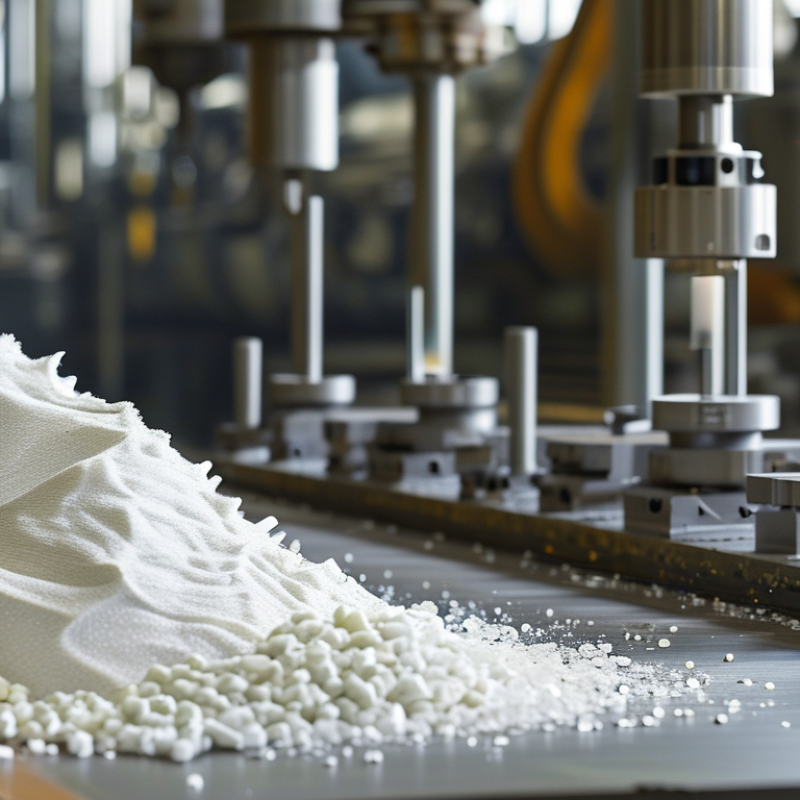
Masterbatch Filler Tips for Optimal Performance in Manufacturing?

Understanding Masterbatch Fillers and Their Role in Manufacturing

Masterbatch fillers play a crucial role in manufacturing processes. They enhance the properties of polymers, leading to improved performance and cost efficiency. According to industry reports, masterbatch fillers can reduce production costs by up to 30%. These fillers are often composed of materials like calcium carbonate, talc, or clay, which provide better stiffness and opacity.

Understanding the impact of different fillers is vital. For example, while using talc can increase strength, it may compromise flexibility. This trade-off requires careful consideration. In some applications, overfilling can lead to poor dispersion and uneven quality. Reports indicate that many manufacturers struggle with optimizing filler concentrations, sometimes leading to losses in process efficiency.

Manufacturers must also acknowledge the evolving regulations on additives and fillers. Compliance is non-negotiable. Staying informed about these standards can avoid costly penalties. As markets shift, mastering the art of fill ratios and material compatibility is essential for sustained success in the competitive landscape.

Types of Masterbatch Fillers and Their Applications in Industry

Masterbatch fillers play a crucial role in various manufacturing processes. They enhance performance and cost-effectiveness, making them essential in the plastics industry. Common types of masterbatch fillers include calcium carbonate, talc, and clay. Each filler has unique properties that cater to different applications.

Calcium carbonate is widely used due to its low cost and availability. It can improve the mechanical properties of plastics. However, overloading with calcium carbonate may weaken versatility.

Talc is another popular option, known for its strength and rigidity, especially in automotive components. It offers good processing stability, but excessive use can lead to challenges in compatibility with certain polymers.

Additionally, clay fillers are used to enhance barrier properties in packaging. According to recent industry reports, incorporating fillers can reduce production costs by 20% without sacrificing quality. However, careful consideration is needed when selecting fillers to ensure they provide the desired performance. Balancing filler type and concentration is key to optimal results.

Key Factors Influencing Masterbatch Filler Performance

When considering masterbatch fillers, several key factors influence their performance in manufacturing. The particle size of additives plays a crucial role. Smaller particles typically disperse better, enhancing the uniformity in the final product. However, if the particles are too fine, they may agglomerate, leading to inconsistencies. Careful balance is essential for achieving optimal performance.

Another important factor is the compatibility of fillers with polymers. Different materials interact uniquely. For example, a filler that works well with one type of polymer may not suit another. This mismatch can lead to weak mechanical properties or discoloration in the final product. Therefore, understanding the chemical nature of the fillers and the base polymer is vital.

Formulation also needs a thoughtful approach. It's not just about adding more fillers to improve properties. Excessive filler use can weaken the product or alter its physical characteristics undesirably. Continuous testing and adjustments are necessary. Manufacturers should always observe how different concentrations affect performance. This ongoing process can reveal valuable insights, leading to continuous improvement and innovation in product design.

Best Practices for Selecting the Right Masterbatch Filler

When selecting the right masterbatch filler, it's crucial to consider various factors that affect manufacturing performance. Masterbatch fillers can enhance mechanical properties, reduce costs, and improve processing efficiency. According to a recent industry report by MarketsandMarkets, the global masterbatch market is expected to reach $16.2 billion by 2025, highlighting the importance of selecting the right materials.

One key aspect to consider is the compatibility of the filler with the base resin. For instance, using a calcium carbonate filler may not yield optimal results when paired with polyethylene. A study from Smithers Pira indicates that improper filler selection can lead to a 20% decrease in tensile strength. Choosing additives that align with specific resin types can mitigate risks and enhance performance.

Additionally, evaluating the particle size and distribution of fillers is important. Finer particles may provide better dispersion, but can also lead to processing challenges. A balance is necessary; overly fine fillers can cause issues with flow properties. In practice, manufacturers often overlook the long-term effects of filler choice. Regular testing and adjustments based on production feedback are essential for achieving desired results in the final product.

Optimizing Manufacturing Processes with Masterbatch Fillers

Masterbatch fillers are pivotal in enhancing efficiency and quality during the manufacturing process. They improve the performance of raw materials and reduce costs. According to a report by MarketsandMarkets, the masterbatch market is projected to reach USD 18.86 billion by 2025, highlighting a growing trend in optimization strategies among manufacturers.

To maximize the benefits of masterbatch fillers, understanding their properties is crucial. For instance, choosing the right type of filler can significantly affect the final product's quality. One tip is to conduct trials with different filler formulations in small batches first. This minimizes waste and allows for adjustments before scaling up production. Moreover, ensuring uniform dispersion of fillers in the polymer matrix can enhance product consistency.

Consider the typical processing temperatures while selecting fillers. Adjusting the machine settings for specific fillers can lead to better outcomes. Another tip is to engage with suppliers who provide technical support during the production process. Their expertise can help identify potential issues early on. Pay attention to the consistency of your masterbatch, as variations can impact your final product unexpectedly. Small deviations can lead to significant quality concerns, making close monitoring essential.

Masterbatch Filler Performance in Manufacturing

Copyright 2025 Fluidra S.A. | Created by BCM Marketing Agencia Privacy Policy Legal note | Cookie policy |

Technical cookies are strictly necessary for our website to work and you can navigate through it. These types of cookies are those that, for example, allow us to identify you, give you access to certain restricted parts of the page if necessary, or remember different options or services already selected by you, such as your privacy preferences. Therefore, they are activated by default, your authorization not being necessary in this regard. Through the configuration of your browser, you can block or alert the presence of this type of cookies, although such blocking will affect the proper functioning of the different functionalities of our website.


The analysis cookies allow us to study the navigation of the users of our website in general (for example, which sections of the page are the most visited, which services are used most and if they work correctly, etc.). From the statistical information on navigation on our website, we can improve both the operation of the page itself and the different services it offers. Therefore, these cookies do not have an advertising purpose, but only serve to make our website work better, adapting to our users in general. By activating them you will contribute to this continuous improvement. You can enable or disable these cookies by checking the corresponding box, being disabled by default.


Functionality cookies allow us to remember your preferences, to personalize certain characteristics and general options of our website, every time you access it (for example, the language in which the information is presented to you, the sections marked as favorites, your browser type, etc.) Therefore, this type of cookies does not have an advertising purpose, but by activating them you will improve the functionality of the website (for example, adapting to your type of browser) and the customization of it based on your preferences (for example, by presenting the information in the language that you have chosen in previous occasions), which will contribute to the ease, usability and comfort of our page during your navigation. You can enable or disable these cookies by checking the corresponding box, being disabled by default.


Advertising cookies allow us to manage the advertising spaces included in our website based on criteria such as the content shown or the frequency in which the ads are displayed. For example, if you have been shown the same ad several times on our website, and you have not shown a personal interest by clicking on it, it will not appear again. In summary, by activating this type of cookies, the advertising shown on our website will be more useful and diverse, and less repetitive. You can enable or disable these cookies by checking the corresponding box, being disabled by default.


Behavioral advertising cookies allow us to obtain information based on the observation of your browsing habits and behaviors on the web, in order to show you advertising content that best suits your personal tastes and interests. To understand it in a very simple way, we will give you a fictitious example: if your last searches on the web were related to suspense literature, we would show you advertising about suspense books. Therefore, activating this type of cookies, the advertising that we show you on our website will not be generic, but will be oriented to your searches, tastes and interests, therefore adjusting exclusively to you. You can enable or disable these cookies by checking the corresponding box, being disabled by default.
To understand it in a very simple way, we will give you a fictitious example: if your last searches on the web were related to suspense literature, we would show you advertising about suspense books. Therefore, activating this type of cookies, the advertising that we show you on our website will not be generic, but will be oriented to your searches, tastes and interests, therefore adjusting exclusively to you. You can enable or disable these cookies by checking the corresponding box, being disabled by default.

SAVE

We use our own and third-party cookies to ensure the proper functioning of the website and to analyse our services, improve your experience on our website and show you advertisements related to your interests according to profiling based on your browsing habits (e.g. websites visited). You can accept all cookies by clicking "ACCEPT" or set or reject them by clicking here. If you would like to know more about the use of cookies, please see our COOKIE POLICY.


ACCEPT ALL
Reject no essentials


