
2026 How to Master Stainless Steel Tube Fabrication Techniques?
FLUID HANDLING EXPERTS

Blog, all our news

2026 How to Master Stainless Steel Tube Fabrication Techniques?

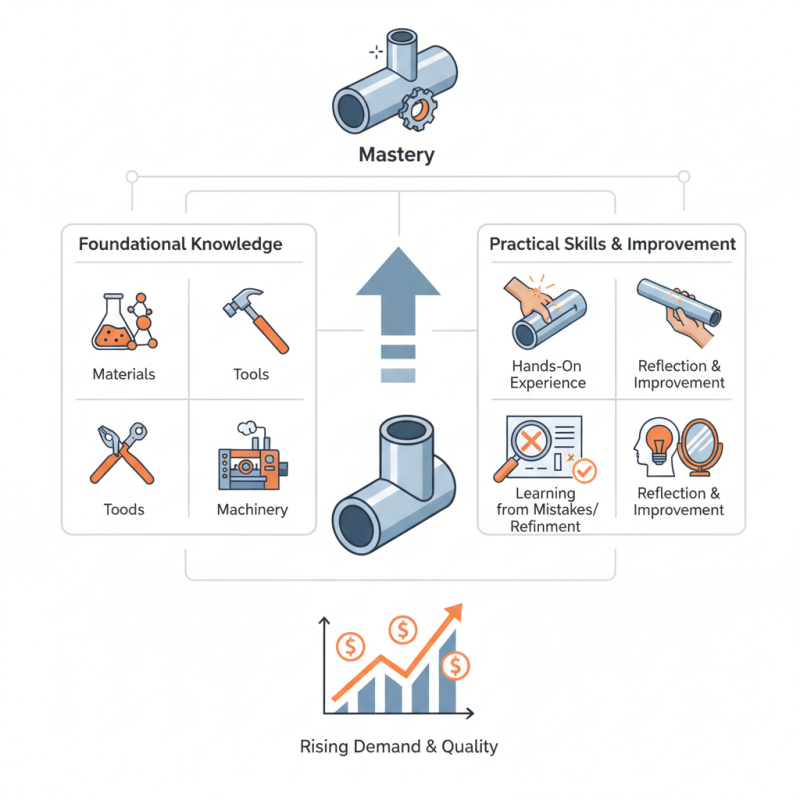
Mastering Stainless Steel Tube Fabrication techniques is essential for professionals in many industries. The demand for high-quality stainless steel tubes is rising. This trend necessitates a deep understanding of fabrication processes and tools. Mastery in this area can enhance product durability and precision.

The process is not without challenges. Proper techniques require significant practice and expertise. Errors in fabrication can lead to costly waste and project delays. It is crucial to learn from these mistakes and refine skills accordingly. Each fabrication project offers valuable lessons.

Focus on developing a combination of technical and practical skills. Knowledge of materials, tools, and machinery is foundational. However, hands-on experience is equally important. Embracing both learning and reflection will lead to continued improvement in stainless steel tube fabrication.
2026 How to Master Stainless Steel Tube Fabrication Techniques?

Understanding the Basics of Stainless Steel Tube Fabrication Techniques

Understanding the basics of stainless steel tube fabrication involves several critical techniques. Welding is one of the most essential methods. According to industry reports, over 50% of stainless steel applications rely on precise welding techniques. Different welding processes, such as TIG and MIG, offer unique benefits. Mastering these techniques can significantly impact the quality and durability of the final product.

Bending is another vital technique in stainless steel tube fabrication. It requires careful calculations and the right equipment. The tube's diameter influences the bending radius. Fabricators must consider the material's grain direction to avoid defects like kinks or wrinkles. Research shows that improper bending can decrease the strength of the tubing by nearly 20%. This highlights the need for precision and experience in the fabrication process.

Cutting techniques also play a crucial role. Laser cutting offers clean edges and high accuracy. However, it can produce heat-affected zones, which may alter the tube's properties. Alternative methods like saw cutting are reliable but may require additional finishing work. Recognizing the strengths and weaknesses of each technique is essential for effective stainless steel tube fabrication. Each step in the process presents opportunities for improvement and requires reflective practice to enhance skills continuously.

Key Materials and Grades for Optimal Stainless Steel Fabrication

When it comes to stainless steel tube fabrication, understanding materials and grades is crucial. Stainless steel offers various grades, each with unique properties. For optimal fabrication, grade selection is vital. Common grades include 304 and 316. The former is versatile and widely used. The latter, with superior corrosion resistance, is ideal for marine applications.


Tips: Pay attention to the environment where the stainless steel will be used. Certain grades perform better in specific conditions. Always check if the material matches your project requirements. Avoid settling for a grade that seems good enough; it may lead to unforeseen issues.


Another important aspect is the choice of suppliers. It's essential to source high-quality stainless steel. Not all suppliers offer the same grades. Do your research and choose a reliable source. Remember, poor quality material can undermine even the best fabrication techniques.


Crafting stainless steel tubes requires precision. Familiarize yourself with tools and techniques for bending and cutting. Investing time in mastering these skills pays off in the long run. It’s easy to overlook the small details, yet they can make or break your project.

Essential Tools and Equipment for Stainless Steel Tube Manufacturing

When it comes to stainless steel tube manufacturing, the right tools and equipment can make all the difference. A high-quality tube bender is essential. It allows for precise bends without compromising the material's integrity. An experienced fabricator knows how crucial it is to choose the correct radius for bending. An incorrect radius may lead to kinks or distortions in the tube.

Another critical tool is the tube cutter. A clean cut is vital for effective welding and fitting. Many fabricators prefer using saws with fine-tooth blades to avoid jagged edges. It can be frustrating when cuts are not straight, so taking time to set up the workpiece correctly is key.

Welding machines specifically designed for stainless steel are also important. They must be reliable and easy to operate. Various types of welding techniques exist, such as TIG and MIG welding. Each method has its own advantages, depending on the specific application. Understanding these differences can improve both quality and efficiency. Overall, mastery comes with practice and continuous learning.

Critical Fabrication Processes: Bending, Welding, and Cutting

Mastering stainless steel tube fabrication requires in-depth knowledge of three critical processes: bending, welding, and cutting. Each process demands precision and expertise to achieve quality results. According to industry data, improperly executed bending can lead to cracks and deformities. It is crucial to select the correct tooling and techniques based on the tube's diameter and wall thickness. A report by the Fabricators and Manufacturers Association highlights that nearly 30% of fabricators experience issues with tube bending, emphasizing the need for training and skill development.

Welding stainless steel tubes presents its own challenges. Heat management is vital, as excessive heat can alter the metal's properties. The American Welding Society suggests that about 20% of weld failures result from inadequate preparation. Proper surface cleaning and fit-up are essential to prevent contamination. Techniques such as TIG or MIG welding require practice and awareness of joint design to achieve durable seams. Mistakes in this area often go unnoticed until later stages of assembly, leading to costly rework.

Cutting stainless steel tubes accurately is another area often overlooked. Laser and plasma cutting technologies have advanced significantly, reducing errors. Yet, a significant percentage of fabricators still rely on older methods that can produce rough edges, necessitating further finishing work. Attention to detail during the cutting process can minimize downstream issues. Adopting modern cutting technologies can improve efficiency, but it also requires an initial investment. Continuous learning and adaptation to new methods remain essential for staying competitive in the fabrication industry.

Quality Control Standards in Stainless Steel Tube Fabrication Industry

In the stainless steel tube fabrication industry, quality control is a crucial aspect. Ensuring that each tube meets specific requirements is vital. Various standards guide manufacturers in maintaining consistency. These standards often focus on the material's thickness, surface finish, and overall integrity.

Regular inspections during the production process are necessary. Techniques such as ultrasonic testing can identify internal flaws. Visual inspections help to ensure surface quality. However, not all manufacturers adhere to these processes, leading to variability in product quality. This inconsistency often reflects manufacturing practices and available resources.

Training staff members in quality control measures is often overlooked. Skilled workers play a key role in maintaining standards. Investing in employee education can significantly improve outcomes. Yet, many companies still struggle with quality implementation. The challenge lies in balancing production speed with rigorous quality checks. Addressing these issues requires a commitment to excellence in all stages of fabrication.

Quality Control Standards in Stainless Steel Tube Fabrication

Copyright 2025 Fluidra S.A. | Created by BCM Marketing Agencia Privacy Policy Legal note | Cookie policy |

Technical cookies are strictly necessary for our website to work and you can navigate through it. These types of cookies are those that, for example, allow us to identify you, give you access to certain restricted parts of the page if necessary, or remember different options or services already selected by you, such as your privacy preferences. Therefore, they are activated by default, your authorization not being necessary in this regard. Through the configuration of your browser, you can block or alert the presence of this type of cookies, although such blocking will affect the proper functioning of the different functionalities of our website.


The analysis cookies allow us to study the navigation of the users of our website in general (for example, which sections of the page are the most visited, which services are used most and if they work correctly, etc.). From the statistical information on navigation on our website, we can improve both the operation of the page itself and the different services it offers. Therefore, these cookies do not have an advertising purpose, but only serve to make our website work better, adapting to our users in general. By activating them you will contribute to this continuous improvement. You can enable or disable these cookies by checking the corresponding box, being disabled by default.


Functionality cookies allow us to remember your preferences, to personalize certain characteristics and general options of our website, every time you access it (for example, the language in which the information is presented to you, the sections marked as favorites, your browser type, etc.) Therefore, this type of cookies does not have an advertising purpose, but by activating them you will improve the functionality of the website (for example, adapting to your type of browser) and the customization of it based on your preferences (for example, by presenting the information in the language that you have chosen in previous occasions), which will contribute to the ease, usability and comfort of our page during your navigation. You can enable or disable these cookies by checking the corresponding box, being disabled by default.


Advertising cookies allow us to manage the advertising spaces included in our website based on criteria such as the content shown or the frequency in which the ads are displayed. For example, if you have been shown the same ad several times on our website, and you have not shown a personal interest by clicking on it, it will not appear again. In summary, by activating this type of cookies, the advertising shown on our website will be more useful and diverse, and less repetitive. You can enable or disable these cookies by checking the corresponding box, being disabled by default.


Behavioral advertising cookies allow us to obtain information based on the observation of your browsing habits and behaviors on the web, in order to show you advertising content that best suits your personal tastes and interests. To understand it in a very simple way, we will give you a fictitious example: if your last searches on the web were related to suspense literature, we would show you advertising about suspense books. Therefore, activating this type of cookies, the advertising that we show you on our website will not be generic, but will be oriented to your searches, tastes and interests, therefore adjusting exclusively to you. You can enable or disable these cookies by checking the corresponding box, being disabled by default.
To understand it in a very simple way, we will give you a fictitious example: if your last searches on the web were related to suspense literature, we would show you advertising about suspense books. Therefore, activating this type of cookies, the advertising that we show you on our website will not be generic, but will be oriented to your searches, tastes and interests, therefore adjusting exclusively to you. You can enable or disable these cookies by checking the corresponding box, being disabled by default.

SAVE

We use our own and third-party cookies to ensure the proper functioning of the website and to analyse our services, improve your experience on our website and show you advertisements related to your interests according to profiling based on your browsing habits (e.g. websites visited). You can accept all cookies by clicking "ACCEPT" or set or reject them by clicking here. If you would like to know more about the use of cookies, please see our COOKIE POLICY.


ACCEPT ALL
Reject no essentials


