
What Is a Manometer Connector and How Does It Work?
FLUID HANDLING EXPERTS

Blog, all our news

What Is a Manometer Connector and How Does It Work?

A Manometer Connector is the small but essential link between a pressure source and a manometer. It may connect a hose, tube, or process port to the instrument, creating a path for pressure to reach the measuring element. The connector itself does not measure pressure. Its fit and condition can still affect the reading. A loose thread, worn seal, or mismatched fitting may allow a leak. The result can be a drifting reading, a slow response, or no measurement at all.

David W. Spitzer is a process-control specialist whose work concerns practical measurement and instrumentation. The following sentence is an editorial summary, not a verified direct quotation from him: “A pressure reading is only as trustworthy as the connection carrying pressure to the instrument.” That distinction matters. Connector designs vary by thread, size, material, and pressure range; similar-looking fittings are not automatically interchangeable. Check the instrument manual and the connector specifications before assembly. Keep the sealing surfaces clean. Tighten the fitting as directed, rather than forcing it. Small details count.

This guide explains how a Manometer Connector works, what happens as pressure passes through it, and which details affect a dependable measurement. It also considers common connector types and practical inspection points. One caution deserves emphasis: a connector can look secure while still leaking. A careful check helps catch that. Reliable readings begin with a sound connection, but technique and instrument condition matter too.
What Is a Manometer Connector and How Does It Work?

What a Manometer Connector Is

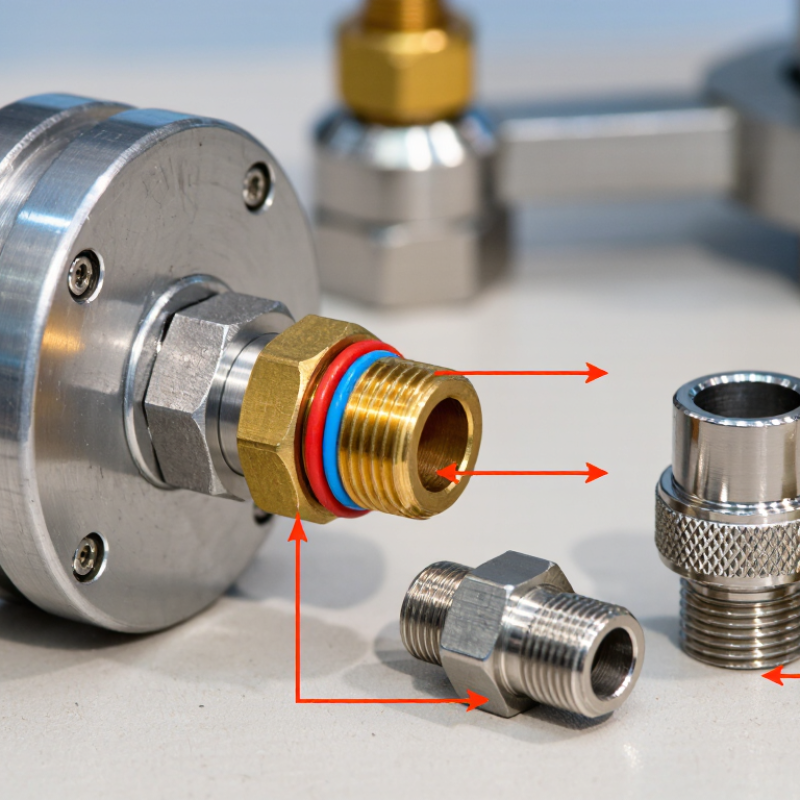
A manometer connector is the fitting that joins a pressure-measuring instrument to a tube, hose, or pressure tap. It creates a physical path for pressure to reach the instrument’s sensing element. Depending on the setup, the connector may use a threaded end, a hose barb, or a compression fitting. Its shape and size must match the instrument port and the connected line.

Fit matters. A connector that screws into place may still have the wrong thread, sealing method, or pressure rating. Some designs rely on a gasket or sealing washer; others seal at the threads or through a compressed ferrule. The right choice depends on the manometer, the measured medium, and the operating conditions. Check the instrument documentation and connector specifications rather than assuming similar-looking parts are interchangeable.

A poor seal can let air escape or enter, causing unstable or misleading readings. Leaks distort readings. Before use, inspect the fitting for damage, confirm that the connection is secure, and follow the instrument’s recommended leak-check procedure. Material compatibility also matters, especially when the measured fluid could corrode or weaken the connector. A small fitting deserves careful attention. It is easy to overlook.

Key Components and Common Connector Types

What Is a Manometer Connector and How Does It Work?

Key Components and Common Connector Types

A manometer connector joins the pressure source to the instrument’s inlet. It does not measure pressure; it provides a sealed path for air or liquid. Most connectors have a body, an inlet, and a sealing surface such as an O-ring or washer. Some also include a locking collar or nut to hold tubing firmly. A connector can look right and still leak.

Common types include threaded fittings, hose barbs, compression connectors, and quick-connect couplings. Threaded fittings suit ports with matching thread forms, while hose barbs grip flexible tubing. Compression styles use a ferrule that tightens around the tube. Quick-connects make repeated setup easier, but their internal seals need inspection. The correct choice depends on the manometer port, tubing size, pressure range, and fluid. Thread compatibility matters: similar-looking threads may not seal together.

Tips: Check the fitting and seal before each test. Tighten only as specified; overtightening can damage threads or deform a seal. Apply pressure gradually, then watch for unstable readings or leaks. If the connection still feels uncertain, verify its specifications before use.

How the Connector Creates a Pressure-Sealed Path

A manometer connector forms the small, sealed passage between a pressure source and the instrument’s sensing element. Its sealing face may use a gasket, an O-ring, or a tapered metal seat. When tightened, the mating surfaces compress the seal and close tiny escape paths. Threads usually provide clamping force; they are not necessarily the sealing surface. That detail is easy to miss.

For a reliable seal, the connector must match the port, pressure range, and fluid. A mismatched thread can feel snug while leaving a narrow leak path. Dirt, scratches, or a twisted O-ring can cause the same problem. Under pressure, even a small leak may make readings drift or respond slowly. ASME B40.100 defines pressure-gauge accuracy grades, including 0.5% and 1% of span; a leaking connection can undermine readings regardless of the gauge’s grade. After assembly, technicians commonly check for leakage and compare the instrument against a suitable pressure reference. NIST guidance on measurement uncertainty also emphasizes accounting for influences across the measurement process, not just the instrument itself. A bubble at the joint is a warning. So is a reading that will not settle.

How a Manometer Connector Transmits Pressure

A sealed connector provides a continuous path for pressure to reach the manometer. This chart shows the ideal pressure difference produced by a water column at 20°C, calculated using ΔP = ρgh. It illustrates the fluid relationship, not measured connector performance.

How Pressure Is Transferred to the Manometer

What Is a Manometer Connector and How Does It Work?

How Pressure Is Transferred to the Manometer

A manometer connector forms the pressure pathway between a pipe, vessel, or test point and the measuring instrument. When attached, it lets the pressure at the source act on the manometer’s sensing element. In a liquid-column model, that pressure moves the liquid until the columns reach balance. The height difference then indicates the pressure difference. Simple, but sensitive.

A tight, well-seated connection matters. If air leaks around the fitting, the manometer may show a reading that drifts or sits below the true value. The connector’s thread or sealing face must match the port, and the tubing should not be kinked or pulled sideways. Hand-tightening may be enough for some fittings; others need the specified tool and torque. More force is not automatically better.

Before reading, check that the line is clear and the instrument is positioned as intended. A droplet or trapped pocket in the tubing can interfere with pressure transfer, especially at low pressures. With differential measurements, each port must connect to the correct side. This is easy to mix up. Even careful setups can have small errors, so comparing the zero reading before and after a test is a useful check.

Factors That Affect Connection Accuracy and Safety

What Is a Manometer Connector and How Does It Work?
Factors That Affect Connection Accuracy and Safety

A manometer connector joins the instrument to a pressure source through a fitting, hose, or adapter. It guides pressure to the sensor or liquid column, so the reading depends on the whole connection—not just the gauge. A loose fitting can leak. A mismatched thread may feel tight but still seal poorly. Small details matter.

Accuracy can shift when tubing is kinked, excessively long, or exposed to heat and vibration. Dust or liquid inside the line may also affect the pressure path. Match the connector to the instrument and port, and check the pressure rating before use. Keep connections aligned and snug, without forcing threads. Before measuring, inspect seals and look for leaks; even a faint hiss deserves attention. Safety comes first. Isolate and release pressure before changing a connection. In practice, setups are not always perfect, so record unusual conditions and repeat readings when results seem inconsistent.

Tips: Use clean, undamaged tubing and the correct seal. Support the hose to prevent strain on the fitting. Never exceed the instrument’s rated pressure. A quick visual check helps, but it cannot replace proper calibration.

Copyright 2025 Fluidra S.A. | Created by BCM Marketing Agencia Privacy Policy Legal note | Cookie policy |

Technical cookies are strictly necessary for our website to work and you can navigate through it. These types of cookies are those that, for example, allow us to identify you, give you access to certain restricted parts of the page if necessary, or remember different options or services already selected by you, such as your privacy preferences. Therefore, they are activated by default, your authorization not being necessary in this regard. Through the configuration of your browser, you can block or alert the presence of this type of cookies, although such blocking will affect the proper functioning of the different functionalities of our website.


The analysis cookies allow us to study the navigation of the users of our website in general (for example, which sections of the page are the most visited, which services are used most and if they work correctly, etc.). From the statistical information on navigation on our website, we can improve both the operation of the page itself and the different services it offers. Therefore, these cookies do not have an advertising purpose, but only serve to make our website work better, adapting to our users in general. By activating them you will contribute to this continuous improvement. You can enable or disable these cookies by checking the corresponding box, being disabled by default.


Functionality cookies allow us to remember your preferences, to personalize certain characteristics and general options of our website, every time you access it (for example, the language in which the information is presented to you, the sections marked as favorites, your browser type, etc.) Therefore, this type of cookies does not have an advertising purpose, but by activating them you will improve the functionality of the website (for example, adapting to your type of browser) and the customization of it based on your preferences (for example, by presenting the information in the language that you have chosen in previous occasions), which will contribute to the ease, usability and comfort of our page during your navigation. You can enable or disable these cookies by checking the corresponding box, being disabled by default.


Advertising cookies allow us to manage the advertising spaces included in our website based on criteria such as the content shown or the frequency in which the ads are displayed. For example, if you have been shown the same ad several times on our website, and you have not shown a personal interest by clicking on it, it will not appear again. In summary, by activating this type of cookies, the advertising shown on our website will be more useful and diverse, and less repetitive. You can enable or disable these cookies by checking the corresponding box, being disabled by default.


Behavioral advertising cookies allow us to obtain information based on the observation of your browsing habits and behaviors on the web, in order to show you advertising content that best suits your personal tastes and interests. To understand it in a very simple way, we will give you a fictitious example: if your last searches on the web were related to suspense literature, we would show you advertising about suspense books. Therefore, activating this type of cookies, the advertising that we show you on our website will not be generic, but will be oriented to your searches, tastes and interests, therefore adjusting exclusively to you. You can enable or disable these cookies by checking the corresponding box, being disabled by default.
To understand it in a very simple way, we will give you a fictitious example: if your last searches on the web were related to suspense literature, we would show you advertising about suspense books. Therefore, activating this type of cookies, the advertising that we show you on our website will not be generic, but will be oriented to your searches, tastes and interests, therefore adjusting exclusively to you. You can enable or disable these cookies by checking the corresponding box, being disabled by default.

SAVE

We use our own and third-party cookies to ensure the proper functioning of the website and to analyse our services, improve your experience on our website and show you advertisements related to your interests according to profiling based on your browsing habits (e.g. websites visited). You can accept all cookies by clicking "ACCEPT" or set or reject them by clicking here. If you would like to know more about the use of cookies, please see our COOKIE POLICY.


ACCEPT ALL
Reject no essentials


