
What Is a Lotion Bottle and How to Choose One?
FLUID HANDLING EXPERTS

Blog, all our news

What Is a Lotion Bottle and How to Choose One?

A Lotion Bottle is more than a container for creams, moisturizers, and body products. It protects the formula, controls each dose, and shapes how customers experience daily care. A pump may deliver a clean, measured amount, while a squeeze tube can work better for thicker lotion. The right choice depends on viscosity, ingredients, packaging goals, and user habits.

Small details matter. A pump should move smoothly without leaving product trapped inside. The bottle should stand firmly on a bathroom shelf, even with wet hands nearby. Plastic, glass, and recycled materials each offer different strengths. Plastic is lightweight and less likely to break, while glass can feel premium and resist some formula interactions. However, material performance must be tested rather than assumed. A lotion containing oils, acids, or fragrances may react differently with each package.

There is no perfect bottle.

Manufacturers and buyers should check leakage, pump compatibility, labeling space, and storage conditions before approval. Airless designs may reduce exposure to air, but they can cost more and require specialized production. Sustainability also needs careful thought. A recyclable bottle is useful only when local recycling systems can process it. That point is easy to overlook.

Choosing a Lotion Bottle requires practical testing and honest evaluation. Samples should be filled, transported, opened repeatedly, and assessed by real users. A beautiful package can still frustrate customers if it dispenses too much product. Reliable decisions come from balancing protection, convenience, cost, appearance, and environmental responsibility. Some choices will remain imperfect, but transparent testing creates a stronger foundation.
What Is a Lotion Bottle and How to Choose One?

Lotion Bottles Defined: Purpose, Structure, and Cosmetic Packaging Roles

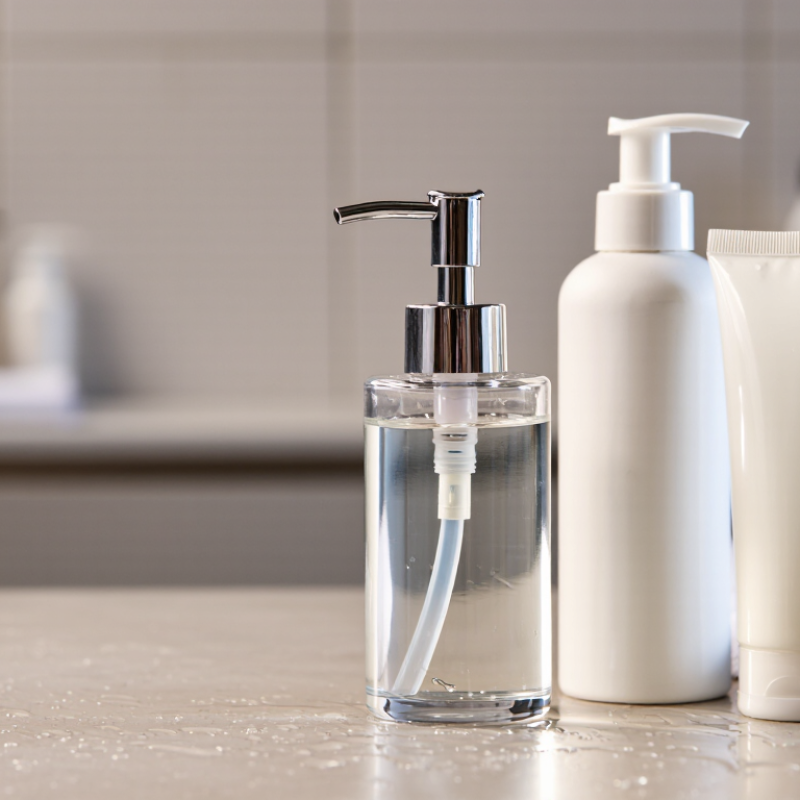
A lotion bottle is a container designed to store, protect, and dispense liquid or creamy skincare products. It reduces exposure to air, dust, moisture, and repeated hand contact. The bottle also controls dosage, helping users apply a consistent amount. Its shape influences grip, storage, and the overall experience at a sink or dressing table. The details matter.

Most lotion bottles contain a body, shoulder, neck, closure, and dispensing system. The body holds the formula, while the shoulder guides product toward the opening. A pump can provide measured doses and limit contact with the remaining lotion. A flip-top cap is simpler and often easier to recycle, but it may allow more direct contact. Materials such as plastic, glass, or aluminum affect weight, durability, chemical compatibility, and transport risk. Packaging professionals usually test leakage, pump performance, label adhesion, and formula interaction before approval.

Choosing one requires more than attractive appearance. Match the bottle to the lotion’s thickness, viscosity, and sensitivity to air or light. A narrow opening may suit a fluid formula, while a stronger pump may handle a richer cream. Check whether the bottle stands securely and can be used with wet hands. In practical testing, a pump that works well in the sample room may struggle after repeated use. No container is perfect. I would also question oversized packaging, because unused space can increase shipping impact and make the product harder to handle. A reliable bottle balances protection, usability, manufacturing quality, and realistic daily behavior.

Lotion Bottles Defined: Common Fill Volumes and Packaging Roles

Lotion bottles are commonly offered in several nominal fill-volume formats. Smaller bottles are practical for travel and sampling, while medium and large bottles are better suited to everyday or family use. When choosing a bottle, consider the lotion’s viscosity, the required dispensing method, ease of use, and the amount of product needed per application.

PET, HDPE, PP, and PCR Materials Compared Under ISO 18604

A lotion bottle is a dispensing container designed to protect a formula and deliver controlled doses. Choosing one involves more than appearance. Pump performance, formula compatibility, recyclability, and PCR content all matter. ISO 18604 focuses on packaging designed for material recycling. It does not mean every PET, HDPE, or PP bottle is automatically recyclable everywhere. Local collection and sorting systems still affect the result.

PET offers clear visibility, good stiffness, and useful barrier performance. It suits products where appearance and formula monitoring matter.

HDPE provides strong chemical resistance and a practical balance of durability and weight. Its opaque surface may limit product visibility.

PP handles hinges, closures, and some demanding formulas well. However, its recycling availability can differ significantly by region.

PCR means post-consumer recycled material. PCR PET, HDPE, and PP can reduce virgin plastic demand, but quality may vary. Color, odor, viscosity, and weak points deserve testing. That detail is easy to miss.

During selection, I would test the bottle with the actual lotion, pump, and filling process. Check leakage after transport simulation and inspect stress around the neck and shoulder. Measure whether the pump empties the formula effectively. Review labels, sleeves, caps, and adhesives because attached parts can affect sorting. A recyclable resin can still perform poorly with unsuitable components. Some PCR bottles look less uniform. That is not always a defect. It can show recycled content, although appearance should never replace documented material data and supplier testing.

Pump Dosage Explained: Typical 0.2–2 mL Outputs and Control Factors

What Is a Lotion Bottle and How to Choose One?

A lotion bottle stores and dispenses creams, body lotions, and light gels with controlled handling. In practical use, the pump matters as much as the bottle material. A typical pump delivers about 0.2–2 mL per press. Small outputs suit facial products or precise applications. Larger outputs work better for body lotion and frequent use.

Output depends on several control factors. The actuator size affects how far the pump moves. The spring, piston, dip tube, and formula thickness also change the dose. A dense cream may dispense less than a thin lotion, even with the same pump. Temperature matters too. Cold formulas often move slowly. I once assumed two identical pumps would deliver equal amounts, but their outputs differed slightly after repeated use.

For reliable selection, test at least ten presses and calculate the average volume. A 1 mL dose can be checked with a small graduated syringe during quality testing. Avoid judging performance from one press. It can be misleading. Choose a bottle with a stable base, a tight closure, and a dip tube that reaches the container bottom. Airless designs may reduce product contact with air, but they can require formula compatibility testing. Clear packaging shows remaining lotion, while opaque packaging can better protect light-sensitive ingredients. A practical choice balances dose control, product viscosity, user strength, and expected daily use.

Choosing 30–500 mL Bottle Capacities for Different Lotion Uses

What Is a Lotion Bottle and How to Choose One?

A lotion bottle is a container designed to store and dispense creams, moisturizers, and liquid lotions. Its shape, pump, opening, and material affect daily use. Capacity matters because a travel lotion and a family-size body cream have different handling needs. A 30 mL bottle fits handbags, sample kits, and short trips. It is light and easy to control. However, the small opening may not suit thick formulas.

A 50–100 mL bottle works well for face lotion, hand cream, and personal-care products used regularly. These sizes balance portability and product life. For shower areas or bedside tables, 150–250 mL bottles offer better convenience. A pump can reduce mess when users have wet hands. Check the pump stroke, because very dense lotion may need a wider passage. My first sample looked attractive but dispensed too slowly. Appearance was not enough.

Larger 300–500 mL bottles suit body lotion, salon supplies, and shared household use. They reduce refill frequency, but they need stable bases and comfortable grips. A narrow bottle can tip beside a sink. A wide shoulder may also trap product near the bottom. Test the bottle with the actual formula, not only water. Measure the usable fill volume, leaving practical headspace for pumping. Recycled or lightweight plastic may reduce material use, but it can feel less rigid. That trade-off deserves an honest review. A suitable lotion bottle should match the formula, location, user habits, and expected consumption period.

Packaging Safety: ISO 22715, Leak Testing, and Formula Compatibility

What Is a Lotion Bottle and How to Choose One?

A lotion bottle must protect both the formula and the user. ISO 22715:2006 provides guidance for cosmetic packaging and labeling, but it does not certify leak resistance. Treat it as a documentation framework, not a complete safety test. Record the resin, closure torque, pump parts, batch code, and filling conditions. A small gap around the dip tube can become a sticky leak during transport. It happens quietly.

Leak testing should match the bottle’s real use. Test filled samples after pressure, vibration, temperature changes, and drop exposure. Vacuum decay can identify tiny leaks without using dyes. Pressure testing can reveal weak seals around pumps and caps. A single passing sample is not enough. I would test multiple production lots because plastic variation is easy to underestimate. UNEP’s 2023 “Turning off the Tap” report states that packaging uses about 36% of global plastic production, so reducing material matters, but not at the expense of containment.

Formula compatibility needs equal attention. Alcohol, fragrances, acids, and high-surfactant lotions may cause swelling, stress cracking, discoloration, or pump failure. Store filled bottles in warm and cool conditions, then inspect weight loss, odor changes, wall distortion, and actuator performance. Check the first dose and the final dose. They may not behave alike. A visually attractive bottle can still be the wrong choice.

Copyright 2025 Fluidra S.A. | Created by BCM Marketing Agencia Privacy Policy Legal note | Cookie policy |

Technical cookies are strictly necessary for our website to work and you can navigate through it. These types of cookies are those that, for example, allow us to identify you, give you access to certain restricted parts of the page if necessary, or remember different options or services already selected by you, such as your privacy preferences. Therefore, they are activated by default, your authorization not being necessary in this regard. Through the configuration of your browser, you can block or alert the presence of this type of cookies, although such blocking will affect the proper functioning of the different functionalities of our website.


The analysis cookies allow us to study the navigation of the users of our website in general (for example, which sections of the page are the most visited, which services are used most and if they work correctly, etc.). From the statistical information on navigation on our website, we can improve both the operation of the page itself and the different services it offers. Therefore, these cookies do not have an advertising purpose, but only serve to make our website work better, adapting to our users in general. By activating them you will contribute to this continuous improvement. You can enable or disable these cookies by checking the corresponding box, being disabled by default.


Functionality cookies allow us to remember your preferences, to personalize certain characteristics and general options of our website, every time you access it (for example, the language in which the information is presented to you, the sections marked as favorites, your browser type, etc.) Therefore, this type of cookies does not have an advertising purpose, but by activating them you will improve the functionality of the website (for example, adapting to your type of browser) and the customization of it based on your preferences (for example, by presenting the information in the language that you have chosen in previous occasions), which will contribute to the ease, usability and comfort of our page during your navigation. You can enable or disable these cookies by checking the corresponding box, being disabled by default.


Advertising cookies allow us to manage the advertising spaces included in our website based on criteria such as the content shown or the frequency in which the ads are displayed. For example, if you have been shown the same ad several times on our website, and you have not shown a personal interest by clicking on it, it will not appear again. In summary, by activating this type of cookies, the advertising shown on our website will be more useful and diverse, and less repetitive. You can enable or disable these cookies by checking the corresponding box, being disabled by default.


Behavioral advertising cookies allow us to obtain information based on the observation of your browsing habits and behaviors on the web, in order to show you advertising content that best suits your personal tastes and interests. To understand it in a very simple way, we will give you a fictitious example: if your last searches on the web were related to suspense literature, we would show you advertising about suspense books. Therefore, activating this type of cookies, the advertising that we show you on our website will not be generic, but will be oriented to your searches, tastes and interests, therefore adjusting exclusively to you. You can enable or disable these cookies by checking the corresponding box, being disabled by default.
To understand it in a very simple way, we will give you a fictitious example: if your last searches on the web were related to suspense literature, we would show you advertising about suspense books. Therefore, activating this type of cookies, the advertising that we show you on our website will not be generic, but will be oriented to your searches, tastes and interests, therefore adjusting exclusively to you. You can enable or disable these cookies by checking the corresponding box, being disabled by default.

SAVE

We use our own and third-party cookies to ensure the proper functioning of the website and to analyse our services, improve your experience on our website and show you advertisements related to your interests according to profiling based on your browsing habits (e.g. websites visited). You can accept all cookies by clicking "ACCEPT" or set or reject them by clicking here. If you would like to know more about the use of cookies, please see our COOKIE POLICY.


ACCEPT ALL
Reject no essentials


