
7 Lift Stage Buying Tips for Global Buyers
FLUID HANDLING EXPERTS

Blog, all our news

7 Lift Stage Buying Tips for Global Buyers

A Lift Stage is a major purchase, not just a platform with a motor. For global buyers, the right choice depends on the venue, audience, transport plan, and local operating conditions. A stage designed for a hotel ballroom may not suit an outdoor event space. Measure the available floor area and ceiling height before comparing models.

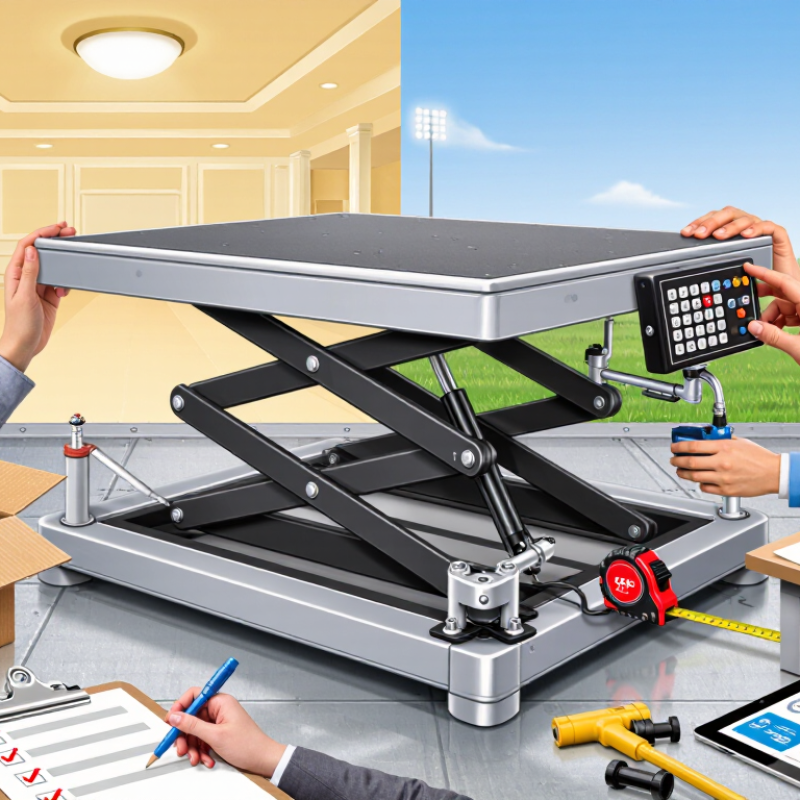
These seven buying tips focus on practical checks: load capacity, lifting mechanism, platform size, controls, safety features, supplier support, and total cost. Ask for technical drawings, clear specifications, and details about installation and maintenance. If possible, review a working unit or request a live demonstration. Small details matter. A control panel’s location, for example, can affect how easily a crew operates the stage during a busy event.

International purchasing also brings questions about shipping, spare parts, documentation, and service after delivery. Confirm what the quoted price includes, and ask how the supplier handles faults or replacement components. Do not judge a Lift Stage by price alone; a lower initial cost may not include the support your venue needs. Some details are easy to overlook. I would still revisit the measurements and service plan before signing, because assumptions can become expensive once equipment arrives. These tips offer a grounded starting point for comparing options and choosing a stage that fits real operating needs.
7 Lift Stage Buying Tips for Global Buyers

Define the Lift Stage Requirements for the Intended Application

A lift stage should be specified around its real task, not its brochure height. Record the required travel, usable deck area, load, cycle rate, and installation footprint. Calculate the full moving load: operators, tools, fixtures, and any shifting workpiece. A 500 kg payload may sound ample until a long fixture concentrates weight near one edge. Ask for the rated capacity at each position and the allowable eccentric load. Also check floor loading, pit depth, overhead clearance, approach path, guarding, emergency lowering, and maintenance access. Small details matter.

The application changes the design. A packaging line may need frequent indexing; a maintenance bay may need precise positioning and quiet operation. Dust, washdown, temperature, and available power also affect components and service life. OSHA’s scissor-lift guidance identifies falls, tip-overs, struck-by incidents, and electrocution as key hazards, so match controls and guarding to the site. The risk deserves attention: the U.S. Bureau of Labor Statistics recorded 885 fatal work injuries from falls, slips, and trips in 2023 (CFOI). That figure covers all workplaces, not lift stages specifically. It is context, not a prediction. Before purchase, test the worst-case load and cycle using the actual fixture. One assumption may be wrong. Recheck it.

Define Lift Stage Requirements: Payload and Static Load

Use the payload mass to estimate the minimum static force a lift stage must support. Values below are calculated using standard gravity (9.81 m/s²).

These figures represent payload weight only. Include the platform, fixtures, acceleration forces, and an appropriate safety margin when defining your application requirements.

Compare Lift Types, Capacities, and Operating Features

A scissor lift stage suits broad platforms and steady vertical travel, but its frame needs room beneath the deck. Telescopic systems can serve compact layouts, though their moving sections may limit usable platform area. Screw-driven lifts often offer controlled positioning; buyers should check travel speed, noise, and maintenance access. Small details matter.

Compare rated capacity with the real load, not just the performers’ combined weight. Include scenery, instruments, crew, and any equipment that may move onto the platform. A 500-kilogram rating can look generous until a heavy set piece rolls across one edge. Ask how the supplier defines load distribution, and request drawings showing the platform dimensions and support points.

Operating features deserve equal attention. Check emergency stops, travel limits, guarding, and how the lift behaves during a power interruption. Confirm the required supply voltage, control method, operating noise, and service access at the venue. For international projects, written specifications should state units clearly and identify local maintenance support. A comparison sheet helps, but it can miss awkward site conditions; measure pit depth, ceiling clearance, and access routes before choosing.

Verify Safety Standards and Local Regulatory Compliance

Before comparing lift stages, identify the rules in the destination market and the exact installation site. Requirements vary by country and may depend on building type, intended use, and rated load. Ask the supplier which standards apply to the specific model, then confirm them with a qualified local inspector or authority. Request current test reports, declarations of conformity where applicable, and installation instructions in the working language. Check that every document names the same model, platform size, and load rating as your quotation. Paperwork matters.

Inspect the safety details, too. Confirm that the stage has suitable edge protection, emergency-stop controls, and a safe method for lowering it during a power failure. Ask how electrical connections, anchoring, and routine inspections must be handled at your site. Not optional. Clarify who will install and inspect the equipment, and keep written records of those checks. A certificate alone may not cover a changed layout or a different local requirement. Buyers can overlook this when delivery dates are tight; I would not assume a standard accepted in one market automatically satisfies another. Verify the exact configuration before signing.

Assess Manufacturers, Technical Support, and Product Quality

A lift stage can look solid in a brochure and still disappoint under load. Ask manufacturers for rated capacity, platform dimensions, travel speed, duty cycle, and emergency-lowering details. Request drawings that show fixing points and service access. Then compare these against your venue’s pit depth, floor structure, and planned scenery. Small mismatches matter.

The ISO Survey 2022 recorded 1,265,216 valid ISO 9001 certificates worldwide. That figure reflects certificates, not proven stage-lift performance. Ask for the manufacturer’s current certificate, inspection records, and test results for the exact model. Also check whether its design and inspection process addresses EN 17206:2020, the European safety standard for stage machinery. Paperwork helps. It is not enough.

Technical support deserves a practical test. Send a specific question about a limit switch or control fault, and note the response time and clarity. Ask who provides commissioning, operator training, spare parts, and remote troubleshooting in your region. Get response times in writing. Ask for a service plan. Product quality shows in welds, guarded pinch points, accessible controls, and repeatable stopping positions. If possible, witness a loaded cycle and inspect the underside. One demonstration cannot reveal years of wear, but skipping it leaves a real gap.

Calculate Total Costs, Shipping Needs, and Delivery Timelines

A lift stage quote is only one part of the purchase cost. Add installation, control equipment, wiring, packing, insurance, and any required site preparation. Ask for each item as a separate line, so you can see what is included and what is still uncertain. A useful comparison includes the same stage dimensions, lifting capacity, travel distance, and operating speed. Otherwise, a lower quote may simply describe a different system.

Check the shipping terms and the delivery point carefully. Freight to a seaport may not include unloading, customs handling, or transport to your venue. Measure doorways, loading bays, and available storage space; a large crate can cause problems before installation even begins. Get the packed dimensions and weight, then confirm who arranges lifting equipment at arrival. Keep written copies. Delivery dates need similar scrutiny. Ask whether the estimate starts at order confirmation, production approval, or final payment. Request a realistic production window and shipping range, with key milestones such as drawing approval and dispatch. Build in a buffer for port congestion or delayed site access. Delays happen. Even a detailed plan can miss a small charge or a few days, so leave room in both the budget and schedule.

Copyright 2025 Fluidra S.A. | Created by BCM Marketing Agencia Privacy Policy Legal note | Cookie policy |

Technical cookies are strictly necessary for our website to work and you can navigate through it. These types of cookies are those that, for example, allow us to identify you, give you access to certain restricted parts of the page if necessary, or remember different options or services already selected by you, such as your privacy preferences. Therefore, they are activated by default, your authorization not being necessary in this regard. Through the configuration of your browser, you can block or alert the presence of this type of cookies, although such blocking will affect the proper functioning of the different functionalities of our website.


The analysis cookies allow us to study the navigation of the users of our website in general (for example, which sections of the page are the most visited, which services are used most and if they work correctly, etc.). From the statistical information on navigation on our website, we can improve both the operation of the page itself and the different services it offers. Therefore, these cookies do not have an advertising purpose, but only serve to make our website work better, adapting to our users in general. By activating them you will contribute to this continuous improvement. You can enable or disable these cookies by checking the corresponding box, being disabled by default.


Functionality cookies allow us to remember your preferences, to personalize certain characteristics and general options of our website, every time you access it (for example, the language in which the information is presented to you, the sections marked as favorites, your browser type, etc.) Therefore, this type of cookies does not have an advertising purpose, but by activating them you will improve the functionality of the website (for example, adapting to your type of browser) and the customization of it based on your preferences (for example, by presenting the information in the language that you have chosen in previous occasions), which will contribute to the ease, usability and comfort of our page during your navigation. You can enable or disable these cookies by checking the corresponding box, being disabled by default.


Advertising cookies allow us to manage the advertising spaces included in our website based on criteria such as the content shown or the frequency in which the ads are displayed. For example, if you have been shown the same ad several times on our website, and you have not shown a personal interest by clicking on it, it will not appear again. In summary, by activating this type of cookies, the advertising shown on our website will be more useful and diverse, and less repetitive. You can enable or disable these cookies by checking the corresponding box, being disabled by default.


Behavioral advertising cookies allow us to obtain information based on the observation of your browsing habits and behaviors on the web, in order to show you advertising content that best suits your personal tastes and interests. To understand it in a very simple way, we will give you a fictitious example: if your last searches on the web were related to suspense literature, we would show you advertising about suspense books. Therefore, activating this type of cookies, the advertising that we show you on our website will not be generic, but will be oriented to your searches, tastes and interests, therefore adjusting exclusively to you. You can enable or disable these cookies by checking the corresponding box, being disabled by default.
To understand it in a very simple way, we will give you a fictitious example: if your last searches on the web were related to suspense literature, we would show you advertising about suspense books. Therefore, activating this type of cookies, the advertising that we show you on our website will not be generic, but will be oriented to your searches, tastes and interests, therefore adjusting exclusively to you. You can enable or disable these cookies by checking the corresponding box, being disabled by default.

SAVE

We use our own and third-party cookies to ensure the proper functioning of the website and to analyse our services, improve your experience on our website and show you advertisements related to your interests according to profiling based on your browsing habits (e.g. websites visited). You can accept all cookies by clicking "ACCEPT" or set or reject them by clicking here. If you would like to know more about the use of cookies, please see our COOKIE POLICY.


ACCEPT ALL
Reject no essentials


