
What is Laser Cutting Technology and How Does it Work?
FLUID HANDLING EXPERTS

Blog, all our news

What is Laser Cutting Technology and How Does it Work?

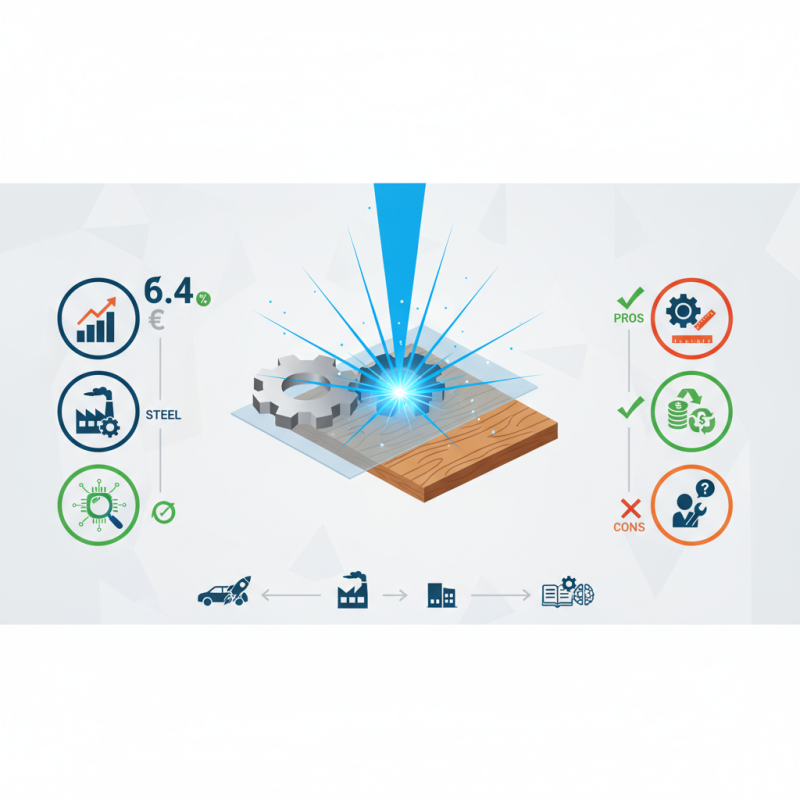
Laser Cutting Technology has become a vital process in various industries, revolutionizing manufacturing and design. According to a report by MarketsandMarkets, the global laser cutting market size is anticipated to reach $6.4 billion by 2025, growing at a CAGR of 5.5%. This growth reflects the rising demand for precision and efficiency in fabrication.

The technology utilizes focused laser beams to cut materials, achieving high precision and minimal waste. Steel, plastics, and wood are among the many materials easily processed by laser cutting. Despite its advantages, challenges exist. Operating costs can be high, and operator skill levels vary significantly. Inadequate training can lead to errors or reduced efficiency.

Industry applications range from automotive to aerospace, highlighting its versatility. Companies must choose the right laser cutting systems that cater to specific needs. They should not overlook the importance of ongoing training and knowledge updates for their workforce. A well-informed approach can maximize the benefits of Laser Cutting Technology while addressing its challenges.
What is Laser Cutting Technology and How Does it Work?

What is Laser Cutting Technology?

Laser cutting technology is a precise and efficient method used for cutting a variety of materials. It employs a high-powered laser beam to melt or vaporize material in moments. According to a recent industry report, the global laser cutting machines market is expected to reach $5 billion by 2026, with a compound annual growth rate (CAGR) of 6.5%. This growth highlights the increasing adoption of laser cutting in various industries, including aerospace, automotive, and manufacturing.

The technology allows intricate designs to be executed with remarkable accuracy. Laser cutting can handle materials such as metal, plastic, wood, and glass. Factors like the power of the laser, the type of material, and the thickness affect the outcome. Miscalculations in settings can lead to undesirable results, such as burns or material warping. Approximately 30% of users report challenges in achieving consistent quality, particularly in thick materials. Despite these issues, the benefits often outweigh the drawbacks, making it a preferred choice for precision tasks.

Moreover, the environmental impact of laser cutting is noteworthy. It generally produces less waste compared to traditional cutting methods. Still, it's essential for companies to consider the energy consumption involved. Reports indicate that laser cutting machines can consume between 5-7 kW of power, which contributes to operational costs. These considerations prompt continuous evaluation of technology and practices to enhance efficiency while minimizing the ecological footprint.

Principles of Laser Cutting: How It Works

Laser cutting technology utilizes a focused beam of light to cut materials with precision. The core principle involves directing a high-intensity laser onto a material's surface. As the laser beam melts or vaporizes the material, it creates a clean and precise cut. This method can be applied to various materials, including metals, plastics, and wood.

The laser cutting process begins with generating a powerful laser beam, typically from a gas or solid-state laser source. The beam is then focused through a series of lenses. This focusing process increases the energy density of the light. When the beam hits the material, it generates heat. The heat is enough to melt the material away or even vaporize it, depending on the thickness of the material.

Laser cutting is known for its accuracy and flexibility. It produces intricate designs that might be impossible with traditional cutting methods. However, there are challenges. The efficiency of laser cutting can be impacted by material reflectivity. Thin materials can sometimes warp due to excessive heat. In these cases, operators must adjust the laser speed and power settings meticulously. It's a process that demands careful observation and fine-tuning to achieve the best results.

Types of Lasers Used in Cutting Processes

Laser cutting technology utilizes high-intensity laser beams to cut materials with precision. Several types of lasers are used in these processes, each suited for specific applications. CO2 lasers are prevalent in industrial cutting due to their efficiency. They can cut through materials like wood, plastics, and metals. According to industry reports, CO2 lasers can operate with an efficacy of up to 30%.

Fiber lasers have gained popularity for their versatility. They produce a concentrated beam of light, making them ideal for cutting thin metal sheets. Research shows that fiber lasers can achieve cutting speeds exceeding 100 meters per minute. However, their initial costs can be high, posing barriers for small businesses. Solid-state lasers, on the other hand, are used for tasks requiring ultra-precision, such as engraving. They are less common but play a critical role in niche markets.

Each laser type has its drawbacks. For instance, CO2 lasers are less effective on reflective metals like copper. Fiber lasers, while fast, may struggle with thicker materials. These limitations can lead to inefficiencies if not properly addressed. Understanding the strengths and weaknesses of each laser technology is key to optimizing production processes in various industries.

Laser Cutting Technology: Types of Lasers Used in Cutting Processes

This bar chart illustrates the different types of lasers used in cutting processes along with their typical cutting speeds (in mm/min) and applications.

Applications of Laser Cutting in Various Industries

Laser cutting technology has revolutionized various industries by providing precise cutting solutions. It employs high-intensity lasers to cut through materials such as metal, wood, plastic, and more. The applications of laser cutting span multiple sectors, including automotive, aerospace, and manufacturing, each benefiting from its efficiency and accuracy.

In the automotive sector, laser cutting plays a vital role in producing intricate parts. Components like brackets and frames require advanced precision, which laser technology provides seamlessly. Aerospace industries utilize laser cutting for complex structures that demand high standards. The lightweight yet durable materials used in aircraft greatly benefit from this technology.

Tips: When considering laser cutting for your project, assess the material types and thicknesses carefully. Not every laser machine can cut every material effectively. It’s essential to choose the right one for your needs. Also, remember that cleanliness is crucial. Dust and debris can affect the cutting quality.

In manufacturing, custom designs are produced rapidly. The flexibility of laser cutting allows for quick adjustments in design, reducing lead times. However, laser cutting can result in burn marks or rough edges. This may require additional finishing processes, impacting the overall workflow. Always factor in these details during planning.

Advantages and Limitations of Laser Cutting Technology

Laser cutting technology offers several significant advantages alongside some limitations. One of its primary benefits is precision. According to a report by MarketsandMarkets, the global laser cutting market is projected to grow at a CAGR of 7.8% from 2020 to 2025. This highlights its increasing adoption due to accuracy, especially in complex designs. Laser cutting works well with various materials, like metals, plastics, and wood. The heat generated by the laser with a focused beam allows for clean cuts, reducing the need for post-processing.

However, this technology has its drawbacks. Engaging thicker materials can cause issues, such as longer cutting times. Additionally, while laser machines can produce high-quality cuts, they may not be suitable for all materials due to their sensitivity to heat. For instance, some plastics can melt or warp under intense heat. Professional insight from industry experts suggests evaluating the specific challenges that arise from material type and thickness.

Tips: Always conduct a thorough material test before committing to large-scale projects. Understanding the limitations of laser cutting can avoid costly mistakes. Utilizing proper settings for each material ensures optimal results and efficiency. Remember, fine-tuning the machine parameters can significantly impact the final cut quality.

Copyright 2025 Fluidra S.A. | Created by BCM Marketing Agencia Privacy Policy Legal note | Cookie policy |

Technical cookies are strictly necessary for our website to work and you can navigate through it. These types of cookies are those that, for example, allow us to identify you, give you access to certain restricted parts of the page if necessary, or remember different options or services already selected by you, such as your privacy preferences. Therefore, they are activated by default, your authorization not being necessary in this regard. Through the configuration of your browser, you can block or alert the presence of this type of cookies, although such blocking will affect the proper functioning of the different functionalities of our website.


The analysis cookies allow us to study the navigation of the users of our website in general (for example, which sections of the page are the most visited, which services are used most and if they work correctly, etc.). From the statistical information on navigation on our website, we can improve both the operation of the page itself and the different services it offers. Therefore, these cookies do not have an advertising purpose, but only serve to make our website work better, adapting to our users in general. By activating them you will contribute to this continuous improvement. You can enable or disable these cookies by checking the corresponding box, being disabled by default.


Functionality cookies allow us to remember your preferences, to personalize certain characteristics and general options of our website, every time you access it (for example, the language in which the information is presented to you, the sections marked as favorites, your browser type, etc.) Therefore, this type of cookies does not have an advertising purpose, but by activating them you will improve the functionality of the website (for example, adapting to your type of browser) and the customization of it based on your preferences (for example, by presenting the information in the language that you have chosen in previous occasions), which will contribute to the ease, usability and comfort of our page during your navigation. You can enable or disable these cookies by checking the corresponding box, being disabled by default.


Advertising cookies allow us to manage the advertising spaces included in our website based on criteria such as the content shown or the frequency in which the ads are displayed. For example, if you have been shown the same ad several times on our website, and you have not shown a personal interest by clicking on it, it will not appear again. In summary, by activating this type of cookies, the advertising shown on our website will be more useful and diverse, and less repetitive. You can enable or disable these cookies by checking the corresponding box, being disabled by default.


Behavioral advertising cookies allow us to obtain information based on the observation of your browsing habits and behaviors on the web, in order to show you advertising content that best suits your personal tastes and interests. To understand it in a very simple way, we will give you a fictitious example: if your last searches on the web were related to suspense literature, we would show you advertising about suspense books. Therefore, activating this type of cookies, the advertising that we show you on our website will not be generic, but will be oriented to your searches, tastes and interests, therefore adjusting exclusively to you. You can enable or disable these cookies by checking the corresponding box, being disabled by default.
To understand it in a very simple way, we will give you a fictitious example: if your last searches on the web were related to suspense literature, we would show you advertising about suspense books. Therefore, activating this type of cookies, the advertising that we show you on our website will not be generic, but will be oriented to your searches, tastes and interests, therefore adjusting exclusively to you. You can enable or disable these cookies by checking the corresponding box, being disabled by default.

SAVE

We use our own and third-party cookies to ensure the proper functioning of the website and to analyse our services, improve your experience on our website and show you advertisements related to your interests according to profiling based on your browsing habits (e.g. websites visited). You can accept all cookies by clicking "ACCEPT" or set or reject them by clicking here. If you would like to know more about the use of cookies, please see our COOKIE POLICY.


ACCEPT ALL
Reject no essentials


