
Why Invest in a Wind Turbine System?
FLUID HANDLING EXPERTS

Blog, all our news

Why Invest in a Wind Turbine System?

Why invest in a Wind Turbine System? The answer depends on the wind at your site, your energy needs, and the full cost of installation. A turbine can turn a steady, local resource into electricity for a home, farm, or business. But it is not a plug-and-play answer. Wind speed, turbulence, tower height, maintenance access, and connection costs all matter.

Fatih Birol, Executive Director of the International Energy Agency, said, “The age of clean energy is not coming, it is already here.” Wind power is part of that shift, though the quote is not a promise of easy savings. A careful investment begins with measured wind data, a realistic production estimate, and a review of equipment warranties and service support. Small details count. A tree line, nearby building, or seasonal change can affect output more than a brochure suggests.

There are trade-offs. Turbines need space, inspections, and occasional repairs; production also varies with the weather. A system may pair well with the grid or storage, but neither option fits every site. The numbers can disappoint. That possibility deserves attention before a purchase, not after one. This article explores the practical reasons to invest, the costs and benefits to weigh, and the questions to ask before choosing a system. No turbine removes uncertainty, but informed planning can make the decision clearer.
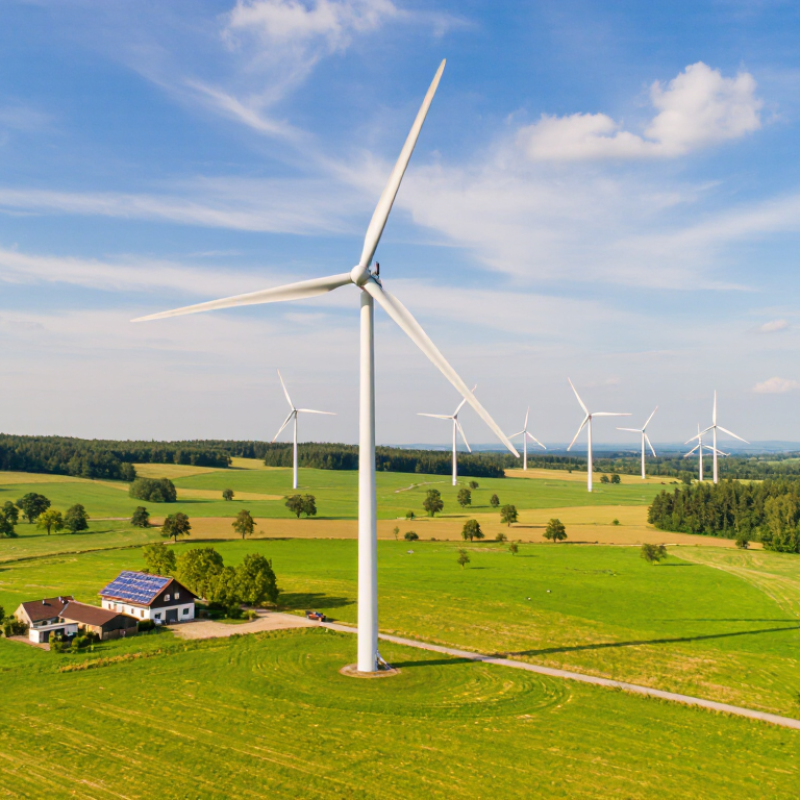
Why Invest in a Wind Turbine System?

What a Wind Turbine System Includes

A wind turbine system is more than a rotor on a tall tower. Its parts must work together to capture wind, regulate power, and deliver electricity safely. Small details matter. The rotor’s blades turn a hub, which drives a generator inside the nacelle. Some turbines use a gearbox; others use direct drive, so the component layout varies.

The tower raises the rotor into stronger, less turbulent airflow, while a foundation transfers loads into the ground. A controller monitors wind speed and turbine behavior, adjusting operation and triggering shutdowns when conditions exceed design limits.

Brakes and electrical protection help manage faults. They are not optional extras. Cables carry output to an inverter or compatible electrical equipment, which conditions power for a building, battery, or grid connection. Storage may be included, but not every installation needs batteries.

A complete project also depends on site assessment, installation hardware, and monitoring. Before choosing equipment, check average wind at hub height, turbulence from trees or buildings, soil conditions, and expected electricity use. A rooftop location can seem convenient, yet nearby edges may produce uneven airflow and noise. That is easy to underestimate. Treat rated output as a starting point, not a promise of household production; real results change with wind, maintenance, and system losses. Service access matters too, even when it complicates the layout.

How Wind Turbines Convert Wind into Electricity

Why Invest in a Wind Turbine System?

How Wind Turbines Convert Wind into Electricity

A wind turbine begins with moving air. Wind passing over the blades creates lift, turning the rotor and its central shaft. The shaft carries this rotation into the nacelle, the housing behind the blades. Inside, a generator converts mechanical motion into electrical energy. Some turbines use a gearbox to increase rotational speed; others use direct-drive generators. Power electronics then condition the electricity, while a transformer raises its voltage for local use or grid delivery. That is the conversion.

The process depends on more than spinning blades. Sensors help the turbine face changing wind, and blade controls adjust their angle to manage output. At a site, technicians may check wind records, soil conditions, and nearby obstacles before installation. A turbine generally needs wind above its cut-in threshold to generate power, and strong gusts can trigger protective shutdowns. Output changes with the weather. That variability can be harder to plan around than a simple diagram suggests. A well-sited system may still produce less electricity than expected if local wind patterns were poorly measured. The numbers deserve a second look.

The Costs and Potential Returns of Wind Energy

Why Invest in a Wind Turbine System?

The Costs and Potential Returns of Wind Energy

A wind turbine can turn a steady breeze into electricity, but the upfront cost is only part of the investment. Equipment, tower, installation, wiring, permits, and site preparation all affect the final price. You may also need to budget for inspections and repairs over time. For a small property, connecting equipment and preparing the site can cost more than expected. That gap matters.

Potential returns depend on local wind speeds, turbine size, electricity use, and the price of power you would otherwise buy. Estimate annual production using measured wind data, not a windy afternoon’s impression. Then compare expected savings with installation and maintenance costs over the system’s working life. A turbine may make financial sense on an open, windy site, but weak or inconsistent wind can stretch the payback period. Grid-connected systems can also produce more electricity than a household uses at certain times, so check how unused power is handled locally. Estimates are imperfect; treat projected returns as a range, not a promise.

Tips: Request a site-specific wind assessment and itemized quotes. Ask what routine maintenance costs, and keep a repair reserve. Compare the projected output with your actual electricity bills. Do the numbers still work under a lower-wind estimate?

Environmental and Energy-Security Benefits

Why Invest in a Wind Turbine System?

Environmental and Energy-Security Benefits

A wind turbine can generate electricity without burning fuel during operation, helping reduce greenhouse-gas emissions when it displaces fossil-fuel power. Its environmental value depends on the full project, though. Manufacturing, transport, construction, and maintenance all require materials and energy. Careful siting matters too: turbines should be assessed for effects on wildlife, nearby residents, and local landscapes. The benefits are real, but not automatic.

Wind power can also strengthen energy security by adding a local source to a home, farm, or community’s energy mix. When fuel prices rise or deliveries are disrupted, locally generated electricity may reduce exposure to those pressures. Wind is variable, however. A turbine cannot guarantee power at every hour, so grid connections, storage, backup supply, and demand planning may be important. Energy independence is rarely complete.

Tips: Check local wind records and obstructions before choosing a site. Ask for realistic estimates of annual output, maintenance needs, and equipment lifespan. Compare those estimates with your actual electricity use. A turbine that looks impressive on a clear, breezy day may still produce less energy than expected over a full year.

Key Factors to Assess Before Investing in a Wind Turbine System

Why Invest in a Wind Turbine System?
Key Factors to Assess Before Investing in a Wind Turbine System

A turbine’s value starts with the wind at its proposed hub height, not the breeze beside your house. Check long-term wind records, then compare them with on-site measurements where possible. Terrain, nearby trees, and buildings can create turbulence and reduce output. Small differences matter. The U.S. Energy Information Administration reported an average capacity factor of about 33% for utility-scale wind in 2023. That figure describes a fleet, not a promise for one site. A careful assessment should model seasonal wind, expected downtime, and the turbine’s power curve.

Costs extend beyond equipment and installation. Include foundations, electrical work, grid connection, inspections, insurance, and future repairs. IRENA’s Renewable Power Generation Costs in 2023 reported a global weighted-average levelized cost of USD 0.033 per kilowatt-hour for newly commissioned onshore wind. This benchmark helps with context, but it is not a household quote; local labor, project size, financing, and resource quality can change the economics sharply. Ask for assumptions behind any production estimate. Then test a weaker-wind scenario. It may feel overly cautious.

Also assess the physical site. A tower needs suitable access for delivery and maintenance, while nearby homes, trees, and wildlife may affect placement. Review noise expectations and connection requirements with qualified local professionals before committing. A beautiful map is not a site study. Wind projects can be worthwhile, but uncertain measurements or optimistic maintenance estimates deserve another look.

Why Invest in a Wind Turbine System? — Key Factors to Assess Before Investing

Assessment Factor Useful Metric or Benchmark Why It Matters What to Check Before Investing
Wind resource Long-term wind speed and direction measured or modeled at the proposed turbine hub height. Utility-scale sites are often assessed around 6.5–7 m/s or higher, but suitability depends on the turbine and project economics. Wind speed strongly affects annual energy production, revenue, and project viability. Review at least a year of on-site measurements where practical, correlated with long-term weather records; assess turbulence, terrain, and uncertainty.
Expected capacity factor Many onshore projects fall broadly around 25–45%; offshore projects commonly fall around 35–55%. Actual results depend on site conditions, turbine design, and curtailment. A higher capacity factor generally means more electricity produced from each installed kilowatt. Request an independent energy-yield assessment, including losses from wakes, electrical systems, availability, environmental limits, and grid curtailment.
Installed project cost Utility-scale onshore wind costs can vary substantially by country, site, project size, and year. A preliminary planning range may be about US$1,300–2,200 per kW, excluding unusual grid or site costs. Upfront capital cost affects financing needs, levelized cost of energy, and returns. Confirm what the estimate includes: turbine, foundations, roads, installation, development, interconnection, taxes, and contingency. Obtain site-specific bids.
Operations and maintenance Costs vary with turbine age, access, service contracts, location, and spare-parts requirements; there is no universal annual cost applicable to every project. Maintenance affects lifetime costs, turbine availability, and the amount of electricity sold. Compare full-service and owner-managed plans, warranty coverage, major-component exclusions, response times, and expected costs over the project life.
Turbine availability Technical availability targets are often in the mid-to-high 90% range, but contractual definitions and exclusions differ. Downtime reduces generation and can delay revenue, especially during periods of strong winds. Check the availability guarantee, measurement method, compensation limits, excluded events, and the service provider’s track record.
Project lifetime Wind projects are commonly planned around a 20–25-year operating life; actual life depends on design, maintenance, and site conditions. Longer operation can spread initial investment over more years, but may require component replacement or refurbishment. Review the turbine design life, warranty term, end-of-life obligations, decommissioning plan, and potential repowering costs.
Grid connection and curtailment There is no general cost benchmark: distance to the grid, network capacity, upgrades, and connection rules determine the project-specific impact. A viable wind site may still face high connection costs or limits on how much electricity it can export. Obtain a grid-impact study, connection-cost estimate, export limit, curtailment history or forecast, and a clear allocation of upgrade costs.
Revenue and electricity price Revenue may come from a power purchase agreement, a regulated tariff, or wholesale-market sales; prices and contract terms vary by market. More predictable revenue can support financing, while market exposure can increase returns as well as risk. Assess contract duration, pricing structure, counterparty credit, settlement rules, imbalance charges, and exposure after the contract ends.
Permits and environmental constraints Requirements are site-specific and may include land-use approval, aviation review, noise limits, and wildlife assessments. Delays, operating restrictions, or denied permits can change project cost and expected output. Confirm land rights, permitting status, community engagement needs, protected-species surveys, shadow-flicker limits, and required setbacks.
Financing and investment returns Evaluate project cash flow using the proposed debt terms, taxes, incentives, energy yield, operating costs, and a range of electricity-price scenarios. Returns depend on the combined effect of resource quality, costs, financing, and revenue—not on turbine output alone. Test downside cases for lower wind production, higher interest rates, construction delays, cost overruns, and reduced power prices; review lender covenants and reserve requirements.

Note: Figures are broad screening benchmarks, not project quotations or guaranteed outcomes. Costs, performance, permitting, and financing conditions vary by location, project scope, technology, and date; commission independent site-specific assessments before making an investment decision.

Copyright 2025 Fluidra S.A. | Created by BCM Marketing Agencia Privacy Policy Legal note | Cookie policy |

Technical cookies are strictly necessary for our website to work and you can navigate through it. These types of cookies are those that, for example, allow us to identify you, give you access to certain restricted parts of the page if necessary, or remember different options or services already selected by you, such as your privacy preferences. Therefore, they are activated by default, your authorization not being necessary in this regard. Through the configuration of your browser, you can block or alert the presence of this type of cookies, although such blocking will affect the proper functioning of the different functionalities of our website.


The analysis cookies allow us to study the navigation of the users of our website in general (for example, which sections of the page are the most visited, which services are used most and if they work correctly, etc.). From the statistical information on navigation on our website, we can improve both the operation of the page itself and the different services it offers. Therefore, these cookies do not have an advertising purpose, but only serve to make our website work better, adapting to our users in general. By activating them you will contribute to this continuous improvement. You can enable or disable these cookies by checking the corresponding box, being disabled by default.


Functionality cookies allow us to remember your preferences, to personalize certain characteristics and general options of our website, every time you access it (for example, the language in which the information is presented to you, the sections marked as favorites, your browser type, etc.) Therefore, this type of cookies does not have an advertising purpose, but by activating them you will improve the functionality of the website (for example, adapting to your type of browser) and the customization of it based on your preferences (for example, by presenting the information in the language that you have chosen in previous occasions), which will contribute to the ease, usability and comfort of our page during your navigation. You can enable or disable these cookies by checking the corresponding box, being disabled by default.


Advertising cookies allow us to manage the advertising spaces included in our website based on criteria such as the content shown or the frequency in which the ads are displayed. For example, if you have been shown the same ad several times on our website, and you have not shown a personal interest by clicking on it, it will not appear again. In summary, by activating this type of cookies, the advertising shown on our website will be more useful and diverse, and less repetitive. You can enable or disable these cookies by checking the corresponding box, being disabled by default.


Behavioral advertising cookies allow us to obtain information based on the observation of your browsing habits and behaviors on the web, in order to show you advertising content that best suits your personal tastes and interests. To understand it in a very simple way, we will give you a fictitious example: if your last searches on the web were related to suspense literature, we would show you advertising about suspense books. Therefore, activating this type of cookies, the advertising that we show you on our website will not be generic, but will be oriented to your searches, tastes and interests, therefore adjusting exclusively to you. You can enable or disable these cookies by checking the corresponding box, being disabled by default.
To understand it in a very simple way, we will give you a fictitious example: if your last searches on the web were related to suspense literature, we would show you advertising about suspense books. Therefore, activating this type of cookies, the advertising that we show you on our website will not be generic, but will be oriented to your searches, tastes and interests, therefore adjusting exclusively to you. You can enable or disable these cookies by checking the corresponding box, being disabled by default.

SAVE

We use our own and third-party cookies to ensure the proper functioning of the website and to analyse our services, improve your experience on our website and show you advertisements related to your interests according to profiling based on your browsing habits (e.g. websites visited). You can accept all cookies by clicking "ACCEPT" or set or reject them by clicking here. If you would like to know more about the use of cookies, please see our COOKIE POLICY.


ACCEPT ALL
Reject no essentials


