
What is a Hydraulic Rotary Actuator and How Does it Work?
FLUID HANDLING EXPERTS

Blog, all our news

What is a Hydraulic Rotary Actuator and How Does it Work?

Hydraulic Rotary Actuators are crucial components in many industrial systems. These devices convert hydraulic energy into rotational motion. According to Dr. Emily Carter, a leading expert in hydraulic systems, "Hydraulic Rotary Actuators play a vital role in enhancing operational efficiency." This highlights their importance.

Understanding how Hydraulic Rotary Actuators work involves exploring their design and mechanics. They often feature compact designs, enabling them to fit in tight spaces. Common applications include robotics, heavy machinery, and aerospace systems. Their ability to provide precise control is unmatched, but not without challenges.

One aspect worth reflecting on is the potential for hydraulic fluid leaks. This can compromise the actuator's performance. Regular maintenance is essential to mitigate such risks. Although they are often reliable, proper knowledge and expertise are necessary to ensure optimal functioning. Hydraulic Rotary Actuators are powerful tools, yet their complexity invites ongoing evaluation and improvement.
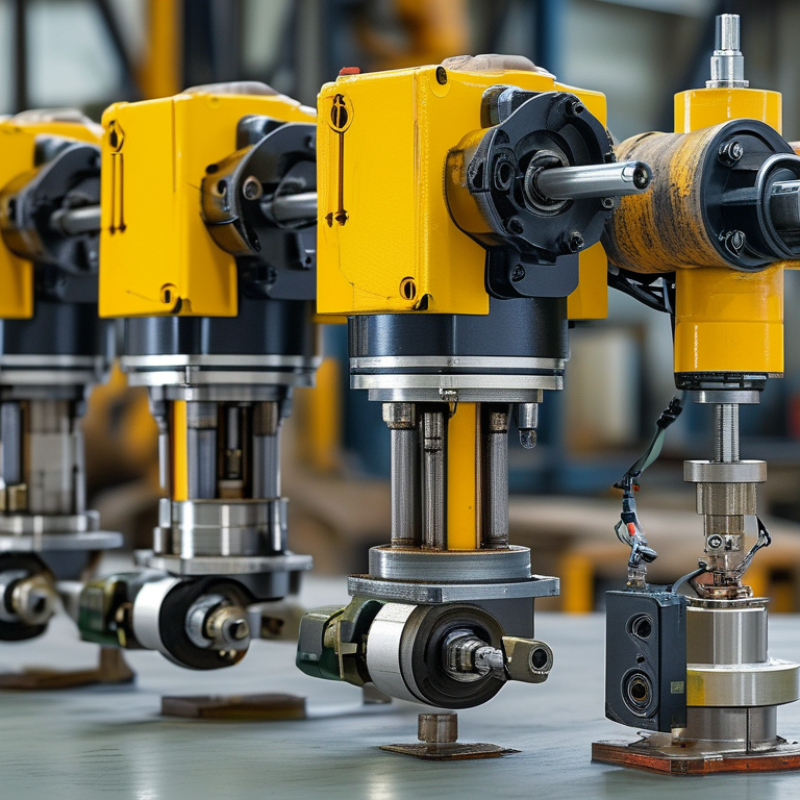
What is a Hydraulic Rotary Actuator and How Does it Work?

Definition and Overview of Hydraulic Rotary Actuators

Hydraulic rotary actuators play a crucial role in various machinery. They convert hydraulic energy into rotary motion, making them vital in many industrial applications. These devices utilize pressurized hydraulic fluid, allowing them to generate significant torque. By adjusting the fluid's flow and pressure, you can control the actuator's position and speed.

The construction of hydraulic rotary actuators varies widely, yet they typically feature a cylindrical body. Inside, a piston or gear works in concert with hydraulic fluid to create movement. Seals and bearings ensure smooth operation and longevity. Designers often strive for efficiency, but challenges arise in sealing and heat management. A small leak can severely impact performance.

These actuators are widely used in construction, robotics, and manufacturing. They enable precise movements in robotic arms and heavy machinery. However, frequent maintenance is necessary to prevent wear and tear. Understanding their operation can lead to improved designs and increased reliability. Industry professionals must constantly evaluate performance to mitigate potential issues.

What is a Hydraulic Rotary Actuator and How Does it Work?

Parameter Description
Definition A hydraulic rotary actuator converts hydraulic energy into rotational motion.
Working Principle Uses hydraulic fluid pressure to move a piston in a cylinder, creating rotational movement.
Applications Used in machinery, robotics, marine applications, and automated systems.
Advantages High torque output, compact design, smooth operation, and precise control.
Disadvantages Potential for leaks, requires maintenance, and affected by temperature changes.
Types Single-acting, double-acting, and rotary vane actuators.
Maintenance Regular inspection for leaks, checking fluid levels, and ensuring seals are intact.

Principle of Operation: How Hydraulic Rotary Actuators Work

Hydraulic rotary actuators are essential in various industrial applications. They convert hydraulic pressure into rotational movement. This mechanism uses hydraulic fluid to move a piston, which then turns a shaft. According to a report by MarketsandMarkets, the global market for hydraulic actuators is expected to expand at a CAGR of 6.5% from 2021 to 2026. This growth highlights the increasing reliance on hydraulic technology in automation.

The principle of operation employs Pascal's Law, wherein pressure applied to a confined fluid is transmitted equally in all directions. In practical terms, this allows for substantial torque output. For example, a hydraulic rotary actuator can generate torque values hundreds of times greater than electric motors of comparable size. However, one needs to consider potential downsides. Hydraulic systems may require more maintenance. They can be prone to leaks and require careful monitoring.

In addition, the design of these actuators can sometimes lead to inefficiencies. Energy losses can result from internal friction and the viscosity of the hydraulic fluid. Industry data suggests that optimizing hydraulic circuits is crucial for improving performance. Addressing these shortcomings is vital for achieving sustainable operations. As technologies develop, hydraulic rotary actuators must evolve, balancing efficiency with operational demands.

Key Components of Hydraulic Rotary Actuators

Hydraulic rotary actuators are essential components in various industrial applications. Their efficiency relies on several key components. The primary part is the hydraulic cylinder. It converts hydraulic pressure into rotational motion. The cylinder houses a rotating shaft, which provides output torque. Proper alignment of these components is crucial, as misalignment can lead to reduced performance and increased wear.

Another significant component is the hydraulic fluid. High-quality fluids enhance system efficiency and longevity. Oil with proper viscosity ensures optimal flow and reduces friction. According to a report from the Fluid Power Journal, improper fluid selection may result in a 20% efficiency loss. Regular maintenance of these fluids is necessary to avoid contamination and thermal breakdown, which can compromise actuator performance.

Seals and bearings also play a vital role in ensuring tight operation. Seals prevent leaks, while bearings support the shaft's smooth rotation. Wear in these components can lead to hydraulic leaks, reducing system reliability. A research study from the Journal of Mechanical Engineering emphasized that regular checks on seals and bearings could improve actuator lifespan by over 30%. Neglecting these components can result in costly downtime and repairs.

Applications of Hydraulic Rotary Actuators in Various Industries

Hydraulic rotary actuators play a crucial role in multiple industries. Their ability to convert hydraulic energy into rotational motion makes them invaluable. In the construction sector, for example, they are used in heavy machinery, like excavators and cranes. These actuators enable precise movements, allowing equipment to perform complex tasks. However, operators must regularly maintain these systems to prevent hydraulic fluid leaks. Over time, wear can lead to efficiency loss.

In the aerospace industry, hydraulic rotary actuators are essential for flight control systems. They provide the necessary torque for moving flight surfaces. The reliability of these components is vital for safety. However, their performance can degrade in harsh conditions, requiring thorough checks. Using advanced materials can help improve durability but also increases costs.

Manufacturing processes also heavily rely on hydraulic rotary actuators. They streamline operations by automating assembly lines. This efficiency is vital for meeting production deadlines. Yet, companies often face challenges balancing cost and quality. Investing in higher-quality actuators can lead to better long-term performance, but it requires careful budgeting. Such reflections are crucial for enhancing operational effectiveness.

Advantages and Limitations of Using Hydraulic Rotary Actuators

Hydraulic rotary actuators are renowned for their efficiency in converting hydraulic energy into rotational motion. They play a vital role in various industrial applications, from robotics to aerospace. Despite their advantages, they come with limitations that can impact their effectiveness.

One advantage is their high torque output. When a hydraulic actuator spins, it provides significant force, enabling heavy load handling. They can perform tasks that electric actuators struggle with. Additionally, they can operate in harsh environments where electrical systems might fail. However, hydraulic systems require regular maintenance to avoid leaks and ensure optimal performance.

On the flip side, hydraulic rotary actuators can be complex. They demand careful installation and skilled operators. If not managed correctly, they can lead to system inefficiencies. Also, their reliance on hydraulic fluid means that if there is a leak, it can become a hazard. Understanding these challenges is essential for ensuring a safe and effective operation.

Copyright 2025 Fluidra S.A. | Created by BCM Marketing Agencia Privacy Policy Legal note | Cookie policy |

Technical cookies are strictly necessary for our website to work and you can navigate through it. These types of cookies are those that, for example, allow us to identify you, give you access to certain restricted parts of the page if necessary, or remember different options or services already selected by you, such as your privacy preferences. Therefore, they are activated by default, your authorization not being necessary in this regard. Through the configuration of your browser, you can block or alert the presence of this type of cookies, although such blocking will affect the proper functioning of the different functionalities of our website.


The analysis cookies allow us to study the navigation of the users of our website in general (for example, which sections of the page are the most visited, which services are used most and if they work correctly, etc.). From the statistical information on navigation on our website, we can improve both the operation of the page itself and the different services it offers. Therefore, these cookies do not have an advertising purpose, but only serve to make our website work better, adapting to our users in general. By activating them you will contribute to this continuous improvement. You can enable or disable these cookies by checking the corresponding box, being disabled by default.


Functionality cookies allow us to remember your preferences, to personalize certain characteristics and general options of our website, every time you access it (for example, the language in which the information is presented to you, the sections marked as favorites, your browser type, etc.) Therefore, this type of cookies does not have an advertising purpose, but by activating them you will improve the functionality of the website (for example, adapting to your type of browser) and the customization of it based on your preferences (for example, by presenting the information in the language that you have chosen in previous occasions), which will contribute to the ease, usability and comfort of our page during your navigation. You can enable or disable these cookies by checking the corresponding box, being disabled by default.


Advertising cookies allow us to manage the advertising spaces included in our website based on criteria such as the content shown or the frequency in which the ads are displayed. For example, if you have been shown the same ad several times on our website, and you have not shown a personal interest by clicking on it, it will not appear again. In summary, by activating this type of cookies, the advertising shown on our website will be more useful and diverse, and less repetitive. You can enable or disable these cookies by checking the corresponding box, being disabled by default.


Behavioral advertising cookies allow us to obtain information based on the observation of your browsing habits and behaviors on the web, in order to show you advertising content that best suits your personal tastes and interests. To understand it in a very simple way, we will give you a fictitious example: if your last searches on the web were related to suspense literature, we would show you advertising about suspense books. Therefore, activating this type of cookies, the advertising that we show you on our website will not be generic, but will be oriented to your searches, tastes and interests, therefore adjusting exclusively to you. You can enable or disable these cookies by checking the corresponding box, being disabled by default.
To understand it in a very simple way, we will give you a fictitious example: if your last searches on the web were related to suspense literature, we would show you advertising about suspense books. Therefore, activating this type of cookies, the advertising that we show you on our website will not be generic, but will be oriented to your searches, tastes and interests, therefore adjusting exclusively to you. You can enable or disable these cookies by checking the corresponding box, being disabled by default.

SAVE

We use our own and third-party cookies to ensure the proper functioning of the website and to analyse our services, improve your experience on our website and show you advertisements related to your interests according to profiling based on your browsing habits (e.g. websites visited). You can accept all cookies by clicking "ACCEPT" or set or reject them by clicking here. If you would like to know more about the use of cookies, please see our COOKIE POLICY.


ACCEPT ALL
Reject no essentials



