
Top Hydraulic Internal Gear Pump Manufacturers Worldwide
FLUID HANDLING EXPERTS

Blog, all our news

Top Hydraulic Internal Gear Pump Manufacturers Worldwide

Hydraulic Internal Gear Pump manufacturers serve demanding applications where steady flow, compact construction, and dependable operation matter. These pumps appear in mobile equipment, machine tools, and industrial power units. Their smooth delivery can be useful in systems handling changing loads. Small details matter. A cold start, a narrow inlet line, or contaminated oil can expose weaknesses that a catalog comparison may miss.

Market reports provide context, but their boundaries matter. Grand View Research’s Hydraulic Pumps Market report estimated the broader global market at about USD 10.2 billion in 2023. That figure includes multiple pump designs; it should not be read as the value of internal gear pumps alone. The U.S. Department of Energy’s Improving Pumping System Performance guide also emphasizes evaluating pumps within their operating systems, rather than judging efficiency in isolation. For buyers, that means checking pressure, viscosity, duty cycle, noise, service access, and parts availability alongside rated flow.

This guide compares leading manufacturers worldwide through those practical criteria. It considers product range, application support, documented specifications, and global service coverage. A polished datasheet is useful, but it cannot settle every field question. One limitation deserves attention: no verifiable source was provided for a named expert’s exact quotation on this topic, so I will not invent one or present a paraphrase as a direct quote. Reliability starts with that distinction.
Top Hydraulic Internal Gear Pump Manufacturers Worldwide

Internal Gear Pump Operation: Rotor, Idler, and Fluid Displacement

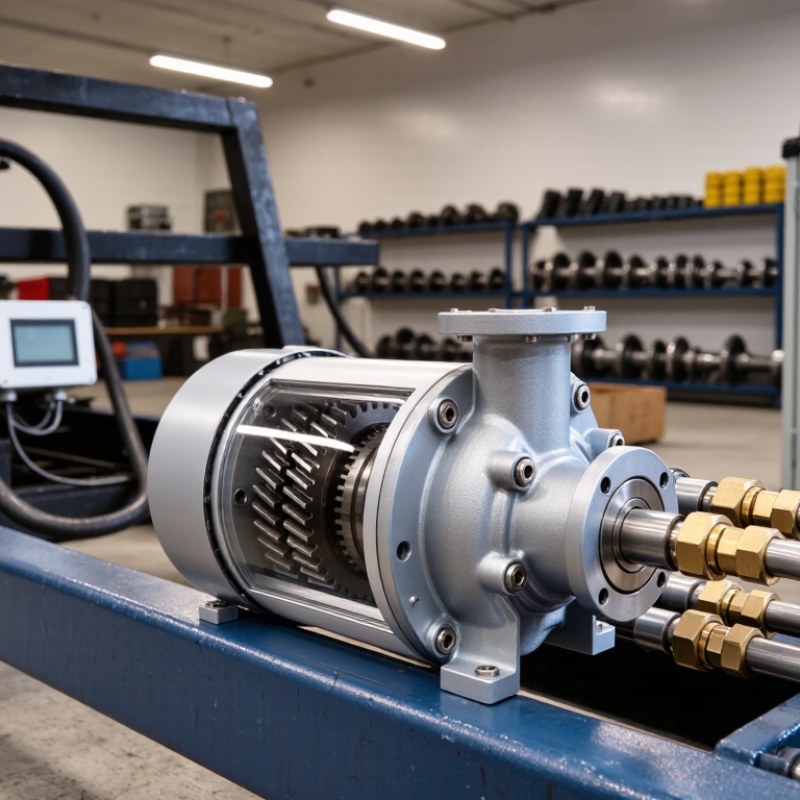
In an internal gear pump, a smaller toothed rotor turns inside a larger, internally toothed idler. Their offset centers create expanding spaces at the inlet. Fluid fills these pockets, travels around the housing, and exits as the spaces shrink. In crescent-style designs, a fixed separator keeps inlet and outlet flow apart. The mechanism is compact, but its clearances matter: wear or contamination can reduce volumetric efficiency.

The U.S. Department of Energy’s Improving Pumping System Performance sourcebook reports that pumping systems use nearly 20% of global electricity demand. That figure covers pumping broadly, not internal gear pumps alone, but it highlights why matching pump capacity to the circuit matters.

Listen closely. A change in sound can signal trouble. For practical checks, compare inlet pressure, fluid temperature, and delivered flow with the pump’s operating records. Viscous fluid may increase drag, while low inlet pressure can encourage cavitation. Neither symptom identifies the cause by itself. Confirm the manufacturer’s operating limits and inspect the fluid before changing settings.

Tips: Keep the inlet line short and adequately sized. Use clean fluid and monitor filter condition; tiny particles can score the rotor and idler surfaces.

Record flow and temperature at consistent operating conditions. Trends are useful, though measurements are only as reliable as the instruments and test method.

Performance Benchmarks: Up to 315 bar and 250 cm³/rev, Model-Dependent

Across published internal-gear pump specifications, peak figures can reach 315 bar and 250 cm³/rev, depending on the model. These are separate performance limits, not necessarily ratings available together. Pressure describes load capacity; displacement describes fluid delivered per revolution. At 250 cm³/rev, theoretical flow is 25 litres per minute at 100 rpm, before leakage and other losses. A large displacement does not automatically mean high pressure.

ISO 4409:2019 provides methods for testing and presenting steady-state pump performance, including flow, torque, and efficiency. That matters when comparing catalog values: speed, fluid viscosity, temperature, and test conditions can shift measured results. Look for a pressure rating tied to a stated speed and duty cycle, rather than a headline maximum alone. Check whether the figure is continuous or intermittent. Small print matters here. A pump may tolerate 315 bar briefly, yet require derating during sustained operation. That distinction is easy to miss, even in a careful specification review. Field results can also disappoint when inlet restrictions, aeration, or cold oil are overlooked. Use the stated displacement and pressure as screening benchmarks, then verify the actual operating envelope against the test conditions reported under ISO 4409.

Worldwide Manufacturers: Bosch Rexroth, Parker, Bucher, Casappa, and Marzocchi

Hydraulic internal gear pumps serve machine tools, mobile equipment, and industrial power units where steady flow and compact packaging matter. Five established manufacturers in this field include European and international suppliers with different product ranges, pressure ratings, and service networks. Their catalogs should be compared by operating pressure, viscosity range, noise level, and parts availability—not reputation alone. Small details matter. A pump that runs smoothly at warm-up may sound very different after a cold start.

Grand View Research estimated the global hydraulic pumps market at about USD 10.4 billion in 2023, with projected growth of 4.8% annually from 2024 to 2030. This is a broad market estimate, not an internal-gear-pump-only figure. It signals continued demand, but does not prove that every supplier or pump design will grow at the same pace. Buyers should check the report’s scope before using the figure in forecasts.

For a practical shortlist, compare the five manufacturers’ published performance curves under the same fluid, speed, and temperature conditions. Check whether the stated pressure is continuous or intermittent. Ask about filtration limits and replacement-part lead times, too. Catalog data can look precise, yet field conditions are messy. A quiet pump on a test bench may not stay quiet in a poorly aligned installation.

Comparing Pump Makers by Pressure Rating, Flow Range, Noise, and Efficiency

When comparing hydraulic internal gear pump makers, treat pressure and flow as a matched operating point, not isolated headline figures. For initial screening, many industrial designs cover roughly 100–300 bar and 10–300 L/min; exact limits depend on speed, fluid viscosity, and duty cycle. These are indicative ranges, not guarantees. ISO 4409:2019 provides procedures for measuring pump flow, pressure, torque, and efficiency under defined conditions. Ask for curves at your actual oil temperature and speed. A pump rated for 300 bar may deliver less flow near its pressure limit.

Noise and efficiency need equally careful comparison. Request sound data measured under consistent conditions; ISO 3744:2010 describes determining sound power from sound-pressure measurements. A difference of several decibels can matter on a factory floor, but distance and enclosure change perceived noise. For screening, compare volumetric efficiency around 90–95% at the intended operating point, then check the full curve. Small losses become heat. That comparison is imperfect: test fluids and installation conditions can differ, and published figures may not represent a real machine. Ask for test reports, not just catalog values.

Hydraulic Internal Gear Pumps: Typical Performance Ranges

Illustrative engineering ranges for internal gear pump designs—not a manufacturer-by-manufacturer comparison. Actual limits depend on model, fluid, speed, and operating conditions.

How to read this: The bars show representative maximum pressure classes; they are not guaranteed continuous-duty ratings. Across product families, flow can range from a few litres per minute to several hundred litres per minute. Published noise and efficiency figures are highly dependent on test conditions; typical catalog values often fall around 60–80 dB(A) and 90–95% volumetric efficiency. Compare data only when speed, fluid viscosity, pressure, and measurement method are alike.

Selecting a Manufacturer: Match Flow, Pressure, Fluid, and Duty Cycle

Top Hydraulic Internal Gear Pump Manufacturers Worldwide

Selecting a hydraulic internal gear pump starts with the machine’s real operating conditions, not its peak rating. Estimate required flow at the pump’s working speed, then check how flow changes with speed and fluid viscosity. Confirm both normal and maximum pressure, including brief pressure spikes during startup or load changes. A pump that meets the average figures may still run hot or wear quickly under demanding cycles.

Fluid matters. Compare its viscosity range and temperature with the pump’s stated limits, and verify that seals and internal materials are suitable. Describe the duty cycle clearly: hours of continuous operation, starts per hour, and periods of heavy load. Ask for performance data at your actual speed, pressure, and fluid temperature. A specification sheet is useful, but it cannot replace checking inlet conditions and filtration. I have seen sizing assumptions look tidy on paper and fail in service.

Tips: Record flow, pressure, fluid, temperature, and duty cycle before requesting a quote. Small details matter. Measure it hot, too. Share any pressure spikes and installation limits, then ask which test conditions support the quoted performance.

Copyright 2025 Fluidra S.A. | Created by BCM Marketing Agencia Privacy Policy Legal note | Cookie policy |

Technical cookies are strictly necessary for our website to work and you can navigate through it. These types of cookies are those that, for example, allow us to identify you, give you access to certain restricted parts of the page if necessary, or remember different options or services already selected by you, such as your privacy preferences. Therefore, they are activated by default, your authorization not being necessary in this regard. Through the configuration of your browser, you can block or alert the presence of this type of cookies, although such blocking will affect the proper functioning of the different functionalities of our website.


The analysis cookies allow us to study the navigation of the users of our website in general (for example, which sections of the page are the most visited, which services are used most and if they work correctly, etc.). From the statistical information on navigation on our website, we can improve both the operation of the page itself and the different services it offers. Therefore, these cookies do not have an advertising purpose, but only serve to make our website work better, adapting to our users in general. By activating them you will contribute to this continuous improvement. You can enable or disable these cookies by checking the corresponding box, being disabled by default.


Functionality cookies allow us to remember your preferences, to personalize certain characteristics and general options of our website, every time you access it (for example, the language in which the information is presented to you, the sections marked as favorites, your browser type, etc.) Therefore, this type of cookies does not have an advertising purpose, but by activating them you will improve the functionality of the website (for example, adapting to your type of browser) and the customization of it based on your preferences (for example, by presenting the information in the language that you have chosen in previous occasions), which will contribute to the ease, usability and comfort of our page during your navigation. You can enable or disable these cookies by checking the corresponding box, being disabled by default.


Advertising cookies allow us to manage the advertising spaces included in our website based on criteria such as the content shown or the frequency in which the ads are displayed. For example, if you have been shown the same ad several times on our website, and you have not shown a personal interest by clicking on it, it will not appear again. In summary, by activating this type of cookies, the advertising shown on our website will be more useful and diverse, and less repetitive. You can enable or disable these cookies by checking the corresponding box, being disabled by default.


Behavioral advertising cookies allow us to obtain information based on the observation of your browsing habits and behaviors on the web, in order to show you advertising content that best suits your personal tastes and interests. To understand it in a very simple way, we will give you a fictitious example: if your last searches on the web were related to suspense literature, we would show you advertising about suspense books. Therefore, activating this type of cookies, the advertising that we show you on our website will not be generic, but will be oriented to your searches, tastes and interests, therefore adjusting exclusively to you. You can enable or disable these cookies by checking the corresponding box, being disabled by default.
To understand it in a very simple way, we will give you a fictitious example: if your last searches on the web were related to suspense literature, we would show you advertising about suspense books. Therefore, activating this type of cookies, the advertising that we show you on our website will not be generic, but will be oriented to your searches, tastes and interests, therefore adjusting exclusively to you. You can enable or disable these cookies by checking the corresponding box, being disabled by default.

SAVE

We use our own and third-party cookies to ensure the proper functioning of the website and to analyse our services, improve your experience on our website and show you advertisements related to your interests according to profiling based on your browsing habits (e.g. websites visited). You can accept all cookies by clicking "ACCEPT" or set or reject them by clicking here. If you would like to know more about the use of cookies, please see our COOKIE POLICY.


ACCEPT ALL
Reject no essentials


