2026 How to Choose the Right Pressure Fittings
FLUID HANDLING EXPERTS

Blog, all our news

2026 How to Choose the Right Pressure Fittings

Pressure fittings look small on a drawing. In service, they carry pressure, vibration, heat, and the cost of a leak. Choosing one means matching the fitting to the actual system—not just the pipe size. Material, connection type, pressure and temperature ratings, fluid compatibility, and installation conditions all matter. A stainless-steel fitting that performs well in a clean water line may be unsuitable for a corrosive process stream.

Market reports help explain why selection deserves care. Grand View Research’s pipe fittings market report tracks demand by product, material, and application, reflecting the range of conditions fittings must serve. But market growth is not a design specification. For technical decisions, compare manufacturer ratings and applicable standards, such as ASME B31.3 for process piping and ISO 8434 for selected metallic tube connections. Check the exact product series; ratings can change with size, material, and connection configuration.

Small parts. High stakes.

Engineer and design historian Henry Petroski’s maxim, “Form follows failure,” offers a useful reminder: consider how a fitting could fail before choosing one. That means checking thread engagement, sealing surfaces, corrosion exposure, pressure spikes, and access for inspection. It also means questioning assumptions. A catalog rating alone does not prove a fitting will suit your operating conditions, and this guide cannot replace qualified engineering review. Use it to ask sharper questions, compare options, and document why a particular pressure fittings choice fits the system.
2026 How to Choose the Right Pressure Fittings

What Pressure Fittings Do and Where They Are Used

Pressure fittings join pipes, tubes, and hoses while helping contain fluid or gas under pressure. Common forms include couplings, elbows, tees, adapters, and reducers. Each solves a practical problem: an elbow changes direction, while a reducer connects lines of different sizes. Small parts matter.

These fittings appear in hydraulic equipment, compressed-air systems, water treatment plants, refrigeration lines, and industrial process piping. A technician might see them beside a pump, behind a machine panel, or along a pipe rack. The right choice depends on working pressure, temperature, fluid, connection style, and vibration. Stainless steel, brass, and engineered plastics each suit different conditions; none is right for every job. A fitting may look solid and still be incompatible with the system. That is easy to overlook. Check the manufacturer’s pressure ratings and installation requirements, and inspect threads and sealing surfaces before assembly. A clean, correctly matched connection helps reduce leaks, but installation quality matters too. Even experienced teams sometimes need to pause and verify an assumption.


2026 Guide: Choosing the Right Pressure Fittings

Pressure fittings connect, route, or control fluid in a system. Select fittings and connection components to suit the system pressure, temperature, fluid, material, and applicable standard.

These reference values are maximum allowable working pressures in psi for ASTM A105 carbon steel components in ASME B16.5 Material Group 1.1 at 100°F. Class numbers are designations, not pressure values; allowable pressure changes with material and temperature. Confirm the applicable standard and component rating before selecting fittings for utility, process, or high-pressure service.

How to Define Your System’s Pressure and Temperature Requirements

2026 How to Choose the Right Pressure Fittings
How to Define Your System’s Pressure and Temperature Requirements

Start with the system’s normal operating pressure, then identify its highest credible pressure. Startup surges, pump pulsation, and sudden valve closure can create brief spikes. A steady gauge reading may not show them. Check the pressure limits of every connected component, including tubing, seals, and fittings. The lowest-rated part sets the practical limit.

Temperature needs the same careful review. Record both the hottest and coldest conditions the fitting may face, including cleaning cycles or outdoor exposure. Heat can reduce pressure capacity and affect seal performance; cold can make some materials less forgiving. Use the component’s published ratings at your actual operating conditions, not just its room-temperature rating. It is easy to overlook brief temperature swings, and those can matter. If readings or operating cycles are uncertain, gather more data before specifying parts. A qualified engineer can help assess unusual conditions.

Tips: Note normal, peak, and vacuum conditions separately. Track temperature at the fitting location, not only at the main unit. Keep a simple record of pressure spikes and cycle changes. Then compare those figures with current technical documentation, leaving an appropriate safety margin for the application.

2026 How to Choose the Right Pressure Fittings - How to Define Your System’s Pressure and Temperature Requirements

Requirement What to define Example or reference point How it affects fitting selection
Normal operating pressure Record the usual pressure and identify whether readings are gauge (barg/psig) or absolute (bara/psia). Example: 10 MPa(g) during steady operation. Use the fitting’s allowable working pressure at the actual operating temperature—not a proof-test or burst value.
Maximum design pressure Specify the highest pressure the system is designed to experience, including the applicable design rules and relief-device settings. Example: a system operating at 10 MPa(g) may have a higher design pressure; establish the value from the system design rather than assuming a standard margin. The fitting, tube or pipe, connector, and sealing method must all be suitable for the design conditions.
Pressure surges and cycles Document startup and shutdown peaks, pump pulsation, water hammer, pressure cycling, and expected cycle frequency. Example: a transient peak of 12 MPa(g) is a separate design input from a 10 MPa(g) steady pressure. Repeated pressure cycling can cause fatigue. Check the fitting’s pressure-cycle suitability and control surges where practical.
Minimum and maximum temperature Record fluid and ambient temperature limits, including cold starts, cleaning, sterilization, and upset conditions. Example: specify a full range such as −20°C to 120°C when both conditions are credible. Temperature can reduce allowable pressure and affect material strength, seals, and thermal expansion. Check the manufacturer’s pressure-temperature limits.
Pressure at temperature Match the maximum pressure and the coincident metal and fluid temperatures, rather than assessing each independently. Example: verify the allowable pressure at 120°C if the system can reach 10 MPa(g) at that temperature. A fitting rated for a pressure at room temperature may have a lower allowable rating at elevated temperature.
Fluid and concentration Identify the fluid, concentration, contaminants, water content, and cleaning or flushing chemicals. Examples: dry air, water-glycol mixture, dilute acid, or hydrocarbon fluid; name the exact chemical where possible. Material and seal compatibility depend on the complete fluid chemistry, concentration, and temperature.
Fitting and seal materials Specify the body, ferrule or insert, and seal materials, and check compatibility with the fluid and environment. Stainless steels, carbon steel, brass, and polymers have different strength, corrosion, and temperature characteristics; no material is universally suitable. Confirm corrosion resistance, temperature limits, and pressure ratings for the exact fitting design and material grade.
Tube or pipe details Record outside diameter or nominal size, wall thickness, material, hardness where relevant, and dimensional tolerances. A tube fitting must match the specified tube size and be used with tube that meets the fitting maker’s requirements. The tube can limit system pressure even when the fitting body has a higher published rating.
Connection type and assembly Define thread or end connection, sealing method, installation access, and assembly procedure. Examples include tapered pipe threads, parallel threads with a separate seal, and compression-style tube connections. Connections are not automatically interchangeable. Follow the specified thread standard, seal, and assembly instructions.
Applicable standard and service Identify governing codes, industry standards, jurisdictional rules, and whether the service is hazardous or safety-critical. Requirements may differ for hydraulic, pneumatic, process, gas, and high-purity systems. Select a fitting documented for the applicable service and verify required certification or traceability.
Verification and maintenance Define inspection, leak testing, replacement intervals, and the approved commissioning or test procedure. Use the system design and applicable procedures to set test pressure; do not infer working pressure from a proof-test result. Inspect for leakage, corrosion, vibration damage, and loosening. Depressurize and isolate the system before maintenance.

Values shown are illustrative planning examples, not fitting ratings or design advice. Confirm allowable pressure at the combined pressure and temperature conditions using the documentation for the exact fitting, materials, connection, and applicable system code.

How to Match Fitting Materials to Fluids and Operating Conditions

2026 How to Choose the Right Pressure Fittings
How to Match Fitting Materials to Fluids and Operating Conditions

Choose fitting materials for the actual fluid, concentration, temperature, and pressure—not a broad label like “water” or “oil.” Water with chlorides can pit stainless steel, while some solvents can swell seals. The seal may fail before the metal body. Check compatibility at the highest expected temperature and concentration, then verify pressure ratings under heat, vibration, and pressure cycling.

The 2016 AMPP/NACE IMPACT study estimated corrosion costs at US$2.5 trillion globally, about 3.4% of world GDP, based on 2013 data. It also estimated that applying existing corrosion-control practices could save 15–35%. Those figures make material selection more than a procurement detail. Still, a compatibility chart is only a starting point; real fluid mixtures are messy, and charts may not cover them.

For a practical check, identify every wetted part, including ferrules, threads, and seals. Confirm alloy and seal compatibility using recognized technical references, and review temperature-adjusted pressure limits. Look for leakage residue or discoloration during inspection, but do not treat either as proof of a specific chemical cause. When fluid composition is uncertain, ask a materials specialist to review the service conditions. That extra check can feel slow, but guessing is worse.

How to Compare Connection Types, Sizes, and Sealing Methods

2026 How to Choose the Right Pressure Fittings

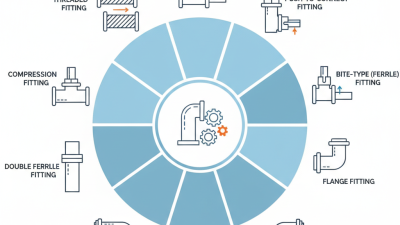
Choosing a pressure fitting starts with the connection, not its appearance. Threaded fittings suit compact assemblies, while flanges can simplify service on larger lines. Compression fittings grip tubing with a ferrule; push-to-connect styles allow faster assembly where compatible. Consider vibration, access, and how often the joint may need removal. Small details matter.

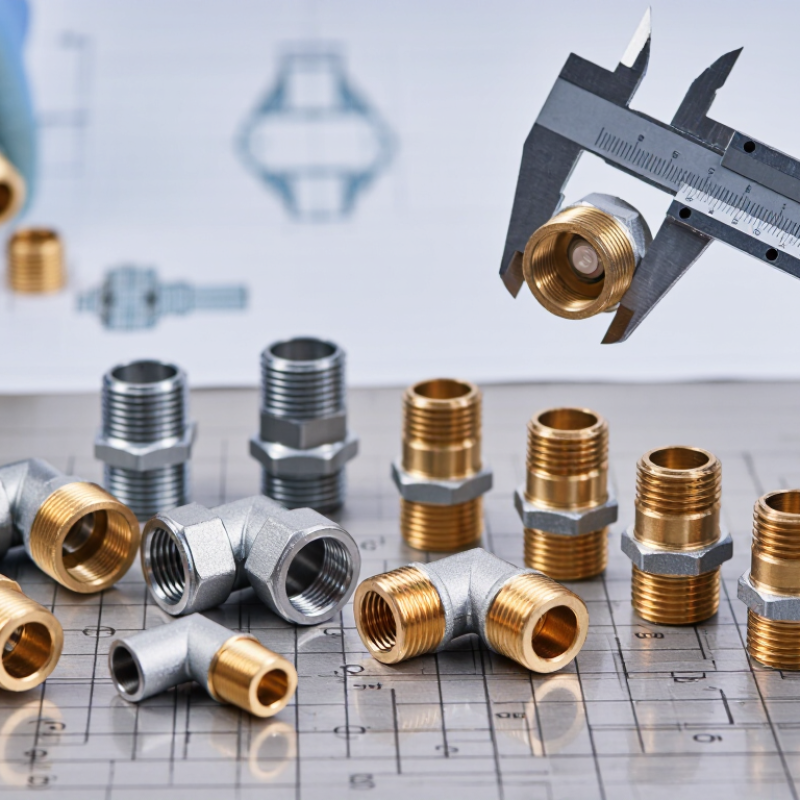
Confirm the fitting’s size, thread form, and material against the system drawings and component specifications. Nominal sizes do not always match measured outside diameters. Check thread pitch and form, too; similar-looking threads may not seal together. I’d avoid choosing by appearance alone. It feels quicker, but it can lead to rework.

Sealing method matters as much as connection type. Tapered threads may require a compatible sealant, while an O-ring face seal relies on a clean, undamaged sealing surface. Compression joints depend on the correct tube size and ferrule assembly. Follow the fitting maker’s torque and installation guidance rather than tightening by feel. After assembly, inspect the joint and test it using the system’s approved procedure. Depressurize before adjustments. If the connection still seems uncertain, recheck the specifications instead of forcing a fit.

How to Verify Standards, Compatibility, and Installation Requirements

2026 How to Choose the Right Pressure Fittings
How to Verify Standards, Compatibility, and Installation Requirements

A pressure rating alone does not prove a fitting is suitable. Check the standard listed on its technical sheet, then confirm it applies to your system and location. Standards can cover dimensions, materials, testing, or performance, so read the scope rather than relying on a familiar abbreviation. Verify the document is current. Also compare the fitting’s rated pressure and temperature with the system’s actual operating range, including possible pressure surges.

Tips: Match the fitting to the fluid, tube outside diameter, and connection type. NPT, BSP, and metric threads are not interchangeable just because they appear to fit. Check seal materials against the fluid and temperature. Before installation, inspect threads and sealing faces for dents, debris, or burrs. Follow the manufacturer’s torque instructions; overtightening can damage parts.

Installation details matter. Isolate and depressurize the line before work, and support tubing so it does not pull sideways on the connection. Use only compatible thread sealant where the connection design calls for it. After assembly, test gradually under the approved procedure and inspect for leaks. Documentation can feel tedious, but it is easy to overlook a small mismatch when parts look nearly identical. Keep the specification sheet and inspection notes with the equipment for later checks.

Copyright 2025 Fluidra S.A. | Created by BCM Marketing Agencia Privacy Policy Legal note | Cookie policy |

Technical cookies are strictly necessary for our website to work and you can navigate through it. These types of cookies are those that, for example, allow us to identify you, give you access to certain restricted parts of the page if necessary, or remember different options or services already selected by you, such as your privacy preferences. Therefore, they are activated by default, your authorization not being necessary in this regard. Through the configuration of your browser, you can block or alert the presence of this type of cookies, although such blocking will affect the proper functioning of the different functionalities of our website.


The analysis cookies allow us to study the navigation of the users of our website in general (for example, which sections of the page are the most visited, which services are used most and if they work correctly, etc.). From the statistical information on navigation on our website, we can improve both the operation of the page itself and the different services it offers. Therefore, these cookies do not have an advertising purpose, but only serve to make our website work better, adapting to our users in general. By activating them you will contribute to this continuous improvement. You can enable or disable these cookies by checking the corresponding box, being disabled by default.


Functionality cookies allow us to remember your preferences, to personalize certain characteristics and general options of our website, every time you access it (for example, the language in which the information is presented to you, the sections marked as favorites, your browser type, etc.) Therefore, this type of cookies does not have an advertising purpose, but by activating them you will improve the functionality of the website (for example, adapting to your type of browser) and the customization of it based on your preferences (for example, by presenting the information in the language that you have chosen in previous occasions), which will contribute to the ease, usability and comfort of our page during your navigation. You can enable or disable these cookies by checking the corresponding box, being disabled by default.


Advertising cookies allow us to manage the advertising spaces included in our website based on criteria such as the content shown or the frequency in which the ads are displayed. For example, if you have been shown the same ad several times on our website, and you have not shown a personal interest by clicking on it, it will not appear again. In summary, by activating this type of cookies, the advertising shown on our website will be more useful and diverse, and less repetitive. You can enable or disable these cookies by checking the corresponding box, being disabled by default.


Behavioral advertising cookies allow us to obtain information based on the observation of your browsing habits and behaviors on the web, in order to show you advertising content that best suits your personal tastes and interests. To understand it in a very simple way, we will give you a fictitious example: if your last searches on the web were related to suspense literature, we would show you advertising about suspense books. Therefore, activating this type of cookies, the advertising that we show you on our website will not be generic, but will be oriented to your searches, tastes and interests, therefore adjusting exclusively to you. You can enable or disable these cookies by checking the corresponding box, being disabled by default.
To understand it in a very simple way, we will give you a fictitious example: if your last searches on the web were related to suspense literature, we would show you advertising about suspense books. Therefore, activating this type of cookies, the advertising that we show you on our website will not be generic, but will be oriented to your searches, tastes and interests, therefore adjusting exclusively to you. You can enable or disable these cookies by checking the corresponding box, being disabled by default.

SAVE

We use our own and third-party cookies to ensure the proper functioning of the website and to analyse our services, improve your experience on our website and show you advertisements related to your interests according to profiling based on your browsing habits (e.g. websites visited). You can accept all cookies by clicking "ACCEPT" or set or reject them by clicking here. If you would like to know more about the use of cookies, please see our COOKIE POLICY.


ACCEPT ALL
Reject no essentials