
How to Choose a Multi Function Induction Cooker
FLUID HANDLING EXPERTS

Blog, all our news

How to Choose a Multi Function Induction Cooker

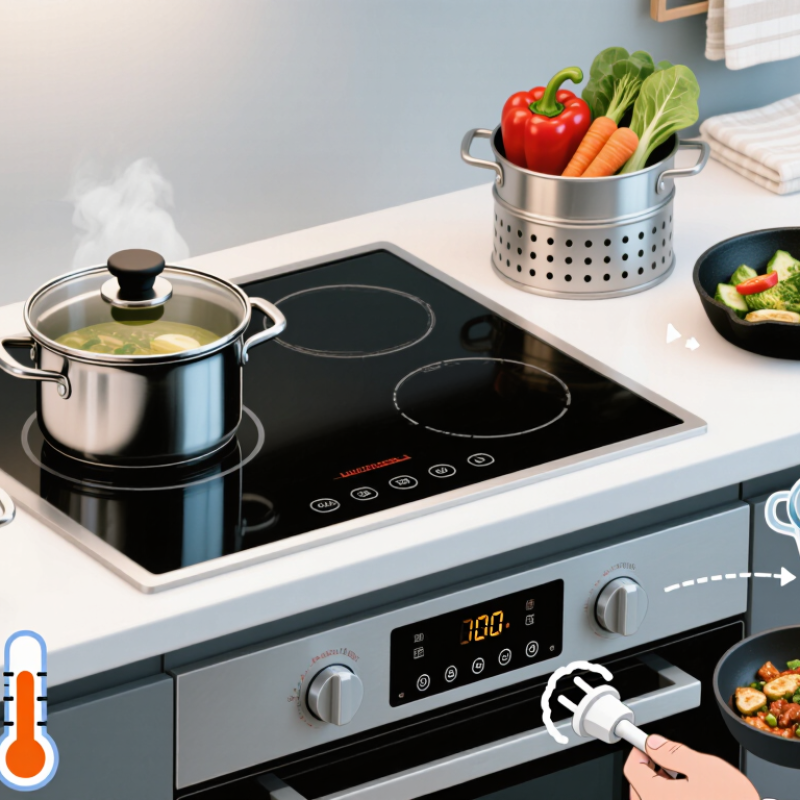
Choosing a Multi Function Induction Cooker is about finding a dependable fit for your kitchen, not buying the model with the longest feature list. These appliances may combine simmering, boiling, frying, steaming, and temperature control in one compact unit. Yet each cooker handles those tasks differently. A steady low setting matters when warming soup, while responsive power adjustments help when bringing a pot of water to a boil.

Start by checking the basics. Confirm that your everyday cookware works with induction; a magnet should cling to the base. Compare the cooking surface with your usual pan sizes, and check the cooker’s wattage against your available outlet and kitchen setup. Look for clear controls, a readable display, and useful protections such as overheating shutoff, as described in the manufacturer’s manual. Small details count. A slippery touch panel or awkward timer can become irritating during a busy dinner.

Then weigh the functions you will actually use. Preset programs can save time, but they do not guarantee better results; manual temperature and power settings offer more control. Consider cleaning, storage space, warranty terms, and access to service before deciding. A low price may seem appealing, but a vague manual or hard-to-find replacement parts deserve a second look. I would not assume that extra modes mean greater reliability. That is worth questioning. Compare specifications with the tasks you cook most often, and read reviews for consistent reports about heat control and durability. The right Multi Function Induction Cooker should suit your cookware, routines, and counter space without making everyday cooking more complicated.
How to Choose a Multi Function Induction Cooker

Define Multi-Function Induction Cookers and Identify Their Main Cooking Modes

A multi-function induction cooker heats compatible cookware with an electromagnetic field rather than heating a burner first. Its “functions” are usually preset power or temperature controls, not separate cooking technologies. Common modes include boiling, simmering, frying, steaming, hot pot, and keeping food warm. Some models also offer timers and temperature settings. Check whether settings are adjustable; a preset can be convenient, but it may not suit every pan or recipe.

Efficiency figures offer useful context. The U.S. Department of Energy’s Energy Saver guidance estimates induction cooking transfers about 85% of its energy to food, compared with roughly 32% for gas cooking. These are general estimates, not a promise for every kitchen. For choosing modes, look for steady low-power control for sauces, responsive heat changes for stir-frying, and a timer for unattended simmering. I would not treat “boil” or “fry” labels as guarantees. Pan size, flat contact, and the cooker’s sensor all matter. A small pot on a wide cooking zone can behave oddly. Test the controls with water before relying on a delicate recipe.

How to Choose a Multi Function Induction Cooker - Define Multi-Function Induction Cookers and Identify Their Main Cooking Modes

A multi-function induction cooker heats compatible cookware directly and may offer several heat, temperature, or timer settings. Available modes and controls vary by model.
Cooking Mode What It Does Typical Uses What to Check When Choosing
Power or Manual Mode Adjusts the induction output in steps or levels to control how quickly compatible cookware heats. General cooking, bringing water to a boil, and recipes that call for flexible heat adjustment. Look for a useful range of settings and controls that are easy to adjust while cooking.
Temperature-Control Mode Targets a selected temperature or temperature range, where supported. Actual pan temperature can vary with cookware and food. Tasks that benefit from steadier heat, such as gentle cooking or shallow frying. Check the stated temperature range and whether the cooker measures pan temperature directly or regulates it indirectly.
Boil Uses high heat to bring liquid toward a boil; some models reduce or stop heating after a set time. Boiling water, pasta, or other liquids. Confirm whether the function requires manual supervision and whether it includes an automatic shutoff.
Simmer Provides lower heat intended to maintain gentle bubbling rather than a vigorous boil. Soups, sauces, grains, and slow stovetop cooking. Low-power control can cycle on and off; check whether the cooker offers a dedicated low setting.
Fry or Sauté Provides medium-to-high heat for cooking food in a pan with a small amount of oil. Stir-frying, browning, sautéing vegetables, and searing ingredients. Choose a model with responsive adjustments. Use cookware and oil suitable for the intended temperature.
Hot Pot Maintains heating for a pot placed on the cooking surface; the setting may offer adjustable heat or a preset level. Shared meals, broths, and cooking ingredients at the table. Check the cooker’s continuous-use guidance, control placement, and compatibility with the pot’s base size.
Steam Heats water in a pot or steamer so that rising steam cooks food. The cooker supplies heat; a suitable steaming vessel is needed. Vegetables, dumplings, fish, and other foods suited to steaming. Confirm that the cookware or steamer fits the cooking zone and that water does not run dry.
Keep Warm Uses low or intermittent heat to help keep food warm after cooking. Holding a dish briefly before serving. Check the function’s time limit and follow food-safety guidance; this mode is not a substitute for safe food storage.
Timer or Preset Program Sets a cooking duration or combines a time setting with a programmed heat level. A timer does not necessarily detect when food is done. Timed cooking and routines that need a reminder or automatic end to heating. Check whether the timer counts down, shuts off the heating, or simply signals when time has elapsed.

Match Power and Capacity to Your Needs, Using 1,200–2,000 W as a Guide

When choosing a multi function induction cooker, treat 1,200–2,000 watts as a practical starting range, not a performance guarantee. Around 1,200 watts can suit simmering soup, warming sauces, or cooking a small pot of rice. It may take longer to bring a large pot to a boil. Higher settings near 2,000 watts can heat faster and handle larger portions, provided your kitchen’s electrical supply supports the appliance. Check the product instructions and your outlet specifications before buying.

Capacity should match the meals you actually make. A compact cooker and a small pot work well for one or two servings, but may feel cramped when preparing family meals. A larger cooking surface can fit wider pans, though it also needs more counter space. Measure your usual cookware, including the base diameter. Induction requires compatible cookware with a magnetic base. A magnet test can help, but the cooker’s manual is the better reference.

Think about how you use each function, too. Steaming vegetables, slow simmering, and quick stir-frying place different demands on power and temperature control. A cooker with several power levels may be more useful than one with a high maximum alone. I would avoid choosing solely by wattage; I once assumed higher power meant easier cooking, but pan size and heat control matter just as much. Check whether the unit can maintain a gentle simmer without frequent adjustment.

Check Cookware Compatibility: Induction Requires a Magnetic Cooking Base

Before choosing a multi function induction cooker, check the cookware you already use. Induction heats a pan through a magnetic field, so the cooking base must attract a magnet. Try a refrigerator magnet on the underside of each pot. If it sticks firmly, the pan is more likely to work. A weak or uneven hold deserves a closer check. That matters.

Material names can mislead. Cast iron usually works, while some stainless-steel pans do not. Aluminum, copper, and glass cookware generally need a compatible magnetic layer to heat on induction. Check the cookware label or manufacturer’s instructions rather than relying on appearance. Also compare the pan’s flat base with the cooker’s stated minimum and maximum cookware sizes. A tiny saucepan may not be detected, even if its base is magnetic. A warped base can heat unevenly or sit poorly on the cooking surface. A small check helps.

Compatibility is not only about whether a pan turns on. For steady cooking, use a flat-bottomed pan that covers the heating zone reasonably well. If you are replacing cookware, test several pieces before buying a cooker with multiple modes or burners. It is easy to overlook a favorite kettle or small skillet until the first meal. One limitation: a magnet test cannot confirm every detail of performance, so consult the cooker’s manual when cookware results seem uncertain.

Compare Energy Use: The U.S. DOE Puts Induction Efficiency at About 85%

When choosing a multi-function induction cooker, compare energy use alongside its cooking modes. The U.S. Department of Energy’s Energy Saver guidance puts induction cooking efficiency at about 85%. It estimates conventional electric resistance cooking at roughly 75–80%, while gas transfers about 32% of its energy to food. These figures describe energy reaching the cookware or food, not a guaranteed reduction in your utility bill.

That distinction matters. An 85% efficiency figure does not mean every meal costs 15% less. Pan size, cooking time, and heat setting all affect actual use. A small pot on a large cooking zone may waste energy, even with induction. Match the pan base to the marked circle, and use a flat, induction-compatible pot. The DOE comparison is a useful baseline, not a household-specific test. For a multi-function model, check whether low simmer, sauté, and keep-warm settings maintain stable heat without long run times. More modes do not automatically mean better efficiency. Still, a quick boil in a covered pot can make the difference visible: less heat spills into the room, and the cooking surface often cools sooner. My own comparison would include standby power too, though manufacturers do not always make that figure easy to find.

How to Choose a Multi-Function Induction Cooker

Typical cooking energy-transfer efficiency

Induction transfers about 85% of its energy to the cookware. For comparison, electric resistance cooking is typically around 75–80% efficient, while gas cooking is about 32% efficient. The electric bar uses the midpoint of its typical range. Actual results vary with cookware, burner size, and cooking habits. Source: U.S. Department of Energy.

Review Safety Features, Electrical Standards, Cleaning Needs, and Warranty Terms

How to Choose a Multi Function Induction Cooker

Check safety features before comparing cooking modes. Look for pan detection, overheat protection, a child lock, and automatic shutoff. A residual-heat indicator is useful, even though induction heats the pan rather than the glass directly. The surface can still become hot from contact.

That matters.

If possible, test whether the controls are easy to read and operate with a damp hand. I would not assume every safety feature works the same way; read the manual for its limits.

Confirm that the cooker’s voltage and frequency match your household supply. Check the power rating against the outlet and circuit guidance in the manual. Avoid using an extension cord unless the manufacturer specifically permits it.

A small detail.

Keep the air vents clear, and leave enough space around the appliance to release heat.

Cleaning should fit your routine.

After unplugging and cooling the cooker, wipe the surface with a soft, damp cloth. Skip abrasive pads, which can scratch the glass, and clean spills before they harden.

Finally, read the warranty terms closely. Note its duration, what parts are covered, and whether labor or shipping is excluded. Keep the receipt and manual; they are easy to misplace, and that can complicate a repair.

Copyright 2025 Fluidra S.A. | Created by BCM Marketing Agencia Privacy Policy Legal note | Cookie policy |

Technical cookies are strictly necessary for our website to work and you can navigate through it. These types of cookies are those that, for example, allow us to identify you, give you access to certain restricted parts of the page if necessary, or remember different options or services already selected by you, such as your privacy preferences. Therefore, they are activated by default, your authorization not being necessary in this regard. Through the configuration of your browser, you can block or alert the presence of this type of cookies, although such blocking will affect the proper functioning of the different functionalities of our website.


The analysis cookies allow us to study the navigation of the users of our website in general (for example, which sections of the page are the most visited, which services are used most and if they work correctly, etc.). From the statistical information on navigation on our website, we can improve both the operation of the page itself and the different services it offers. Therefore, these cookies do not have an advertising purpose, but only serve to make our website work better, adapting to our users in general. By activating them you will contribute to this continuous improvement. You can enable or disable these cookies by checking the corresponding box, being disabled by default.


Functionality cookies allow us to remember your preferences, to personalize certain characteristics and general options of our website, every time you access it (for example, the language in which the information is presented to you, the sections marked as favorites, your browser type, etc.) Therefore, this type of cookies does not have an advertising purpose, but by activating them you will improve the functionality of the website (for example, adapting to your type of browser) and the customization of it based on your preferences (for example, by presenting the information in the language that you have chosen in previous occasions), which will contribute to the ease, usability and comfort of our page during your navigation. You can enable or disable these cookies by checking the corresponding box, being disabled by default.


Advertising cookies allow us to manage the advertising spaces included in our website based on criteria such as the content shown or the frequency in which the ads are displayed. For example, if you have been shown the same ad several times on our website, and you have not shown a personal interest by clicking on it, it will not appear again. In summary, by activating this type of cookies, the advertising shown on our website will be more useful and diverse, and less repetitive. You can enable or disable these cookies by checking the corresponding box, being disabled by default.


Behavioral advertising cookies allow us to obtain information based on the observation of your browsing habits and behaviors on the web, in order to show you advertising content that best suits your personal tastes and interests. To understand it in a very simple way, we will give you a fictitious example: if your last searches on the web were related to suspense literature, we would show you advertising about suspense books. Therefore, activating this type of cookies, the advertising that we show you on our website will not be generic, but will be oriented to your searches, tastes and interests, therefore adjusting exclusively to you. You can enable or disable these cookies by checking the corresponding box, being disabled by default.
To understand it in a very simple way, we will give you a fictitious example: if your last searches on the web were related to suspense literature, we would show you advertising about suspense books. Therefore, activating this type of cookies, the advertising that we show you on our website will not be generic, but will be oriented to your searches, tastes and interests, therefore adjusting exclusively to you. You can enable or disable these cookies by checking the corresponding box, being disabled by default.

SAVE

We use our own and third-party cookies to ensure the proper functioning of the website and to analyse our services, improve your experience on our website and show you advertisements related to your interests according to profiling based on your browsing habits (e.g. websites visited). You can accept all cookies by clicking "ACCEPT" or set or reject them by clicking here. If you would like to know more about the use of cookies, please see our COOKIE POLICY.


ACCEPT ALL
Reject no essentials



