
2026 How to Choose the Right Hex Socket Bolt?
FLUID HANDLING EXPERTS

Blog, all our news

2026 How to Choose the Right Hex Socket Bolt?

Choosing the right Hex Socket Bolt is more than matching a diameter to a threaded hole. In real assembly work, small decisions can affect strength, service life, and maintenance time. A bolt may look suitable on a parts tray, yet fail because its grade, thread pitch, or head clearance is wrong.

This guide explains how to evaluate Hex Socket Bolt options with practical engineering judgment. It considers material, strength class, dimensions, drive size, corrosion resistance, and installation conditions. For example, a stainless steel bolt may suit outdoor equipment, while a high-strength alloy steel bolt may better support heavy mechanical loads. The correct choice depends on the complete application, not one attractive specification.

Check the drawings carefully. Measure the available thread depth. Inspect the mating material. These details matter. Reliable selection also requires comparing manufacturer data, applicable standards, and verified test information. Product markings should be clear, and torque recommendations should come from trustworthy technical sources.

Some recommendations are not universal. A bolt that performs well in a dry workshop may disappoint near saltwater or repeated vibration. I have seen assemblies fail after users focused only on tensile strength. That mistake is easy to repeat. It deserves reflection.

By understanding load direction, installation access, environmental exposure, and future maintenance, buyers can make more defensible decisions. The aim is not to choose the most expensive fastener. It is to select a Hex Socket Bolt that fits the actual job, performs consistently, and remains serviceable over time.
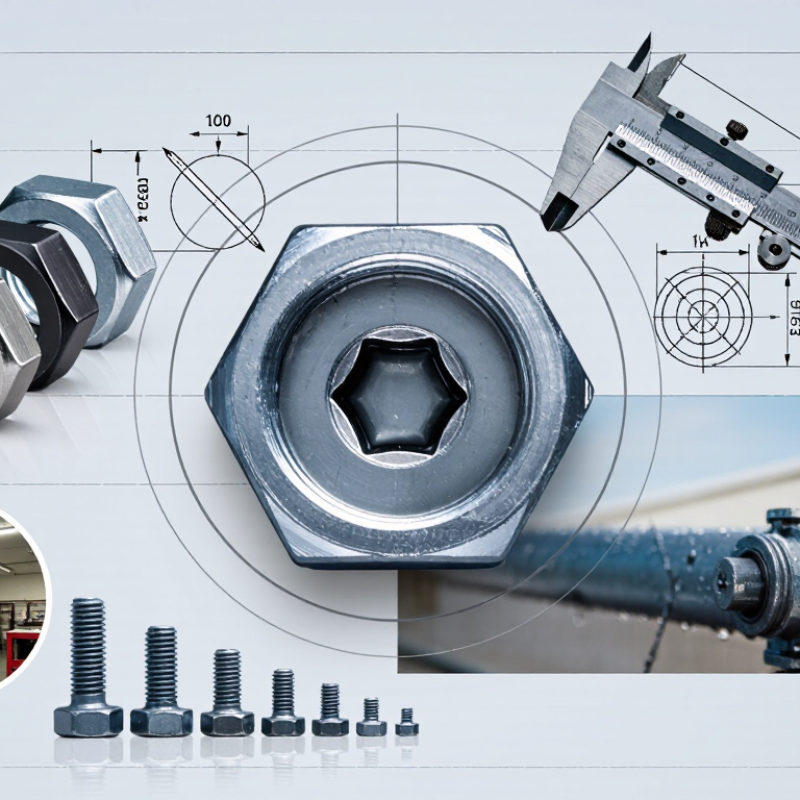
2026 How to Choose the Right Hex Socket Bolt?

Understanding Hex Socket Bolt Designs and Their Applications

2026 How to Choose the Right Hex Socket Bolt?

Hex socket bolts differ by head shape, drive depth, strength class, and installation space. A socket head cap screw suits compact machinery because its cylindrical head offers high clamping force. Button-head designs provide a lower profile, while flat-head versions sit nearly flush after countersinking.

ISO 4762 defines key dimensions for socket head cap screws. ISO 898-1 also classifies mechanical performance, including tensile strength and yield behavior. Choose by load, clearance, vibration, and corrosion exposure—not appearance.

The decision matters in a growing market. Grand View Research estimated the global industrial fasteners market at about US$88.5 billion in 2023. That figure reflects broad demand, but it does not guarantee every bolt fits every assembly. In field maintenance, mismatched socket depth or poor thread engagement can cause rounding, loosening, or uneven pressure. I have seen bolts look oversized yet fail because the joint design was weak. A perfect-looking choice can still be wrong.

Tips: Check the strength marking and thread pitch first. Match the bolt to the nut or tapped hole. Keep engagement near the engineering specification. Use a calibrated torque tool, especially on critical joints. For outdoor equipment, compare coating compatibility with the base metal. Metric and inch threads may appear similar. They are not interchangeable. A short trial assembly can reveal clearance problems before production.

Identifying the Correct Bolt Size, Thread, and Drive Type

2026 How to Choose the Right Hex Socket Bolt?

Choosing a hex socket bolt starts with the bolt’s size, not the socket wrench. Measure the shaft diameter and length separately. Length usually runs from beneath the head to the bolt tip. A bolt that is too short may not engage enough threads. An overly long bolt can interfere with moving parts or internal spaces.

Check the thread carefully. Metric threads use millimetres, while imperial threads use inches. Measure the diameter, then identify the thread pitch with a thread gauge. Count the ridges over a known distance if no gauge is available. This method works, but it is easier to misread fine threads. Compare the bolt with a known sample whenever possible. Match the thread type, pitch, and engagement depth. Do not force a bolt into a similar-looking hole.

Tips: Clean the hole before testing. Turn the bolt by hand first. It should rotate smoothly for several turns. Select the correct drive size and use a fully seated hex key or bit. A loose drive can round the internal socket, especially during final tightening. I have seen this happen when paint, dirt, or a worn tool reduced contact. Use a torque wrench when the assembly has specified tightening requirements. Recheck your measurement before ordering; one small error can waste an entire repair.

Selecting the Right Material, Grade, and Surface Finish

2026 How to Choose the Right Hex Socket Bolt?

Selecting the correct material starts with the working environment. Alloy steel suits high-load joints, especially where compact socket heads are useful. Stainless steel performs better in damp or mildly corrosive areas. A2 stainless is common for general exposure, while A4 offers stronger resistance in marine conditions. Do not choose stainless only by appearance. Its strength and galling behavior may affect installation. I have seen bolts seize when installers reused dry stainless fasteners without suitable assembly paste.

Grade controls load capacity, not just bolt color. Metric classes such as 8.8, 10.9, and 12.9 indicate different strength levels. Match the bolt grade with the joint design, clamp load, and torque procedure. A stronger bolt is not automatically safer. The connected material may fail first. Check the drawing, technical datasheet, and applicable standard before ordering. Small details matter.

Surface finish should reflect the environment and grade. Zinc plating improves basic corrosion resistance, while black oxide offers limited protection unless oiled. Passivated stainless steel supports cleaner, more consistent corrosion performance. High-strength plated bolts require careful specification because some processes can increase hydrogen embrittlement risk. Finish also changes thread friction, which affects torque. Do not copy a torque value blindly. Test a sample assembly when friction, coating, or lubrication changes. That extra check can prevent an expensive and quiet failure.

Matching Strength, Environment, and Load Requirements

2026 How to Choose the Right Hex Socket Bolt?

Matching Strength, Environment, and Load Requirements

Choosing a hex socket bolt starts with the joint, not the bolt head. Define the load, clamping force, thread size, and available space. A high-strength bolt may fail if the connected material is weak. Check the bolt’s property class, thread engagement, and recommended tightening torque. Metric classes such as 8.8 or 10.9 offer different strength levels. Never select by appearance alone.

Environment changes the decision quickly. Indoor machinery may need a standard alloy steel bolt with protective plating. Outdoor equipment, coastal areas, and washdown zones demand better corrosion resistance. Stainless steel can perform well, but its strength and galling behavior require careful evaluation. Avoid mixing dissimilar metals without checking galvanic corrosion risks. Small details matter.

Think about repeated loads, vibration, and temperature changes. Use suitable washers, locking methods, or thread engagement where the joint design requires them. Torque tools should be calibrated, yet torque alone does not prove correct preload. Friction, surface finish, and lubrication can alter results. A practical inspection should check damaged threads, uneven seating, and visible corrosion. One common mistake is choosing the strongest bolt available. That choice can increase cost or shift failure into the joint. Recheck the design when conditions change.

2026 How to Choose the Right Hex Socket Bolt? - Matching Strength, Environment, and Load Requirements

Bolt Material / Property Class Minimum Tensile Strength Minimum Proof Stress Suitable Environment Typical Load or Application Important Selection Notes
Carbon Steel, Class 8.8
ISO 898-1
800 MPa 580 MPa Dry indoor areas and ordinary outdoor service when protected with a suitable coating General machinery, brackets, frames, guards, and moderate static loads A practical general-purpose grade; provide corrosion protection and verify fatigue loads.
Carbon Steel, Class 10.9
ISO 898-1
1,040 MPa 830 MPa Controlled indoor or protected environments; coating may be required outdoors High-clamp-load joints, automotive assemblies, machine structures, and heavily loaded equipment Use correct tightening procedures; avoid unsuitable electroplating because high-strength steel can be vulnerable to hydrogen embrittlement.
Carbon Steel, Class 12.9
ISO 898-1
1,220 MPa 970 MPa Dry, controlled environments where maximum strength is needed Compact high-load joints, tooling, molds, and precision machinery Not automatically the best choice for every joint; increased hardness can reduce toughness and corrosion resistance.
Austenitic Stainless Steel, A2-70
ISO 3506-1
700 MPa 450 MPa General atmospheric exposure, indoor humidity, and many food-processing or architectural environments Light-to-moderate loads where corrosion resistance is more important than maximum strength Lower strength than Class 8.8; galling is possible, so use suitable installation practices.
Austenitic Stainless Steel, A4-80
ISO 3506-1
800 MPa 600 MPa Humid, coastal, and many chloride-containing environments; suitability must be assessed for severe service Moderate-to-high loads in outdoor equipment, marine-adjacent structures, and chemical-processing areas Better corrosion resistance than A2 in many conditions, but it is not immune to pitting or stress-corrosion cracking.
Coated Carbon Steel
Strength class selected separately
Depends on class Depends on class Outdoor or humid service when the coating system is specified for the exposure category Structural and industrial joints requiring higher strength with controlled corrosion protection Confirm coating thickness, thread fit, friction coefficient, and tightening method before installation.
Selection checklist: Confirm the applied tensile, shear, fatigue, vibration, and preload requirements; select the bolt diameter and engagement length; check temperature and chemical exposure; ensure the nut, washer, and mating material are compatible; and use a verified tightening method. Strength values are minimum values from the stated ISO property-class systems and should not replace a joint-specific engineering calculation.

Checking Fit, Standards, Installation, and Long-Term Performance

2026 How to Choose the Right Hex Socket Bolt?

Choosing a hex socket bolt starts with fit, not appearance. Match the bolt diameter, thread pitch, length, and head clearance to the assembly. A bolt that feels close enough can still damage threads or leave weak clamping force. Check whether the drawing requires metric or inch dimensions. Confirm the specified strength class, material, and corrosion resistance before ordering. Standards matter because thread angles, tolerances, and head dimensions must work together. Do not rely on a familiar size.

Installation quality affects long-term performance. Use a clean, correctly sized hex key or bit that reaches the socket fully. A loose tool can round the recess before the bolt reaches its target torque. Follow the project’s torque specification, and check whether lubrication changes that value. Tightening by feel is tempting. It is also inconsistent. For critical joints, use a calibrated torque wrench and tighten in a controlled sequence. Inspect the mating surfaces for burrs, paint, or trapped debris.

Service conditions deserve equal attention. Vibration, heat, moisture, and repeated loading can loosen or fatigue a poorly selected bolt. Consider a suitable locking method only when the design permits it. Recheck exposed fasteners after initial operation, especially on equipment with movement. I sometimes find that a perfect specification fails because the access space was ignored. That detail is easy to miss. A final trial fit, followed by a visual inspection, can reveal problems before they become expensive repairs.

Copyright 2025 Fluidra S.A. | Created by BCM Marketing Agencia Privacy Policy Legal note | Cookie policy |

Technical cookies are strictly necessary for our website to work and you can navigate through it. These types of cookies are those that, for example, allow us to identify you, give you access to certain restricted parts of the page if necessary, or remember different options or services already selected by you, such as your privacy preferences. Therefore, they are activated by default, your authorization not being necessary in this regard. Through the configuration of your browser, you can block or alert the presence of this type of cookies, although such blocking will affect the proper functioning of the different functionalities of our website.


The analysis cookies allow us to study the navigation of the users of our website in general (for example, which sections of the page are the most visited, which services are used most and if they work correctly, etc.). From the statistical information on navigation on our website, we can improve both the operation of the page itself and the different services it offers. Therefore, these cookies do not have an advertising purpose, but only serve to make our website work better, adapting to our users in general. By activating them you will contribute to this continuous improvement. You can enable or disable these cookies by checking the corresponding box, being disabled by default.


Functionality cookies allow us to remember your preferences, to personalize certain characteristics and general options of our website, every time you access it (for example, the language in which the information is presented to you, the sections marked as favorites, your browser type, etc.) Therefore, this type of cookies does not have an advertising purpose, but by activating them you will improve the functionality of the website (for example, adapting to your type of browser) and the customization of it based on your preferences (for example, by presenting the information in the language that you have chosen in previous occasions), which will contribute to the ease, usability and comfort of our page during your navigation. You can enable or disable these cookies by checking the corresponding box, being disabled by default.


Advertising cookies allow us to manage the advertising spaces included in our website based on criteria such as the content shown or the frequency in which the ads are displayed. For example, if you have been shown the same ad several times on our website, and you have not shown a personal interest by clicking on it, it will not appear again. In summary, by activating this type of cookies, the advertising shown on our website will be more useful and diverse, and less repetitive. You can enable or disable these cookies by checking the corresponding box, being disabled by default.


Behavioral advertising cookies allow us to obtain information based on the observation of your browsing habits and behaviors on the web, in order to show you advertising content that best suits your personal tastes and interests. To understand it in a very simple way, we will give you a fictitious example: if your last searches on the web were related to suspense literature, we would show you advertising about suspense books. Therefore, activating this type of cookies, the advertising that we show you on our website will not be generic, but will be oriented to your searches, tastes and interests, therefore adjusting exclusively to you. You can enable or disable these cookies by checking the corresponding box, being disabled by default.
To understand it in a very simple way, we will give you a fictitious example: if your last searches on the web were related to suspense literature, we would show you advertising about suspense books. Therefore, activating this type of cookies, the advertising that we show you on our website will not be generic, but will be oriented to your searches, tastes and interests, therefore adjusting exclusively to you. You can enable or disable these cookies by checking the corresponding box, being disabled by default.

SAVE

We use our own and third-party cookies to ensure the proper functioning of the website and to analyse our services, improve your experience on our website and show you advertisements related to your interests according to profiling based on your browsing habits (e.g. websites visited). You can accept all cookies by clicking "ACCEPT" or set or reject them by clicking here. If you would like to know more about the use of cookies, please see our COOKIE POLICY.


ACCEPT ALL
Reject no essentials


