
How to Choose the Right Girder Cranes for Your Business?
FLUID HANDLING EXPERTS

Blog, all our news

How to Choose the Right Girder Cranes for Your Business?

Choosing the right Girder Cranes begins with the work, not the catalogue photograph. A crane that looks powerful may still be unsuitable. The real question is simple: what must it lift, move, and survive each day?

Mark Bridger, a lifting-equipment consultant, states, “The best crane is matched to the task, not oversized for appearance.” This principle deserves attention. Review the safe working load, span, lifting height, duty class, travel speed, and operating frequency. A ten-ton girder crane may handle ten tons safely, yet repeated impacts can shorten its service life. Measure the building columns, runway alignment, floor condition, and available headroom. Small errors become expensive quickly.

Think about the load path. Will operators move steel coils, moulds, machine parts, or irregular assemblies? Each load creates different control and positioning demands. Consider pendant controls, radio controls, variable-speed drives, brakes, hooks, and maintenance access. A dusty workshop may need different protection than a clean manufacturing area. Moisture matters too.

Do not ignore tomorrow.

Production can expand. Loads can change. A crane selected only for today may become a bottleneck within two years. However, buying excessive capacity also wastes capital and can increase structural demands. This is where practical engineering judgment matters. I would not trust a decision based only on supplier claims. Ask for duty calculations, inspection records, component specifications, and installation references. Compare proposals carefully. Even experienced buyers miss one detail: the crane must fit the building as precisely as it fits the load.
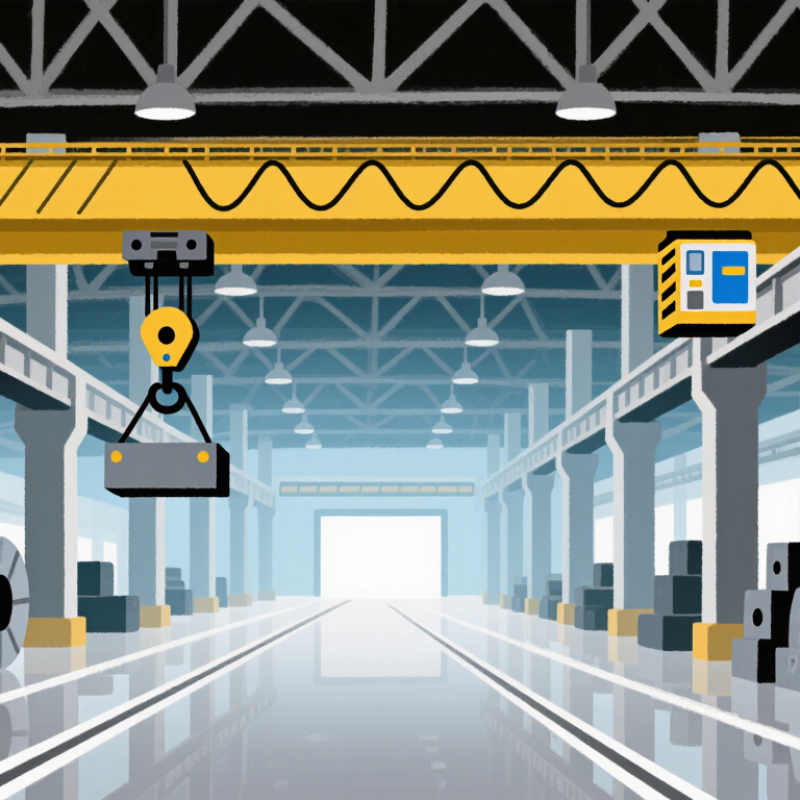
How to Choose the Right Girder Cranes for Your Business?

Define Your Lifting Requirements and Operating Conditions

Choosing the right girder crane starts with the load, not the catalogue. Record the maximum load, average load, lifting frequency, span, hook height, and travel distance. A 5-ton load lifted twice daily demands different equipment from a 3-ton load moved every five minutes. Include the load’s shape and center of gravity. Steel coils, molds, and machinery behave differently.

Operating conditions matter just as much. Measure available headroom and runway clearance at the lowest point. Check dust, heat, humidity, corrosive chemicals, outdoor wind, and temperature changes.

Specify the required lifting speed and positioning accuracy. For example, a fabrication bay may need slow, controlled movement, while a warehouse may prioritize repeated travel cycles.

ASME B30.2 and OSHA 29 CFR 1910.179 provide useful safety and inspection frameworks, but local requirements must also be verified.

The 2024 MHI Annual Industry Report found that 83% of supply-chain professionals planned to increase technology investment. That trend makes monitoring and maintenance features more attractive, but automation cannot correct poor capacity estimates. Calculate duty class from actual cycles, not optimistic assumptions.

A crane used 40 cycles per hour may experience far greater fatigue than its nameplate suggests. I have seen planning teams overlook future production growth. That mistake becomes expensive.

Leave sensible capacity and runway allowance, yet avoid excessive sizing, which can increase structure, power, and installation costs. Recheck the decision with a qualified engineer and a real site survey.

Compare Girder Crane Types and Structural Configurations

Choosing the right girder crane starts with comparing structure, not lifting capacity alone. Single-girder cranes usually suit moderate loads, shorter spans, and buildings with limited headroom. They often reduce steel weight and installation costs. However, their lower headroom can affect hook height.

Double-girder cranes provide greater lifting capacity, longer spans, and improved hook approach. They are practical for steel fabrication, heavy maintenance, and busy production lines. Their deeper structure needs stronger runway beams and more vertical clearance. Measure the building carefully. A powerful crane is useless if it cannot reach the working area.

Top-running configurations travel on runway rails supported by columns or building frames. Under-running cranes hang beneath the runway, which can preserve floor space and support flexible layouts. Box girders offer strong torsional resistance, while rolled I-beams may work well for lighter applications. Actual loads, duty cycles, travel distance, and future expansion should guide the choice. Real site conditions often challenge the original plan.

Tips: Record the heaviest load, lifting frequency, span, and available headroom. Check runway alignment and building strength with a qualified engineer. Leave service access around electrical systems and end trucks. Ask for brake performance, overload protection, and inspection records. Do not size the crane for today only. That mistake can become expensive. Also, avoid choosing the heaviest configuration automatically; unnecessary capacity may increase structural and operating costs.

How to Choose the Right Girder Cranes for Your Business?

Comparison of common girder crane types and structural configurations using typical industry capacity and span ranges.

Single-girder cranes are generally suitable for lighter loads and lower installation costs, while double-girder designs provide greater lifting capacity, longer spans, and increased headroom for demanding production environments. Under-running configurations can be useful where the existing building structure has limited runway support capacity. Actual selections should be verified against load cycles, duty classification, span, lift height, building clearance, and runway design.

Evaluate Load Capacity, Span, Lift Height, and Travel Distance

How to Choose the Right Girder Cranes for Your Business?

Load capacity should match the heaviest verified load, not an optimistic estimate. Include slings, spreader beams, hooks, and other below-hook equipment. A 10-ton process load may require a higher-rated crane. The final rating should follow a qualified engineer’s calculation and applicable ASME and OSHA requirements. MHI’s 2024 Annual Industry Report surveyed more than 2,000 supply-chain professionals and identified labor availability as a continuing operational pressure. That pressure makes simple, reliable lifting controls more valuable. Do not guess.

Span affects girder deflection, wheel loads, headroom, and building reactions. Measure the actual runway width. Then check column spacing, rail alignment, and available hook approach. A longer span is not automatically better. It may increase steel weight and structural cost. CMAA Specification No. 70 evaluates crane duty through load spectrum and operating frequency. Record typical lifts, peak loads, daily cycles, and idle periods before selecting a duty class.

Lift height must clear the highest storage position, vehicle bed, or machine opening. Add sling length and hook approach. Travel distance should cover the full production route, including loading zones and maintenance access. Measure the real path. Frequent short moves may need better positioning control, while long repetitive travel increases cycle time and wear. I would also review future loads, because today’s safe capacity can become tomorrow’s limitation. That assumption fails. Recheck the layout with maintenance personnel before ordering.

Assess Safety Features, Controls, Installation, and Maintenance Needs

How to Choose the Right Girder Cranes for Your Business?

Safety begins with the crane’s working environment, not its lifting capacity. Check rated-load markings, overload protection, emergency stops, upper-limit switches, brakes, and hook latches. OSHA 29 CFR 1910.179 requires regular inspections and safe operating controls for overhead cranes. Controls should suit the operator’s sightline, gloves, and walking distance. A pendant may work inside a compact bay. A radio control can improve visibility around long loads, but it needs secure pairing and battery checks. Keep the control layout simple.

Installation deserves equal attention. Verify runway alignment, support strength, power supply, clearances, and end-stop protection before delivery. A competent person should witness commissioning tests and confirm the actual load path. Do not rely only on supplier drawings. Existing floors and columns may be weaker than expected. The U.S. Bureau of Labor Statistics recorded 5,283 fatal occupational injuries in 2023, including 1,495 among transportation and material-moving workers. These figures do not isolate cranes, but they reinforce disciplined planning.

Maintenance should follow duty cycles, load frequency, dust, heat, and moisture. Inspect ropes, sheaves, hooks, brakes, wheels, electrical panels, and fasteners. ISO 4309:2017 provides inspection and discard guidance for steel wire ropes. HSE’s 2023/24 statistics reported 138 worker fatalities across Great Britain. Broad data still matters. A tidy checklist can miss unusual wear. Record defects with photographs, dates, and corrective actions. Review those records before increasing lifting frequency or changing loads.

Select a Crane Supplier Based on Compliance, Service, and Total Cost

When choosing girder cranes, start with the supplier’s compliance records, not the lowest quotation. Ask for design calculations, rated-load documentation, inspection procedures, and operator training materials. These documents should match your site conditions, lifting frequency, and applicable local requirements. A supplier that answers vaguely may create delays during installation or approval.

Service quality becomes visible after delivery. Request clear response times, maintenance schedules, spare-parts availability, and technician qualifications. Ask who handles emergency support and how faults are documented. In field evaluations, I have seen small issues become costly because nobody owned the service process. That detail matters.

Total cost includes more than purchase price. Compare installation, commissioning, transport, inspections, energy use, maintenance, downtime, and future component replacement. A cheaper crane can consume more time through frequent adjustments or difficult access to parts. Ask for a five-year cost estimate with realistic operating hours. The estimate may not be perfect. That is acceptable if its assumptions are visible and easy to challenge. Suppliers should also explain warranty limits, exclusions, and expected service life without using unclear promises. A practical site visit can reveal more than a polished proposal, especially when the supplier observes aisle width, floor conditions, lifting patterns, and working temperatures.

Copyright 2025 Fluidra S.A. | Created by BCM Marketing Agencia Privacy Policy Legal note | Cookie policy |

Technical cookies are strictly necessary for our website to work and you can navigate through it. These types of cookies are those that, for example, allow us to identify you, give you access to certain restricted parts of the page if necessary, or remember different options or services already selected by you, such as your privacy preferences. Therefore, they are activated by default, your authorization not being necessary in this regard. Through the configuration of your browser, you can block or alert the presence of this type of cookies, although such blocking will affect the proper functioning of the different functionalities of our website.


The analysis cookies allow us to study the navigation of the users of our website in general (for example, which sections of the page are the most visited, which services are used most and if they work correctly, etc.). From the statistical information on navigation on our website, we can improve both the operation of the page itself and the different services it offers. Therefore, these cookies do not have an advertising purpose, but only serve to make our website work better, adapting to our users in general. By activating them you will contribute to this continuous improvement. You can enable or disable these cookies by checking the corresponding box, being disabled by default.


Functionality cookies allow us to remember your preferences, to personalize certain characteristics and general options of our website, every time you access it (for example, the language in which the information is presented to you, the sections marked as favorites, your browser type, etc.) Therefore, this type of cookies does not have an advertising purpose, but by activating them you will improve the functionality of the website (for example, adapting to your type of browser) and the customization of it based on your preferences (for example, by presenting the information in the language that you have chosen in previous occasions), which will contribute to the ease, usability and comfort of our page during your navigation. You can enable or disable these cookies by checking the corresponding box, being disabled by default.


Advertising cookies allow us to manage the advertising spaces included in our website based on criteria such as the content shown or the frequency in which the ads are displayed. For example, if you have been shown the same ad several times on our website, and you have not shown a personal interest by clicking on it, it will not appear again. In summary, by activating this type of cookies, the advertising shown on our website will be more useful and diverse, and less repetitive. You can enable or disable these cookies by checking the corresponding box, being disabled by default.


Behavioral advertising cookies allow us to obtain information based on the observation of your browsing habits and behaviors on the web, in order to show you advertising content that best suits your personal tastes and interests. To understand it in a very simple way, we will give you a fictitious example: if your last searches on the web were related to suspense literature, we would show you advertising about suspense books. Therefore, activating this type of cookies, the advertising that we show you on our website will not be generic, but will be oriented to your searches, tastes and interests, therefore adjusting exclusively to you. You can enable or disable these cookies by checking the corresponding box, being disabled by default.
To understand it in a very simple way, we will give you a fictitious example: if your last searches on the web were related to suspense literature, we would show you advertising about suspense books. Therefore, activating this type of cookies, the advertising that we show you on our website will not be generic, but will be oriented to your searches, tastes and interests, therefore adjusting exclusively to you. You can enable or disable these cookies by checking the corresponding box, being disabled by default.

SAVE

We use our own and third-party cookies to ensure the proper functioning of the website and to analyse our services, improve your experience on our website and show you advertisements related to your interests according to profiling based on your browsing habits (e.g. websites visited). You can accept all cookies by clicking "ACCEPT" or set or reject them by clicking here. If you would like to know more about the use of cookies, please see our COOKIE POLICY.


ACCEPT ALL
Reject no essentials


