
How to Choose Frameless Sliding Doors?
FLUID HANDLING EXPERTS

Blog, all our news

How to Choose Frameless Sliding Doors?

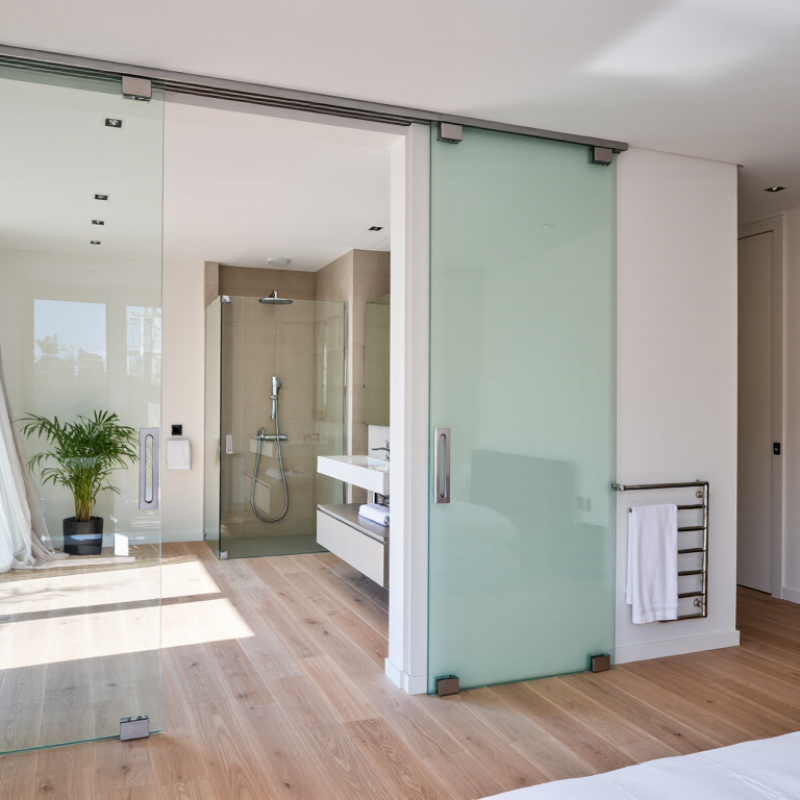
Frameless Sliding Doors can bring daylight into a room and create a cleaner visual connection between spaces. Their broad glass panels suit compact bathrooms, modern wardrobes, and patio openings. Yet “frameless” rarely means there is no supporting hardware. The panels still rely on tracks, rollers, guides, and secure fixing points. Those details affect daily use as much as appearance.

Think about where the door will go before comparing finishes. A shower door needs suitable glass, reliable seals, and enough clearance to open smoothly. A patio door has different demands, including weather exposure, insulation, and access. Measure the opening carefully, and note nearby taps, furniture, or wall returns. Small differences matter. A door that looks perfect in a showroom may feel awkward beside a towel rail.

Ask suppliers for clear product specifications, including glass thickness, hardware materials, weight limits, and maintenance guidance. For heavy panels or unusual openings, have a qualified installer assess the structure and fitting method. Local building and safety requirements may also affect which products are appropriate. Do not judge quality by minimal hardware alone. Quiet rollers, stable movement, and replaceable components are easier to appreciate after months of use.

Cleaning is another practical test. Water spots show quickly on clear glass, especially in hard-water areas. Check whether the track is easy to reach and whether seals can be maintained. Some trade-offs are unavoidable: the most open look may offer less privacy or sound separation. It is worth questioning that preference before buying. A well-chosen door should suit the room, not just the photograph.
How to Choose Frameless Sliding Doors?

Measure the Opening and Confirm Panel Sizes Fit the System’s Tested Limits

How to Choose Frameless Sliding Doors?

Measure the finished opening at the top, middle, and bottom; record the smallest width and height. Check whether the floor is level and the jambs are plumb. A few millimeters can affect panel clearance, overlap, and sealing. The opening size is not the panel size. Account for track dimensions, installation tolerances, and the system’s specified panel limits. Ask for test documentation showing the tested configuration and dimensions. ASTM E330 evaluates structural performance under uniform static air pressure, but a test result applies to its stated setup—not every opening.

Tips: Use a rigid tape, note each measurement, and photograph the sill and jambs. Confirm glass thickness, panel weight, hardware capacity, and any required head clearance with the installer. Small details matter.

Oversized panels may exceed tested limits or place excessive loads on rollers and guides; undersized panels can compromise coverage. The U.S. Department of Energy’s Energy Saver guidance estimates that windows account for about 25–30% of residential heating and cooling energy use, making fit and sealing worth careful attention. That figure is broad, not a prediction for one door. Even careful measurements can miss a bowed wall, so verify the opening again after finishes are complete.

How to Choose Frameless Sliding Doors? — Measure the Opening and Confirm Panel Sizes Fit the System’s Tested Limits

Measurement or Check Illustrative Example How to Determine It What to Confirm
Opening width 2,400 mm (94.5 in) Measure horizontally at the top, middle, and bottom of the finished opening. Record the smallest measurement. Use the system’s required measuring reference and installation clearances; do not assume the nominal opening is the order size.
Opening height 2,100 mm (82.7 in) Measure vertically at the left, center, and right. Record the smallest measurement after accounting for the finished floor and head condition. Check the proposed glass height, track arrangement, and adjustment range against the system documentation.
Opening squareness and level Check both diagonals; compare the readings. Measure from corner to opposite corner in both directions. Use a level to check the sill and head, and a plumb tool to check the jambs. Confirm any allowable out-of-square or out-of-level tolerance with the system supplier before sizing panels.
Panel count and layout 2 sliding panels Choose the number of panels and which panel or panels move. Panel count affects the required overlap and usable clear opening. Verify that the tested configuration supports the intended panel count, track layout, and operating direction.
Illustrative panel-width calculation (2,400 mm opening + 50 mm overlap) ÷ 2 = 1,225 mm per panel For this simplified two-panel example only, panel width = (opening width + overlap) ÷ 2. Overlap is system-specific. Confirm how the system defines opening width, panel coverage, interlocks, and end clearances before ordering.
Panel height and clearance Determine from the measured opening and the selected track and hardware details. Do not calculate glass height from the opening alone. Account for the system’s specified top and bottom clearances, track depth, and floor finish. Confirm the final panel height with the system’s sizing method and the site’s finished dimensions.
Glass thickness, weight, and hardware capacity Check using the selected glass specification and calculated panel dimensions. Panel weight depends on glass type, thickness, and panel area. Have the weight checked using the applicable glass specification. Each panel must remain within the system’s tested glass, panel-weight, and hardware limits.
Final system-limit check Compare every proposed panel dimension with the system’s published tested minimums and maximums. Review the applicable technical documentation for panel width, panel height, weight, configuration, and installation conditions. Proceed only when the proposed sizes and configuration fall within the tested limits. Example measurements above are for illustration, not universal product limits.

Planning note: Take final measurements after the opening surfaces and floor are finished. Sizing rules, overlap, clearances, and tested limits vary by sliding-door system.

Choose 10 mm or 12 mm Glass Only Within the Manufacturer’s Approved Span

When choosing frameless sliding doors, glass thickness is only part of the decision. A 10 mm panel may suit one opening, while a 12 mm panel may be required for another. The safe choice depends on the door system’s tested design, not thickness alone. Check the manufacturer’s approved span for the exact panel and hardware configuration.

That detail matters. Wider or taller glass panels can weigh considerably more, placing extra load on rollers, tracks, and fixings. The approved span may also change with the glass type, handle placement, and installation method. Ask for the permitted panel width and height in writing, then compare them with your finished opening measurements. Do not guess.

A tape measure can reveal an awkward opening. It cannot confirm that the hardware is rated for it. If your measurements sit close to the stated limit, pause and ask the supplier or installer to verify the configuration before ordering. Also confirm the required glass specification and clearances. A thicker panel is not automatically safer if the system is not designed to carry its weight. Real openings are rarely perfect, and that small mismatch deserves a second look.

How to Choose Frameless Sliding Doors?

Choose 10 mm or 12 mm glass only within the manufacturer’s approved span.

Approximate glass-only mass, calculated using a typical soda-lime glass density of 2,500 kg/m³. Thicker glass adds weight; it does not determine an acceptable panel span by itself. Check the specific door system’s approved span and hardware requirements before choosing.

Check Safety Glazing: ANSI Z97.1 Class A Uses a 400 ft·lbf Impact Test

When choosing frameless sliding doors, check the safety-glazing label before comparing handle styles or finishes. ANSI Z97.1 Class A glazing is associated with a 400 ft·lbf impact test. That rating matters near walkways, tubs, and other places where someone could strike the glass. Ask for documentation showing the glass type, thickness, and tested classification. A sales description alone is not enough.

Look closely at the panel edges and corners, where chips or damage may be easier to miss. Confirm that the marked glass matches the panel being supplied, not just a sample or a different size. The rating applies to tested glazing; it does not automatically prove that every track, roller, or installation detail is suitable. Fit matters. Have the installer confirm that the glass is supported as specified and slides without binding. I would not assume “frameless” means fragile, or that Class A means indestructible. It is a test classification, not a promise against every impact. Keep the product documentation for reference, and ask questions if the label is missing or unclear.

Compare Exterior Door Ratings Under AAMA/WDMA/CSA 101/I.S.2/A440

When comparing frameless sliding doors, ask for the tested rating under AAMA/WDMA/CSA 101/I.S.2/A440, commonly called NAFS. The standard evaluates air leakage, water penetration, and structural performance. Its performance classes—R, LC, CW, and AW—reflect different intended building uses. They are not a simple best-to-worst scale. A door’s stated performance grade and design pressure matter, too. Ask for the test report, including the tested panel size and configuration. A rating for a smaller unit may not apply to a wider opening. Details matter.

Check water and air results against your exposure. Wind-driven rain on a coastal facade is different from a sheltered patio. The U.S. Department of Energy’s Energy Saver guidance reports that windows account for about 25–30% of residential heating and cooling energy use; large glazed doors can also affect comfort and energy demand. A tight seal helps, but installation and drainage remain critical. Even a high-rated door can leak if its sill is poorly flashed. That part is easy to overlook. Compare equivalent test conditions, then confirm the rating suits your project’s wind, rain, and opening size. I would not treat one rating as a guarantee of quiet operation or low bills; real results depend on the whole assembly.

Verify Roller Load Capacity, Track Limits, and Required Clearances

How to Choose Frameless Sliding Doors?

Choosing frameless sliding doors starts with checking panel weight against roller capacity. Glass may look weightless, but a large panel can be heavy. Include the glass, clamps, handles, and other attached hardware in your estimate. Check whether the capacity rating is for each roller, each panel, or the full system. Don’t assume two rollers share the load perfectly. Small errors matter.

Tips: Ask the supplier or installer for the rated load per panel and the track’s maximum panel size. Compare these limits with your actual measurements, not estimates from a sketch. If the glass thickness or hardware changes, check the figures again.

Track length and clearances matter just as much. Confirm that the track can support the panel width and provide enough travel for the opening you want. Measure headroom, floor level, wall space, and the area where panels will park. Allow room for handles and overlaps, too. A tidy drawing can hide an awkward obstruction; pause and recheck the site before ordering. Small gaps can affect smooth movement, so follow the system’s specified clearance requirements.

Copyright 2025 Fluidra S.A. | Created by BCM Marketing Agencia Privacy Policy Legal note | Cookie policy |

Technical cookies are strictly necessary for our website to work and you can navigate through it. These types of cookies are those that, for example, allow us to identify you, give you access to certain restricted parts of the page if necessary, or remember different options or services already selected by you, such as your privacy preferences. Therefore, they are activated by default, your authorization not being necessary in this regard. Through the configuration of your browser, you can block or alert the presence of this type of cookies, although such blocking will affect the proper functioning of the different functionalities of our website.


The analysis cookies allow us to study the navigation of the users of our website in general (for example, which sections of the page are the most visited, which services are used most and if they work correctly, etc.). From the statistical information on navigation on our website, we can improve both the operation of the page itself and the different services it offers. Therefore, these cookies do not have an advertising purpose, but only serve to make our website work better, adapting to our users in general. By activating them you will contribute to this continuous improvement. You can enable or disable these cookies by checking the corresponding box, being disabled by default.


Functionality cookies allow us to remember your preferences, to personalize certain characteristics and general options of our website, every time you access it (for example, the language in which the information is presented to you, the sections marked as favorites, your browser type, etc.) Therefore, this type of cookies does not have an advertising purpose, but by activating them you will improve the functionality of the website (for example, adapting to your type of browser) and the customization of it based on your preferences (for example, by presenting the information in the language that you have chosen in previous occasions), which will contribute to the ease, usability and comfort of our page during your navigation. You can enable or disable these cookies by checking the corresponding box, being disabled by default.


Advertising cookies allow us to manage the advertising spaces included in our website based on criteria such as the content shown or the frequency in which the ads are displayed. For example, if you have been shown the same ad several times on our website, and you have not shown a personal interest by clicking on it, it will not appear again. In summary, by activating this type of cookies, the advertising shown on our website will be more useful and diverse, and less repetitive. You can enable or disable these cookies by checking the corresponding box, being disabled by default.


Behavioral advertising cookies allow us to obtain information based on the observation of your browsing habits and behaviors on the web, in order to show you advertising content that best suits your personal tastes and interests. To understand it in a very simple way, we will give you a fictitious example: if your last searches on the web were related to suspense literature, we would show you advertising about suspense books. Therefore, activating this type of cookies, the advertising that we show you on our website will not be generic, but will be oriented to your searches, tastes and interests, therefore adjusting exclusively to you. You can enable or disable these cookies by checking the corresponding box, being disabled by default.
To understand it in a very simple way, we will give you a fictitious example: if your last searches on the web were related to suspense literature, we would show you advertising about suspense books. Therefore, activating this type of cookies, the advertising that we show you on our website will not be generic, but will be oriented to your searches, tastes and interests, therefore adjusting exclusively to you. You can enable or disable these cookies by checking the corresponding box, being disabled by default.

SAVE

We use our own and third-party cookies to ensure the proper functioning of the website and to analyse our services, improve your experience on our website and show you advertisements related to your interests according to profiling based on your browsing habits (e.g. websites visited). You can accept all cookies by clicking "ACCEPT" or set or reject them by clicking here. If you would like to know more about the use of cookies, please see our COOKIE POLICY.


ACCEPT ALL
Reject no essentials


