
Choosing an Aluminum Sunroom is not just a matter of picking a frame color. The right design must suit your climate, home, budget, and plans for year-round use. A bright room can feel welcoming in spring, yet become uncomfortable when afternoon sun hits the glass. Small details matter.
The U.S. Department of Energy’s Energy Saver guidance notes that inefficient windows can account for 25–30% of a home’s heating and cooling energy use. That figure concerns residential windows generally, not sunrooms specifically, but it highlights why glazing and installation deserve careful attention. Compare window ratings, including U-factor and solar heat gain coefficient (SHGC), and check that the product’s performance suits your local conditions. The National Fenestration Rating Council provides standardized ratings to help make those comparisons clearer.
Frame materials deserve equal scrutiny. The International Aluminium Institute reports that about 75% of all aluminum ever produced remains in use, reflecting the material’s durability and recyclability. Still, an aluminum frame alone does not guarantee comfort. Thermal breaks, glass specification, seals, drainage, and workmanship all affect the finished room. Look closely at those details.
This guide explains how to compare aluminum profiles, glazing options, thermal performance, maintenance needs, and installation quality. It also considers trade-offs, because no single specification works best everywhere. Some choices are less obvious than brochures suggest. A sunroom should feel good on a cold morning, not only in a showroom.
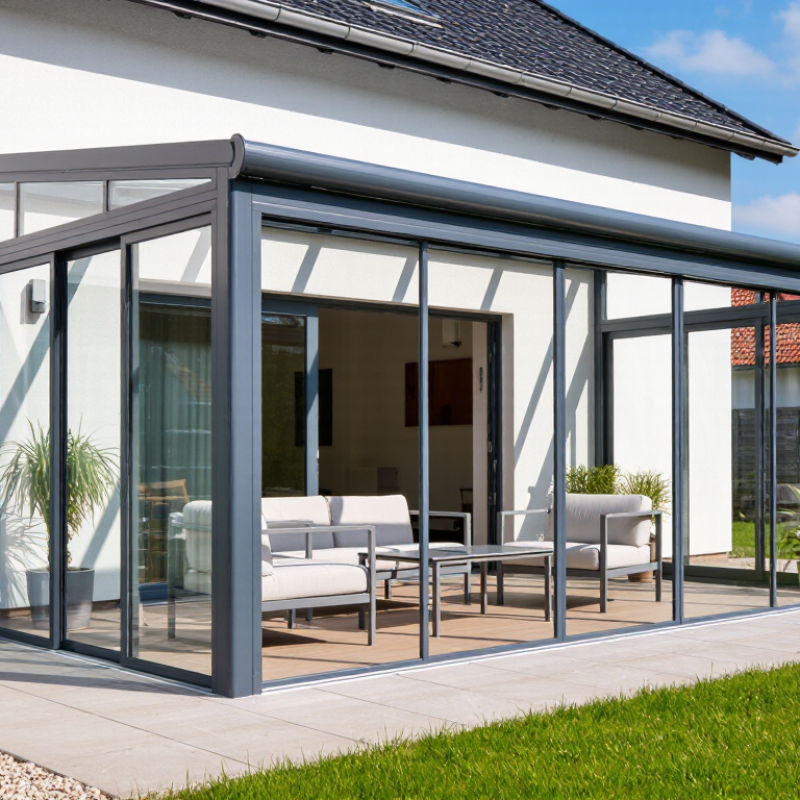
Before comparing aluminum sunrooms, decide how you will use the space. A quiet reading room, a dining area, and a year-round family room place different demands on glazing, insulation, ventilation, and doors. Sketch where furniture will sit and note how people will enter from the house. Small details matter. A room used every day may need more thermal comfort than a seasonal sitting area, even if both look similar in a catalog.
Then check the site’s design loads using the applicable edition of ASCE 7 and local building requirements. Wind, snow, seismic forces, exposure, and roof shape can all affect the structure. An open, coastal site may face stronger wind pressures than a sheltered yard. A roof beneath heavy snow needs a different assessment. Aluminum framing is lightweight, but that does not make load checks optional. The connection to the house and the foundation matter too.
Gather the address, roof dimensions, photos of the attachment wall, and any available plans before requesting a structural review. A qualified professional can evaluate site conditions and confirm whether the proposed framing, anchors, and supports suit them. Do not rely on a generic load rating alone. It is easy to overlook drainage or an existing roof detail when focusing on appearance; I would check those early, even if the first sketch feels settled.

Choosing an aluminum sunroom starts with the frame, but alloy names alone do not tell the whole story. Alloy and temper affect strength, formability, and resistance to corrosion. Ask for the specified alloy and finish details, especially if the room will face frequent rain or salty air. Thermal breaks also matter: they reduce heat transfer through the frame, though they cannot prevent condensation in every condition. Small details count.
Profile shape and wall thickness influence stiffness, sightlines, and how large a span the frame can support. A deeper profile may feel sturdy, but appearance and thickness are not structural proof. Check how corners, roof members, and connections are reinforced. Water drainage deserves a close look, too; a strong frame with poorly managed joints can still cause trouble. It is tempting to treat a heavier frame as automatically safer, but that shortcut can mislead.
Tips: Request structural ratings for wind and snow loads, and confirm they apply to your room’s dimensions and roof design. Check the engineering documents, not just a sales description. If a rating is unclear, ask a qualified local professional to review it. I would compare the installed span and connection details before settling on a profile.
Compare representative minimum strength values for common aluminum frame alloys and tempers.
6061-T6 has higher minimum strength than the 6063 tempers shown, while 6063 is commonly used for architectural extrusions. These representative values can vary with product specification and section thickness. An alloy’s strength alone does not determine a sunroom’s structural rating: profile geometry, connections, glazing, and project-specific wind and snow loads must also be evaluated.
Aluminum is strong and slim, but it transfers heat readily: its thermal conductivity is roughly 160–200 W/m·K. In a sunroom, an unbroken frame can carry outdoor heat inward on a hot afternoon and draw warmth outside on a cold night. You may notice the difference near the frame, even when the glass feels comfortable. Thermal breaks interrupt that path with a less conductive material, often a polymer strip between the inner and outer aluminum sections.
Look closely at how the break runs through the frame. A narrow strip, gaps at corners, or poorly joined sections can reduce its effectiveness. Ask for whole-window or whole-door thermal performance figures, not just the conductivity of one material. Also check the glazing and seals; a well-insulated frame cannot compensate for leaky joints or single-pane glass. Condensation around frame edges is a useful warning sign, though indoor humidity and ventilation also affect it.
There are trade-offs. A deeper, thermally broken profile may look bulkier and cost more, and installation still matters. I would not judge a sunroom by the thermal break alone; it is easy to focus on one impressive number. Check the details. Ask how the frame drains water, how corner joints are sealed, and whether performance data matches the assembled unit you plan to buy.
When comparing aluminum sunrooms, read the NFRC label rather than relying on glass descriptions alone. U-factor measures how quickly heat passes through the rated product; lower values generally mean better insulation. In U.S. customary units, it is shown in Btu/(h·ft²·°F); some materials use W/(m²·K). SHGC runs from 0 to 1 and estimates the fraction of solar heat admitted through the product. A value near 0 blocks more solar heat, while a value near 1 admits more. That matters.
The right SHGC depends on orientation, climate, and how you use the room. A west-facing sunroom can overheat on bright afternoons, so a lower SHGC may help limit unwanted heat. In a colder climate, a sunnier exposure may benefit from more solar gain. The U.S. Department of Energy reports that windows account for roughly 25–30% of residential heating and cooling energy use, underscoring why ratings deserve attention. Aluminum framing can conduct heat readily, so ask whether the quoted NFRC rating covers the complete unit, including its thermal break—not just the glass. I would not treat one number as a verdict. Check comparable ratings and confirm the actual sunroom configuration; roof panels and walls may perform differently.
An aluminum sunroom can look light and simple, but its glass and roof still need to meet local safety requirements. Check whether glazing near doors, floors, or other impact zones must be safety glass. The exact locations and testing standards vary by jurisdiction. Ask for product specifications or permanent markings, and confirm they match the approved plans. Labels matter. A clear pane alone does not show that it is suitable for every location.
Roof capacity deserves equal attention. Snow depth, drifting snow, wind exposure, and the sunroom’s connection to the house can all affect design loads. Ask whether the drawings account for local conditions and show how the roof attaches to existing framing. A familiar-looking roof is not proof of adequate support. It is tempting to accept a standard drawing as sufficient, but that shortcut can miss a site-specific load or connection detail. I would not guess here.
Before ordering materials, contact the local building department about permits, required drawings, inspections, and any rules for additions near property lines. Requirements can differ even between neighboring towns. Keep written approvals and the final specifications together; they make changes easier to track. If an official or qualified local professional flags a conflict, resolve it before construction begins. The paperwork can feel tedious. It may prevent costly rework later.

Cepex is the brand for the fluid handling market belonging to the Fluidra group. One of the leading european manufacturer of valves and fittings in thermoplastic materials.
Dedicated to the swimming pool, irrigation and industrial markets, we distribute our products worldwide with the Fluidra commercial network and presence in 46 countries with 136 sales branches.


