
Choosing the right Ac Condensers is not simply a matter of selecting the largest cooling capacity. The condenser must match the evaporator coil, compressor, refrigerant, airflow, and electrical supply. A mismatch can produce weak cooling, noisy operation, or premature component failure. Sometimes, bigger is worse.
HVAC educator John Barba offers a practical reminder: “A good installation starts with the right match.” That principle guides this article. It encourages buyers and technicians to examine the complete system rather than judge one specification. Model compatibility matters. So does climate.
Imagine a condenser placed beside a sunny exterior wall. Its coil collects dust, airflow becomes restricted, and head pressure rises during a hot afternoon. A coastal property faces another concern: salt can attack unprotected metal surfaces. These details affect real performance. They also show why product selection requires experience, not only catalog reading.
This guide will explain how to compare AC Condensers by capacity, efficiency rating, refrigerant compatibility, coil design, sound level, and service access. It will also discuss sizing methods and installation conditions. Manufacturer data should be checked carefully. Local codes and certified professional advice remain essential.
There is no perfect choice for every building. Even experienced installers can overlook small details, especially when replacing an older unit. That uncertainty deserves attention, not confidence without evidence. A reliable decision considers the home’s heat load, existing equipment, budget, climate exposure, and long-term maintenance needs. The right condenser should cool consistently, operate safely, and remain practical to service for years.
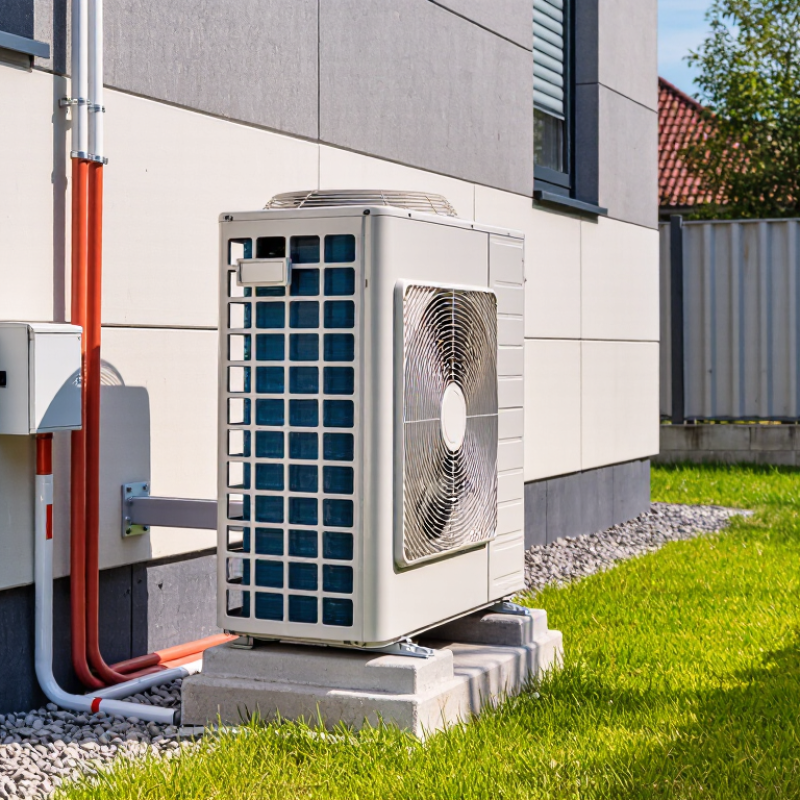
How to Choose the Right AC Condensers?
AC Condenser Basics: Heat Rejection, Coils, Fans, and Refrigerant Flow
An AC condenser removes indoor heat and releases it outdoors. The hot, high-pressure refrigerant enters the coil and gives up heat to surrounding air. It then changes into a high-pressure liquid. This phase change depends on adequate coil area, clean fins, and suitable outdoor temperature.
Coil design matters. Copper tubing transfers heat efficiently, while aluminum fins expand the contact area. Fin spacing should match the environment. Tight fins may perform well in clean air but clog quickly near dust, leaves, or traffic pollution. Corrosion resistance also deserves attention. A shiny coil is not always a durable coil.
Airflow matters. A fan must move enough air across the coil without creating excessive noise or electrical demand. Poor airflow raises condensing pressure and can shorten compressor life. Refrigerant flow must match the compressor, expansion device, coil capacity, and operating conditions. Size matters.
In field inspections, I have found that a condenser chosen only by cooling capacity can disappoint. Design ambient temperature, installation clearance, voltage, and airflow resistance all affect performance. I once underestimated clearance beside a wall, and the unit rejected heat poorly during the afternoon peak. That mistake still influences how I compare equipment. Manufacturer data should be checked carefully, but real installation conditions deserve equal weight.

Match the condenser’s rated capacity to the system’s required BTU/h, not just the room’s floor area. A 36,000 BTU/h condenser should serve a properly sized three-ton system. Oversizing can cause short cycling, uneven humidity control, and unnecessary energy use. Undersizing may leave rooms warm on a 95°F afternoon.
SEER2 SEER2 measures seasonal cooling efficiency under updated testing conditions. However, the advertised rating applies to a matched system, including the condenser, indoor coil, blower, and controls. Confirm the approved combination in certified performance data before purchasing. In real service work, mismatched coils often create disappointing efficiency, even when the condenser looks powerful. That shortcut is tempting, but it can cost more later.
Tips: Ask for the system’s required BTU/h and expected SEER2 rating in writing. Check the condenser’s rated capacity at your design temperature, not only its nominal size. Verify refrigerant compatibility, airflow requirements, and line-set limits. A technician should measure duct airflow and indoor temperature before final selection. Small details matter. A slightly higher rating is not automatically better; actual performance depends on installation quality, coil cleanliness, refrigerant charge, and airflow. Even reliable calculations need review when insulation, sunlight, or daily occupancy differs from the original estimate.
How to Choose the Right AC Condensers?
Choosing an AC condenser starts with verified performance, not cabinet size or a familiar model number. Check the AHRI 210/240 certification data for cooling capacity, seasonal efficiency, and tested indoor-outdoor combinations. These figures show how the condenser performs with a specific evaporator coil and indoor blower. A similar-looking unit may deliver different results. Do not rely on appearance alone.
Confirm the complete system match before ordering. Compare refrigerant type, rated voltage, phase, metering device, coil design, and communication requirements. The indoor coil must support the condenser’s capacity range. Check operating temperatures too, especially for homes facing long, hot summers. A mismatch can cause weak cooling, excessive cycling, or higher energy use. It is tempting to trust a matching model number. That shortcut can fail.
Tips: Search the current AHRI 210/240 directory and save the certificate reference. Ask the supplier for the exact indoor and outdoor model pairing. Verify field wiring, line-set limits, and required accessories with the installation manual. Measure twice. Small details matter. If the data conflicts, pause the purchase and request written confirmation from a qualified professional. Performance ratings are useful, but real installation conditions can still change results. That limitation deserves honest attention.
Coil material should match the air around the condenser. Copper tubes transfer heat efficiently, while aluminum coils reduce weight and material cost. However, dissimilar metals can create galvanic corrosion when moisture and salt are present. The NACE IMPACT study estimated global corrosion costs at 3.4% of worldwide GDP. That figure makes material compatibility a design issue, not a minor detail. In coastal installations, consider corrosion-resistant tube joints and protective barriers. Small details matter.
Fin density changes both capacity and maintenance. High-density fins provide more surface area in a compact coil. They can also trap dust, pollen, and salt faster. Airflow resistance rises as passages become tighter. ASHRAE guidance links fin spacing with pressure drop, fouling, and heat-transfer performance. For clean, dry air, dense fins may perform well. For dusty workshops or humid shorelines, wider spacing is often safer. This is not universal.
Coatings add another layer of protection. Hydrophilic or epoxy-based systems can slow salt and moisture attack, but coating thickness may slightly reduce heat transfer. The IEA’s The Future of Cooling reports that global cooling energy demand could more than triple by 2050, increasing pressure on efficient equipment. Choose coatings tested for the actual exposure, not only attractive laboratory results. Inspect edges, bends, and tube-fin contact points. Those areas often fail first. A perfect specification still needs practical maintenance.
How to Choose the Right AC Condensers?
Select R-410A or Lower-GWP Refrigerant Systems Under Current Standards
Choosing an AC condenser starts with the complete system, not the outdoor cabinet. The condenser must match the indoor coil, metering device, airflow, voltage, and capacity. A mismatch can cause poor cooling, high pressure, or early compressor failure. Check the equipment data plate carefully. Small details matter.
R-410A systems remain serviceable in many existing installations, but their global warming potential is relatively high. Newer lower-GWP systems may use refrigerants such as R-32 or R-454B. These options can support current environmental targets, but requirements vary by region and installation date. Always confirm local efficiency rules, refrigerant restrictions, and approved equipment combinations before purchasing. Do not mix refrigerants or pair incompatible components.
Lower-GWP refrigerants may require different tools, recovery procedures, and safety practices. Some are mildly flammable. The technician should follow the manufacturer’s instructions and applicable safety codes. Ask for documented pressure testing, evacuation, charge verification, and startup readings. A reliable installer should explain the choice in plain language.
Labels can mislead.
I have found that homeowners often focus on price first. That can be a costly mistake. A slightly cheaper condenser may need coil replacement, electrical changes, or control upgrades. Review the warranty terms, service availability, and long-term refrigerant support. The best choice is the system that fits the building, the climate, and the standards governing your installation.

Cepex is the brand for the fluid handling market belonging to the Fluidra group. One of the leading european manufacturer of valves and fittings in thermoplastic materials.
Dedicated to the swimming pool, irrigation and industrial markets, we distribute our products worldwide with the Fluidra commercial network and presence in 46 countries with 136 sales branches.


