
How to Choose the Right Greenhouse Pipe?
FLUID HANDLING EXPERTS

Blog, all our news

How to Choose the Right Greenhouse Pipe?

Choosing the right Greenhouse Pipe begins with the growing environment, not the lowest price. Wind, snow, humidity, and daily temperature changes all affect structural performance. A pipe that works well in a mild coastal area may fail under heavy snow or strong seasonal winds.

John W. Bartok Jr., a recognized greenhouse engineering author, offers a practical principle: “Design for the local climate before choosing materials.” His advice remains highly relevant when comparing galvanized steel, aluminum, and other pipe options. Check the pipe diameter, wall thickness, zinc coating, connection method, and expected load. Small differences matter. A thin pipe may bend around a roof joint. Poor galvanizing may develop rust near humid ground conditions. Weak connectors can loosen after repeated wind movement.

Look closely at the whole frame.

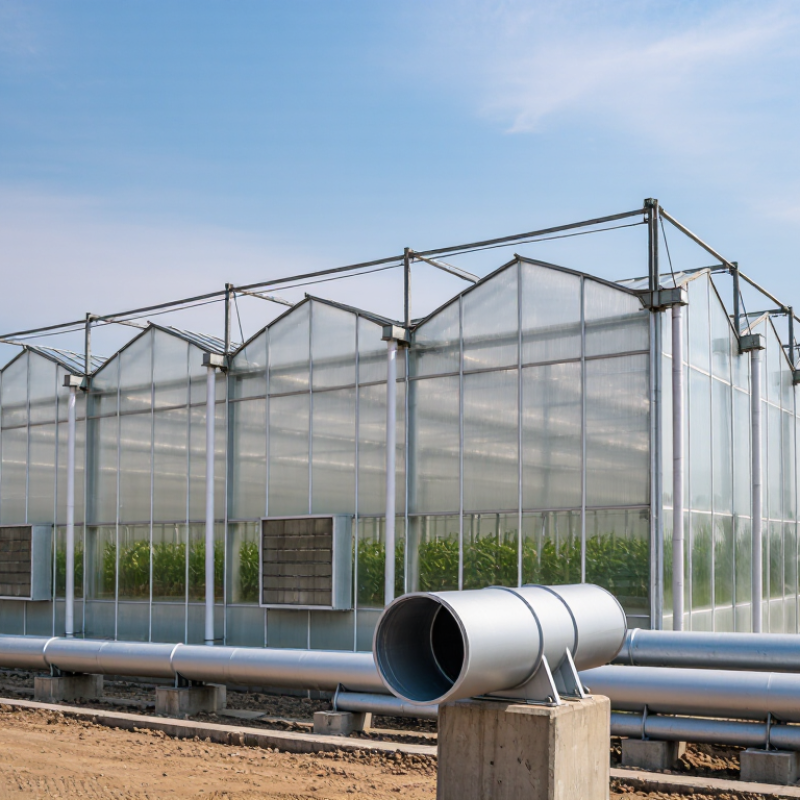
A reliable Greenhouse Pipe should match the covering material, span length, ventilation system, and foundation design. For example, glass panels often require stronger support than lightweight plastic film. In coastal regions, corrosion resistance deserves extra attention. In snowy regions, roof spacing and load calculations should guide every decision.

Still, no single pipe suits every greenhouse. That is an easy assumption to make, and it is often wrong. Manufacturer specifications should be checked against local building requirements and professional structural advice. The cheapest option may reduce the initial budget, yet increase maintenance costs later. Careful selection creates a safer frame, steadier crop conditions, and a longer service life. It may not look dramatic, but dependable materials quietly protect the entire growing investment.
How to Choose the Right Greenhouse Pipe?

Assess Site Loads: Use 0.5–1.5 kPa Snow and 0.3–1.0 kPa Wind Data

How to Choose the Right Greenhouse Pipe?

Assessing site loads is the practical starting point for choosing greenhouse pipe. Snow loads commonly range from 0.5 to 1.5 kPa, while wind loads may range from 0.3 to 1.0 kPa. These figures are not interchangeable. Snow presses downward. Wind creates uplift, bending, and movement at the joints.

Measure the site, not only the weather station. A greenhouse beside a wall may receive drifting snow on one roof section. An exposed field may experience stronger gusts than nearby records suggest. Check roof width, frame spacing, pipe diameter, wall thickness, and connection strength together. A heavier pipe does not automatically create a safer structure. Weak clamps can still fail first.

Ask a qualified structural professional to verify the design against local requirements. Use reliable regional data where possible. For a small tunnel greenhouse, mark the likely windward side and inspect anchor points after installation. Watch for loose soil, shallow foundations, and water collecting near posts. These details matter.

Numbers need context.

I once treated a published load value as complete, but the site had unusual drifting snow. That assumption needed correction. A simple calculation may also miss repeated wind vibration or uneven loading. Leave room for inspection, maintenance, and realistic construction tolerances when selecting each pipe.

Compare Pipe Materials: Steel, Aluminum, and PVC by Strength and Durability

How to Choose the Right Greenhouse Pipe?

Greenhouse pipes must carry more than their own weight. They support glazing, vents, hanging plants, and sometimes heavy snow. Steel offers the highest strength, especially for wide spans and windy sites. Galvanized or properly coated steel resists rust, but damaged coatings can expose bare metal. It also weighs more, making installation slower and foundations more demanding. In practical builds, strong steel frames feel stable when doors slam or gusts hit.

Aluminum Aluminum is lighter and naturally resistant to corrosion. One person can often assemble its sections more easily. However, aluminum has less resistance to bending than steel, so larger profiles or closer supports may be necessary. It can also expand noticeably during temperature changes. That movement is easy to overlook.

PVC pipes PVC pipes are inexpensive, light, and simple to cut. They work for small, temporary structures and provide decent moisture resistance. Yet sunlight can weaken ordinary PVC, while cold weather may make it brittle. PVC also needs frequent bracing under snow or strong wind.

A useful choice depends on the site, not just the price. For permanent houses, steel usually provides the strongest long-term frame. Aluminum suits coastal or humid areas where low weight matters. PVC fits protected gardens with modest loads.

I once underestimated wind pressure on a small tunnel frame; extra supports solved the problem, but the original spacing was poor. Check local snow and wind conditions, pipe thickness, connection quality, and expected service life before buying. No material performs well when the structure is undersized.

Select Diameter and Wall Thickness: Evaluate 25–60 mm Pipes and 1.5–3.0 mm Walls

How to Choose the Right Greenhouse Pipe?

Pipe diameter and wall thickness shape a greenhouse’s strength, weight, and service life. For small tunnels, 25–32 mm pipes often suit hoops and side supports. Their lighter weight makes installation easier. However, they may flex under heavy snow or strong wind. Main frames usually need 40–60 mm pipes, especially on wider structures. Larger diameters resist bending more effectively, but they also require stronger joints and foundations.

Wall thickness deserves equal attention. A 1.5 mm wall can work for temporary covers or sheltered sites. It is less forgiving when workers bend, drill, or tighten fittings carelessly. A 2.0–2.5 mm wall provides a practical balance for many permanent greenhouses. In exposed areas, 3.0 mm walls offer greater rigidity and better resistance to local dents. More steel is not automatically better. It increases weight, cost, and installation demands.

Measure carefully.

Before ordering, check the actual outside diameter and wall thickness with a caliper. Nominal dimensions can differ between suppliers. Also inspect cut ends for uneven walls or hidden corrosion. Consider snow load, wind exposure, span width, ventilation equipment, and foundation spacing. A pipe that performs well in a calm valley may fail on an open coastal site. I have seen oversized frames assembled with weak connectors, which reduced their real strength. The connection system matters as much as the pipe. When conditions are uncertain, consult local structural guidance or a qualified engineer.

Specify Corrosion Protection: Choose EN 10346 Z275 Galvanized Coating or Better

Choosing the right greenhouse pipe starts with its corrosion protection. EN 10346 Z275 means 275 grams of zinc coating per square metre, measured across both surfaces. This is a practical baseline for humid greenhouse structures.

Zinc protects steel in two ways. It forms a barrier and provides sacrificial protection when the surface is scratched. However, Z275 is not a magic shield. The International Zinc Association reports that atmospheric zinc corrosion can range from below 0.1 to several micrometres per year, depending on humidity, salts, pollutants, and temperature. A coastal greenhouse faces harsher conditions than an inland site.

In real installations, condensation often collects inside pipe joints. Cut ends, drilled holes, and weld areas can become early corrosion points. The European General Galvanizers Association notes that zinc durability depends strongly on the surrounding atmosphere and coating thickness. Choosing Z275 or better helps, but design details still matter. I would also question whether a thicker coating solves poor drainage. It usually does not.

Tips: Ask for the EN 10346 coating designation and test documentation. Check whether 275 g/m² refers to both sides. Inspect cut edges and connection points before assembly. Avoid sealed cavities that trap water. For coastal or chemical-rich environments, specify a higher coating level or an additional compatible protection system.

Verify Standards and Layout: Check ASTM Requirements and 1.0–1.5 m Bay Spacing

Choosing a greenhouse pipe starts with standards, not appearance. ASTM A500/A500M covers structural steel tubing, while ASTM A53/A53M applies to certain steel pipe products. For corrosion protection, ASTM A123/A123M addresses hot-dip galvanized coatings. These standards describe material performance, dimensions, or coating quality. They do not certify an entire greenhouse frame. Confirm the mill certificate, wall thickness, yield strength, and coating mass before installation.

Bay spacing deserves equal attention. A 1.0–1.5 m frame interval is a practical starting range for many light greenhouse structures. Narrower bays can reduce the load carried by each frame under wind, snow, hanging crops, and irrigation equipment. Wider bays may reduce frame count, but they usually demand stronger pipes, purlins, joints, and foundations. A neat grid can still be wrong. I would calculate local loads using ASCE 7-22 or the applicable national code, then compare the result with the pipe’s tested capacity. Do not copy a spacing chart from another climate.

The USDA National Agricultural Statistics Service reported about 16.2 billion dollars in 2022 sales for nursery, greenhouse, floriculture, and sod products. That scale makes structural reliability a production issue, not merely a construction preference. Check whether the quoted 1.0–1.5 m spacing refers to frame bays or purlin spacing. They are different measurements. On site, measure actual pipe centerlines, inspect screw connections, and allow for thermal movement. I have seen layouts fail because the drawing was precise, but the soil and drainage assumptions were not.

Copyright 2025 Fluidra S.A. | Created by BCM Marketing Agencia Privacy Policy Legal note | Cookie policy |

Technical cookies are strictly necessary for our website to work and you can navigate through it. These types of cookies are those that, for example, allow us to identify you, give you access to certain restricted parts of the page if necessary, or remember different options or services already selected by you, such as your privacy preferences. Therefore, they are activated by default, your authorization not being necessary in this regard. Through the configuration of your browser, you can block or alert the presence of this type of cookies, although such blocking will affect the proper functioning of the different functionalities of our website.


The analysis cookies allow us to study the navigation of the users of our website in general (for example, which sections of the page are the most visited, which services are used most and if they work correctly, etc.). From the statistical information on navigation on our website, we can improve both the operation of the page itself and the different services it offers. Therefore, these cookies do not have an advertising purpose, but only serve to make our website work better, adapting to our users in general. By activating them you will contribute to this continuous improvement. You can enable or disable these cookies by checking the corresponding box, being disabled by default.


Functionality cookies allow us to remember your preferences, to personalize certain characteristics and general options of our website, every time you access it (for example, the language in which the information is presented to you, the sections marked as favorites, your browser type, etc.) Therefore, this type of cookies does not have an advertising purpose, but by activating them you will improve the functionality of the website (for example, adapting to your type of browser) and the customization of it based on your preferences (for example, by presenting the information in the language that you have chosen in previous occasions), which will contribute to the ease, usability and comfort of our page during your navigation. You can enable or disable these cookies by checking the corresponding box, being disabled by default.


Advertising cookies allow us to manage the advertising spaces included in our website based on criteria such as the content shown or the frequency in which the ads are displayed. For example, if you have been shown the same ad several times on our website, and you have not shown a personal interest by clicking on it, it will not appear again. In summary, by activating this type of cookies, the advertising shown on our website will be more useful and diverse, and less repetitive. You can enable or disable these cookies by checking the corresponding box, being disabled by default.


Behavioral advertising cookies allow us to obtain information based on the observation of your browsing habits and behaviors on the web, in order to show you advertising content that best suits your personal tastes and interests. To understand it in a very simple way, we will give you a fictitious example: if your last searches on the web were related to suspense literature, we would show you advertising about suspense books. Therefore, activating this type of cookies, the advertising that we show you on our website will not be generic, but will be oriented to your searches, tastes and interests, therefore adjusting exclusively to you. You can enable or disable these cookies by checking the corresponding box, being disabled by default.
To understand it in a very simple way, we will give you a fictitious example: if your last searches on the web were related to suspense literature, we would show you advertising about suspense books. Therefore, activating this type of cookies, the advertising that we show you on our website will not be generic, but will be oriented to your searches, tastes and interests, therefore adjusting exclusively to you. You can enable or disable these cookies by checking the corresponding box, being disabled by default.

SAVE

We use our own and third-party cookies to ensure the proper functioning of the website and to analyse our services, improve your experience on our website and show you advertisements related to your interests according to profiling based on your browsing habits (e.g. websites visited). You can accept all cookies by clicking "ACCEPT" or set or reject them by clicking here. If you would like to know more about the use of cookies, please see our COOKIE POLICY.


ACCEPT ALL
Reject no essentials


