
How to Choose an Electric Winch in 2026?
FLUID HANDLING EXPERTS

Blog, all our news

How to Choose an Electric Winch in 2026?

Choosing an Electric Winch in 2026 starts with a practical question: what load must it move, and under what conditions? Market reports from Grand View Research and Fortune Business Insights track the wider winch market, but market growth alone cannot tell you which model is right for your vehicle, workshop, or jobsite. The specification sheet matters more. Check rated line pull, rope type, duty cycle, power supply, mounting strength, and brake design. A winch rated for a heavy pull may still perform poorly when its battery is weak, its cable is poorly routed, or its mounting surface flexes.

Numbers need context. A winch’s maximum line pull is commonly measured on the first rope layer, where the drum has the greatest mechanical advantage. As rope builds up, pulling capacity falls. That detail is easy to miss. Before comparing products, define the real load, likely pull angle, operating frequency, and available power. Then compare manufacturer data and manuals, not headline ratings alone. For industrial lifting, vehicle recovery, and utility work, the appropriate equipment and safeguards differ.

I can’t responsibly attribute a quotation to a named Electric Winch expert without a verifiable source. That is a limitation worth stating, not disguising. This guide will instead focus on checkable specifications and practical trade-offs, while acknowledging that sizing still depends on the actual setup. A little caution helps.
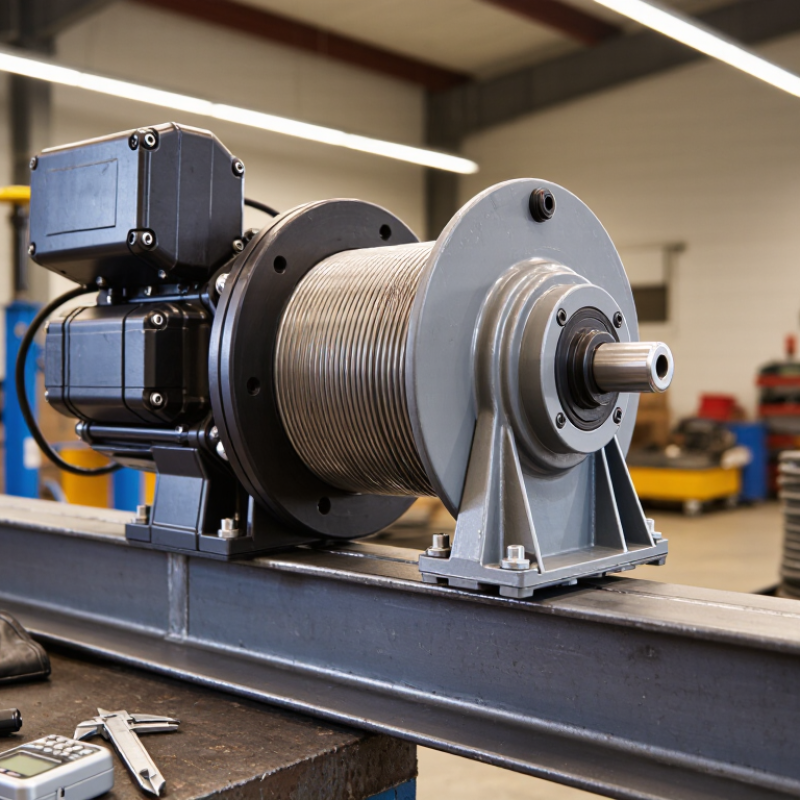
How to Choose an Electric Winch in 2026?

Identify the Winch’s Intended Use and Operating Conditions

An electric winch should suit the job it will actually perform, not just its highest advertised pull. Identify whether you need to recover a vehicle, move equipment across a workshop, or lift a load. These tasks create different forces. A vehicle on wet gravel may meet sudden resistance, while a steady pull on a smooth floor is more predictable. Be specific. For suspended lifting, choose equipment explicitly rated for that purpose.

Estimate the load and allow for slope, friction, rolling resistance, and snags. Line pull can rise sharply when a load sticks or the cable angle changes. Check the rated capacity for the rope layer you expect to use; capacity may decrease as more cable winds onto the drum. Consider how often the winch will run, too. Repeated pulls create more heat than occasional use. Hot motor, slow recovery. Finally, assess rain, dust, salt spray, mounting space, battery capacity, and cable routing. Confirm that the support structure and electrical supply suit the expected load. A specification sheet cannot capture every muddy, awkward job, so revisit your assumptions before choosing.

Calculate the Required Pulling Capacity and Safety Margin

How to Choose an Electric Winch in 2026?

Calculate the Required Pulling Capacity and Safety Margin

Start with the load, not the winch’s biggest number. A vehicle on firm, level ground takes less force to move than one bogged in wet sand or facing uphill. Estimate the load’s weight, then account for slope, surface, and obstacles. For a simple recovery, a winch rated at around 1.5 times the vehicle’s gross weight is a common starting point, not a guarantee. Tougher conditions may demand more capacity or a different recovery method. It is easy to overlook how much mud adds resistance.

Tips: Check the rated line pull on the first rope layer. Capacity usually drops as rope builds up on the drum. Keep the rope straight, and inspect its condition before use.

Add a safety margin for uncertainty and changing conditions. Never treat the winch’s maximum rating as a routine working load. For example, a 3,000-kilogram vehicle may call for a winch rated near 4,500 kilograms under straightforward conditions, but deep mud or a steep incline can change the calculation. Follow the winch and vehicle manufacturers’ instructions, and use properly rated recovery equipment. Pause if the load shifts, the rope snags, or the winch strains. Real terrain rarely matches a neat calculation.

Choose a Power Source, Mounting Style, and Cable Type

How to Choose an Electric Winch in 2026?
Choose a Power Source, Mounting Style, and Cable Type

Match the winch voltage to the vehicle’s electrical system, then check current draw and duty cycle. A high peak rating means little if the battery voltage sags during a long pull. AAA’s 2019 cold-weather tests found electric-vehicle range fell by up to 41% at 20°F with cabin heating. That is not a winch test, but it underlines how cold can strain batteries. Leave extra electrical capacity for winter use.

Mounting determines where the pulling force goes. A chassis-mounted plate can provide a direct load path; a receiver mount is convenient, but adds a connection to inspect. Keep the fairlead aligned with the pull. Side loading can damage the cable and mounting hardware. One detail is easy to miss: check the mount’s rating, not just the winch’s.

Choose steel cable for abrasion resistance and frequent contact with rough surfaces. It is heavy, and broken strands can cut hands. Synthetic rope is lighter and easier to handle, but needs protection from sharp edges, heat, and sunlight. Check line-pull ratings against SAE J706 guidance, and inspect the rope or cable before each use. Small defects matter. A frayed section near the fairlead deserves attention, even when the rest looks sound.

How to Choose an Electric Winch in 2026? - Choose a Power Source, Mounting Style, and Cable Type
Decision Factor Option Best Suited For Advantages Key Checks and Limitations
Power source 12 V DC Many light- and medium-duty vehicle installations with a compatible 12 V electrical system. Common vehicle voltage; can operate from a suitable vehicle battery and charging system. Winches can draw very high current under load. Check the winch’s specified current demand, battery capacity, wiring size, connections, and duty cycle.
Power source 24 V DC Vehicles and equipment equipped with a compatible 24 V electrical system. For the same electrical power, a higher system voltage generally requires less current than a lower voltage. Use only with a matching 24 V system. Confirm the battery arrangement, charging system, control components, and manufacturer’s wiring requirements.
Power source AC mains Workshop, garage, or other stationary applications with a suitable mains supply. Does not rely on a vehicle battery; may suit repeated stationary pulling when the winch is rated for the intended duty. Check supply voltage, circuit capacity, plug or hard-wiring requirements, and duty rating. Outdoor use requires equipment and connections suitable for the environment.
Mounting style Fixed plate or frame mount Regular use on a vehicle, trailer, or stationary structure. Provides a dedicated installation and can offer a direct, stable load path when properly engineered. Verify the mounting pattern, fasteners, backing structure, clearance, and load ratings. The supporting structure must withstand the expected forces.
Mounting style Removable receiver mount Users who need to move a compatible winch between approved receiver locations. Allows the winch to be detached when not in use and shared between suitable mounting points. Confirm receiver and mount ratings, secure retention, electrical connections, and the strength of each mounting point. A receiver rating alone does not establish the capacity of the complete setup.
Mounting style Portable mounting plate or base Occasional pulling where a permanent installation is not practical. Can be stored separately and positioned for different jobs when a properly rated anchor is available. Requires a secure anchor and stable setup. Never rely on an unverified attachment point, and keep people clear of the loaded line.
Cable type Steel wire rope Applications where abrasion resistance and tolerance of rough contact are priorities. Generally resists abrasion well and tolerates more contact with surfaces than synthetic rope. Can develop sharp broken wires, kinks, or corrosion. Inspect regularly, wear gloves when handling, and follow the specified drum-winding procedure.
Cable type Synthetic rope Applications where lower line weight and easier handling are useful. Lighter and more flexible to handle than steel wire rope of comparable use. Protect from abrasion, cutting, chemicals, and excessive heat, including heat near the drum. Inspect for damage and use a compatible fairlead and protective sleeve as required.
Capacity and safety Check the rated line pull and complete setup Every winch purchase and installation. Helps match the winch to the load and intended pulling task. Compare the rated line pull with the planned load and operating conditions; line pull can vary by drum layer. Use only for pulling unless the winch is specifically certified for lifting. Follow the manual and use rated accessories.

Compare Controls, Protection Features, and 2026 Safety Standards

Choosing an electric winch in 2026 means matching its controls and safeguards to the job, not just comparing pulling capacity. Check the rated line pull on the first rope layer; capacity usually drops as rope builds up on the drum. For a vehicle recovery setup, a wired remote offers a direct connection and avoids radio pairing issues. A wireless remote can keep the operator farther from moving rope, but check its range, battery status, and fail-safe behavior. Small details matter. Controls should be clearly marked and easy to reach without standing in the line of pull.

Protection features deserve equal attention. Look for documented overload protection, a holding brake, and an appropriate circuit breaker or fuse. Confirm the winch’s duty cycle and temperature limits; repeated long pulls can overheat a motor, even when each pull stays below its rated load. Check the enclosure rating against expected dust and water exposure, and inspect the cable, hook, and fairlead for wear. In 2026, safety requirements can vary by country, industry, and installation. Ask for current conformity documents and the applicable standard references, then compare them with local requirements and the winch manual. Read the manual. A feature list alone does not prove safe installation, and a convenient remote can still encourage poor positioning.

Check Vehicle Compatibility, Installation Needs, and Total Cost

Before comparing pull ratings, check whether the winch suits your vehicle. A number on a product sheet does not prove that your bumper, mounting plate, or frame can handle the load. Check the vehicle manual and the mounting hardware specifications. Consider the vehicle’s loaded weight, including passengers and gear, rather than its empty curb weight. Keep a sensible safety margin; recovery loads can rise sharply when a vehicle is stuck in mud. Small details matter.

Installation needs affect both safety and cost. Measure the available mounting space, then check clearance for the fairlead, cable path, and controls. Confirm that the vehicle’s electrical system and battery can support the winch’s current draw. Long or undersized wiring can cause voltage drop and heat. Not sure about the wiring? Have a qualified installer assess it. I once underestimated access behind a bumper; the extra labor changed the budget.

Calculate the full installed cost, not just the winch price. Include a compatible mounting plate, wiring, a rated isolator, remote controls, and labor. Add likely upkeep, such as cable inspection and cleaning after wet or dusty recoveries. Steel cable and synthetic rope have different handling and maintenance needs, so compare them against your conditions. A cheaper setup can become expensive if it needs custom fabrication or repeated repairs. Check what the quote actually includes.

Copyright 2025 Fluidra S.A. | Created by BCM Marketing Agencia Privacy Policy Legal note | Cookie policy |

Technical cookies are strictly necessary for our website to work and you can navigate through it. These types of cookies are those that, for example, allow us to identify you, give you access to certain restricted parts of the page if necessary, or remember different options or services already selected by you, such as your privacy preferences. Therefore, they are activated by default, your authorization not being necessary in this regard. Through the configuration of your browser, you can block or alert the presence of this type of cookies, although such blocking will affect the proper functioning of the different functionalities of our website.


The analysis cookies allow us to study the navigation of the users of our website in general (for example, which sections of the page are the most visited, which services are used most and if they work correctly, etc.). From the statistical information on navigation on our website, we can improve both the operation of the page itself and the different services it offers. Therefore, these cookies do not have an advertising purpose, but only serve to make our website work better, adapting to our users in general. By activating them you will contribute to this continuous improvement. You can enable or disable these cookies by checking the corresponding box, being disabled by default.


Functionality cookies allow us to remember your preferences, to personalize certain characteristics and general options of our website, every time you access it (for example, the language in which the information is presented to you, the sections marked as favorites, your browser type, etc.) Therefore, this type of cookies does not have an advertising purpose, but by activating them you will improve the functionality of the website (for example, adapting to your type of browser) and the customization of it based on your preferences (for example, by presenting the information in the language that you have chosen in previous occasions), which will contribute to the ease, usability and comfort of our page during your navigation. You can enable or disable these cookies by checking the corresponding box, being disabled by default.


Advertising cookies allow us to manage the advertising spaces included in our website based on criteria such as the content shown or the frequency in which the ads are displayed. For example, if you have been shown the same ad several times on our website, and you have not shown a personal interest by clicking on it, it will not appear again. In summary, by activating this type of cookies, the advertising shown on our website will be more useful and diverse, and less repetitive. You can enable or disable these cookies by checking the corresponding box, being disabled by default.


Behavioral advertising cookies allow us to obtain information based on the observation of your browsing habits and behaviors on the web, in order to show you advertising content that best suits your personal tastes and interests. To understand it in a very simple way, we will give you a fictitious example: if your last searches on the web were related to suspense literature, we would show you advertising about suspense books. Therefore, activating this type of cookies, the advertising that we show you on our website will not be generic, but will be oriented to your searches, tastes and interests, therefore adjusting exclusively to you. You can enable or disable these cookies by checking the corresponding box, being disabled by default.
To understand it in a very simple way, we will give you a fictitious example: if your last searches on the web were related to suspense literature, we would show you advertising about suspense books. Therefore, activating this type of cookies, the advertising that we show you on our website will not be generic, but will be oriented to your searches, tastes and interests, therefore adjusting exclusively to you. You can enable or disable these cookies by checking the corresponding box, being disabled by default.

SAVE

We use our own and third-party cookies to ensure the proper functioning of the website and to analyse our services, improve your experience on our website and show you advertisements related to your interests according to profiling based on your browsing habits (e.g. websites visited). You can accept all cookies by clicking "ACCEPT" or set or reject them by clicking here. If you would like to know more about the use of cookies, please see our COOKIE POLICY.


ACCEPT ALL
Reject no essentials


