
How to Choose a Weighing Packing Machine in 2026?
FLUID HANDLING EXPERTS

Blog, all our news

How to Choose a Weighing Packing Machine in 2026?

Choosing the right Weighing Packing Machine in 2026 requires more than comparing prices and advertised speeds. Manufacturers now face tighter production targets, changing product textures, and higher expectations for traceability. A machine that handles dry rice smoothly may struggle with sticky snacks, fragile powders, or irregular granules. Product behavior matters.

This guide approaches selection from the factory floor. It considers weighing accuracy, packing speed, sealing quality, cleaning access, control systems, and after-sales support. Operators should test the machine with real product samples, not showroom materials. Watch how the load cells respond when a hopper fills unevenly. Check whether dust reaches sensitive components. Listen for unstable feeding. Small details become expensive problems.

A reliable Weighing Packing Machine should match the product, bag size, target output, and available workspace. It should also support practical maintenance, clear error messages, and suitable safety requirements for its installation region. Energy use and spare-part availability deserve attention too. The cheapest quotation is rarely the lowest long-term cost.

No machine is perfect.

Even experienced buyers can overlook changeover time or operator training. That weakness deserves honest discussion. This article will compare key machine types, explain important specifications, and identify questions worth asking suppliers in 2026. The goal is not to promote one model, but to help buyers make a defensible decision based on testing, evidence, and everyday production realities.
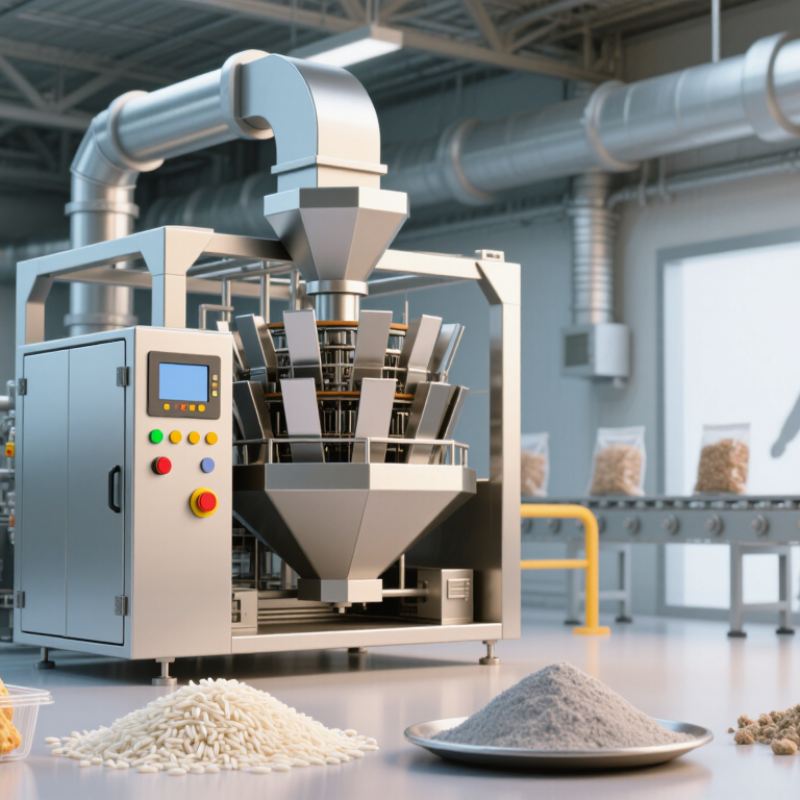
How to Choose a Weighing Packing Machine in 2026?

Define Your Product, Material, and Packaging Requirements

How to Choose a Weighing Packing Machine in 2026?

Define Your Product, Material, and Packaging Requirements

Choosing a weighing packing machine starts with the product, not the machine. Granules, powders, flakes, and fragile pieces behave differently during filling. A dry rice product may flow smoothly, while sticky seasoning can bridge above the hopper. Moisture, particle size, bulk density, and breakage risk all affect weighing performance.

Measure your product before requesting equipment advice. Record the target weight, acceptable tolerance, hourly output, and package dimensions. Also check whether the product needs dust control, gentle handling, or easy cleaning. In production, small details matter. A narrow film roll or uneven product flow can stop a carefully planned line. I once underestimated cleaning time during evaluation. That mistake changed the real labor cost.

Tips: Test your actual material, not a similar sample. Ask for repeated weighing results at low, medium, and high speeds. Inspect sample packs for weight variation, seal quality, and product damage. Confirm that contact parts suit your hygiene requirements. Keep spare parts and operator training in the plan. Do not choose maximum speed automatically; stable accuracy may be more valuable. Your packaging film also needs testing, because slippery or weak film can cause poor forming and sealing. Leave room for adjustment. Product behavior can change with temperature, storage time, and supplier batches.

Set the Required Weighing Accuracy and Production Capacity

Choosing a weighing packing machine in 2026 should begin with two numbers: required accuracy and hourly output. Define both before comparing machine designs.

A snack line may need ±1 gram accuracy, while coarse agricultural products may allow a wider tolerance. Do not copy a competitor’s specification. Your product density, moisture, and particle shape can change the result.

Measure real samples, not ideal samples. This is where many buying plans become weak. I have seen teams test only dry product, then face slower dosing during humid shifts. It was avoidable.

Production capacity also needs a practical calculation. Record the target bags per minute, average fill weight, working hours, and expected pauses. Then allow time for cleaning, material refilling, film changes, and routine checks.

A machine rated for 40 bags per minute may deliver less in daily operation. That gap matters. Ask for a test using your own product and packaging material. Check weight variation across several runs, not one impressive sample. Keep the test records. They support purchasing decisions and future quality reviews.

Tips:

Set an acceptable weight range, then calculate giveaway cost at the upper limit. Confirm whether accuracy changes at low hopper levels. Review the weighing sensor’s calibration procedure with trained operators.

Use independent scales to verify results. Small errors grow quickly. Recheck capacity after three shifts. Your first estimate may be wrong.

Compare Machine Types, Feeding Systems, and Automation Levels

Choosing a weighing packing machine in 2026 requires more than comparing speed ratings.

Product behavior decides the machine type. Multihead weighers suit free-flowing snacks, seeds, and frozen pieces. Linear weighers often fit uniform products and smaller production runs. Auger systems handle powders, while net weighers support heavier, dusty materials.

Feeding accuracy is equally important. Vibratory feeders work well with fragile, free-flowing products, but excessive vibration can damage delicate pieces. Screw feeders provide controlled powder flow, although sticky materials may bridge inside the hopper. Belt feeders offer gentler handling for irregular products. Run practical trials with your real product, not substitute material. That detail is often overlooked.

Automation should match your labor model and process stability.

Semi-automatic machines cost less initially and may suit frequent product changes. Fully automatic systems improve consistency when upstream and downstream equipment are synchronized.

The International Federation of Robotics reported 541,302 industrial robots were installed worldwide in 2023, showing how quickly automation is expanding. PMMI’s 2024 packaging industry research also identifies labor availability and automation as major investment pressures.

Still, more automation is not always better. A complex line can create longer troubleshooting delays and higher maintenance demands.

Check changeover time, weighing accuracy, cleaning access, reject handling, and data connectivity. Ask for recorded results from multiple production tests. One impressive demonstration is not enough.

Evaluate Packaging Materials, Sealing Methods, and Machine Compatibility

Choosing a weighing packing machine in 2026 starts with the material, not the machine price. Test powders, granules, flakes, and fragile pieces under real production conditions. A fine powder may bridge inside the hopper. Sticky products can slow discharge and affect weight accuracy. Moisture, temperature, and particle size also change flow behavior.

Sealing performance depends on the packaging film. Polyethylene, laminated films, paper-based layers, and recyclable structures need different heat settings. Check sealing temperature, dwell time, pressure, and jaw design. A narrow seal may fail when the bag contains sharp particles. A deep seal can improve strength, but it may increase material use. Confirm whether the machine supports your bag width, thickness, and forming style. Small mismatches create frequent stoppages.

Tips: Bring actual materials and empty bags for a factory trial. Measure several hundred packs, not just five. Ask for cleaning access, calibration procedures, spare-part availability, and operator training. In my experience, compatibility tests reveal more than a polished specification sheet. Still, one trial cannot represent every season or batch. Leave adjustment range for future products. Review dust control and sensor protection before purchase. The best choice is not always the fastest machine. It is the one that maintains stable weighing, clean seals, and practical maintenance during ordinary shifts.

Check Hygiene, Safety, Maintenance, and Total Operating Costs

How to Choose a Weighing Packing Machine in 2026?

Check Hygiene, Safety, Maintenance, and Total Operating Costs

A weighing packing machine should fit your product, room, and cleaning routine. Check whether product-contact parts use suitable, corrosion-resistant materials. Smooth surfaces reduce powder buildup around hoppers, seals, and discharge points. Avoid hidden gaps where moisture or residue can remain. Ask for clear cleaning instructions, including tool-free removal of difficult components. Hygienic design is not only about appearance.

Safety needs practical inspection, not just a certificate. Look for guarded moving parts, emergency stops, secure covers, and controlled access during operation. The machine should prevent filling when a door is open. Operators also need clear instructions and realistic training time. A complicated safety system may be strong on paper but weak during a busy shift. No checklist catches everything.

Maintenance costs can quietly exceed the purchase price. Review calibration procedures, spare-part availability, sensor life, lubrication needs, and expected service intervals. Ask how quickly common parts can be replaced. Record electricity use, cleaning labor, product waste, film consumption, and unplanned downtime. These figures reveal the total operating cost more honestly. A perfect forecast is impossible. Leave room for mistakes, seasonal changes, and operator learning. During testing, measure actual accuracy over several production runs, not one successful demonstration.

Copyright 2025 Fluidra S.A. | Created by BCM Marketing Agencia Privacy Policy Legal note | Cookie policy |

Technical cookies are strictly necessary for our website to work and you can navigate through it. These types of cookies are those that, for example, allow us to identify you, give you access to certain restricted parts of the page if necessary, or remember different options or services already selected by you, such as your privacy preferences. Therefore, they are activated by default, your authorization not being necessary in this regard. Through the configuration of your browser, you can block or alert the presence of this type of cookies, although such blocking will affect the proper functioning of the different functionalities of our website.


The analysis cookies allow us to study the navigation of the users of our website in general (for example, which sections of the page are the most visited, which services are used most and if they work correctly, etc.). From the statistical information on navigation on our website, we can improve both the operation of the page itself and the different services it offers. Therefore, these cookies do not have an advertising purpose, but only serve to make our website work better, adapting to our users in general. By activating them you will contribute to this continuous improvement. You can enable or disable these cookies by checking the corresponding box, being disabled by default.


Functionality cookies allow us to remember your preferences, to personalize certain characteristics and general options of our website, every time you access it (for example, the language in which the information is presented to you, the sections marked as favorites, your browser type, etc.) Therefore, this type of cookies does not have an advertising purpose, but by activating them you will improve the functionality of the website (for example, adapting to your type of browser) and the customization of it based on your preferences (for example, by presenting the information in the language that you have chosen in previous occasions), which will contribute to the ease, usability and comfort of our page during your navigation. You can enable or disable these cookies by checking the corresponding box, being disabled by default.


Advertising cookies allow us to manage the advertising spaces included in our website based on criteria such as the content shown or the frequency in which the ads are displayed. For example, if you have been shown the same ad several times on our website, and you have not shown a personal interest by clicking on it, it will not appear again. In summary, by activating this type of cookies, the advertising shown on our website will be more useful and diverse, and less repetitive. You can enable or disable these cookies by checking the corresponding box, being disabled by default.


Behavioral advertising cookies allow us to obtain information based on the observation of your browsing habits and behaviors on the web, in order to show you advertising content that best suits your personal tastes and interests. To understand it in a very simple way, we will give you a fictitious example: if your last searches on the web were related to suspense literature, we would show you advertising about suspense books. Therefore, activating this type of cookies, the advertising that we show you on our website will not be generic, but will be oriented to your searches, tastes and interests, therefore adjusting exclusively to you. You can enable or disable these cookies by checking the corresponding box, being disabled by default.
To understand it in a very simple way, we will give you a fictitious example: if your last searches on the web were related to suspense literature, we would show you advertising about suspense books. Therefore, activating this type of cookies, the advertising that we show you on our website will not be generic, but will be oriented to your searches, tastes and interests, therefore adjusting exclusively to you. You can enable or disable these cookies by checking the corresponding box, being disabled by default.

SAVE

We use our own and third-party cookies to ensure the proper functioning of the website and to analyse our services, improve your experience on our website and show you advertisements related to your interests according to profiling based on your browsing habits (e.g. websites visited). You can accept all cookies by clicking "ACCEPT" or set or reject them by clicking here. If you would like to know more about the use of cookies, please see our COOKIE POLICY.


ACCEPT ALL
Reject no essentials


