
How to Choose a Steel Fire Rated Shutter?
FLUID HANDLING EXPERTS

Blog, all our news

How to Choose a Steel Fire Rated Shutter?

Choosing a Steel Fire-Rated Shutter is not just a matter of matching a finish to a doorway. The shutter must suit the opening, the building’s fire strategy, and the way people use the space every day. A loading bay may face dust, trolley impacts, and frequent operation. A kitchen pass-through may need different controls and maintenance access. Details matter.

Start with the required fire-resistance rating and confirm it against the project specification. Check the opening’s width, height, headroom, side guides, and available space for the barrel and motor. Ask how the shutter behaves during an alarm and what release or closing method is specified. A rating label is important, but it does not tell the whole story. Installation, compatible components, and routine inspection also affect dependable performance.

Composite fire-protection specialist Daniel Mercer offers this editorially drafted reminder, not a verified published quotation: “A shutter is only as dependable as its rating, installation, and maintenance working together.” Use that principle when comparing steel gauges, curtain construction, controls, and service arrangements. Request product documentation, installation details, and a clear inspection schedule. Then consider the everyday reality: who will test the shutter, and can staff keep its path clear? It is easy to overlook that last question.

This guide explains the decisions worth checking before purchase. It also flags where a product brochure may leave practical questions unanswered. Verify project requirements with the responsible design professional. A careful choice starts with evidence, not appearance alone.
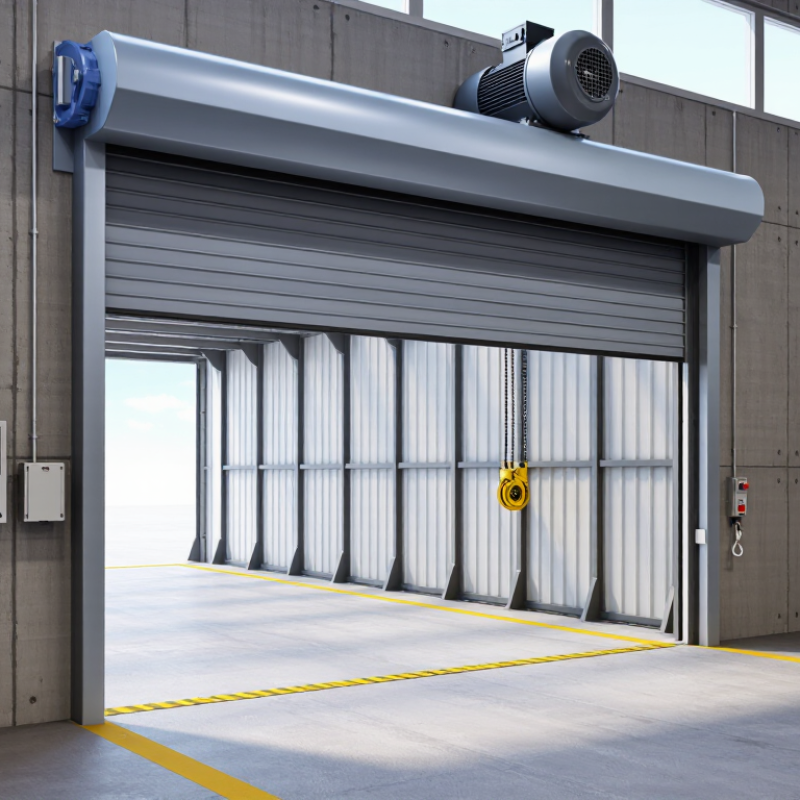
How to Choose a Steel Fire Rated Shutter?

Understand the Purpose and Operation of Steel Fire-Rated Shutters

A steel fire-rated shutter helps limit the spread of fire and smoke between building areas. It is not simply a heavy security door. Its curtain, guides, motor, controls, and surrounding construction work as one assembly. During normal use, the shutter stays open or operates as specified for the opening. When a linked alarm or heat detector signals, the release mechanism allows it to close, often at a controlled speed.

Keep the path clear. A box, trolley, or loose cable beneath the curtain can obstruct closure. That sounds simple. It isn’t always.

Choose a shutter for the opening’s dimensions, daily traffic, and required fire performance. Check how it will respond to alarms and whether people need a safe exit nearby. Ask the installer to explain the release method, backup power arrangements, and routine inspection schedule.

During commissioning, watch the shutter descend and confirm it closes evenly without striking nearby equipment. Record any unusual noise or hesitation; small changes can signal a maintenance issue.

In practice, handover paperwork can be less clear than the hardware, so ask for a plain explanation. The shutter’s rating also depends on suitable installation and compatible surrounding construction, not the metal curtain alone.

Identify Required Fire Ratings and Applicable Building Codes

Start with the wall and opening, not the shutter catalogue. Check the required fire-resistance rating for the fire barrier, then confirm what rating the opening protective must provide under the locally adopted building and fire codes. These ratings are related, but they are not always identical. A 90-minute wall, for example, does not automatically mean every opening needs a 90-minute shutter. The code may set a different requirement based on the wall’s function, building use, and opening location. Small details matter.

Ask the authority having jurisdiction, or the project’s fire protection professional, which code edition and amendments apply. Requirements can differ between cities and between new construction and renovations. Check the approved fire-test listing for the complete shutter assembly, including guides, hood, release mechanism, and installation conditions. A rating applies only when the assembly is installed as tested. Keep the listing and installation instructions with the project records. During a site review, verify the label, clearances, and closing operation; a correct rating on paper is not enough. I have seen schedules leave this point vague. It is worth resolving before the opening dimensions are finalized.

How to Choose a Steel Fire Rated Shutter? - Identify Required Fire Ratings and Applicable Building Codes
Selection Dimension What to Confirm Practical Guidance
Opening location Identify the wall or barrier containing the opening, its fire-resistance rating, and the opening’s use. Ask the design professional or authority having jurisdiction (AHJ) which opening-protective rating applies. Requirements depend on the adopted code, occupancy, building design, and location.
Required fire rating Confirm the required duration for the complete shutter assembly, not just the steel curtain. Common listed fire-protection ratings include 1½, 2, and 3 hours, but these are not interchangeable or universally permitted. Select the rating specified for the actual opening.
Applicable building code Determine the locally adopted building and fire codes, including their edition and amendments. In the United States, the International Building Code (IBC) addresses opening protectives in Section 716. The applicable requirements and permitted ratings vary by edition and jurisdiction.
Fire-test standard Check the test standard and the product’s fire-test listing or certification. Relevant U.S. standards can include UL 10B, UL 10C, and NFPA 252. Confirm that the listed assembly and test method are accepted for the project; a wall fire-resistance rating is not automatically the shutter’s required rating.
Listing and label Verify that the complete assembly is listed for the intended application and bears the required permanent label. Review the label, listing documentation, and installation instructions for the rating, approved components, permitted orientation, and any limitations.
Opening size and configuration Measure the clear opening and confirm width, height, mounting arrangement, and surrounding construction. Use a configuration covered by the assembly’s listing. Maximum dimensions, guides, barrel, hood, clearances, and supporting construction must match the approved details.
Closing and release method Confirm how the shutter closes during a fire event and how it interfaces with the building’s alarm or detection system. Depending on the approved design, closure may use an automatic release, fire-alarm interface, or other listed arrangement. Confirm the required operation with the AHJ and follow the product instructions.
Smoke control Determine whether the opening also requires smoke and draft control. A fire-protection rating alone does not establish smoke-leakage performance. Where required, verify the separate smoke-control listing and applicable test criteria, such as UL 1784.
Installation and maintenance Plan for compliant installation, inspection, testing, and recordkeeping. NFPA 80 provides requirements for the inspection, testing, and maintenance of fire door assemblies, including applicable rolling steel fire doors. Confirm the edition adopted locally and follow the listed instructions.

Important: This table is a planning guide, not a substitute for code review. Confirm the required rating, approved assembly, and installation details with the project design professional and local AHJ before ordering.

Assess Opening Size, Site Conditions, and Shutter Configuration

Measure the clear opening at the top, middle, and bottom, and check its height on both sides. Walls and floors are not always square. Small differences matter. Use the finished opening, not an early drawing, when discussing shutter dimensions. Note the lintel depth, side space, and floor level; each can affect how guides and the barrel fit.

Look above the opening for beams, pipes, ducts, and lights. A shutter needs room for its hood and operating parts, and access may be needed for inspection or maintenance. Check whether the wall is masonry, concrete, or another construction, and confirm that it can support the fixing method. Dust, moisture, temperature, and busy traffic can also influence material and control choices. A quick site visit can miss details, so record them carefully.

Choose a configuration that suits both the opening and daily use. Manual operation may suit a smaller opening, while a larger or frequently used shutter may call for a powered system. Consider where controls can be reached safely and whether the shutter must connect to the building’s fire alarm system. The fire rating applies to the tested assembly, not just the curtain; guides, fixings, and installation details matter too. Check proposed dimensions and site conditions against the manufacturer’s certified specifications before ordering. It is easy to focus on the opening and overlook access for future service.

How to Choose a Steel Fire Rated Shutter?

Assess the opening size, site conditions, and shutter configuration before selecting a system.

How to use this chart: These example field-survey dimensions are illustrative, not product limits or fire-rating requirements. Measure each opening at multiple points, then check headroom, side room, obstructions, guides, hood, and operator space. Confirm the final shutter configuration and required fire performance with the project specification and applicable local codes.

Compare Materials, Controls, Safety Features, and Certifications

Steel gauge is only one part of a fire-rated shutter’s performance. Compare the curtain, guides, bottom bar, and tested assembly—not just the sheet thickness. NFPA’s Fire Loss in the United States During 2023 estimated that U.S. fire departments responded to about 1.4 million fires. A suitable shutter can help limit fire spread, but only when its rating matches the opening and installation.

Check how the shutter closes. Does it connect to the building alarm, use a heat-triggered release, or support both? Ask how staff can test it and whether an obstruction sensor or warning signal is included. Small details matter.

Look for a traceable listing and the tested fire rating; UL 10B and UL 10C are test standards, while NFPA 80 covers installation and inspection practices. Confirm the required rating with the project’s fire-safety professional.

In practice, paperwork can look reassuring while the control sequence remains unclear—request a written explanation and a witnessed operational test.

One more check: verify inspection access and maintenance intervals before choosing.

Plan Installation, Inspection, and Ongoing Maintenance

How to Choose a Steel Fire Rated Shutter?

Plan Installation, Inspection, and Ongoing Maintenance

A suitable steel fire rated shutter must fit the opening, the surrounding wall, and the building’s fire protection plan. Measure the clear width and height, check side-room and headroom, and confirm that guides can be fixed to a suitable structure. Keep pipes, signs, and stored items clear of the curtain’s path. Small gaps matter.

After installation, test the shutter’s release and full closure, including its connection to the building’s alarm system where applicable. Record the results.

Maintenance needs a schedule, not just a quick look after installation. NFPA 80 calls for fire door assemblies to be inspected and tested at least annually; confirm requirements for the shutter and site with a qualified professional.

Check the curtain, guides, bottom bar, fasteners, release components, and controls. Watch for bent slats, unusual noise, or a shutter that stops short. Keep records of inspections, faults, repairs, and test dates.

A checklist can still miss a sticking guide, so observe the full closing cycle.

The NFPA report “U.S. Fire Loss in 2023” estimated 1.39 million fires attended by U.S. fire departments. That figure does not measure shutter performance, but it underscores why passive fire protection deserves attention. Do not assume a shutter is reliable because it looks intact. Recheck after nearby building work or changes to the opening.

Copyright 2025 Fluidra S.A. | Created by BCM Marketing Agencia Privacy Policy Legal note | Cookie policy |

Technical cookies are strictly necessary for our website to work and you can navigate through it. These types of cookies are those that, for example, allow us to identify you, give you access to certain restricted parts of the page if necessary, or remember different options or services already selected by you, such as your privacy preferences. Therefore, they are activated by default, your authorization not being necessary in this regard. Through the configuration of your browser, you can block or alert the presence of this type of cookies, although such blocking will affect the proper functioning of the different functionalities of our website.


The analysis cookies allow us to study the navigation of the users of our website in general (for example, which sections of the page are the most visited, which services are used most and if they work correctly, etc.). From the statistical information on navigation on our website, we can improve both the operation of the page itself and the different services it offers. Therefore, these cookies do not have an advertising purpose, but only serve to make our website work better, adapting to our users in general. By activating them you will contribute to this continuous improvement. You can enable or disable these cookies by checking the corresponding box, being disabled by default.


Functionality cookies allow us to remember your preferences, to personalize certain characteristics and general options of our website, every time you access it (for example, the language in which the information is presented to you, the sections marked as favorites, your browser type, etc.) Therefore, this type of cookies does not have an advertising purpose, but by activating them you will improve the functionality of the website (for example, adapting to your type of browser) and the customization of it based on your preferences (for example, by presenting the information in the language that you have chosen in previous occasions), which will contribute to the ease, usability and comfort of our page during your navigation. You can enable or disable these cookies by checking the corresponding box, being disabled by default.


Advertising cookies allow us to manage the advertising spaces included in our website based on criteria such as the content shown or the frequency in which the ads are displayed. For example, if you have been shown the same ad several times on our website, and you have not shown a personal interest by clicking on it, it will not appear again. In summary, by activating this type of cookies, the advertising shown on our website will be more useful and diverse, and less repetitive. You can enable or disable these cookies by checking the corresponding box, being disabled by default.


Behavioral advertising cookies allow us to obtain information based on the observation of your browsing habits and behaviors on the web, in order to show you advertising content that best suits your personal tastes and interests. To understand it in a very simple way, we will give you a fictitious example: if your last searches on the web were related to suspense literature, we would show you advertising about suspense books. Therefore, activating this type of cookies, the advertising that we show you on our website will not be generic, but will be oriented to your searches, tastes and interests, therefore adjusting exclusively to you. You can enable or disable these cookies by checking the corresponding box, being disabled by default.
To understand it in a very simple way, we will give you a fictitious example: if your last searches on the web were related to suspense literature, we would show you advertising about suspense books. Therefore, activating this type of cookies, the advertising that we show you on our website will not be generic, but will be oriented to your searches, tastes and interests, therefore adjusting exclusively to you. You can enable or disable these cookies by checking the corresponding box, being disabled by default.

SAVE

We use our own and third-party cookies to ensure the proper functioning of the website and to analyse our services, improve your experience on our website and show you advertisements related to your interests according to profiling based on your browsing habits (e.g. websites visited). You can accept all cookies by clicking "ACCEPT" or set or reject them by clicking here. If you would like to know more about the use of cookies, please see our COOKIE POLICY.


ACCEPT ALL
Reject no essentials


