
How Does Skynex Produce Video Door Phones in 2026?
FLUID HANDLING EXPERTS

Blog, all our news

How Does Skynex Produce Video Door Phones in 2026?

Video door phones combine cameras, microphones, displays, access controls, and network connections in one compact system. Their production depends on more than assembly. Component selection, firmware testing, enclosure design, and quality checks all affect what residents see at the door. Grand View Research’s Smart Home Market Size report estimated the global smart home market at USD 127.8 billion in 2023, reflecting wider demand for connected residential devices. That figure covers the broader smart-home sector, not video door phones alone.

How Does Skynex Produce Video Door Phones in 2026? This introduction considers the manufacturing stages behind a typical product: planning its features, sourcing components, assembling circuit boards, fitting cameras and screens, and testing image, audio, and network performance. Skynex Manufacturer Produce Video Door Phone is a useful search phrase, but it does not by itself verify a particular factory process. Publicly available company information should guide any claims about Skynex’s specific facilities, suppliers, or production capacity. Details can change.

A practical assessment should look for clear specifications and repeatable quality checks. For example, a camera must capture a visitor’s face in uneven porch lighting, while the indoor screen should remain readable at an angle. A unit may pass bench tests yet behave differently after installation. That gap matters. The sections that follow will distinguish documented information from common industry practice, and examine how design, assembly, testing, and after-sales support shape a dependable video door phone in 2026.
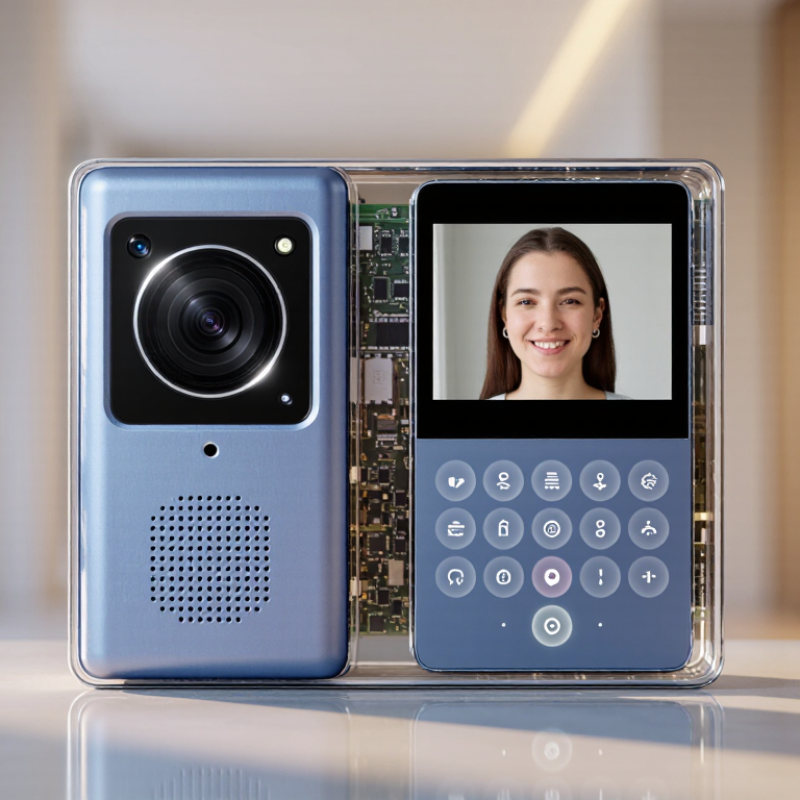
How Does Skynex Produce Video Door Phones in 2026?

Product Planning and Design for Skynex Video Door Phones

Product Planning and Design for Video Door Phones

Product planning should begin with the entrance, not the feature list. Measure the mounting height, viewing angle, cable route, and available wall space. A 2024 Grand View Research report valued the global smart-home market at $127.8 billion in 2023 and projected 27.3% annual growth through 2030. That figure covers the broader smart-home market, not video door phones alone. Still, it points to growing interest in connected home devices. Designers should test core tasks early: seeing a visitor in low light, hearing speech beside a busy street, and opening the door without confusion. Small details matter. Glare on a screen can ruin an otherwise clear image.

During design reviews, teams can use physical mock-ups and varied lighting conditions to check camera framing, button reach, and screen readability. Keep common actions obvious, even for visitors who have never used the device. Plan for dependable audio, weather exposure, and simple installation; each can shape customer experience as much as image quality. A blind spot remains: ideal laboratory tests rarely match a narrow hallway or harsh afternoon sun. That gap deserves more testing, not a confident claim. Record failures, revise the layout, and check whether the new design actually solves the problem.

Component Selection and Supply Chain Preparation

Component Selection and Supply Chain Preparation

A video door phone begins with parts that must work together, not merely pass individual tests. The image sensor, processor, display, microphone, speaker, and network interface need compatible power and thermal limits. Choose an outdoor camera module that keeps a clear image in glare and low light. Check the display under bright indoor lighting, too. Small parts matter.

The WSTS Autumn 2024 forecast projected global semiconductor sales of 697 billion dollars in 2025, up 11.2 percent from 2024.

That growth signals a large, changing market, not guaranteed availability for every processor or memory chip. For a 2026 build, map each critical component to its lead time, approved alternatives, and last-time-buy risk. Keep samples from more than one supplier when possible, then test them with the same firmware and circuit board. A substitute that fits the socket may still behave differently.

Supply preparation should include dated bills of materials, incoming inspection criteria, and traceable component lots. Confirm that lens assemblies, connectors, weather seals, and mounting hardware arrive in the right sequence. A missing gasket can hold up a finished unit. Forecasts also miss. A neat spreadsheet cannot replace supplier checks, and small teams may not have enough time to requalify every alternative. Keep that weakness visible in the plan.

Assembly of the Door Phone Hardware

A video door phone begins as separate parts: a circuit board, camera module, speaker, microphone, display, and weather-resistant housing. Technicians check each component before assembly. A small dust mark on the camera lens can soften the image, so the lens area stays covered until fitting.

On the assembly bench, workers seat the camera behind its opening and align the board with molded posts. They connect ribbon cables carefully; a sharp bend can damage the fine conductors. The speaker and microphone are secured near their sound ports, while buttons and seals are fitted into the front panel. Small screws are tightened evenly to help prevent gaps. It takes a steady hand.

The unit then receives power for practical checks. A technician tests the screen, camera view, button response, and two-way audio. They inspect the housing seam and confirm that the cables sit clear of moving or pinched edges. Some parts need a second adjustment. That is worth noting: assembly instructions cannot anticipate every slight variation in a molded panel or connector. A final visual check catches issues that automated tests may miss.

Firmware Installation and System Testing

Firmware installation begins after each video door phone passes a basic hardware check. Technicians confirm the display, camera, microphone, speaker, and network connection respond correctly. The approved firmware file is then matched to the device model and checked for integrity. This step matters. A mismatched file can interrupt startup or disable a feature.

During installation, the unit stays connected to a stable power supply. A technician monitors progress and records the software version and device identifier. After rebooting, the team checks the live image, two-way audio, call button, door-release signal, and night lighting. They also test calls across different network conditions. Small delays can be easy to miss. Repeated tests help reveal them.

System testing continues beyond a single successful call. Units may be left running to check for freezes, unexpected restarts, or audio dropouts. Test results are logged, including failures and corrective steps. Not every issue appears on the production bench; that remains a limitation worth acknowledging. When a problem occurs, technicians repeat the relevant test after adjustment rather than assuming the fix worked. This careful cycle helps ensure consistent performance before packing.

Video Door Phone Firmware Installation & System Testing

A representative production workflow, shown in sequence. The bars indicate step order—not measured durations or test results.

Typical checks include firmware loading and startup verification, followed by camera, display, audio, network, and complete-system checks.

Quality Inspection, Packaging, and Distribution

Quality inspection should test each video door phone as a working system, not just a finished shell. Technicians can check camera focus, microphone clarity, speaker output, touch response, and night-mode switching. A sample unit should also complete repeated power cycles. Small details matter. A loose terminal or blurred lens can escape a rushed recheck, so recording retest failures is more useful than claiming a perfect process. Before packing, staff should confirm the model label, accessories, and installation guide match the order. ESD-safe protection, a molded insert, and a snug carton help keep the lens and screen away from impact. Packaging should be tested, not merely made attractive.

Distribution planning needs equal care. UNCTAD’s Review of Maritime Transport 2024 reports that more than 80% of world merchandise trade by volume travels by sea. That makes moisture barriers, carton strength, and clear handling labels practical safeguards for long routes. The World Bank’s 2023 Logistics Performance Index compares 139 economies across areas including customs, infrastructure, tracking, and timeliness. Those measures help manufacturers assess where tracking gaps or delays may occur. Each carton should carry a scannable shipment identifier, while pallet counts and carton condition are checked before dispatch. Transit damage can still happen. A simple photo record at loading gives the receiving team useful evidence when cartons arrive crushed or wet.

Copyright 2025 Fluidra S.A. | Created by BCM Marketing Agencia Privacy Policy Legal note | Cookie policy |

Technical cookies are strictly necessary for our website to work and you can navigate through it. These types of cookies are those that, for example, allow us to identify you, give you access to certain restricted parts of the page if necessary, or remember different options or services already selected by you, such as your privacy preferences. Therefore, they are activated by default, your authorization not being necessary in this regard. Through the configuration of your browser, you can block or alert the presence of this type of cookies, although such blocking will affect the proper functioning of the different functionalities of our website.


The analysis cookies allow us to study the navigation of the users of our website in general (for example, which sections of the page are the most visited, which services are used most and if they work correctly, etc.). From the statistical information on navigation on our website, we can improve both the operation of the page itself and the different services it offers. Therefore, these cookies do not have an advertising purpose, but only serve to make our website work better, adapting to our users in general. By activating them you will contribute to this continuous improvement. You can enable or disable these cookies by checking the corresponding box, being disabled by default.


Functionality cookies allow us to remember your preferences, to personalize certain characteristics and general options of our website, every time you access it (for example, the language in which the information is presented to you, the sections marked as favorites, your browser type, etc.) Therefore, this type of cookies does not have an advertising purpose, but by activating them you will improve the functionality of the website (for example, adapting to your type of browser) and the customization of it based on your preferences (for example, by presenting the information in the language that you have chosen in previous occasions), which will contribute to the ease, usability and comfort of our page during your navigation. You can enable or disable these cookies by checking the corresponding box, being disabled by default.


Advertising cookies allow us to manage the advertising spaces included in our website based on criteria such as the content shown or the frequency in which the ads are displayed. For example, if you have been shown the same ad several times on our website, and you have not shown a personal interest by clicking on it, it will not appear again. In summary, by activating this type of cookies, the advertising shown on our website will be more useful and diverse, and less repetitive. You can enable or disable these cookies by checking the corresponding box, being disabled by default.


Behavioral advertising cookies allow us to obtain information based on the observation of your browsing habits and behaviors on the web, in order to show you advertising content that best suits your personal tastes and interests. To understand it in a very simple way, we will give you a fictitious example: if your last searches on the web were related to suspense literature, we would show you advertising about suspense books. Therefore, activating this type of cookies, the advertising that we show you on our website will not be generic, but will be oriented to your searches, tastes and interests, therefore adjusting exclusively to you. You can enable or disable these cookies by checking the corresponding box, being disabled by default.
To understand it in a very simple way, we will give you a fictitious example: if your last searches on the web were related to suspense literature, we would show you advertising about suspense books. Therefore, activating this type of cookies, the advertising that we show you on our website will not be generic, but will be oriented to your searches, tastes and interests, therefore adjusting exclusively to you. You can enable or disable these cookies by checking the corresponding box, being disabled by default.

SAVE

We use our own and third-party cookies to ensure the proper functioning of the website and to analyse our services, improve your experience on our website and show you advertisements related to your interests according to profiling based on your browsing habits (e.g. websites visited). You can accept all cookies by clicking "ACCEPT" or set or reject them by clicking here. If you would like to know more about the use of cookies, please see our COOKIE POLICY.


ACCEPT ALL
Reject no essentials


