
What is a household gas detector and how does it work?
FLUID HANDLING EXPERTS

Blog, all our news

What is a household gas detector and how does it work?

household gas detectors are essential devices for ensuring safety in homes. They detect harmful gases like carbon monoxide and natural gas. According to John Smith, an expert in safety technology, “A household gas detector is your first line of defense against invisible threats.” This statement highlights their importance in everyday safety.

These detectors work by continuously monitoring the air for specific gas concentrations. When a dangerous level is reached, they emit an alarm to alert residents. Prompt action can prevent accidents or health issues. However, not all detectors are created equal. It is crucial to choose reliable brands and install them properly.

Many people underestimate the risks associated with gas leaks. They assume their home is safe until it’s too late. Regular maintenance and testing of household gas detectors are critical. It's not just about having the device; it's also about understanding its function. Reflecting on these points can lead to better safety practices at home.
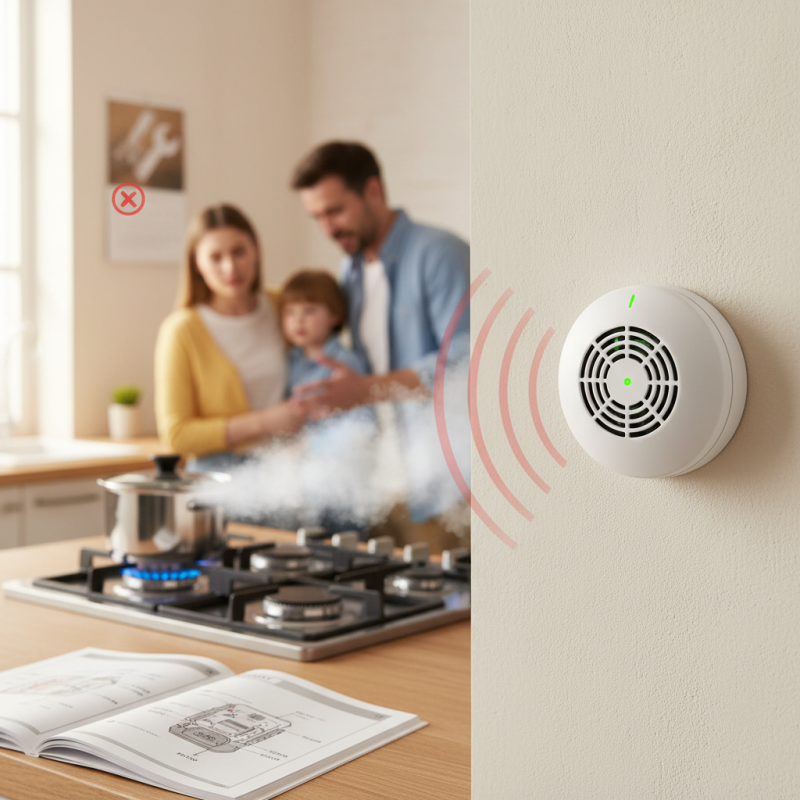
What is a household gas detector and how does it work?

What is a Household Gas Detector?

A household gas detector is a device designed to monitor the presence of hazardous gases such as carbon monoxide, natural gas, and propane. According to a report by the National Fire Protection Association, over 400 deaths occur annually in the United States due to unintentional carbon monoxide poisoning. These incidents often happen in homes where gas appliances are in use. A gas detector can provide essential early warnings, potentially saving lives.

The working mechanism of a household gas detector typically involves sensors that detect specific gas types. When dangerous gas levels are identified, the device emits an audible alarm, alerting residents. The effectiveness of these detectors is underscored by studies indicating that homes equipped with gas detectors report significantly lower incidents of gas-related injuries. Despite this, many households remain unprotected. A survey revealed that about 30% of homes lack any form of gas detection system, highlighting the need for greater awareness.

Proper placement of gas detectors is crucial for their effectiveness. They should be installed near sleeping areas and gas appliances. However, improper positioning can limit their effectiveness. Homeowners often overlook maintenance, such as replacing batteries and checking functionality. Not realizing the importance of this can lead to fatal consequences. Awareness and education regarding gas detectors can further enhance their utility in safeguarding households.

Types of Gases Detected by Household Gas Detectors

Household gas detectors play a crucial role in safety. They are designed to identify specific gases that may be harmful. Common gases detected include natural gas, propane, carbon monoxide, and methane. Each type poses different risks. For instance, carbon monoxide is odorless and can be deadly.

Natural gas detectors focus on detecting methane leaks. A small gas leak can lead to serious hazards. Propane detectors are essential for homes using propane for heating or cooking. Early detection can prevent explosions or fires. Many detectors also alert users before gas concentrations become dangerous.

Understanding these gases helps in choosing the right detector. It is essential to have reliable devices. Regular maintenance of these detectors is also important. However, some people may forget or overlook this task. In these cases, safety could be compromised. Having a better awareness of the specific gases in your home can lead to more informed decisions regarding gas detection.

How Household Gas Detectors Work: Key Components and Mechanisms

Household gas detectors are crucial devices that help ensure safety in homes. They detect dangerous gases like carbon monoxide (CO) and natural gas. These detectors work primarily through electrochemical sensors or semiconductor sensors. Electrochemical sensors measure changes in electrical current caused by gas exposure. Semiconductor sensors use metal oxide to identify the presence of gases based on resistance changes.

According to industry reports, around 50,000 people visit emergency rooms annually due to carbon monoxide poisoning. This highlights the importance of having a functional gas detector. Many detectors come with audible alarms, providing a quick warning. These units should be installed near sleeping areas, ensuring immediate alerts during the night.

Tips: Regularly test your gas detector monthly. Replace the batteries yearly to maintain functionality. It’s also advisable to replace detectors every 5-7 years for optimal safety. Maintaining awareness about the gas detector's alerts is essential, as false alarms can sometimes occur due to household fumes or cooking. Stay vigilant and ensure your family is aware of safety protocols.

Installation and Maintenance of Household Gas Detectors

When installing a household gas detector, consider location first. The device should be placed near sleeping areas and potential gas leak sources. Studies indicate that around 50% of gas leaks occur in kitchens. Positioning detectors in these areas enhances safety. Wall installations are ideal, about 5 to 6 feet above the ground, as gas often rises.

Maintenance is crucial for accurate detection. Regularly check the device for battery life and functionality. According to industry reports, about 30% of household gas detectors fail due to lack of maintenance. Monthly testing is recommended to ensure reliability. Additionally, replace the detector every 5 to 7 years, as sensors lose sensitivity over time. Failure to maintain can result in dangerous consequences, highlighting the need for regular care.

Being informed can save lives. Understanding how detectors work provides peace of mind. While they are reliable, no device is infallible. There can be false alarms or failures to detect gas. Awareness and routine checks are essential to ensure that your safety measures are effective. Staying proactive can greatly reduce risks associated with gas leaks.

Common Features and Safety Standards of Household Gas Detectors

Household gas detectors are essential safety devices designed to identify harmful gases such as carbon monoxide (CO) and natural gas (methane). These detectors use advanced sensors to measure gas concentrations. When dangerous levels are detected, they emit loud alarms to notify residents. Statistics suggest that CO poisoning accounts for over 400 deaths annually in the U.S. alone. This makes reliable detection crucial for household safety.

Common features of household gas detectors include digital displays, battery backups, and connectivity options. Many models feature sensitive alarms that trigger at low gas concentrations, often below hazardous levels. This proactive approach is essential in preventing accidents. Safety standards, such as those set by Underwriters Laboratories (UL), ensure that detectors function correctly and provide accurate readings. Consumers should look for certifications that guarantee compliance with these safety measures.

However, not all detectors are created equal, and a one-size-fits-all solution may not exist. Different homes have varied layouts and gas sources, requiring careful consideration when choosing a detector. Regular maintenance is often overlooked, despite being critical for functionality. Battery checks and sensor testing are necessary to ensure reliability. This gap in awareness underlines the need for informed choices regarding household gas safety.

Copyright 2025 Fluidra S.A. | Created by BCM Marketing Agencia Privacy Policy Legal note | Cookie policy |

Technical cookies are strictly necessary for our website to work and you can navigate through it. These types of cookies are those that, for example, allow us to identify you, give you access to certain restricted parts of the page if necessary, or remember different options or services already selected by you, such as your privacy preferences. Therefore, they are activated by default, your authorization not being necessary in this regard. Through the configuration of your browser, you can block or alert the presence of this type of cookies, although such blocking will affect the proper functioning of the different functionalities of our website.


The analysis cookies allow us to study the navigation of the users of our website in general (for example, which sections of the page are the most visited, which services are used most and if they work correctly, etc.). From the statistical information on navigation on our website, we can improve both the operation of the page itself and the different services it offers. Therefore, these cookies do not have an advertising purpose, but only serve to make our website work better, adapting to our users in general. By activating them you will contribute to this continuous improvement. You can enable or disable these cookies by checking the corresponding box, being disabled by default.


Functionality cookies allow us to remember your preferences, to personalize certain characteristics and general options of our website, every time you access it (for example, the language in which the information is presented to you, the sections marked as favorites, your browser type, etc.) Therefore, this type of cookies does not have an advertising purpose, but by activating them you will improve the functionality of the website (for example, adapting to your type of browser) and the customization of it based on your preferences (for example, by presenting the information in the language that you have chosen in previous occasions), which will contribute to the ease, usability and comfort of our page during your navigation. You can enable or disable these cookies by checking the corresponding box, being disabled by default.


Advertising cookies allow us to manage the advertising spaces included in our website based on criteria such as the content shown or the frequency in which the ads are displayed. For example, if you have been shown the same ad several times on our website, and you have not shown a personal interest by clicking on it, it will not appear again. In summary, by activating this type of cookies, the advertising shown on our website will be more useful and diverse, and less repetitive. You can enable or disable these cookies by checking the corresponding box, being disabled by default.


Behavioral advertising cookies allow us to obtain information based on the observation of your browsing habits and behaviors on the web, in order to show you advertising content that best suits your personal tastes and interests. To understand it in a very simple way, we will give you a fictitious example: if your last searches on the web were related to suspense literature, we would show you advertising about suspense books. Therefore, activating this type of cookies, the advertising that we show you on our website will not be generic, but will be oriented to your searches, tastes and interests, therefore adjusting exclusively to you. You can enable or disable these cookies by checking the corresponding box, being disabled by default.
To understand it in a very simple way, we will give you a fictitious example: if your last searches on the web were related to suspense literature, we would show you advertising about suspense books. Therefore, activating this type of cookies, the advertising that we show you on our website will not be generic, but will be oriented to your searches, tastes and interests, therefore adjusting exclusively to you. You can enable or disable these cookies by checking the corresponding box, being disabled by default.

SAVE

We use our own and third-party cookies to ensure the proper functioning of the website and to analyse our services, improve your experience on our website and show you advertisements related to your interests according to profiling based on your browsing habits (e.g. websites visited). You can accept all cookies by clicking "ACCEPT" or set or reject them by clicking here. If you would like to know more about the use of cookies, please see our COOKIE POLICY.


ACCEPT ALL
Reject no essentials


