
What Is a Hose Clamp and What Types Are Available?
FLUID HANDLING EXPERTS

Blog, all our news

What Is a Hose Clamp and What Types Are Available?

Hose Clamps look simple, but their job is precise: they hold a hose securely against a fitting. A loose clamp can allow leaks; excessive tightening can damage soft hose walls. The right choice depends on hose material, fitting shape, pressure, temperature, and exposure to moisture or vibration.

This guide explains what Hose Clamps are and how common designs differ. It covers screw, spring, wire, and ear-style clamps, with practical notes on where each may be suitable. Picture a rubber hose around a metal barb: a narrow band, sharp edges, or uneven pressure can change how reliably that connection holds. Small details matter.

A useful technical reminder is, “Match the clamp to the hose, fitting, and working conditions.” No verifiable source for a named hose-clamp expert’s quotation was provided, so I won’t attribute those words to someone without evidence. That matters. A reliable guide should distinguish sourced expertise from general advice. It should also acknowledge that no clamp type is best for every assembly. Before choosing, check the clamp’s size range and the hose maker’s installation guidance. Then consider how the connection will be inspected and maintained. The goal is not simply a tight band. It is a secure, even fit without crushed hose or a loose seal.
What Is a Hose Clamp and What Types Are Available?

What a Hose Clamp Does: Securing a Hose-to-Fitting Connection

A hose clamp presses a flexible hose against a fitting to help keep the connection secure. Its band applies pressure around the hose, reducing the chance of slipping or leaking. The fitting and hose must also be compatible; a clamp cannot fix a poor fit. Small detail, big difference.

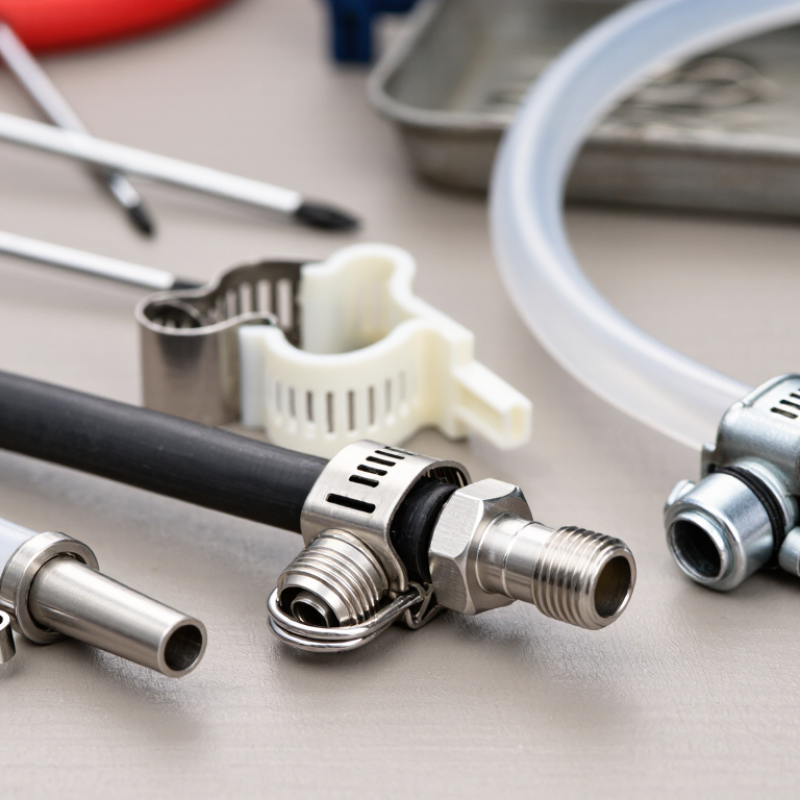
Screw-band clamps tighten with a screw and are common on many serviceable connections. Spring clamps use their own tension and can suit applications with changing temperatures. Wire clamps are another option for some hose designs. Each type distributes force differently, so follow the hose or equipment maker’s guidance when choosing one.

Position the clamp behind the fitting’s raised bead, when present, and tighten it evenly. Too loose, and the hose may move. Too tight, and the band can cut into the hose or distort it. I’ve seen a neat-looking clamp hide a damaged hose underneath; appearance alone is not a test. Check for cracks, bulges, and dampness after installation, then recheck the joint during routine maintenance.

How Clamp Design Applies Pressure to Help Prevent Leaks

A hose clamp is a band that tightens around a flexible hose where it fits over a pipe or fitting. Its pressure compresses the hose against the fitting, closing small gaps that could let fluid escape. The seal depends on contact around the full circumference, not just a tight-looking screw. That matters.

In a screw-driven clamp, turning the screw pulls the band tighter and increases inward pressure. A smooth, correctly sized band helps spread that force across the hose. Spring clamps work differently: their curved shape maintains tension as the hose expands or contracts with temperature changes. Ear-style clamps are crimped to create a fixed, compact hold. Each design suits different hose materials, access conditions, and service needs.

More pressure is not always better. Excessive tightening can cut into soft rubber, deform a fitting, or weaken the hose beneath the band. Too little pressure may leave a narrow leak path, especially as vibration shifts the connection. In practice, judging tightness by feel alone is imperfect. Check the clamp size and fitting guidance, then inspect the hose for pinching, bulges, or seepage after installation. A dry connection is reassuring, but it should be checked again after use.

Common Types: Worm-Drive, Spring, Wire, Ear, and T-Bolt Clamps

What Is a Hose Clamp and What Types Are Available?

A hose clamp tightens around a hose to help prevent leaks or separation. Worm-drive clamps use a slotted band and screw, making adjustment straightforward. Spring clamps flex as temperatures change, which can help maintain pressure on cooling hoses. Wire clamps use shaped wire for a compact, light grip. Ear clamps are crimped closed; they offer a low-profile fit but usually need a special tool. T-bolt clamps spread force across a broad band and suit larger, high-pressure connections. Each type has limits.

Grand View Research’s hose clamp market analysis estimates the 2023 market at about USD 1.1 billion and projects roughly 4% annual growth through 2030. Market size does not tell you which clamp fits a particular hose. SAE J1508 provides an automotive-industry reference for clamp dimensions and performance testing. In practice, match the clamp to hose material, operating pressure, temperature, and vibration. I have seen “tight enough” cause trouble: a narrow band can cut soft rubber, while an undersized clamp may leak.

Tips: Measure the hose outside diameter after fitting it over the connector. Tighten evenly, then check for leaks under normal operating conditions. Recheck after the hose has settled; small shifts happen.

How to Choose a Clamp by Hose Size, Material, and Service Conditions

What Is a Hose Clamp and What Types Are Available?

Choose a clamp using the hose’s installed outside diameter, not its nominal inside diameter. Measure over the hose and fitting together; a thick hose wall can change the required range. The clamp’s adjustment range must cover that measurement without reaching either end of its travel. Too small, and the band may distort the hose. Too large, and it may not tighten evenly. Small details matter.

Worm-drive clamps suit many general-purpose connections and allow simple adjustment. T-bolt designs can provide more even pressure on larger, high-vibration hoses, while spring clamps accommodate some temperature-related changes.

Material matters just as much. Zinc-plated steel may work in dry, sheltered locations; stainless steel is often a better choice around moisture or washdown. For harsher corrosive exposure, verify the alloy and fitting compatibility rather than relying on the word “stainless.”

ASTM A240 specifications distinguish common stainless grades; Type 316, for example, contains molybdenum for improved resistance to certain corrosive environments. The 2016 NACE IMPACT study estimated global corrosion costs at US$2.5 trillion annually, a reminder that environment is not a minor selection detail.

SAE J1508 provides performance requirements for many clamp types, but it cannot replace checking the actual hose, pressure, temperature, and vibration. A fit that looks right may still need testing.

Industry Standards: SAE J1508 and DIN 3017 for Hose Clamps

What Is a Hose Clamp and What Types Are Available?
Industry Standards: SAE J1508 and DIN 3017 for Hose Clamps

A hose clamp tightens around a hose to help secure it to a fitting and limit leaks. Common designs include worm-drive, spring, and wire clamps. Their performance depends on the hose, fitting, temperature, and pressure—not just the clamp’s appearance. Standards help buyers compare designs using defined requirements and test methods.

SAE J1508 covers hose clamps used in automotive applications and sets out performance requirements and test procedures. DIN 3017 addresses worm-drive hose clamps, including design and dimensional requirements. They are not identical standards, and compliance with one does not automatically mean compliance with the other. A clamp’s material and size still matter. Stainless steel may suit damp environments, but the grade and surrounding conditions affect corrosion resistance. In practice, matching a standard to an application can involve judgment; the standard alone cannot account for every installation.

Tips: Check the clamp’s stated standard, size range, and material before purchase. Measure the hose over the fitting, not in isolation. Tighten evenly, then inspect the hose for cuts or distortion. Don’t overtighten. A clamp that feels secure may still damage a soft hose.

What Is a Hose Clamp and What Types Are Available? — Industry Standards: SAE J1508 and DIN 3017 for Hose Clamps
Category How It Works or What It Covers Typical Applications Selection Considerations
Hose clamp A mechanical fastener that applies circumferential pressure to secure a hose to a fitting and help prevent leakage or hose detachment. Fluid, air, and coolant connections across automotive, industrial, plumbing, and equipment systems. Match the clamp to the hose outside diameter, fitting, operating pressure, temperature, fluid, and service environment.
Worm-drive clamp A perforated or slotted band tightens around the hose when a screw engages with the band. General-purpose hose connections where the clamp must be adjustable and removable. Use the specified size range and tighten according to the hose and clamp guidance. Avoid excessive tightening, which can damage the hose.
Constant-tension clamp A spring element helps maintain clamping force as the hose expands or contracts with temperature changes. Applications with temperature cycling, including some engine and coolant connections. Check the operating temperature range, hose size range, and required installation method.
T-bolt clamp A bolt and nut draw the band ends together, providing a robust, high-clamping-force connection. Larger-diameter hoses and demanding connections in vehicle, industrial, or equipment systems. Confirm that the hose and fitting can tolerate the clamp load; select the correct band width and diameter range.
Spring-band clamp A formed spring-steel band applies pressure through its elastic action and can accommodate some dimensional variation. Factory-installed or serviceable connections designed for a specific hose and fitting. Choose the correct size and compatible installation tool; suitability depends on the assembly design and service conditions.
Wire clamp A shaped wire loop tightens around a hose, concentrating force along one or more narrow contact areas. Selected low-pressure or purpose-designed hose assemblies. Use only where the hose and fitting are designed for this contact pattern; it is not a universal substitute for a band clamp.
SAE J1508 A Society of Automotive Engineers standard covering requirements for hose clamps. Applicable details depend on the clamp type and standard revision. Evaluation and specification of covered hose clamps, particularly in automotive applications. Check the current applicable revision and the relevant clamp classification, test requirements, and purchasing specification.
DIN 3017 A German standard series for worm-drive hose clamps. Requirements and dimensions depend on the applicable part and edition. Specification and selection of worm-drive clamps in applications that call for DIN 3017 conformity. Verify the required part, size, material, and edition. Do not assume that conformity to one standard automatically means conformity to the other.

Note: Standards and product requirements can change between editions. Confirm the current standard, assembly requirements, and manufacturer’s installation instructions before selecting or installing a clamp.

Article Source:

Copyright 2025 Fluidra S.A. | Created by BCM Marketing Agencia Privacy Policy Legal note | Cookie policy |

Technical cookies are strictly necessary for our website to work and you can navigate through it. These types of cookies are those that, for example, allow us to identify you, give you access to certain restricted parts of the page if necessary, or remember different options or services already selected by you, such as your privacy preferences. Therefore, they are activated by default, your authorization not being necessary in this regard. Through the configuration of your browser, you can block or alert the presence of this type of cookies, although such blocking will affect the proper functioning of the different functionalities of our website.


The analysis cookies allow us to study the navigation of the users of our website in general (for example, which sections of the page are the most visited, which services are used most and if they work correctly, etc.). From the statistical information on navigation on our website, we can improve both the operation of the page itself and the different services it offers. Therefore, these cookies do not have an advertising purpose, but only serve to make our website work better, adapting to our users in general. By activating them you will contribute to this continuous improvement. You can enable or disable these cookies by checking the corresponding box, being disabled by default.


Functionality cookies allow us to remember your preferences, to personalize certain characteristics and general options of our website, every time you access it (for example, the language in which the information is presented to you, the sections marked as favorites, your browser type, etc.) Therefore, this type of cookies does not have an advertising purpose, but by activating them you will improve the functionality of the website (for example, adapting to your type of browser) and the customization of it based on your preferences (for example, by presenting the information in the language that you have chosen in previous occasions), which will contribute to the ease, usability and comfort of our page during your navigation. You can enable or disable these cookies by checking the corresponding box, being disabled by default.


Advertising cookies allow us to manage the advertising spaces included in our website based on criteria such as the content shown or the frequency in which the ads are displayed. For example, if you have been shown the same ad several times on our website, and you have not shown a personal interest by clicking on it, it will not appear again. In summary, by activating this type of cookies, the advertising shown on our website will be more useful and diverse, and less repetitive. You can enable or disable these cookies by checking the corresponding box, being disabled by default.


Behavioral advertising cookies allow us to obtain information based on the observation of your browsing habits and behaviors on the web, in order to show you advertising content that best suits your personal tastes and interests. To understand it in a very simple way, we will give you a fictitious example: if your last searches on the web were related to suspense literature, we would show you advertising about suspense books. Therefore, activating this type of cookies, the advertising that we show you on our website will not be generic, but will be oriented to your searches, tastes and interests, therefore adjusting exclusively to you. You can enable or disable these cookies by checking the corresponding box, being disabled by default.
To understand it in a very simple way, we will give you a fictitious example: if your last searches on the web were related to suspense literature, we would show you advertising about suspense books. Therefore, activating this type of cookies, the advertising that we show you on our website will not be generic, but will be oriented to your searches, tastes and interests, therefore adjusting exclusively to you. You can enable or disable these cookies by checking the corresponding box, being disabled by default.

SAVE

We use our own and third-party cookies to ensure the proper functioning of the website and to analyse our services, improve your experience on our website and show you advertisements related to your interests according to profiling based on your browsing habits (e.g. websites visited). You can accept all cookies by clicking "ACCEPT" or set or reject them by clicking here. If you would like to know more about the use of cookies, please see our COOKIE POLICY.


ACCEPT ALL
Reject no essentials


