
Top High Torque Brushless DC Motors for Sale
FLUID HANDLING EXPERTS

Blog, all our news

Top High Torque Brushless DC Motors for Sale

A high-torque motor can look impressive on a product page. The real test is how it performs under a defined load, at a stated speed, without overheating. This guide to Top High Torque Brushless DC Motors for Sale will compare practical specifications, not just headline torque figures. We will look at continuous and peak torque, rated voltage, current, speed range, cooling, and controller compatibility. Small details matter. A motor that fits a compact robot arm may not suit a conveyor that runs all day. Check the datasheet, too: mounting dimensions, shaft size, and thermal limits can change a good option into the wrong one.

Motor-drive authority R. Krishnan’s published work explains how motor design and drive control interact. A fair paraphrase of that engineering lesson is: “Torque claims need context: speed, current, and heat shape real performance.” It is not a verbatim quotation. That distinction matters when buyers need reliable technical guidance. A High Torque Brushless Dc Motor should be assessed as part of a system, including its controller, power supply, and cooling path. Listen for noise. Check temperature after a realistic duty cycle. Ask the seller for test conditions and documentation. Some listings leave these details unclear. That is worth questioning. This overview will help readers compare available models, spot missing information, and narrow choices for their actual workload. It will not pretend one motor fits every application. Sometimes, the best choice is less obvious.
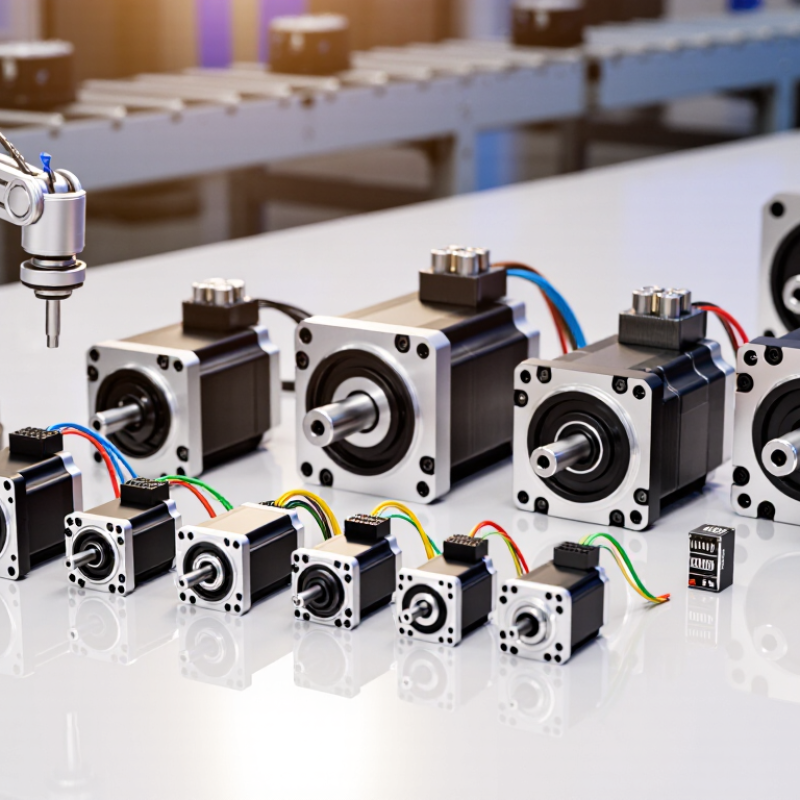
Top High Torque Brushless DC Motors for Sale

What High-Torque Brushless DC Motors Are and How They Work

Top High Torque Brushless DC Motors for Sale

A high-torque brushless DC motor converts electrical energy into rotary force without brushes rubbing against a commutator. Permanent magnets sit on the rotor, while copper windings occupy the stator. An electronic controller switches current through those windings in sequence, pulling the rotor around. Hall sensors may report rotor position; sensorless controllers can estimate it from voltage changes. No brushes. Less contact wear.

Torque generally rises with motor current, but it also depends on magnetic strength, winding design, and motor dimensions. At low speed, a suitable motor can deliver strong turning force, useful for moving a loaded conveyor or lifting a mechanism from rest. The controller, wiring, and power supply must handle the required current. Heat matters, too. A small motor pushed hard can overheat even when its short peak rating looks impressive.

The International Energy Agency’s 2011 report, Energy-Efficiency Policy Opportunities for Electric Motor-Driven Systems, estimates that motor-driven systems consume about 45% of global electricity. This figure covers motor systems broadly, not brushless DC motors alone. Still, it shows why efficient motor selection matters. A torque number alone can mislead; I would compare continuous torque, peak duration, speed, and cooling conditions. Check the actual load. Ratings can vary with test setup, and that detail is easy to overlook.

Motor Designs That Deliver High Torque

High-torque brushless DC motors deliver useful force at low speeds, where conveyors, compact winches, and powered wheels need steady movement. Good motor design starts with electromagnetic choices: more active copper in the windings and a well-matched stator can increase torque. A larger rotor may help, too, but it also adds weight and inertia. There is a trade-off. Heat matters just as much. If a motor runs hot inside a cramped housing, its continuous torque may fall below the advertised peak.

Tips: Check both continuous and peak torque ratings. Confirm the voltage, speed range, shaft size, and mounting pattern against your equipment. Ask how the motor handles heat during repeated starts and stops. A brief peak rating is not a promise of endless pulling power.

When comparing high-torque brushless DC motors for sale, look beyond one headline number. Review the torque-speed curve and controller requirements; torque often drops as speed rises. A geared design can provide more output torque, though gears add noise, wear points, and maintenance. Measure the available space around the shaft, and leave room for airflow and wiring. One easy mistake is choosing by stall torque alone. It sounds convincing, but sustained operation is what keeps a machine moving reliably.

Key Specifications for Comparing Brushless DC Motors

Top High Torque Brushless DC Motors for Sale
Key Specifications for Comparing Brushless DC Motors

A high torque rating alone does not tell you how a motor will perform in your machine. Compare continuous torque and peak torque separately, including how long peak torque is allowed. Check the torque-speed curve at your actual supply voltage; torque usually falls as speed rises. Also record rated voltage, continuous current, peak current, and speed constant (Kv). These figures help match the motor to its controller and load. A tidy datasheet can still mislead.

Thermal limits matter. Ask for winding temperature limits, cooling conditions, and any derating curve, especially for enclosed equipment or repeated starts. Check shaft dimensions, mounting pattern, encoder resolution, and ingress protection against the installation. The U.S. Department of Energy’s Improving Motor and Drive System Performance sourcebook stresses evaluating the motor and drive as a system, not in isolation. The IEA’s 2011 report on motor-driven systems estimates they use about 45% of global electricity. Small efficiency differences can matter at scale. Yet a quoted efficiency may not reflect your operating point.

Tips: Compare tested curves at your voltage and load. Confirm peak-torque duration in writing. I still recheck the thermal assumptions; they are easy to overlook.

Common Applications for High-Torque BLDC Motors

High-torque brushless DC motors are useful wherever a machine must start moving under load or hold steady speed. In factory automation, they can drive conveyor belts carrying cartons, trays, or heavier components. Their electronic speed control helps operators match belt movement to a packing line. That matters. Robotic joints also use them to move arms and position tools with repeatable force. A motor alone does not guarantee accuracy; the controller, sensors, and gearbox all play a part.

Electric utility vehicles and powered carts may use high-torque BLDC motors to climb ramps or move loads across warehouses. Compact lifting equipment can benefit from their strong output in a limited space, while adjustable torque helps reduce abrupt starts. For smaller machines, the same motor type can turn feed rollers or positioning tables. Not always. Actual performance depends on the load, duty cycle, cooling, and drive settings. A motor that handles a brief peak may overheat during continuous work. Before choosing one, check the required torque at the operating speed, not just the headline rating. A little margin helps, though too much can add cost and weight without solving the real problem.

How to Choose a Motor for Your Performance and Budget Needs

For a high-torque brushless DC motor, choose around the work it must do, not its largest advertised number. Start with the load, desired speed, supply voltage, and available space. A compact motor may deliver strong torque but draw more current and heat quickly. Peak torque matters, but continuous torque determines whether it can handle a long climb or repeated starts. Measure before ordering.

Check the motor’s torque-speed curve, rated current, shaft size, and mounting pattern against your design. Include the controller and power supply in the budget; a motor alone cannot deliver a usable system. A sensored option can improve low-speed starts, while sensorless models may suit steady, faster operation. Heat changes everything. Leave room for cooling, and do not treat a brief peak rating as an everyday operating target.

Compare price with efficiency, documentation, warranty, and replacement-part availability. A lower-cost motor can be good value when its specifications are clear and its bearings and insulation suit the workload. It is tempting to trust a neat spec sheet, but real loads rarely behave so neatly. Test with the actual load, then check case temperature and current after several minutes. A little reserve helps, though oversizing adds weight and cost. Sometimes the right choice is less powerful than expected.

Top High Torque Brushless DC Motors for Sale - How to Choose a Motor for Your Performance and Budget Needs

Representative buying categories and typical market ranges for brushless DC (BLDC) motors.
Motor Category Typical Supply Voltage Continuous Torque Typical Speed Typical Power Indicative Motor-Only Price (USD) Best Suited For Key Selection Consideration
Compact outrunner BLDC 12–48 V DC 0.2–2 N·m 2,000–8,000 rpm 100–1,000 W $30–$200 Small robots, hobby equipment, compact fans, and lightweight drive systems Offers a simple, low-cost way to get good torque from a compact motor; check cooling and continuous-current limits.
Geared BLDC motor 12–60 V DC 5–50 N·m at gearbox output 100–1,500 rpm at gearbox output 100–1,500 W $100–$800 Conveyors, mobile platforms, powered doors, and low-speed traction Gear reduction increases output torque and lowers speed; compare gearbox efficiency, backlash, and rated output torque.
BLDC servo motor 24–220 V DC, depending on system 0.5–20 N·m 1,000–3,000 rpm 200 W–3 kW $150–$1,500 Automated machinery, CNC axes, packaging equipment, and applications needing precise motion Often supports encoder feedback and closed-loop control; allow for the added cost of a compatible drive and feedback devices.
Direct-drive torque motor 24–220 V DC, depending on system 5–100 N·m 50–1,000 rpm 100 W–5 kW $300–$3,000 Turntables, rotary indexing, robotic joints, and low-speed precision motion Provides torque without a gearbox, reducing backlash and maintenance; check thermal capacity at continuous low speed.
Industrial high-power BLDC motor 48–400 V DC 10–100+ N·m 1,000–5,000 rpm 2–15 kW $500–$5,000+ Heavy-duty machinery, larger mobile equipment, and high-throughput production systems Designed for demanding loads; confirm peak and continuous ratings, cooling method, mounting, and drive compatibility.

Buying note: Figures are broad, indicative ranges rather than specifications for a particular model. Torque and speed depend on the winding, controller, cooling, and operating conditions. Geared-motor torque and speed are stated at the gearbox output; other torque figures refer to the motor shaft. Prices vary by specification, quantity, and region, and generally exclude controllers, cables, and installation.

Copyright 2025 Fluidra S.A. | Created by BCM Marketing Agencia Privacy Policy Legal note | Cookie policy |

Technical cookies are strictly necessary for our website to work and you can navigate through it. These types of cookies are those that, for example, allow us to identify you, give you access to certain restricted parts of the page if necessary, or remember different options or services already selected by you, such as your privacy preferences. Therefore, they are activated by default, your authorization not being necessary in this regard. Through the configuration of your browser, you can block or alert the presence of this type of cookies, although such blocking will affect the proper functioning of the different functionalities of our website.


The analysis cookies allow us to study the navigation of the users of our website in general (for example, which sections of the page are the most visited, which services are used most and if they work correctly, etc.). From the statistical information on navigation on our website, we can improve both the operation of the page itself and the different services it offers. Therefore, these cookies do not have an advertising purpose, but only serve to make our website work better, adapting to our users in general. By activating them you will contribute to this continuous improvement. You can enable or disable these cookies by checking the corresponding box, being disabled by default.


Functionality cookies allow us to remember your preferences, to personalize certain characteristics and general options of our website, every time you access it (for example, the language in which the information is presented to you, the sections marked as favorites, your browser type, etc.) Therefore, this type of cookies does not have an advertising purpose, but by activating them you will improve the functionality of the website (for example, adapting to your type of browser) and the customization of it based on your preferences (for example, by presenting the information in the language that you have chosen in previous occasions), which will contribute to the ease, usability and comfort of our page during your navigation. You can enable or disable these cookies by checking the corresponding box, being disabled by default.


Advertising cookies allow us to manage the advertising spaces included in our website based on criteria such as the content shown or the frequency in which the ads are displayed. For example, if you have been shown the same ad several times on our website, and you have not shown a personal interest by clicking on it, it will not appear again. In summary, by activating this type of cookies, the advertising shown on our website will be more useful and diverse, and less repetitive. You can enable or disable these cookies by checking the corresponding box, being disabled by default.


Behavioral advertising cookies allow us to obtain information based on the observation of your browsing habits and behaviors on the web, in order to show you advertising content that best suits your personal tastes and interests. To understand it in a very simple way, we will give you a fictitious example: if your last searches on the web were related to suspense literature, we would show you advertising about suspense books. Therefore, activating this type of cookies, the advertising that we show you on our website will not be generic, but will be oriented to your searches, tastes and interests, therefore adjusting exclusively to you. You can enable or disable these cookies by checking the corresponding box, being disabled by default.
To understand it in a very simple way, we will give you a fictitious example: if your last searches on the web were related to suspense literature, we would show you advertising about suspense books. Therefore, activating this type of cookies, the advertising that we show you on our website will not be generic, but will be oriented to your searches, tastes and interests, therefore adjusting exclusively to you. You can enable or disable these cookies by checking the corresponding box, being disabled by default.

SAVE

We use our own and third-party cookies to ensure the proper functioning of the website and to analyse our services, improve your experience on our website and show you advertisements related to your interests according to profiling based on your browsing habits (e.g. websites visited). You can accept all cookies by clicking "ACCEPT" or set or reject them by clicking here. If you would like to know more about the use of cookies, please see our COOKIE POLICY.


ACCEPT ALL
Reject no essentials


