
What Is a Folding Mesh Door and How Does It Work?
FLUID HANDLING EXPERTS

Blog, all our news

What Is a Folding Mesh Door and How Does It Work?

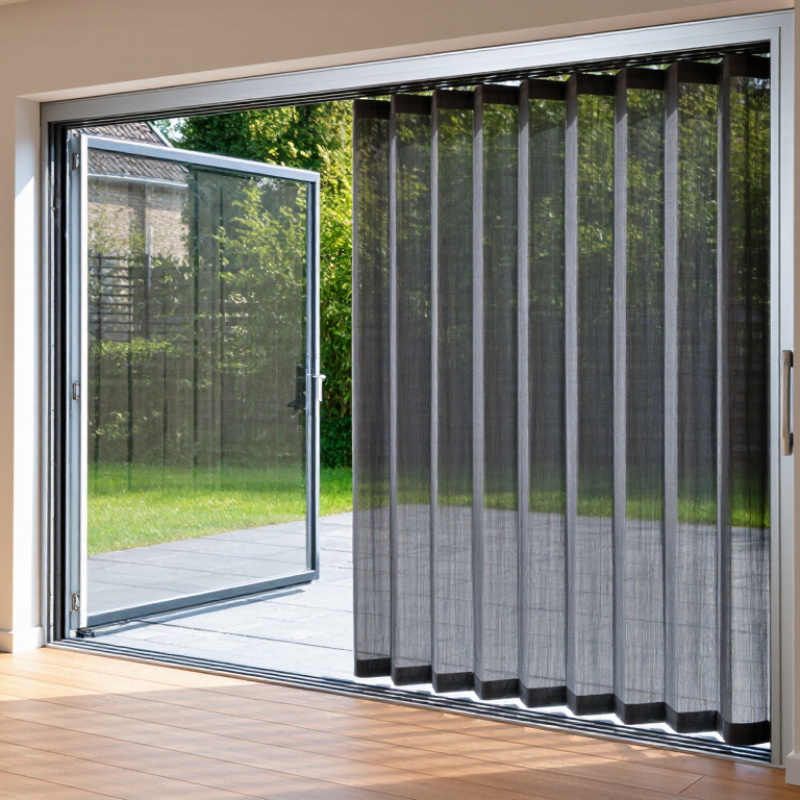
A Folding Mesh Door is a practical screen system designed to divide indoor and outdoor spaces. Unlike a solid hinged door, it folds sideways along a track. Its pleated mesh forms compact panels, similar to an accordion. When opened, the panels gather neatly beside the frame. When closed, they create a breathable barrier across the doorway.

It helps reduce insects while allowing fresh air and daylight to enter. Many models use a top track, side frame, rollers, and a magnetic or mechanical closure. The mesh may be fiberglass, polyester, or another coated material. Each option offers different strength, visibility, and cleaning needs. In daily use, smooth operation depends on accurate measurements and a level installation surface. A rushed measurement can cause gaps or uneven folding. Small details matter.

It is not completely maintenance-free.

A reliable Folding Mesh Door should match the doorway’s width, height, traffic level, and exposure to weather. Experienced installers usually inspect the frame before selecting hardware. They also check whether the floor is uneven or the opening is frequently used. These factors affect alignment and long-term performance. This guide explains how the door works, what its main components do, and where common installation mistakes appear. It also considers practical limitations, because mesh can tear, tracks can collect dust, and closures may weaken over time. Understanding those details helps homeowners choose a suitable design and use it with greater confidence.
What Is a Folding Mesh Door and How Does It Work?

What Is a Folding Mesh Door?

A folding mesh door is a flexible screen barrier that covers a doorway without needing a solid panel. It usually contains fine mesh fabric, folding sections, guide tracks, and a frame. When closed, the mesh helps reduce insects while allowing air and daylight to pass through. Unlike a hinged door, it gathers neatly to one side.

The door works through connected folds that move along a top or side track. A light pull opens the panels, while magnets, clips, or a latch can hold the center closed. During regular use, the mesh should remain reasonably flat and aligned. Dust, rough handling, or an uneven frame may cause dragging. It is not a perfect seal, especially around the edges. That small gap matters in windy conditions.

Tips: Measure the opening at several points before installation. Check both width and height. Clean the track regularly with a soft brush. Avoid forcing the panels when they resist. A practical inspection includes checking loose fasteners, damaged mesh, and weak magnets. For homes with pets or children, choose a durable mesh and test the closing force carefully. Some designs feel smooth at first but become noisy later, so long-term maintenance deserves attention.

What Are the Main Parts of a Folding Mesh Door?

What Is a Folding Mesh Door and How Does It Work?

The main parts of a folding mesh door are the frame, folding panels, mesh screen, hinges, track, rollers, and closing system. The frame anchors the assembly to the doorway. Each panel connects through vertical hinges, allowing the screen to fold into a compact stack. A top track carries most of the movement, while rollers guide the panels smoothly. Some designs also use a bottom guide, but uneven floors can make it troublesome.

The mesh blocks insects while allowing air and daylight to pass. Fiberglass mesh is common because it resists rust and remains flexible. The closing edge may include magnets, a latch, or overlapping seals. These details matter. A weak seal can leave a narrow path for mosquitoes. A distorted track can cause dragging and early wear. Testing air leakage under ASTM E283 can help assess door and frame performance, although it does not measure insect control.

The U.S. Department of Energy reports that windows account for about 25–30% of residential heating and cooling energy use. A mesh door cannot replace an insulated exterior door, but it can support natural ventilation when conditions are suitable. The 2023 Global Status Report for Buildings and Construction also links buildings with about 30% of global final energy use. In practice, installation quality often matters more than expected. Dirt in the track, loose fasteners, or a poorly measured opening can reduce performance quickly.

How Does a Folding Mesh Door Operate?

A folding mesh door operates through a flexible screen connected to a series of narrow pleats. When you pull the handle, the screen slides sideways along an upper and lower track. Each pleat folds neatly against the next one, creating a compact stack beside the doorway. It does not swing outward like a hinged door.

The system usually relies on rollers, guide tracks, and a tensioned mesh panel. The rollers reduce friction while the tracks keep the screen aligned. Many designs use magnets or a latch where the two edges meet. These parts hold the mesh closed and help block insects. The screen still allows air and daylight to pass through.

In practical use, smooth operation depends on accurate installation. A slightly uneven threshold can make the screen drag or leave a small gap. Dust inside the track may also cause rough movement. Keep the track clean with a soft brush, and avoid forcing the handle. That habit matters.

The mesh needs gentle handling.

A useful detail is controlled tension. It helps the screen return to position, but excessive force can strain the pleats. I have found that users often pull too quickly, especially when carrying items. Slower movement protects the rollers and keeps the folds even. Still, no folding mesh door is maintenance-free. Its performance can decline over time, and that limitation deserves honest attention.

Where Can Folding Mesh Doors Be Used?

Folding mesh doors suit spaces that need airflow, daylight, and quick access without a permanent open entrance. They are commonly installed on patios, balconies, porches, garden rooms, and kitchen extensions. The panels slide or concertina along a track, then stack beside the opening. This design saves swing space. It also helps households connect indoor rooms with outdoor seating areas.

Their value is practical in warm seasons. A homeowner can open the mesh during a cool evening and reduce reliance on mechanical cooling. The International Energy Agency reported in its 2023 Global Status Report for Buildings and Construction that buildings use about 30% of global final energy. Small ventilation choices do not solve this problem. However, they can support sensible daily energy habits when outdoor conditions are suitable. In practice, users often place folding mesh doors between a living room and a shaded patio, where airflow feels immediate.

They also appear in cafés, reception areas, clinics, workshops, and light commercial spaces. These locations benefit from separated zones without installing a heavy hinged door. Mesh can help limit insects, but it is not an air filter. The U.S. Environmental Protection Agency states that indoor pollutant levels can be two to five times higher than outdoors, and sometimes much higher. Opening a mesh door near traffic or dusty work may worsen indoor air quality. Track alignment, mesh strength, wind exposure, and threshold accessibility need careful review. A beautiful installation can still perform poorly when the bottom seal drags or the panels catch in strong wind.

What Are the Benefits and Limitations of Folding Mesh Doors?

What Is a Folding Mesh Door and How Does It Work?

A folding mesh door uses hinged or pleated panels that slide along a top and bottom track. When opened, the panels fold into a narrow stack beside the doorway. When closed, the mesh forms a breathable barrier against insects, leaves, and light debris. A magnetic strip or latch usually seals the meeting edge. The system needs accurate measuring, because a few millimeters of misalignment can cause dragging, gaps, or poor closure. That detail is easy to underestimate.

Its main benefit is controlled ventilation. EPA reports that indoor pollutant levels can be two to five times higher than outdoor levels, although ventilation alone cannot solve every air-quality problem. A mesh door can support airflow without leaving the opening completely exposed. It also uses less swing space than a hinged screen door, making it practical near patios, kitchens, and narrow walkways. The U.S. Department of Energy reports that windows can represent 25–30% of residential heating and cooling energy use. A mesh door is not an insulating replacement, but daytime airflow may reduce some cooling demand in suitable weather.

Limitations remain. Mesh can tear under pet claws, sharp furniture, or strong wind. Tracks collect dust and may become noisy. Fine mesh improves pest control but can reduce airflow and visibility. In humid or coastal areas, metal parts may corrode faster. It is also not a security barrier. Real performance depends on installation, maintenance, and local climate. A careful review is still necessary.

Folding Mesh Doors: Benefits and Limitations

Folding mesh doors provide natural airflow and daylight while helping keep insects outside when the mesh is closed. Their privacy and wind-blocking performance is limited because the mesh is designed to remain breathable and lightweight. Ratings use a practical five-point scale and can vary with mesh density, frame design, installation quality, and weather conditions.

Copyright 2025 Fluidra S.A. | Created by BCM Marketing Agencia Privacy Policy Legal note | Cookie policy |

Technical cookies are strictly necessary for our website to work and you can navigate through it. These types of cookies are those that, for example, allow us to identify you, give you access to certain restricted parts of the page if necessary, or remember different options or services already selected by you, such as your privacy preferences. Therefore, they are activated by default, your authorization not being necessary in this regard. Through the configuration of your browser, you can block or alert the presence of this type of cookies, although such blocking will affect the proper functioning of the different functionalities of our website.


The analysis cookies allow us to study the navigation of the users of our website in general (for example, which sections of the page are the most visited, which services are used most and if they work correctly, etc.). From the statistical information on navigation on our website, we can improve both the operation of the page itself and the different services it offers. Therefore, these cookies do not have an advertising purpose, but only serve to make our website work better, adapting to our users in general. By activating them you will contribute to this continuous improvement. You can enable or disable these cookies by checking the corresponding box, being disabled by default.


Functionality cookies allow us to remember your preferences, to personalize certain characteristics and general options of our website, every time you access it (for example, the language in which the information is presented to you, the sections marked as favorites, your browser type, etc.) Therefore, this type of cookies does not have an advertising purpose, but by activating them you will improve the functionality of the website (for example, adapting to your type of browser) and the customization of it based on your preferences (for example, by presenting the information in the language that you have chosen in previous occasions), which will contribute to the ease, usability and comfort of our page during your navigation. You can enable or disable these cookies by checking the corresponding box, being disabled by default.


Advertising cookies allow us to manage the advertising spaces included in our website based on criteria such as the content shown or the frequency in which the ads are displayed. For example, if you have been shown the same ad several times on our website, and you have not shown a personal interest by clicking on it, it will not appear again. In summary, by activating this type of cookies, the advertising shown on our website will be more useful and diverse, and less repetitive. You can enable or disable these cookies by checking the corresponding box, being disabled by default.


Behavioral advertising cookies allow us to obtain information based on the observation of your browsing habits and behaviors on the web, in order to show you advertising content that best suits your personal tastes and interests. To understand it in a very simple way, we will give you a fictitious example: if your last searches on the web were related to suspense literature, we would show you advertising about suspense books. Therefore, activating this type of cookies, the advertising that we show you on our website will not be generic, but will be oriented to your searches, tastes and interests, therefore adjusting exclusively to you. You can enable or disable these cookies by checking the corresponding box, being disabled by default.
To understand it in a very simple way, we will give you a fictitious example: if your last searches on the web were related to suspense literature, we would show you advertising about suspense books. Therefore, activating this type of cookies, the advertising that we show you on our website will not be generic, but will be oriented to your searches, tastes and interests, therefore adjusting exclusively to you. You can enable or disable these cookies by checking the corresponding box, being disabled by default.

SAVE

We use our own and third-party cookies to ensure the proper functioning of the website and to analyse our services, improve your experience on our website and show you advertisements related to your interests according to profiling based on your browsing habits (e.g. websites visited). You can accept all cookies by clicking "ACCEPT" or set or reject them by clicking here. If you would like to know more about the use of cookies, please see our COOKIE POLICY.


ACCEPT ALL
Reject no essentials


