
Top FLS Gate Valve Components for Global Buyers
FLUID HANDLING EXPERTS

Blog, all our news

Top FLS Gate Valve Components for Global Buyers

Global buyers rarely choose a gate valve by nameplate alone. They inspect the wedge, stem, seats, bonnet, and pressure boundary—the parts that determine whether a valve seals cleanly after repeated cycles. For Fls Gate Valve Components, material traceability and dimensional fit matter as much as the catalog description. A polished stem can look convincing; a mismatched seat may still cause leakage.

Grand View Research’s Industrial Valves Market report valued the global market at approximately USD 78.5 billion in 2023 and projected continued growth through 2030. That scale reflects broad demand, not a guarantee of quality in any individual shipment. Buyers should compare component materials, pressure ratings, inspection records, and compatibility with the intended service. API 600 and API 602 provide relevant design and construction references for specified steel gate valves, but the applicable standard depends on valve type and project requirements.

Details count. A buyer checking a wedge should confirm its material and sealing-face condition; a stem review should include dimensions, finish, and documentation. Small discrepancies can become costly after installation. A verified expert quotation was not provided with the source material, so none is attributed here. That restraint is deliberate: an invented endorsement would weaken a technical buying guide. Use this outline to assess Fls Gate Valve Components with evidence, clear specifications, and careful supplier checks.
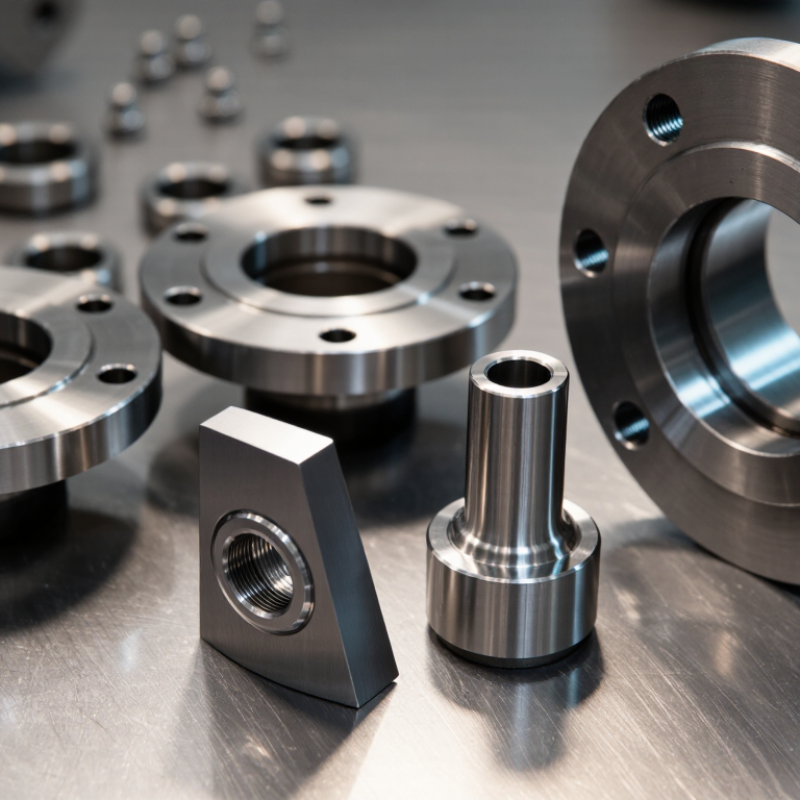
Top FLS Gate Valve Components for Global Buyers

What Defines an FLS Gate Valve Under API 6A?

An FLS gate valve is not defined by its name alone. Under API 6A, buyers should assess its documented design and performance for wellhead and tree service. The applicable edition, pressure rating, temperature class, material class, and product specification level all matter. Check the datasheet and certification records.

The main components work as a pressure-containing system. The body and bonnet hold pressure; the gate and seats control flow; the stem transfers operating force. Seals help contain fluid at joints and around the stem. Each part must suit the stated service conditions, not just fit the assembly. Small details matter.

API 6A also sets requirements for design validation and testing, with applicable levels depending on the product specification. Ask for traceable material records and test documentation. Confirm whether the stated performance applies to the complete valve configuration. A familiar component layout does not prove compliance. And the label alone is not enough. In practice, specifications can be easy to misread, so buyers should compare the exact valve configuration against the project requirements before ordering.

Body, Bonnet, and Connections: Common 5,000–20,000 psi Ratings

For global buyers, FLS gate valve pressure ratings deserve closer attention than the headline number. API Specification 6A and ISO 10423 identify standard rated working pressures including 5,000, 10,000, 15,000, and 20,000 psi. The valve body contains the pressure; the bonnet seals the upper opening, while end connections transfer load into the piping or wellhead assembly. Small details matter. A mismatched flange, seal, or bolt specification can undermine an otherwise suitable selection.

Check the complete configuration, not just the catalog rating. Confirm material class, temperature range, pressure class, and connection dimensions against the applicable API 6A or ISO 10423 documentation. Ask for traceable inspection and test records, including the stated test pressure and acceptance criteria. Ratings are not interchangeable across every service condition. And a higher number is not automatically safer. I would also verify whether the quoted rating applies to the assembled valve, rather than a component alone.

Tips: Match body, bonnet, and connections to the same working-pressure class, then confirm the exact configuration on the nameplate and inspection records. Keep the paperwork with the valve. It is easy to overlook. One practical limitation: paperwork cannot replace checking the actual installation and operating conditions.

Gate, Seats, and Seals: Metal-to-Metal and Elastomeric Designs

A gate valve’s performance depends on how the gate, seats, and seals work together. The gate moves between the seats to control flow, so alignment and surface condition matter. Metal-to-metal designs use closely fitted contact surfaces and may suit demanding pressure or temperature conditions. They need careful machining and inspection. Small defects can affect shutoff.

Elastomeric seals add a flexible contact surface that can improve sealing at lower operating pressures. Their suitability depends on the fluid, temperature, and expected cycling. Check material compatibility rather than choosing by appearance alone. A seal that swells, hardens, or wears early can lead to leakage. The right design is not always obvious; service details can be incomplete, so verify assumptions with a qualified supplier.

Tips: Ask for seat and seal material data, pressure and temperature limits, and inspection records. Confirm dimensions against the valve drawing. Look closely at seat faces and seal grooves for scratches or uneven wear. Keep spare seals in clean, dry storage. Small checks help.

Stem and Bonnet Assembly: Components That Control Valve Operation

The stem and bonnet assembly turns handwheel or actuator input into controlled gate movement. Its stem must remain straight, while the bonnet supports alignment and contains pressure. Packing around the stem limits leakage; the gland follower compresses it evenly. Uneven tightening can increase friction or score the stem. Small details matter.

API 622, a recognized packing qualification standard, includes 1,510 mechanical cycles in its test procedure. This figure highlights repeated movement as a key packing challenge, though field conditions may differ. Buyers should check packing material, stem finish, bonnet joint design, and pressure-temperature ratings against the service specification. Ask for inspection records and dimensional tolerances, not only a parts list. A smooth stem helps. But it is not the whole story.

Tips: During inspection, look for packing wear, corrosion near the stem, and uneven gland gaps. Confirm the stem travels freely before installation. A slightly imperfect check is better than none, but document the finding and verify it against the manufacturer’s assembly limits.

Materials and Qualification: API 6A PSL, PR, and Testing Requirements

For global buyers, a gate valve’s pressure label is only the starting point. API Specification 6A, 21st edition, lists rated working-pressure classes from 2,000 to 20,000 psi, including 3,000, 5,000, 10,000, and 15,000 psi. Match the class to the wellhead system, not just the purchase order. A higher rating does not automatically mean better suitability.

PSL sets quality-control and documentation requirements; API 6A defines PSL levels 1 through 4. PR addresses performance verification, with PR1 and PR2 applying different qualification requirements. Ask suppliers to state the specified PSL and PR for each component, then review material certificates, heat numbers, hardness results, and required nondestructive examination. Small details matter. Traceability can break at a replacement part.

For gate valves, confirm that pressure and temperature ratings, body and seat tests, and acceptance criteria match the applicable API 6A requirements and order. PR2 testing includes defined operating cycles and pressure testing, but it should not be mistaken for proof of every field condition. Testing scope varies by component and configuration. A clean certificate package helps, though paperwork alone cannot reveal poor handling or assembly. That deserves a second look.

Copyright 2025 Fluidra S.A. | Created by BCM Marketing Agencia Privacy Policy Legal note | Cookie policy |

Technical cookies are strictly necessary for our website to work and you can navigate through it. These types of cookies are those that, for example, allow us to identify you, give you access to certain restricted parts of the page if necessary, or remember different options or services already selected by you, such as your privacy preferences. Therefore, they are activated by default, your authorization not being necessary in this regard. Through the configuration of your browser, you can block or alert the presence of this type of cookies, although such blocking will affect the proper functioning of the different functionalities of our website.


The analysis cookies allow us to study the navigation of the users of our website in general (for example, which sections of the page are the most visited, which services are used most and if they work correctly, etc.). From the statistical information on navigation on our website, we can improve both the operation of the page itself and the different services it offers. Therefore, these cookies do not have an advertising purpose, but only serve to make our website work better, adapting to our users in general. By activating them you will contribute to this continuous improvement. You can enable or disable these cookies by checking the corresponding box, being disabled by default.


Functionality cookies allow us to remember your preferences, to personalize certain characteristics and general options of our website, every time you access it (for example, the language in which the information is presented to you, the sections marked as favorites, your browser type, etc.) Therefore, this type of cookies does not have an advertising purpose, but by activating them you will improve the functionality of the website (for example, adapting to your type of browser) and the customization of it based on your preferences (for example, by presenting the information in the language that you have chosen in previous occasions), which will contribute to the ease, usability and comfort of our page during your navigation. You can enable or disable these cookies by checking the corresponding box, being disabled by default.


Advertising cookies allow us to manage the advertising spaces included in our website based on criteria such as the content shown or the frequency in which the ads are displayed. For example, if you have been shown the same ad several times on our website, and you have not shown a personal interest by clicking on it, it will not appear again. In summary, by activating this type of cookies, the advertising shown on our website will be more useful and diverse, and less repetitive. You can enable or disable these cookies by checking the corresponding box, being disabled by default.


Behavioral advertising cookies allow us to obtain information based on the observation of your browsing habits and behaviors on the web, in order to show you advertising content that best suits your personal tastes and interests. To understand it in a very simple way, we will give you a fictitious example: if your last searches on the web were related to suspense literature, we would show you advertising about suspense books. Therefore, activating this type of cookies, the advertising that we show you on our website will not be generic, but will be oriented to your searches, tastes and interests, therefore adjusting exclusively to you. You can enable or disable these cookies by checking the corresponding box, being disabled by default.
To understand it in a very simple way, we will give you a fictitious example: if your last searches on the web were related to suspense literature, we would show you advertising about suspense books. Therefore, activating this type of cookies, the advertising that we show you on our website will not be generic, but will be oriented to your searches, tastes and interests, therefore adjusting exclusively to you. You can enable or disable these cookies by checking the corresponding box, being disabled by default.

SAVE

We use our own and third-party cookies to ensure the proper functioning of the website and to analyse our services, improve your experience on our website and show you advertisements related to your interests according to profiling based on your browsing habits (e.g. websites visited). You can accept all cookies by clicking "ACCEPT" or set or reject them by clicking here. If you would like to know more about the use of cookies, please see our COOKIE POLICY.


ACCEPT ALL
Reject no essentials


