
How to Find Reliable Crystal Suppliers in 2026?
FLUID HANDLING EXPERTS

Blog, all our news

How to Find Reliable Crystal Suppliers in 2026?

Finding reliable Crystals suppliers in 2026 takes more than admiring bright color or polished photos. Buyers need evidence they can check: clear product descriptions, consistent grading language, disclosed treatments, and invoices that identify each stone. A certificate can help when relevant, but it should come from a qualified gemological laboratory and match the item being sold. For common mineral specimens, detailed photographs and honest descriptions may be more useful than impressive paperwork.

Gemologist and author Richard W. Hughes is known for emphasizing evidence and careful gem identification. A practical paraphrase of that approach is: “Let verifiable details outrank polished sales language.” That principle can guide every supplier conversation. Ask where the material was sourced, what is known about its treatment, and whether the seller accepts independent inspection. Check return terms before paying. Compare the answers with the listing, invoice, and physical stone.

Look closely at the details. Does the seller show the crystal from several angles, including any chips or inclusions? Are dimensions and weight stated clearly? Do replies address specific questions, or rely on vague promises such as “perfect quality”? A professional supplier should explain uncertainty rather than hide it. Small inconsistencies matter.

Even experienced buyers can miss a detail. That happens. This guide will help readers assess supplier transparency, documentation, product photos, reviews, and after-sale support. It will also flag warning signs without treating every small seller as untrustworthy. Reliable sourcing is rarely instant; it grows through careful checks, clear records, and honest communication.
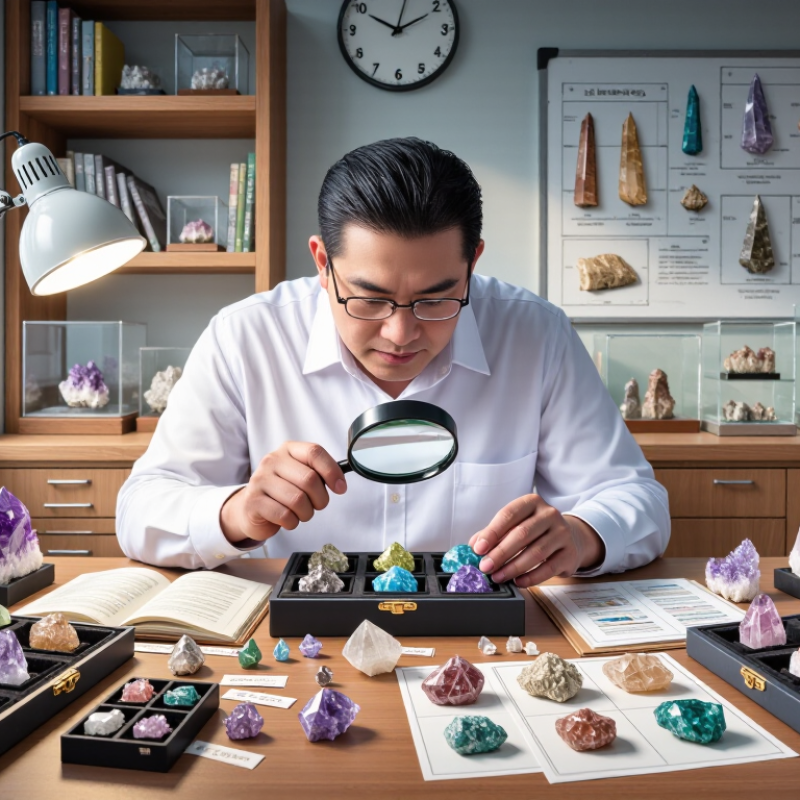
How to Find Reliable Crystal Suppliers in 2026?

Define Your Crystal Needs and Supplier Requirements

Before contacting crystal suppliers, define what you actually need. List the crystal types, intended use, preferred shapes, approximate dimensions, and expected order volume. “Clear quartz” alone is vague; note whether you need polished points, tumbled stones, or rough pieces. Be specific. A small sketch or reference photo can prevent confusion about shape and finish.

Set practical quality requirements. Describe acceptable color variation, visible inclusions, surface chips, and size tolerance. For example, you might accept natural color differences but reject pieces with sharp cracks. Decide whether each item needs individual sizing or whether a range is acceptable. Also set a target price, delivery window, packaging preference, and a minimum order quantity you can manage. These details help you compare supplier responses fairly.

Ask what information the supplier can provide about origin, grading, stock consistency, and handling. Request clear photos of current inventory, not only polished catalogue images. If possible, order a small sample before committing to a larger quantity. Check it in daylight and under indoor lighting. Keep records. You may revise your requirements after seeing real stones; that is useful, not a failure. A highly detailed specification can also exclude suitable material, so leave room for natural variation where appearance allows it.

Identify Suitable Supplier Types and Sales Channels

Choosing a supplier starts with matching the seller type to your needs. Wholesale distributors suit repeat orders and consistent sizes, while lapidaries can offer more control over cuts and finishes. Local mineral shops let you inspect color, weight, and surface marks in person. Small dealers may provide useful sourcing details, but their stock can change quickly. Ask how they describe treatments and natural variations.

Sales channels each reveal different things. Trade shows allow hands-on comparison under the same light; online catalogs offer broader selection but depend on photos. Request images beside a ruler, plus a short video showing the stone from several angles. A polished video is not proof. Ask for a small sample order before committing to a large purchase. Check business details, written return terms, invoices, and whether product descriptions match delivered stones.

Pay attention to how a seller answers ordinary questions. Clear replies about grading, packing, and shipping are more useful than grand claims about rarity. For mixed lots, ask whether the stones are sorted by size or quality, and how much variation to expect. Keep the conversation in writing. I would not treat a fast reply as a guarantee; I have seen careful listings still leave out small flaws. Compare a few suppliers, then judge the actual sample against the listing.

Verify Supplier Credentials, Sourcing, and Business Practices

A reliable crystal supplier should be verifiable beyond attractive product photos. Ask for the registered business name, a physical address, and invoices that identify each lot. Request the stated country and extraction area, plus any available chain-of-custody records. The OECD’s 2016 Due Diligence Guidance for Responsible Supply Chains of Minerals sets out a five-step framework for identifying and managing supply-chain risks. Use it as a practical checklist, not as proof that a supplier has been audited. Cross-check geographic claims against the USGS Mineral Commodity Summaries 2025, which reports mineral production and trade information.

Ask for dated photos of the actual stock, not a generic display tray. Compare lot codes, weights, and quantities across quotes, invoices, and packing documents. Ask how the supplier handles treatments, color variation, breakage, and returns; get the answers in writing. If an independent lab report is offered, check that its description matches the specific piece or lot. No checklist catches everything. A certificate may be outdated, and a polished response can still leave gaps. Treat unanswered questions as unresolved risks, not automatic proof of misconduct, and be cautious when a seller discourages reasonable verification.

Assess Crystal Quality, Documentation, Pricing, and Policies

A reliable crystal supplier should make quality easy to inspect, not just easy to admire. Request close-up photos in natural light, including the edges and any visible inclusions. Ask whether stones are dyed, coated, or otherwise treated, and have the answer recorded in writing. For larger orders, request a sample before approving the full shipment. Small details matter.

Documentation helps turn a confident sales conversation into a verifiable purchase. Check that the invoice describes the material, quantity, dimensions, and any stated treatments. Ask for available sourcing or origin information, while recognizing that records may vary by stone and supplier. Keep the record. If product descriptions change between a listing, invoice, and email, pause and ask for clarification. I still find this part awkward: a polished certificate can look reassuring, yet its value depends on what it actually verifies.

Compare prices only after checking what is included. Shipping, packaging, minimum quantities, and sample fees can change the real cost. A very low quote is not proof of poor quality, but it deserves specific questions. Read the return and damage policies before paying, especially the reporting deadline and required photos. Save screenshots and correspondence. Clear terms are useful; vague promises are not. A careful supplier should answer reasonable questions without rushing you.

How to Find Reliable Crystal Suppliers in 2026? - Assess Crystal Quality, Documentation, Pricing, and Policies

Evaluation Area What to Check Useful Evidence or Comparison Potential Warning Signs
Crystal identity and quality Confirm the stated mineral or material, dimensions, weight, finish, and any disclosed treatments. Ask whether natural, synthetic, dyed, coated, or reconstituted material is being offered. Request current, well-lit photos or video of the actual lot, plus written specifications. For higher-value or disputed material, consider an independent gemological or mineralogical assessment; methods may include Raman spectroscopy or X-ray diffraction when appropriate. Descriptions use vague terms such as “100% natural” without defining the material, or the supplier will not disclose known treatments or provide lot-specific images.
Consistency between sample and order Compare the approved sample with production goods for color, clarity, size, shape, polish, and acceptable variation. Natural stones can vary, so define tolerances in writing. Keep an approved sample or dated reference images and specify measurable limits, such as dimensions and weight ranges, on the purchase order. The supplier promises identical appearance across natural pieces or refuses to state how defects and variations are handled.
Documentation and traceability Check that invoices and packing lists identify the goods accurately. For claims about origin, treatment, or responsible sourcing, ask what records support each claim. Review a sample commercial invoice, packing list, product specification, and any applicable test report. Verify that documents refer to the same item or lot and are issued by an identifiable party. Documents contain inconsistent product descriptions, unsupported origin claims, or reports that cannot be matched to the goods being quoted.
Testing and certificates Determine whether testing is necessary for the intended use, value, or legal requirements. A general business quality certificate does not by itself establish the identity or quality of a particular crystal. For relevant claims, request a report stating the tested sample, method, date, and issuing laboratory. Confirm the report directly with the issuer when possible. The supplier presents a certificate as proof of every product’s authenticity, but it does not identify the tested sample or the scope of the test.
Price and total landed cost Compare price per piece or weight alongside grade, size, treatment, packing, minimum order quantity, shipping, insurance, duties, and taxes. Request a written quotation with currency, validity period, quantity breaks, payment terms, shipping terms, and all known charges. Compare like-for-like specifications from multiple sources. An unusually low quote omits key costs, changes after payment, or relies on a different grade or specification from the comparison item.
Samples and minimum order quantity Check sample availability, sample cost, production lead time, minimum order quantity, and whether sample charges can be credited toward a larger order. Place a small test order before committing to a large purchase, where practical. Confirm in writing whether the sample is representative of the available stock. The supplier requires a large first order but will not provide a sample, clear specification, or verifiable business details.
Shipping and packaging Review dispatch time, carrier options, tracking, insurance, export packing, and responsibility for damage or loss in transit. Ask for the estimated packed weight and shipping cost. Confirm the agreed delivery term and who handles import duties and customs clearance. Delivery estimates are not provided, tracking is unavailable, or responsibility for damaged goods is unclear.
Returns, defects, and disputes Read the written policy for incorrect items, undisclosed treatments, transit damage, shortages, and items that fail agreed specifications. Confirm the reporting deadline, required evidence, available remedies, return-shipping responsibility, and refund or replacement process before payment. Policies are absent, change between the quotation and invoice, or exclude all remedies even when goods do not match the agreed description.
Payment and business verification Verify the supplier’s legal business identity and contact details. Use payment methods with suitable records and protections for the transaction size. Check that the payee name matches the invoicing business and that contact, address, and payment information are consistent across documents. Payment is redirected to an unrelated account, urgent payment pressure is applied, or the supplier avoids providing a formal invoice.
Final supplier decision Evaluate quality, documentation, total cost, delivery reliability, and after-sales terms together rather than choosing on price alone. Use a written checklist and retain quotations, approved specifications, sample records, and order communications for comparison. Important promises remain verbal or the supplier will not put specifications and policies in writing.

Note: Testing needs and import requirements depend on the material, intended use, destination, and transaction value. Treat verification steps as due diligence, not as a guarantee of authenticity or quality.

Place a Trial Order and Evaluate Supplier Reliability

A trial order shows how a crystal supplier handles real work, not just polished product photos. Choose a small batch with several shapes or sizes, and record the expected dimensions, weight range, and finish before paying. Ask for clear photos under neutral lighting. Color can shift on screens, so images alone are not enough.

Small orders reveal habits. When the parcel arrives, compare pieces with your notes. Check for chips, uneven polishing, dust in drilled holes, and whether the stones match the agreed descriptions. Weigh a few items and measure several pieces rather than judging the entire batch by one example. Keep photos of any mismatch, including the packaging and shipping label. This makes a specific discussion easier.

Notice how the supplier responds when you raise a concern. A dependable seller should answer clearly, explain what can be checked, and offer a practical next step. Vague promises are less useful than written details about replacement pieces, credit, or quality checks. One smooth shipment is not proof of long-term consistency; I would want another order before relying on it. My own first inspection can also miss things, especially subtle color variation. Ask a second person to review the batch if the order matters. Compare the supplier’s claims with what actually arrived, and keep the results for future purchasing decisions.

Article Source:

Copyright 2025 Fluidra S.A. | Created by BCM Marketing Agencia Privacy Policy Legal note | Cookie policy |

Technical cookies are strictly necessary for our website to work and you can navigate through it. These types of cookies are those that, for example, allow us to identify you, give you access to certain restricted parts of the page if necessary, or remember different options or services already selected by you, such as your privacy preferences. Therefore, they are activated by default, your authorization not being necessary in this regard. Through the configuration of your browser, you can block or alert the presence of this type of cookies, although such blocking will affect the proper functioning of the different functionalities of our website.


The analysis cookies allow us to study the navigation of the users of our website in general (for example, which sections of the page are the most visited, which services are used most and if they work correctly, etc.). From the statistical information on navigation on our website, we can improve both the operation of the page itself and the different services it offers. Therefore, these cookies do not have an advertising purpose, but only serve to make our website work better, adapting to our users in general. By activating them you will contribute to this continuous improvement. You can enable or disable these cookies by checking the corresponding box, being disabled by default.


Functionality cookies allow us to remember your preferences, to personalize certain characteristics and general options of our website, every time you access it (for example, the language in which the information is presented to you, the sections marked as favorites, your browser type, etc.) Therefore, this type of cookies does not have an advertising purpose, but by activating them you will improve the functionality of the website (for example, adapting to your type of browser) and the customization of it based on your preferences (for example, by presenting the information in the language that you have chosen in previous occasions), which will contribute to the ease, usability and comfort of our page during your navigation. You can enable or disable these cookies by checking the corresponding box, being disabled by default.


Advertising cookies allow us to manage the advertising spaces included in our website based on criteria such as the content shown or the frequency in which the ads are displayed. For example, if you have been shown the same ad several times on our website, and you have not shown a personal interest by clicking on it, it will not appear again. In summary, by activating this type of cookies, the advertising shown on our website will be more useful and diverse, and less repetitive. You can enable or disable these cookies by checking the corresponding box, being disabled by default.


Behavioral advertising cookies allow us to obtain information based on the observation of your browsing habits and behaviors on the web, in order to show you advertising content that best suits your personal tastes and interests. To understand it in a very simple way, we will give you a fictitious example: if your last searches on the web were related to suspense literature, we would show you advertising about suspense books. Therefore, activating this type of cookies, the advertising that we show you on our website will not be generic, but will be oriented to your searches, tastes and interests, therefore adjusting exclusively to you. You can enable or disable these cookies by checking the corresponding box, being disabled by default.
To understand it in a very simple way, we will give you a fictitious example: if your last searches on the web were related to suspense literature, we would show you advertising about suspense books. Therefore, activating this type of cookies, the advertising that we show you on our website will not be generic, but will be oriented to your searches, tastes and interests, therefore adjusting exclusively to you. You can enable or disable these cookies by checking the corresponding box, being disabled by default.

SAVE

We use our own and third-party cookies to ensure the proper functioning of the website and to analyse our services, improve your experience on our website and show you advertisements related to your interests according to profiling based on your browsing habits (e.g. websites visited). You can accept all cookies by clicking "ACCEPT" or set or reject them by clicking here. If you would like to know more about the use of cookies, please see our COOKIE POLICY.


ACCEPT ALL
Reject no essentials


