
How to Find a Top China Bend WPC Manufacturer?
FLUID HANDLING EXPERTS

Blog, all our news

How to Find a Top China Bend WPC Manufacturer?

Finding a reliable China Bend Wpc manufacturer requires more than comparing prices. It demands practical inspection, technical questions, and careful evidence. Bend Wpc products must combine flexibility, strength, weather resistance, and stable surface quality. A supplier may describe these features confidently, but factory capability should support every claim.

Look for a manufacturer with documented experience in curved wood-plastic composite production. Ask about resin types, wood-fiber ratios, bending radius, extrusion temperatures, and cooling controls. Request recent test reports for water absorption, impact resistance, UV exposure, and dimensional stability. Product samples can reveal uneven color, small cracks, rough edges, or spring-back after bending. These details matter.

Visit the production site when possible. Observe material storage, mold maintenance, quality checkpoints, and batch labeling. A serious factory should explain how it controls thickness and curvature from one shipment to another. It should also provide clear packaging plans, lead times, replacement policies, and technical support. Communication is evidence.

Certification helps, but it is not proof of everything.

Check the issuing laboratory and report dates. Confirm that the tested model matches the proposed product. Some suppliers present attractive samples while shipping a weaker specification later. This risk deserves attention. My own evaluation would include a small trial order, installation feedback, and testing after outdoor exposure. No manufacturer is perfect, and even an experienced supplier may need improvement. However, transparent records, responsive engineers, and consistent production offer stronger confidence than impressive promises alone. Choosing the right China Bend WPC manufacturer becomes a controlled decision, not a guess.
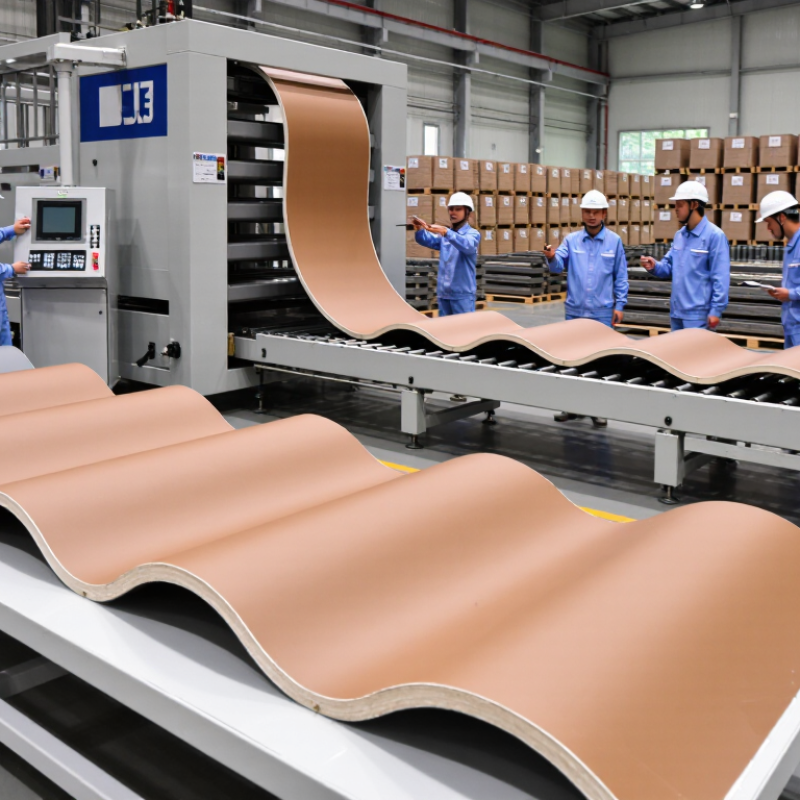
How to Find a Top China Bend WPC Manufacturer?

Define “Top” by EN 15534-1, ASTM D7031, and ISO 178 compliance

How to Find a Top China Bend WPC Manufacturer?

Define “top” through EN 15534-1, ASTM D7031, and ISO 178 compliance. These standards create a practical starting point for evaluating wood-plastic composite products. EN 15534-1 addresses material characteristics, durability, and relevant test methods. ASTM D7031 provides guidance for evaluating WPC performance and service conditions. ISO 178 measures flexural properties, including strength and stiffness.

Ask the manufacturer for complete, traceable test reports. Check the tested formulation, specimen dimensions, conditioning process, and laboratory date. A reliable supplier should explain whether testing covered the exact profile you will purchase. A factory sample is not enough. Request production-batch records, moisture-control procedures, and dimensional inspection data. Small changes in wood fibre content can affect bending performance.

Visit the facility if possible. Observe pellet storage, extrusion temperature control, cooling systems, and surface inspection. Speak with technical staff, not only sales representatives. Their answers should match the documents. No checklist is perfect. Standards do not replace real-world evaluation. I would still inspect a trial shipment after laboratory review, especially for warping, edge damage, and colour variation. A strong manufacturer welcomes questions and admits limitations. That honesty may matter more than polished certificates.

Verify bending radius, flexural strength, and load data under ISO 178

How to Find a Top China Bend WPC Manufacturer?

A capable China WPC manufacturer should prove bending performance with traceable test records. ISO 178:2019 measures flexural strength and flexural modulus under controlled conditions. It does not define a universal bending radius. This distinction matters. Ask whether the quoted radius comes from a separate mandrel, cold-bend, or repeated-flex test.

Published WPC studies often report flexural strength between 20 and 80 MPa, depending on wood content, polymer type, moisture, and processing. A 2023 review in Polymers reported similarly wide variation across formulations. Do not compare numbers blindly. Request specimen size, span, loading speed, conditioning time, and failure mode. Load data should include span length, support spacing, product thickness, and safety factor. A 1,000 N result means little without those details. ISO 178:2019 and ASTM D7031-11 provide useful testing guidance, but neither replaces product-specific validation. A clean datasheet can still mislead.

Tips: Ask for three independent batches, not one attractive sample. Check the bending radius after conditioning at high humidity and low temperature. Examine photographs of cracked surfaces. In my experience, suppliers sometimes report modulus as strength, or confuse maximum load with working load. That error is easy to miss. For outdoor profiles, request creep data as well; short laboratory tests may overstate long-term performance. Allow room for uncertainty. Real installations rarely match the laboratory perfectly.

How to Find a Top China Bend WPC Manufacturer?

Compare the declared bending radius with ISO 178 flexural test results and the corresponding load capacity. The flexural load values below are calculated for an 80 × 10 × 4 mm specimen with a 64 mm support span using σ = 3FL / 2bh².

The bending radius is profile-specific and is not defined by ISO 178. Request the original laboratory report, specimen dimensions, conditioning method, test speed, support span, flexural strength, and load–deflection curve before approving a supplier. The anonymous values shown are engineering screening references, not company or brand claims.

Audit ≥2,000-hour UV-weathering tests and ASTM D256 impact results

When choosing a China WPC manufacturer, audit the test evidence before reviewing polished samples. A reliable supplier should provide complete UV-weathering records, not only a final photograph. Ask for at least 2,000 hours under an agreed ASTM G154 cycle. The report should identify irradiance, temperature, condensation time, specimen thickness, and exposure intervals. ASTM G154 controls fluorescent UV and moisture cycles, but it does not guarantee outdoor service life.

Look for measured color change, surface chalking, cracking, gloss loss, and flexural retention. The American Society for Testing and Materials treats these results as separate performance indicators. One number is not enough. A dark board may hide fading better than a light board, yet surface embrittlement can still appear. Request before-and-after photos at identical lighting. Small details matter.

Impact resistance requires equal discipline. ASTM D256 reports notched impact strength, commonly in J/m or ft·lbf/in, using controlled specimen geometry. Confirm notch radius, conditioning temperature, moisture condition, and failure mode. Do not accept “high impact” as evidence. Compare at least three production lots, because a laboratory plaque may perform better than a routed board edge. A 2024 test report with no raw values deserves questions. I would also repeat selected tests through an independent laboratory. It costs more, and this is an imperfect safeguard, but supplier-controlled testing can miss variation. Auditing is slower than trusting a certificate. It is usually cheaper than replacing brittle decking after one harsh summer.

Compare factory capacity, MOQ, lead time, and 2024 export records

Choosing a top China bend WPC manufacturer requires more than attractive product photos. Factory capacity should match your order size, tooling needs, and delivery schedule. Ask for production lines, monthly output, curing equipment, and recent workshop videos. A crowded factory is not automatically efficient.

MOQ affects both price and risk. Request separate quantities for standard colors, custom profiles, and new molds. I once saw a low MOQ hide expensive tooling fees. That detail changed the real quotation. Confirm whether the MOQ applies per color, per length, or per container. Also test a physical sample before approving mass production.

Lead time should be documented, not promised casually. Ask for sample timing, mold development days, production days, and loading dates. A realistic supplier can explain delays caused by material shortages or port congestion. Check packaging strength with corner guards and moisture protection. Important details.

For 2024 export records, request verifiable evidence such as redacted bills of lading, commercial invoices, or destination-market shipping data. Compare product descriptions, quantities, and shipment frequency. Records should support experience with similar WPC bending profiles, not unrelated products. Independent factory audits and reference checks add credibility. Still, export history alone cannot prove stable quality. Inspect recent batches and review test reports for bending strength, water absorption, color stability, and surface consistency. Some reports may be outdated. Ask for current testing.

How to Find a Top China Bend WPC Manufacturer? — Compare Factory Capacity, MOQ, Lead Time, and 2024 Export Records
Evaluation Metric Practical Benchmark for WPC Decking Evidence to Request from the Factory How to Check the 2024 Export Record Decision Signal
Factory capacity A stable supplier should disclose monthly output by product type, not only a total annual figure. Request capacity in square metres or tonnes per month. Current production-line list, extrusion-line count, shift schedule, warehouse photos, and a capacity statement signed by the factory. Compare claimed capacity with shipment frequency, container quantities, and production dates shown in commercial documents or independently verified trade records. Stronger
Capacity is supported by production and shipment evidence.
Product specialization Prioritize factories with dedicated WPC extrusion, embossing, co-extrusion, grooving, and colour-matching capability. Machine list, product drawings, technical data sheets, sample approvals, and photographs showing the actual production process. Confirm that export descriptions refer to WPC decking or related profiles rather than unrelated plastic products. Stronger
Dedicated equipment reduces outsourcing and process variation.
MOQ for standard colours A commercially practical benchmark is commonly one 20-foot container for standard profiles, subject to length, packaging, and colour. Written MOQ by profile, colour, surface finish, packaging method, and order quantity. Check whether the supplier has shipped mixed-SKU or full-container orders comparable to the requested project. Stronger
MOQ is clearly defined and compatible with the buyer’s forecast.
MOQ for custom colours or tooling Custom colour, capstock, embossing, or profile tooling normally requires a higher MOQ and may involve a separate tooling charge. Tooling quotation, colour-development procedure, approval sample, setup fee, and ownership terms for the mould. Look for repeat export shipments of the same custom profile instead of relying only on catalogue samples. Verify
Require written costs, approval stages, and ownership terms before ordering.
Standard-order lead time For approved materials and standard profiles, a realistic planning range is approximately 15–30 days after deposit and final specification approval. Formal production schedule, raw-material availability statement, packaging lead time, and recent on-time delivery records. Compare promised dates with shipment dates on recent 2024 orders and allow additional time for booking and port congestion. Stronger
Lead time is documented and measured against actual shipment performance.
Custom-product lead time Custom tooling, colour matching, or new co-extrusion structures require additional development and approval time beyond standard production. Stage-by-stage timeline covering tooling, trial extrusion, sample approval, mass production, inspection, and packing. Verify whether the supplier exported the same custom specification during 2024, not merely similar-looking products. Verify
Use milestone payments tied to sample approval and production completion.
Quality-control system A qualified supplier should control moisture, dimensions, colour consistency, surface finish, bending, impact, and weathering performance according to the agreed specification. Inspection plan, batch-test reports, calibration records, retention-sample policy, and third-party test reports where required. Match test-report dates, product codes, and batch numbers with the exported product specification. Stronger
Quality data is batch-specific and traceable.
Export compliance The factory should provide consistent legal-entity details, product descriptions, packing lists, invoices, certificates, and destination-market documents. Business licence, export qualification or trading arrangement, invoice sample, packing-list sample, certificate-of-origin process, and compliance declarations. Use the exact legal entity name and shipment period when reviewing 2024 records; do not rely only on a website name or trading brand. Stronger
Documents use one consistent legal entity across quotations and shipments.
2024 export records The most useful indicator is repeated shipment activity for comparable WPC products, destinations, quantities, and packaging—not a single isolated shipment. Redacted bills of lading, customs declarations, commercial invoices, packing lists, or independently verified trade-database results. Reconcile exporter name, consignee or destination, shipment date, product description, quantity, and container count. HS-code-only searches can include unrelated plastic products. Verify
Accept export claims only when the legal entity and product evidence match.
Supply-chain resilience A dependable factory should have documented sources for resin, wood fibre, additives, packaging, and replacement components. Approved-supplier list, alternative-material policy, safety-stock rules, and contingency plan for equipment downtime. Compare production continuity and shipment frequency during 2024 with the supplier’s stated capacity. Stronger
More than one critical input or backup plan is documented.
Total landed-cost transparency Evaluate product price together with tooling, packaging, inspection, inland transport, export handling, freight, and replacement-policy costs. Itemised quotation with Incoterms, packaging dimensions, net and gross weight, loading quantity, payment terms, and warranty conditions. Compare quoted loading quantities and product descriptions with actual 2024 shipment documentation. Stronger
No major cost component is hidden outside the unit price.
Due-diligence note: Capacity, MOQ, lead time, and export activity vary by profile, colour, tooling, destination, and order season. Treat the figures above as procurement benchmarks, and request verifiable 2024 documents before selecting an anonymous supplier. Do not infer factory performance from catalogue claims, brand names, or HS-code results alone.

Check traceability, QC controls, certifications, warranty, and sample performance

How to Find a Top China Bend WPC Manufacturer?

A reliable manufacturer should show where every board begins. Ask for resin, wood-fiber, pigment, and additive batch records. Traceability must continue through extrusion, bending, inspection, and packing. Request a sample production record, not only a polished brochure. Grand View Research valued the global wood-plastic composites market at about USD 7.31 billion in 2022. MarketsandMarkets also expects strong growth through 2028, although estimates differ. That difference deserves careful questioning.

Quality control should include moisture checks, profile dimensions, density, flexural strength, water absorption, and surface consistency. For outdoor applications, ask whether testing follows relevant ASTM or EN methods. ISO 9001 certification can indicate controlled processes, but it does not prove excellent bending performance.

Check independent test reports, certificate scope, laboratory names, and issue dates. Small details matter. Sometimes they do not match.

Request full-size samples, not just short cuttings. Bend them at the intended temperature and radius, then inspect whitening, cracking, spring-back, and surface distortion. Test fastener holding and color stability after exposure. Ask for a written warranty covering fading, cracking, and structural failure. Clarify exclusions, installation requirements, and claim response time.

A long warranty sounds impressive, but weak evidence remains weak. Compare two or three production batches before ordering. My own caution: one successful sample may be a lucky sample, not proof of stable manufacturing.

Article Source:

Copyright 2025 Fluidra S.A. | Created by BCM Marketing Agencia Privacy Policy Legal note | Cookie policy |

Technical cookies are strictly necessary for our website to work and you can navigate through it. These types of cookies are those that, for example, allow us to identify you, give you access to certain restricted parts of the page if necessary, or remember different options or services already selected by you, such as your privacy preferences. Therefore, they are activated by default, your authorization not being necessary in this regard. Through the configuration of your browser, you can block or alert the presence of this type of cookies, although such blocking will affect the proper functioning of the different functionalities of our website.


The analysis cookies allow us to study the navigation of the users of our website in general (for example, which sections of the page are the most visited, which services are used most and if they work correctly, etc.). From the statistical information on navigation on our website, we can improve both the operation of the page itself and the different services it offers. Therefore, these cookies do not have an advertising purpose, but only serve to make our website work better, adapting to our users in general. By activating them you will contribute to this continuous improvement. You can enable or disable these cookies by checking the corresponding box, being disabled by default.


Functionality cookies allow us to remember your preferences, to personalize certain characteristics and general options of our website, every time you access it (for example, the language in which the information is presented to you, the sections marked as favorites, your browser type, etc.) Therefore, this type of cookies does not have an advertising purpose, but by activating them you will improve the functionality of the website (for example, adapting to your type of browser) and the customization of it based on your preferences (for example, by presenting the information in the language that you have chosen in previous occasions), which will contribute to the ease, usability and comfort of our page during your navigation. You can enable or disable these cookies by checking the corresponding box, being disabled by default.


Advertising cookies allow us to manage the advertising spaces included in our website based on criteria such as the content shown or the frequency in which the ads are displayed. For example, if you have been shown the same ad several times on our website, and you have not shown a personal interest by clicking on it, it will not appear again. In summary, by activating this type of cookies, the advertising shown on our website will be more useful and diverse, and less repetitive. You can enable or disable these cookies by checking the corresponding box, being disabled by default.


Behavioral advertising cookies allow us to obtain information based on the observation of your browsing habits and behaviors on the web, in order to show you advertising content that best suits your personal tastes and interests. To understand it in a very simple way, we will give you a fictitious example: if your last searches on the web were related to suspense literature, we would show you advertising about suspense books. Therefore, activating this type of cookies, the advertising that we show you on our website will not be generic, but will be oriented to your searches, tastes and interests, therefore adjusting exclusively to you. You can enable or disable these cookies by checking the corresponding box, being disabled by default.
To understand it in a very simple way, we will give you a fictitious example: if your last searches on the web were related to suspense literature, we would show you advertising about suspense books. Therefore, activating this type of cookies, the advertising that we show you on our website will not be generic, but will be oriented to your searches, tastes and interests, therefore adjusting exclusively to you. You can enable or disable these cookies by checking the corresponding box, being disabled by default.

SAVE

We use our own and third-party cookies to ensure the proper functioning of the website and to analyse our services, improve your experience on our website and show you advertisements related to your interests according to profiling based on your browsing habits (e.g. websites visited). You can accept all cookies by clicking "ACCEPT" or set or reject them by clicking here. If you would like to know more about the use of cookies, please see our COOKIE POLICY.


ACCEPT ALL
Reject no essentials


