
10 Tips for Buying CNC Aluminum Profiles Worldwide
FLUID HANDLING EXPERTS

Blog, all our news

10 Tips for Buying CNC Aluminum Profiles Worldwide

Buying a Cnc Aluminum Profile worldwide is not simply a price comparison. It is a technical sourcing decision.

The global aluminum extrusion market continues to expand through construction, automation, transport, and renewable energy. Grand View Research estimates that the market will grow steadily through 2030. The International Aluminium Institute also reports annual global aluminum production above 70 million tonnes. These figures suggest strong supply capacity. They do not guarantee consistent quality.

A buyer still needs to inspect alloy, temper, dimensional tolerance, surface finish, and packaging. A profile may look identical on a screen. Its wall thickness can differ by fractions of a millimeter. That difference may affect assembly, vibration, and load performance. Ask for mill certificates, inspection records, sample sections, and clear tolerance tables. ISO 9001 certification helps, but it never replaces product verification.

Charles M. Johnson Jr., President and CEO of The Aluminum Association, has stated, “Aluminum is a critical material for our economy and national security.” His point also applies to international sourcing. Material availability, recycling, energy use, and supply-chain resilience deserve attention.

This guide presents 10 practical tips for buying Cnc Aluminum Profile worldwide. It covers supplier audits, alloy selection, quotation checks, tooling costs, shipping protection, and after-sales support. Some recommendations may seem obvious. They are often missed under deadline pressure.

One honest limitation remains. No checklist can remove every sourcing risk. A low-cost supplier may become expensive after rework, delays, or rejected batches. Careful documentation feels slower at the beginning. It usually saves time later.
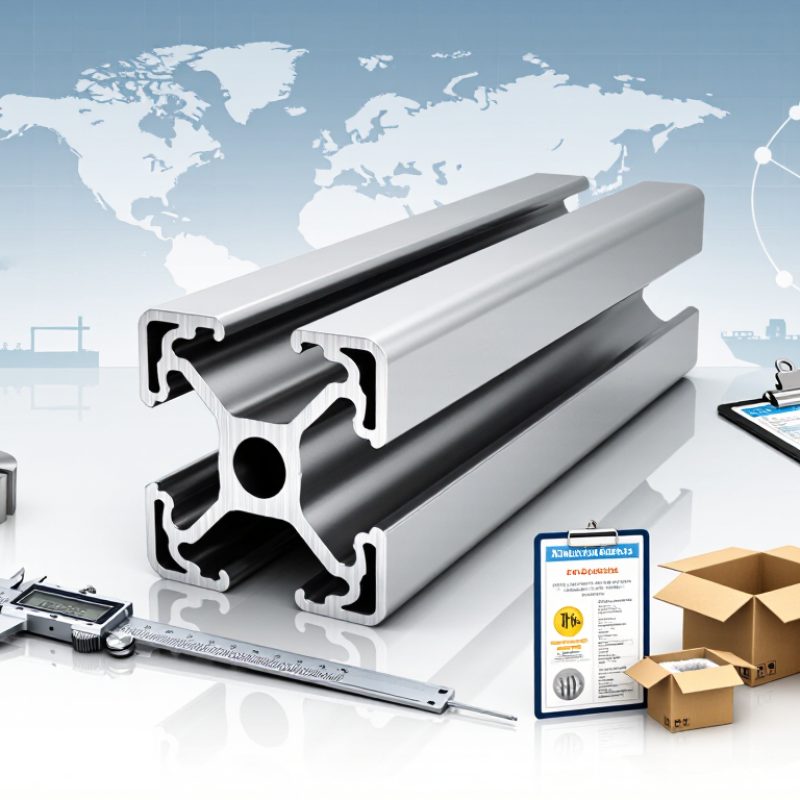
10 Tips for Buying CNC Aluminum Profiles Worldwide

Understanding CNC Aluminum Profiles and Their Applications

CNC aluminum profiles are extruded aluminum sections shaped or machined with computer-controlled equipment. Their form usually begins with a standard cross-section, such as a T-slot rail, frame beam, or curved housing. CNC operations then add precise holes, pockets, threads, and cutouts. This combination reduces manual fitting during assembly. It also supports repeatable production across international suppliers.

These profiles appear in machine guards, robotic frames, lighting structures, laboratory equipment, and lightweight transport fixtures. Aluminum offers useful corrosion resistance and a strong strength-to-weight ratio. However, alloy selection still matters. A rigid support may require a different alloy from a decorative panel. Surface treatment also changes performance. Anodizing can improve appearance and wear resistance, while powder coating provides more color choices. Ask for dimensional tolerances, alloy certificates, inspection records, and sample parts before ordering large quantities.

In practical sourcing, I compare the CAD drawing with the finished profile, not only the supplier’s quotation. Check hole positions, thread depth, flatness, and edge quality. Small errors can become expensive when several frames must align. Packaging deserves attention too; long profiles can bend during overseas transport. I once underestimated this risk and focused too much on machining accuracy. The parts were precise, but several arrived with damaged corners. That mistake changed my inspection checklist. A profile may look perfect on a screen. Real applications are less forgiving.

Defining Technical Requirements Before Purchasing

Defining Technical Requirements Before Purchasing

Buying CNC aluminum profiles worldwide starts with a clear technical brief, not a supplier comparison. Record the alloy, temper, profile dimensions, wall thickness, cut length, and required tolerances. Specify the load, span, vibration, and mounting method. A profile supporting a light guard differs greatly from one carrying a moving assembly.

Tip 1: Draw the application.

Include hole positions, machining depths, thread types, and critical reference surfaces. State whether the finish is natural, anodized, or powder-coated. Also define acceptable scratches, color variation, and burr limits. These details prevent different factories from interpreting “high quality” in different ways. Request material certificates and dimensional inspection records when traceability matters. They are useful, but they do not replace checking samples.

Tip 2: Test before scaling.

Order a small sample with the same machining and finish as production parts. Measure it with calibrated tools, then assemble it under realistic conditions. Check fit, straightness, surface damage, and thread strength. Packaging deserves attention too. Long profiles can bend when poorly supported during international transport.

I have seen an excellent extrusion arrive unusable because the crate allowed movement. That mistake was avoidable.

Leave room for revision. Your first drawing may miss drainage, tool clearance, or access for maintenance. Ask a qualified engineer to review stress points and tolerance stacks before approval. Confirm packing dimensions, delivery terms, inspection timing, and document requirements in writing. Clear requirements reduce disputes, waste, and expensive rework.

Evaluating Global Suppliers and Manufacturing Capabilities

Buying CNC aluminum profiles worldwide requires more than comparing unit prices. Supplier capability matters.

Tip 1: Verify extrusion and CNC equipment lists. Ask for machine sizes, axis counts, tolerance ranges, and maintenance records. Tip 2: Request recent inspection reports, not promotional photos. Tip 3: Check whether one facility controls extrusion, aging, cutting, machining, and packing. Fewer transfers usually reduce damage and dimensional variation. The International Aluminium Institute reported global primary aluminum production of about 70.6 million tonnes in 2023. Large output does not guarantee stable profile quality. Material traceability still matters. Tip 4: Require alloy certificates and heat numbers for every batch. Tip 5: Confirm temper, surface treatment, and profile straightness before sampling.

Tip 6: Send a detailed drawing with datums, hole locations, thread standards, and acceptable burr limits. Tip 7: Test a pilot lot before signing annual volumes. Measure critical features with calibrated equipment. Tip 8: Review the supplier’s corrective-action process. A polished sample can hide weak production control. I have seen buyers focus on machining speed and overlook packaging strength. That mistake becomes expensive after ocean transport. Tip 9: Compare logistics performance, customs experience, and export documentation. The World Bank’s 2023 Logistics Performance Index evaluates 139 economies, including customs, infrastructure, and shipment reliability. Use those indicators as context, not proof. Tip 10: Define inspection ownership, replacement rules, and delivery penalties in writing. Also confirm production capacity during peak months. Capacity claims are often optimistic. A factory visit, video audit, or independent inspection can expose the difference.

Comparing Materials, Finishes, Prices, and Minimum Orders

10 Tips for Buying CNC Aluminum Profiles Worldwide

Comparing materials is more useful than choosing the lowest quote. Aluminum 6063 usually offers clean extrusion surfaces and reliable anodizing results. Aluminum 6061 provides higher strength, but machining may cost more. Confirm the temper, alloy certificate, dimensional tolerance, and intended load before requesting prices. A profile can look identical while performing differently. Small details matter.

Finish affects both appearance and durability. Mill finish is economical, but it may show die lines and minor color variation. Anodizing improves corrosion resistance and creates a consistent surface, though shade matching needs approved samples. Powder coating offers many colors, but thick coating can affect tight assembly points. Ask for coating thickness, color tolerance, and protected packaging. Scratched profiles are expensive to rework.

Compare prices using the landed cost, not only the unit price. Include tooling, CNC setup, finishing, inspection, packing, freight, and possible sample charges. Minimum order quantities vary widely. A low MOQ may carry a higher piece price, while a large order can create excess stock. Request a trial batch when tolerances are critical. It exposes problems early. Still, trial batches are not perfect; production behavior can change with different billet lots or machine settings. Confirm how replacements, inspection records, and delivery changes will be handled before placing the order.

Checking Quality Standards, Shipping Terms, and Import Duties

10 Tips for Buying CNC Aluminum Profiles Worldwide

Checking Quality Standards, Shipping Terms, and Import Duties

1) Specify the alloy, temper, dimensions, and tolerance before requesting prices.

2) Ask for mill certificates, inspection records, and surface-finish samples.

3) Match testing requirements with recognized standards, such as ISO 9001 processes and applicable EN or ASTM specifications. Certification alone proves little.

4) Require a first-article inspection for complex channels, drilled holes, or tight tolerances. Small profile distortions can disrupt assembly.

5) Confirm the exact HS classification, often within heading 7604 for aluminum profiles. Ask your customs broker to verify it before payment. The WTO World Tariff Profiles report shows that duty treatment varies by economy and product line.

6) Calculate duty, VAT, brokerage, and port charges separately. A low factory price may hide expensive landed costs.

7) Compare Incoterms carefully, especially EXW, FOB, and DDP. DDP may simplify delivery, but documentation and tax control require scrutiny.

8) Check whether the invoice, packing list, certificate of origin, and bill of lading use matching descriptions.

9) Review transit time and cargo protection. UNCTAD’s Review of Maritime Transport 2023 states that over 80% of global merchandise trade by volume moves by sea. Long voyages need dry packaging, edge protection, and corrosion prevention.

10) Track the supplier’s delivery performance, not only quoted lead time. The World Bank’s 2023 Logistics Performance Index compares 139 economies across customs, tracking, infrastructure, and timeliness. These indicators help, but they cannot replace a sample inspection. I would still budget for delays. Real shipments rarely behave perfectly.

Copyright 2025 Fluidra S.A. | Created by BCM Marketing Agencia Privacy Policy Legal note | Cookie policy |

Technical cookies are strictly necessary for our website to work and you can navigate through it. These types of cookies are those that, for example, allow us to identify you, give you access to certain restricted parts of the page if necessary, or remember different options or services already selected by you, such as your privacy preferences. Therefore, they are activated by default, your authorization not being necessary in this regard. Through the configuration of your browser, you can block or alert the presence of this type of cookies, although such blocking will affect the proper functioning of the different functionalities of our website.


The analysis cookies allow us to study the navigation of the users of our website in general (for example, which sections of the page are the most visited, which services are used most and if they work correctly, etc.). From the statistical information on navigation on our website, we can improve both the operation of the page itself and the different services it offers. Therefore, these cookies do not have an advertising purpose, but only serve to make our website work better, adapting to our users in general. By activating them you will contribute to this continuous improvement. You can enable or disable these cookies by checking the corresponding box, being disabled by default.


Functionality cookies allow us to remember your preferences, to personalize certain characteristics and general options of our website, every time you access it (for example, the language in which the information is presented to you, the sections marked as favorites, your browser type, etc.) Therefore, this type of cookies does not have an advertising purpose, but by activating them you will improve the functionality of the website (for example, adapting to your type of browser) and the customization of it based on your preferences (for example, by presenting the information in the language that you have chosen in previous occasions), which will contribute to the ease, usability and comfort of our page during your navigation. You can enable or disable these cookies by checking the corresponding box, being disabled by default.


Advertising cookies allow us to manage the advertising spaces included in our website based on criteria such as the content shown or the frequency in which the ads are displayed. For example, if you have been shown the same ad several times on our website, and you have not shown a personal interest by clicking on it, it will not appear again. In summary, by activating this type of cookies, the advertising shown on our website will be more useful and diverse, and less repetitive. You can enable or disable these cookies by checking the corresponding box, being disabled by default.


Behavioral advertising cookies allow us to obtain information based on the observation of your browsing habits and behaviors on the web, in order to show you advertising content that best suits your personal tastes and interests. To understand it in a very simple way, we will give you a fictitious example: if your last searches on the web were related to suspense literature, we would show you advertising about suspense books. Therefore, activating this type of cookies, the advertising that we show you on our website will not be generic, but will be oriented to your searches, tastes and interests, therefore adjusting exclusively to you. You can enable or disable these cookies by checking the corresponding box, being disabled by default.
To understand it in a very simple way, we will give you a fictitious example: if your last searches on the web were related to suspense literature, we would show you advertising about suspense books. Therefore, activating this type of cookies, the advertising that we show you on our website will not be generic, but will be oriented to your searches, tastes and interests, therefore adjusting exclusively to you. You can enable or disable these cookies by checking the corresponding box, being disabled by default.

SAVE

We use our own and third-party cookies to ensure the proper functioning of the website and to analyse our services, improve your experience on our website and show you advertisements related to your interests according to profiling based on your browsing habits (e.g. websites visited). You can accept all cookies by clicking "ACCEPT" or set or reject them by clicking here. If you would like to know more about the use of cookies, please see our COOKIE POLICY.


ACCEPT ALL
Reject no essentials


