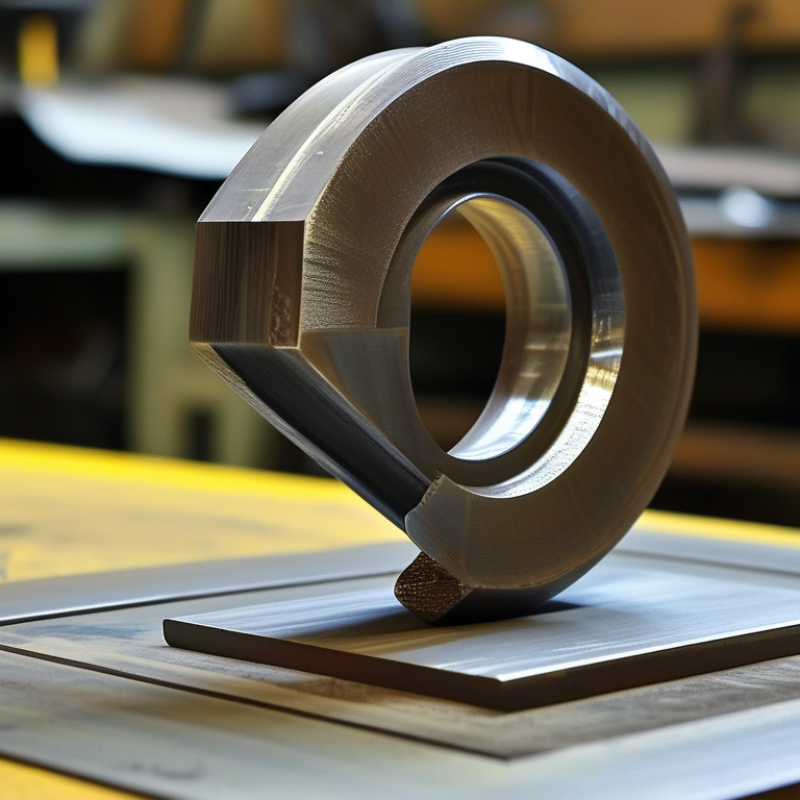
In the realm of metalwork, "Bending Metals" presents both challenges and opportunities. Renowned expert Simon Turner once said, "Mastering metal bending transforms ideas into tangible creations." His insight reflects the essence of this craft. Understanding the nuances of bending metals is crucial for any project.
As a process, bending metals requires precision and skill. There are multiple techniques available, each with its own merits and drawbacks. A wrong bend can lead to wasted materials and time. Reflecting on methods can improve the outcome significantly. Consider the tools at hand and the desired shape.
The journey of mastering bending metals can be frustrating. Not every attempt will yield perfect results. Yet, each mistake offers a lesson. As you practice, cultivate a mindset focused on improvement. With patience and experience, the art of bending metals can elevate your projects to new heights.
Understanding the Properties of Metals for Bending Techniques
Bending metals requires a solid understanding of their properties. Different metals, like aluminum and steel, have unique characteristics that affect how they bend. Aluminum is lightweight and more malleable, while steel is stronger but more challenging to shape. It's essential to know these properties to select the right metal for your project.
When bending, consider the metal's thickness. Thicker materials will need more force and may require specialized tools. Heating the metal can also help, making it softer and easier to shape. A common tool for bending is a brake, which provides a controlled environment for accurate results.
Tips: Use a cheat sheet for metal thickness and bend radius. Measure twice before cutting. If a bent section springs back, you'll need to adjust your technique. Always wear safety gear to protect yourself during the bending process. Understanding these basics sets a foundation for effective metalworking and can enhance your craftsmanship.
Identifying the Right Tools and Equipment for Metal Bending
Choosing the right tools and equipment for metal bending is crucial for successful projects. Start by considering the types of metals you'll be working with. Different metals require specific bending techniques and tools. For instance, aluminum bends easily with minimal tooling, while steel may need more heavy-duty equipment.
Hand tools are essential for small tasks and adjustments. A good pair of pliers or a bending brake can suffice for minor bends. For larger projects, you may need hydraulic or electric benders. These machines provide more control and power, allowing for precise bends. It is vital to understand how much force your chosen tool can handle. Overloading a tool can damage both the equipment and the metal.
Investing time to learn about the tools is important. Reading manuals and watching tutorials can enhance your skills. While it's tempting to dive straight into projects, taking the time to understand your equipment pays off in the long run. Ensure your workspace is organized and safe. A cluttered area can lead to accidents and mistakes. Even experienced metalworkers continuously refine their techniques. Each project offers lessons and opportunities for improvement, reminding us that perfection comes with practice.
Step-by-Step Guide to Different Metal Bending Methods
When bending metals, choosing the right method is crucial. Each technique has unique advantages. Let's explore the most common methods used today.
The hammering technique is simple yet effective. You use a hammer and an anvil. This method allows you to control the bend's angle by adjusting your strikes. However, it requires precision. Over-hitting can distort the metal. Gauge the force carefully for better results. Practice is essential to master this technique.
Another popular method is heat bending. This involves heating the metal until it becomes pliable. A torch is often used for this purpose. Once heated, you can easily bend the metal. Be cautious about the temperature. Too much heat can weaken the metal's structure. It's best to experiment with small pieces first to find the right conditions.
Roll bending is ideal for creating curves. A bending machine uses rollers to achieve smooth transitions. While efficient, it requires an understanding of the machine's settings. Incorrect adjustments can lead to uneven bends. Each project may need fine-tuning. Testing on scrap material is advisable before working on your final pieces.
Safety Precautions When Bending Metals for Projects
Bending metals requires careful attention to safety. Wear protective gear, such as gloves and safety glasses. Metal pieces can have sharp edges. A sudden slip might cause cuts. It's crucial to work in a well-ventilated area. Fumes from heated metals can be harmful. Always have a fire extinguisher nearby when using heat.
Before starting, inspect your tools. Dull or damaged tools can lead to accidents. Ensure the working surface is stable and clear of clutter. Clutter can lead to distractions. Clamping the metal securely helps prevent movement. This can reduce the risk of injury significantly. Take your time with bends. Rushing often leads to mistakes.
Understand the metal type you are bending. Different metals have various properties. Some are more prone to cracking. Knowing the limitations of the material helps avoid failure. Bending should be precise to ensure your project is successful. After bending, check for sharp areas. Smooth out rough edges with a file. This helps prevent injuries later in the project.
Metal Bending Techniques and Their Effectiveness
Common Mistakes to Avoid in Metal Bending Processes
Bending metals can be challenging. Many beginners make common mistakes that can lead to poor results. One mistake is not choosing the right tool for the job. Using inadequate tools can cause the metal to crack or warp.
Proper planning is essential. You need to know the exact angle and bend radius required. If you do not plan, it often leads to wasted materials. Even slight miscalculations can ruin your project.
Tips to improve your metal bending include measuring twice and cutting once. Always double-check your dimensions. Use a good-quality gauge to ensure accuracy. Another tip is to practice on scrap metal before working on the final piece. Mistakes can happen, and learning from them can prevent bigger errors down the line.
How to Bend Metals Effectively for Your Projects? - Common Mistakes to Avoid in Metal Bending Processes
Mistake
Description
Consequence
Prevention Tips
Incorrect Material Selection
Choosing a metal that is not suitable for bending.
Cepex is the brand for the fluid handling market belonging to the Fluidra group. One of the leading european manufacturer of valves and fittings in thermoplastic materials.
Dedicated to the swimming pool, irrigation and industrial markets, we distribute our products worldwide with the Fluidra commercial network and presence in 46 countries with 136 sales branches.
Your data will be processed by CEPEX S.A., with address at C. Lluís Companys, 51-53, 08400, Granollers (Barcelona), and C.I.F. nº A-08928707, to send you communications about our products based on your interests. You can consult more information about the processing of your data and how to exercise your rights as described in the Privacy Policy.
Technical cookies are strictly necessary for our website to work and you can navigate through it. These types of cookies are those that, for example, allow us to identify you, give you access to certain restricted parts of the page if necessary, or remember different options or services already selected by you, such as your privacy preferences. Therefore, they are activated by default, your authorization not being necessary in this regard. Through the configuration of your browser, you can block or alert the presence of this type of cookies, although such blocking will affect the proper functioning of the different functionalities of our website.
The analysis cookies allow us to study the navigation of the users of our website in general (for example, which sections of the page are the most visited, which services are used most and if they work correctly, etc.). From the statistical information on navigation on our website, we can improve both the operation of the page itself and the different services it offers. Therefore, these cookies do not have an advertising purpose, but only serve to make our website work better, adapting to our users in general. By activating them you will contribute to this continuous improvement. You can enable or disable these cookies by checking the corresponding box, being disabled by default.
Functionality cookies allow us to remember your preferences, to personalize certain characteristics and general options of our website, every time you access it (for example, the language in which the information is presented to you, the sections marked as favorites, your browser type, etc.) Therefore, this type of cookies does not have an advertising purpose, but by activating them you will improve the functionality of the website (for example, adapting to your type of browser) and the customization of it based on your preferences (for example, by presenting the information in the language that you have chosen in previous occasions), which will contribute to the ease, usability and comfort of our page during your navigation. You can enable or disable these cookies by checking the corresponding box, being disabled by default.
Advertising cookies allow us to manage the advertising spaces included in our website based on criteria such as the content shown or the frequency in which the ads are displayed. For example, if you have been shown the same ad several times on our website, and you have not shown a personal interest by clicking on it, it will not appear again. In summary, by activating this type of cookies, the advertising shown on our website will be more useful and diverse, and less repetitive. You can enable or disable these cookies by checking the corresponding box, being disabled by default.
Behavioral advertising cookies allow us to obtain information based on the observation of your browsing habits and behaviors on the web, in order to show you advertising content that best suits your personal tastes and interests. To understand it in a very simple way, we will give you a fictitious example: if your last searches on the web were related to suspense literature, we would show you advertising about suspense books. Therefore, activating this type of cookies, the advertising that we show you on our website will not be generic, but will be oriented to your searches, tastes and interests, therefore adjusting exclusively to you. You can enable or disable these cookies by checking the corresponding box, being disabled by default. To understand it in a very simple way, we will give you a fictitious example: if your last searches on the web were related to suspense literature, we would show you advertising about suspense books. Therefore, activating this type of cookies, the advertising that we show you on our website will not be generic, but will be oriented to your searches, tastes and interests, therefore adjusting exclusively to you. You can enable or disable these cookies by checking the corresponding box, being disabled by default.
We use our own and third-party cookies to ensure the proper functioning of the website and to analyse our services, improve your experience on our website and show you advertisements related to your interests according to profiling based on your browsing habits (e.g. websites visited). You can accept all cookies by clicking "ACCEPT" or set or reject them by clicking here. If you would like to know more about the use of cookies, please see our COOKIE POLICY.