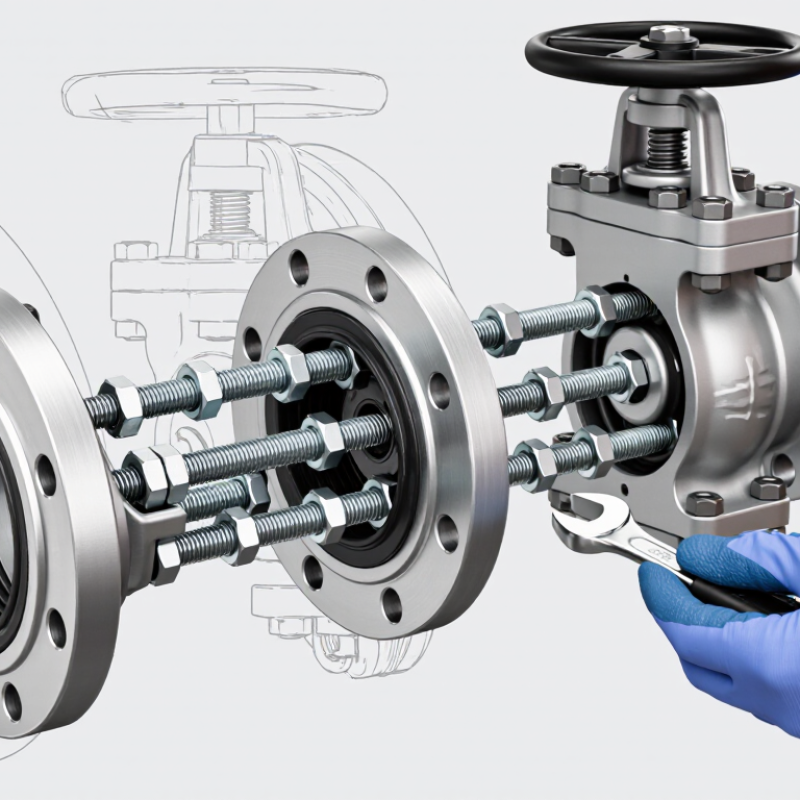
A Dismantling Joint is a practical connection used in pipelines, valves, pumps, and other fixed systems. It allows technicians to remove heavy equipment without cutting the pipe or shifting nearby components. Its design usually combines a flanged body, adjustable length, sealing surfaces, and tie rods. These parts work together to create a controlled connection.
Dr. M. A. Malik, author of Pipeline Engineering, describes the principle clearly: “A reliable pipe joint must control movement, maintain sealing, and tolerate installation conditions.” This statement explains why a Dismantling Joint is more than a simple spacer. During installation, the joint can be extended or compressed to match the exact gap between flanges. Once aligned, the tie rods transfer axial forces and help prevent unwanted separation. The gasket then forms the pressure boundary.
Small details matter.
A technician may notice a few millimeters of misalignment near a valve. Without an adjustable joint, correction could require cutting, rewelding, or lifting the valve with additional equipment. With a Dismantling Joint, controlled adjustment can make removal more manageable. However, the joint does not solve every problem. Poor bolt tightening, damaged flange faces, incorrect gasket placement, or unrestrained pipeline movement can still cause leakage or failure. This is where the explanation becomes less comfortable: a well-designed product cannot compensate for careless installation. Understanding how each component carries load is essential before selecting, fitting, or maintaining a Dismantling Joint.
A dismantling joint is a flanged pipe fitting designed to make installation, inspection, and removal easier. It usually includes a central flange, a sealing gasket, and adjustable tie rods or bolts. The adjustable section creates controlled axial movement. Workers can loosen the joint, move the connected pipe, and remove a valve or pump without cutting the pipeline.
Its purpose becomes clearer during maintenance. Large valves are heavy, and rigid pipe sections leave little room for movement. A dismantling joint provides that working space while maintaining a sealed connection under operating pressure.
The 2023 U.S. EPA Drinking Water Infrastructure Needs Survey and Assessment estimates that drinking water systems require about $625 billion in investment over 20 years. Aging infrastructure makes practical access increasingly important. Still, a joint cannot correct poor alignment or weak support. That limitation is easy to overlook.
Tips: Check the manufacturer’s pressure rating, gasket material, bolt torque, and allowable adjustment range. Keep the joint centered during installation. Do not use excessive force to close a visible gap. A small alignment error today may become leakage tomorrow. Engineers should also verify pipe supports and thrust control before commissioning. Industry practice often treats this step as routine, but field conditions can challenge even a carefully prepared design.
Main Components and Their Functions
What Is a Dismantling Joint and How Does It Work?
Main Components and Their Functions
A dismantling joint connects flanged pipe sections while allowing controlled removal. Its central body bridges the pipe ends. Flanges transfer pressure across the connection. Tie rods resist axial movement during operation. Bolts compress the gasket and maintain sealing. The gasket fills small surface irregularities between flanges. Together, these parts create a stable, serviceable assembly. It is not an expansion joint unless specifically designed for movement.
The U.S. Environmental Protection Agency’s 2023 Drinking Water Infrastructure Needs Survey estimates $625 billion in required investment over 20 years. ASCE’s 2021 Infrastructure Report Card also cites approximately 240,000 water-main breaks annually in the United States. These figures explain why accessible pipeline connections matter. A dismantling joint can shorten valve, pump, and meter replacement work. In practice, technicians loosen the tie rods, adjust the joint length, and remove the equipment. Poor alignment still causes trouble. No component can correct every installation mistake.
Tips: Check flange faces before assembly. Keep the gasket centered. Tighten bolts gradually in a cross pattern. Measure exposed thread lengths afterward. Inspect corrosion around nuts and tie rods during maintenance. I have seen apparently minor misalignment create difficult removal months later. The joint seemed correct, but the pipe had shifted under load. That detail deserves more attention.
How a Dismantling Joint Operates Step by Step
A dismantling joint is a mechanical pipe fitting that connects flanged equipment and pipework. It allows controlled movement along the pipe axis. This movement makes pumps, valves, and other equipment easier to remove. The assembly usually includes a flanged adaptor, a sleeve, bolts, tie rods, and a sealing gasket. Each part has a practical purpose.
During installation, a technician places the joint between two flanges. The pipe ends are aligned, but a small adjustment gap remains. The adaptor and sleeve then slide into position. Bolts draw the flanges together and compress the gasket evenly. Tie rods control the joint’s length and transfer pulling forces. After tightening, the technician checks flange alignment and records bolt torque. A small alignment error can still cause stress later. This detail is easy to underestimate.
When maintenance begins, the line must be isolated and fully depressurized. The technician loosens the tie rods and flange bolts in a controlled sequence. The joint extends slightly, creating working space around the valve or pump. The equipment can then be removed without cutting the pipe. During reassembly, the gasket is inspected or replaced, and the joint returns to its measured length. A pressure test should follow before normal service resumes.
Tips: Measure the installation gap carefully. Tighten bolts in a cross pattern. Keep tie rods evenly loaded. Never use the joint to correct major pipe misalignment. Check for leakage after pressurization. If movement feels uneven, stop and inspect the assembly.
Common Applications in Piping Systems
A dismantling joint is a mechanical fitting that connects two pipe sections. It also allows controlled movement during installation and maintenance. Its central body usually includes flanged ends, a sealing arrangement, and adjustable tie rods. Installers can loosen the rods and create a small working gap. This gap makes equipment removal far easier than cutting the pipe.
Common applications include water treatment plants, pumping stations, and industrial process lines. Dismantling joints are often installed beside pumps, valves, flow meters, and strainers. For example, a pump may need removal after years of vibration and service. Without a dismantling joint, workers might disconnect several rigid connections. That task can require more time, lifting equipment, and replacement seals.
They also help manage installation tolerances. Pipe runs rarely align perfectly on the first attempt. However, the joint is not a solution for every alignment problem. Incorrect adjustment may place stress on flanges or affect gasket performance. The choice is not always obvious.
Tips: Confirm pipe diameter, pressure class, material compatibility, and face-to-face dimensions before ordering. Check the manufacturer’s installation instructions and project specifications. Tighten tie rods evenly, then inspect for leakage during controlled testing. Field conditions can differ from drawings, so measure the actual gap when possible. A qualified piping engineer should review unusual loads, buried installations, and high-temperature service.
Selection, Installation, and Maintenance Considerations
A dismantling joint connects flanged pipe sections while allowing controlled axial adjustment. Selection starts with service conditions, not price. Check pipe diameter, pressure class, temperature, fluid chemistry, flange standard, and expected movement. The joint should match the pipeline’s weakest component. For buried water mains, corrosion-resistant bolts and a compatible gasket matter greatly. ASCE’s 2021 Infrastructure Report Card rated U.S. drinking water infrastructure C−, highlighting the cost of aging assets and deferred renewal. Small specification errors can become expensive shutdowns.
Installation requires clean flange faces and accurate pipe alignment. Leave the manufacturer’s specified dismantling gap; excessive compression can damage the gasket. Tighten bolts in a diagonal sequence, using calibrated equipment and the specified torque. Do not use the joint to force badly misaligned pipe. That shortcut is common. It is also risky. Pipe supports, anchors, and thrust restraints must handle pressure forces independently, because a dismantling joint is not a substitute for structural restraint. Record bolt torque, gap dimensions, gasket type, and installation date for future inspections.
Maintenance should include visual checks for leakage, corrosion, coating damage, and bolt movement during planned shutdowns. The U.S. Environmental Protection Agency reports roughly 240,000 water-main breaks annually, so access planning deserves attention. Inspect joints near pumps, valves, and buried transitions first; vibration and repeated pressure changes often appear there. Replace damaged gaskets rather than tightening indefinitely. Retorquing may worsen a weakened seal. In practice, maintenance records are often incomplete, and that weakness deserves honest review. A clear inspection log can prevent guesswork during the next isolation.
What Is a Dismantling Joint and How Does It Work? - Selection, Installation, and Maintenance Considerations
Evaluation Dimension
Typical Information
Selection or Maintenance Guidance
Primary Function
Creates an adjustable flanged connection between a valve, pipe, pump, meter, or other equipment item.
Use it where equipment may need to be removed without cutting the pipeline or moving large pipe sections.
How It Works
A telescopic body changes the face-to-face length, while tie rods transfer axial forces and maintain the assembled connection.
Set the joint within its specified adjustment range; do not use it as a substitute for pipe alignment or permanent structural support.
Common Applications
Water transmission, water treatment, pumping stations, industrial process lines, and buried or above-ground flanged pipework.
Confirm that the application, fluid, pressure class, temperature, and installation environment are compatible with the joint design.
Nominal Size Range
Commonly available from approximately DN50 to DN2000, depending on the design and applicable standard.
Match the nominal diameter, flange drilling, outside diameter, and connection standard to the adjoining equipment.
Adjustment Allowance
Many designs provide an installation adjustment of roughly ±25 mm to ±50 mm, although the exact range varies by size and manufacturer design.
Verify the actual minimum, maximum, and nominal face-to-face dimensions before ordering and setting the pipework.
Pressure Rating
Typical water-service ratings include PN10, PN16, and PN25; some systems use ASME pressure classes such as Class 150.
Select a pressure rating equal to or greater than the system design pressure, including foreseeable surge conditions.
Body Material
Common options include ductile iron, carbon steel, and stainless steel.
Cepex is the brand for the fluid handling market belonging to the Fluidra group. One of the leading european manufacturer of valves and fittings in thermoplastic materials.
Dedicated to the swimming pool, irrigation and industrial markets, we distribute our products worldwide with the Fluidra commercial network and presence in 46 countries with 136 sales branches.
Your data will be processed by CEPEX S.A., with address at C. Lluís Companys, 51-53, 08400, Granollers (Barcelona), and C.I.F. nº A-08928707, to send you communications about our products based on your interests. You can consult more information about the processing of your data and how to exercise your rights as described in the Privacy Policy.
Technical cookies are strictly necessary for our website to work and you can navigate through it. These types of cookies are those that, for example, allow us to identify you, give you access to certain restricted parts of the page if necessary, or remember different options or services already selected by you, such as your privacy preferences. Therefore, they are activated by default, your authorization not being necessary in this regard. Through the configuration of your browser, you can block or alert the presence of this type of cookies, although such blocking will affect the proper functioning of the different functionalities of our website.
The analysis cookies allow us to study the navigation of the users of our website in general (for example, which sections of the page are the most visited, which services are used most and if they work correctly, etc.). From the statistical information on navigation on our website, we can improve both the operation of the page itself and the different services it offers. Therefore, these cookies do not have an advertising purpose, but only serve to make our website work better, adapting to our users in general. By activating them you will contribute to this continuous improvement. You can enable or disable these cookies by checking the corresponding box, being disabled by default.
Functionality cookies allow us to remember your preferences, to personalize certain characteristics and general options of our website, every time you access it (for example, the language in which the information is presented to you, the sections marked as favorites, your browser type, etc.) Therefore, this type of cookies does not have an advertising purpose, but by activating them you will improve the functionality of the website (for example, adapting to your type of browser) and the customization of it based on your preferences (for example, by presenting the information in the language that you have chosen in previous occasions), which will contribute to the ease, usability and comfort of our page during your navigation. You can enable or disable these cookies by checking the corresponding box, being disabled by default.
Advertising cookies allow us to manage the advertising spaces included in our website based on criteria such as the content shown or the frequency in which the ads are displayed. For example, if you have been shown the same ad several times on our website, and you have not shown a personal interest by clicking on it, it will not appear again. In summary, by activating this type of cookies, the advertising shown on our website will be more useful and diverse, and less repetitive. You can enable or disable these cookies by checking the corresponding box, being disabled by default.
Behavioral advertising cookies allow us to obtain information based on the observation of your browsing habits and behaviors on the web, in order to show you advertising content that best suits your personal tastes and interests. To understand it in a very simple way, we will give you a fictitious example: if your last searches on the web were related to suspense literature, we would show you advertising about suspense books. Therefore, activating this type of cookies, the advertising that we show you on our website will not be generic, but will be oriented to your searches, tastes and interests, therefore adjusting exclusively to you. You can enable or disable these cookies by checking the corresponding box, being disabled by default. To understand it in a very simple way, we will give you a fictitious example: if your last searches on the web were related to suspense literature, we would show you advertising about suspense books. Therefore, activating this type of cookies, the advertising that we show you on our website will not be generic, but will be oriented to your searches, tastes and interests, therefore adjusting exclusively to you. You can enable or disable these cookies by checking the corresponding box, being disabled by default.
We use our own and third-party cookies to ensure the proper functioning of the website and to analyse our services, improve your experience on our website and show you advertisements related to your interests according to profiling based on your browsing habits (e.g. websites visited). You can accept all cookies by clicking "ACCEPT" or set or reject them by clicking here. If you would like to know more about the use of cookies, please see our COOKIE POLICY.