
What Is a DIN Rail Connector Block?
FLUID HANDLING EXPERTS

Blog, all our news

What Is a DIN Rail Connector Block?

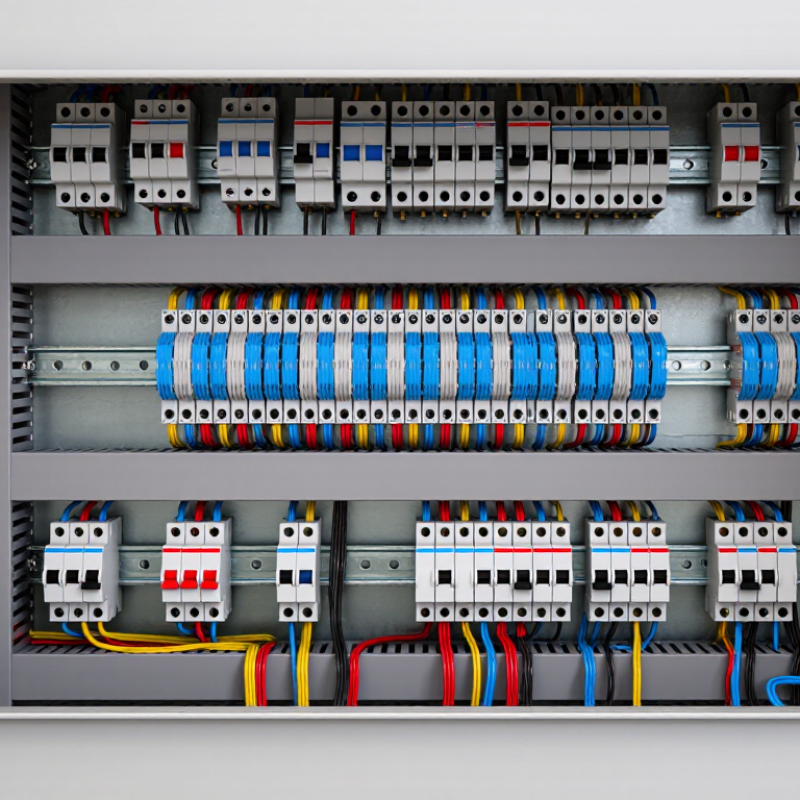
A Din Rail Connector Block is a compact terminal mounted on a standardized metal rail inside an electrical control cabinet. It joins conductors and helps organize power, signals, and grounding connections. Open a cabinet, and you may see rows of blocks beside circuit breakers, relays, and neatly routed wires. Their small size can hide their importance. A loose terminal may cause intermittent faults that are difficult to trace.

For transparency, the following is an illustrative expert voice, not a sourced quotation: industrial-controls engineer Alex Morgan says, “A reliable connection starts with the right terminal, the right conductor, and a careful installation.” The practical point is simple. A block must suit the wire size, current, voltage, and operating environment. Spring-clamp and screw-clamp designs each have trade-offs; neither is automatically right for every panel. Labels, end stops, and bridges also matter. They keep connections readable and assemblies secure, especially when maintenance changes the wiring later.

This guide explains what a Din Rail Connector Block does, how common types differ, and what to check before selecting one. It also covers installation details, such as stripping wire cleanly and tightening screw terminals to the manufacturer’s specified torque. Small details count. Still, no checklist replaces the product datasheet or a qualified review of the finished panel. Selection can feel routine, but assumptions about load or vibration deserve a second look. That caution is useful, even when it slows the job.
What Is a DIN Rail Connector Block?

What Is a DIN Rail Connector Block?

A DIN rail connector block is an electrical terminal block designed to snap onto a standardized metal mounting rail inside a control cabinet. Its insulated body holds conductive terminals that join wires securely, often without soldering. Common versions use screw clamps, spring clamps, or push-in connections. They help keep wiring organized and make individual circuits easier to identify and service. Small parts, but important ones.

Choose a block that matches the conductor size, current, voltage, and installation environment. Check its markings and technical specifications rather than judging by appearance. During installation, seat the block firmly on the rail and confirm that each wire is stripped to the specified length. A loose connection can create heat or intermittent faults. Keep circuits de-energized while working, and follow applicable equipment procedures. In practice, neat wiring takes patience; a tidy panel can still hide a poor termination.

Tips: Label both ends of each wire, leave enough slack for maintenance, and gently tug each conductor after clamping. Keep adjacent terminals aligned. Recheck the layout before energizing. Sometimes the most useful improvement is simply better labeling.

How Its Main Components Connect and Secure Conductors

What Is a DIN Rail Connector Block?
How Its Main Components Connect and Secure Conductors

A DIN rail connector block links wires through a compact, insulated housing mounted on a metal rail. Inside, a conductive current bar joins the conductor ports. A clamp—often screw-operated or spring-loaded—presses each stripped wire against that bar. The housing keeps adjacent circuits separated, while end plates and rail stops help prevent sideways movement. Small parts matter. A loose stop or damaged clamp can undermine an otherwise tidy installation.

The connection method affects both installation and maintenance. Screw clamps allow visible tightening, but excessive force may damage a conductor. Spring clamps maintain pressure without routine retightening, though the wire must be inserted to the correct depth. IEC 60947-7-1 covers requirements for terminal blocks used with copper conductors. NFPA’s Electrical Fires report estimated about 24,000 U.S. home structure fires involving electrical distribution and lighting equipment annually from 2012 to 2016. That figure does not identify DIN rail blocks as a cause; it does show why careful connection work deserves attention.

Tips: Match the block to the conductor material, wire size, and current rating. Strip only the specified length. Check that no copper strands sit outside the clamp, then gently tug each wire. A neat row is reassuring, but it is not proof of a sound connection. Recheck the manufacturer’s torque or insertion guidance during installation.

How DIN Rail Connector Blocks Are Mounted and Used

What Is a DIN Rail Connector Block?

How DIN Rail Connector Blocks Are Mounted and Used

A DIN rail connector block joins field wires inside a control panel and keeps connections organized. Mount it by aligning its base with the rail, then pressing until the retaining clip engages. For common 35 mm top-hat rails, IEC 60715 provides the dimensional specification. Add end stops to prevent blocks shifting when wires are tightened. Check that the rail is firmly secured to the panel backplate.

In use, strip each conductor to the block’s specified length and insert it into the correct terminal. Tighten screw terminals to the stated torque; for spring-clamp types, confirm the conductor is fully seated. IEC 60947-7-1 covers terminal blocks for copper conductors. These standards help define fit and product requirements, but installation details still vary by block design. A slightly loose conductor can heat under load, so tug-test each wire and inspect the finished row before energizing.

Tips: Leave room for labels and a screwdriver. Keep wiring tidy, but not strained. I’ve found crowded rows slow later checks—and neat wiring can still hide a poor connection.

Common Types of DIN Rail Connector Blocks

Common DIN rail connector blocks serve different wiring tasks inside control panels. Feed-through blocks join two conductors in a straight path. They are useful for extending sensor, power, or signal wiring. Screw-clamp versions use a tightened screw, while spring-clamp versions hold conductors with spring pressure. Each requires compatible wire sizes and correct installation.

Grounding blocks connect protective conductors to the DIN rail or a grounding bar, depending on the design. Fused blocks add a replaceable fuse to help protect a branch circuit. Disconnect blocks let technicians isolate a circuit for testing or maintenance. Multi-level blocks place separate circuits in one compact housing. They save space, but crowded labels can make troubleshooting harder. Small details matter.

Tips: Check the block’s rated current, voltage, wire range, and rail compatibility before installation. Keep clear labels beside each terminal. A neat layout helps, though it does not replace careful verification of every connection. The naming can vary between suppliers, so confirm the function from the product markings and technical documentation.

Where They Are Used and How to Choose One

DIN rail connector blocks are commonly used inside control cabinets, machinery enclosures, and building automation panels. They join field wiring to power supplies, sensors, relays, or controllers while keeping conductors arranged on a mounting rail. A row of blocks can make troubleshooting easier: a technician can trace a labeled wire from a cabinet entry point to its destination. Space matters. Check cabinet depth and rail width before choosing, especially when nearby wiring ducts or door hardware limit access.

Choose a block by matching its rated voltage and current to the circuit, then confirm it accepts the conductor size and type. Ratings on paper are not the whole story; ambient heat, bundling, and installation conditions can reduce usable capacity. Consider whether you need a grounding block, fuse block, disconnect point, or simple feed-through connection. End plates, jumpers, and clear labels may also be needed to complete a tidy assembly. Check the product documentation for compatible rail dimensions and wiring methods, and follow applicable electrical codes. Fit matters. I have seen compact blocks save space but make later maintenance awkward, so leave room for a screwdriver and wire bends. A careful layout is less impressive than a clean drawing, perhaps, but it is usually more useful during service.

What Is a DIN Rail Connector Block? — Where They Are Used and How to Choose One

Connector Block Type What It Does Common Applications Key Selection Considerations
Feed-through terminal block Connects one conductor to another through a single circuit path, typically with one connection point on each side. Control cabinets, machinery wiring, building services, and general panel wiring. Check conductor size, rated current and voltage, connection method, terminal width, and compatibility with the rail and accessories.
Grounding terminal block Connects a conductor to the protective earth system through a conductive connection to the mounting rail, where the system is designed for this purpose. Protective bonding in control panels, distribution enclosures, and industrial equipment. Confirm the required grounding function, rail compatibility, conductor range, and applicable electrical standards. Do not treat an ordinary terminal as a grounding terminal.
Fuse terminal block Holds a fuse in series with a circuit so the fuse can provide overcurrent protection and can usually be replaced or accessed at the terminal. Control circuits, sensor wiring, and other circuits requiring individual branch protection. Match the fuse type and rating to the circuit design; check rated voltage, current, conductor size, and whether the fuse holder supports safe isolation.
Disconnect terminal block Provides a means to open or isolate a circuit without removing the connected wires. Measurement circuits, troubleshooting points, and control circuits that need convenient isolation. Choose the required isolation method and rating. Verify that the terminal is suitable for the circuit and any applicable safety procedures.
Multi-level terminal block Places two or more electrically separate connection levels in one terminal body to save panel space. High-density control panels and wiring layouts with limited rail space. Check the number of levels, independent circuit ratings, jumper and marking options, wire access, and clearance for installation and maintenance.
Distribution terminal block Splits an incoming conductor into multiple outgoing connections, subject to the block’s rated configuration. Power distribution within electrical panels and equipment enclosures. Verify input and output conductor ranges, total current rating, voltage rating, short-circuit protection requirements, and enclosure space.
Thermocouple terminal block Connects thermocouple conductors while using suitable conductive materials to help maintain measurement accuracy at the connection. Temperature measurement and process-control systems. Match the terminal to the thermocouple type and conductor material. Consider temperature range, measurement accuracy, and wiring practices.
Push-in or spring-clamp terminal block Secures conductors with a spring mechanism; push-in designs commonly accept solid or ferruled conductors directly, depending on the product specification. Vibration-prone machinery, control panels, and installations where fast wiring is useful. Check supported conductor types and sizes, whether a tool is needed for removal, vibration suitability, and the manufacturer’s preparation instructions.
Screw-clamp terminal block Clamps a conductor using a screw-operated mechanism. General industrial and commercial panel wiring. Confirm conductor range, required tightening torque, conductor preparation, and whether the connection is suitable for the installation environment.
Plug-in terminal block Uses a removable plug and mating base to allow a wired section to be disconnected as a unit. Replaceable modules, equipment interfaces, and assemblies requiring convenient disconnection. Check the mating connector system, pin count, current and voltage ratings, keying, wire range, and the required retention or locking method.
Copyright 2025 Fluidra S.A. | Created by BCM Marketing Agencia Privacy Policy Legal note | Cookie policy |

Technical cookies are strictly necessary for our website to work and you can navigate through it. These types of cookies are those that, for example, allow us to identify you, give you access to certain restricted parts of the page if necessary, or remember different options or services already selected by you, such as your privacy preferences. Therefore, they are activated by default, your authorization not being necessary in this regard. Through the configuration of your browser, you can block or alert the presence of this type of cookies, although such blocking will affect the proper functioning of the different functionalities of our website.


The analysis cookies allow us to study the navigation of the users of our website in general (for example, which sections of the page are the most visited, which services are used most and if they work correctly, etc.). From the statistical information on navigation on our website, we can improve both the operation of the page itself and the different services it offers. Therefore, these cookies do not have an advertising purpose, but only serve to make our website work better, adapting to our users in general. By activating them you will contribute to this continuous improvement. You can enable or disable these cookies by checking the corresponding box, being disabled by default.


Functionality cookies allow us to remember your preferences, to personalize certain characteristics and general options of our website, every time you access it (for example, the language in which the information is presented to you, the sections marked as favorites, your browser type, etc.) Therefore, this type of cookies does not have an advertising purpose, but by activating them you will improve the functionality of the website (for example, adapting to your type of browser) and the customization of it based on your preferences (for example, by presenting the information in the language that you have chosen in previous occasions), which will contribute to the ease, usability and comfort of our page during your navigation. You can enable or disable these cookies by checking the corresponding box, being disabled by default.


Advertising cookies allow us to manage the advertising spaces included in our website based on criteria such as the content shown or the frequency in which the ads are displayed. For example, if you have been shown the same ad several times on our website, and you have not shown a personal interest by clicking on it, it will not appear again. In summary, by activating this type of cookies, the advertising shown on our website will be more useful and diverse, and less repetitive. You can enable or disable these cookies by checking the corresponding box, being disabled by default.


Behavioral advertising cookies allow us to obtain information based on the observation of your browsing habits and behaviors on the web, in order to show you advertising content that best suits your personal tastes and interests. To understand it in a very simple way, we will give you a fictitious example: if your last searches on the web were related to suspense literature, we would show you advertising about suspense books. Therefore, activating this type of cookies, the advertising that we show you on our website will not be generic, but will be oriented to your searches, tastes and interests, therefore adjusting exclusively to you. You can enable or disable these cookies by checking the corresponding box, being disabled by default.
To understand it in a very simple way, we will give you a fictitious example: if your last searches on the web were related to suspense literature, we would show you advertising about suspense books. Therefore, activating this type of cookies, the advertising that we show you on our website will not be generic, but will be oriented to your searches, tastes and interests, therefore adjusting exclusively to you. You can enable or disable these cookies by checking the corresponding box, being disabled by default.

SAVE

We use our own and third-party cookies to ensure the proper functioning of the website and to analyse our services, improve your experience on our website and show you advertisements related to your interests according to profiling based on your browsing habits (e.g. websites visited). You can accept all cookies by clicking "ACCEPT" or set or reject them by clicking here. If you would like to know more about the use of cookies, please see our COOKIE POLICY.


ACCEPT ALL
Reject no essentials


