Top 10 Different Types of Valves Used in Industrial Applications
FLUID HANDLING EXPERTS

Blog, all our news

Top 10 Different Types of Valves Used in Industrial Applications

In the intricate world of industrial applications, the selection of the right valve can significantly impact efficiency and reliability. Various processes rely on a multitude of valve types to control fluid flow, maintain safety, and ensure operational effectiveness. According to John Smith, a leading expert in process engineering, "Understanding the different types of valves and their specific functions is essential for optimizing system performance." This assertion highlights not only the diversity found in valve designs but also their critical role in various industrial sectors.

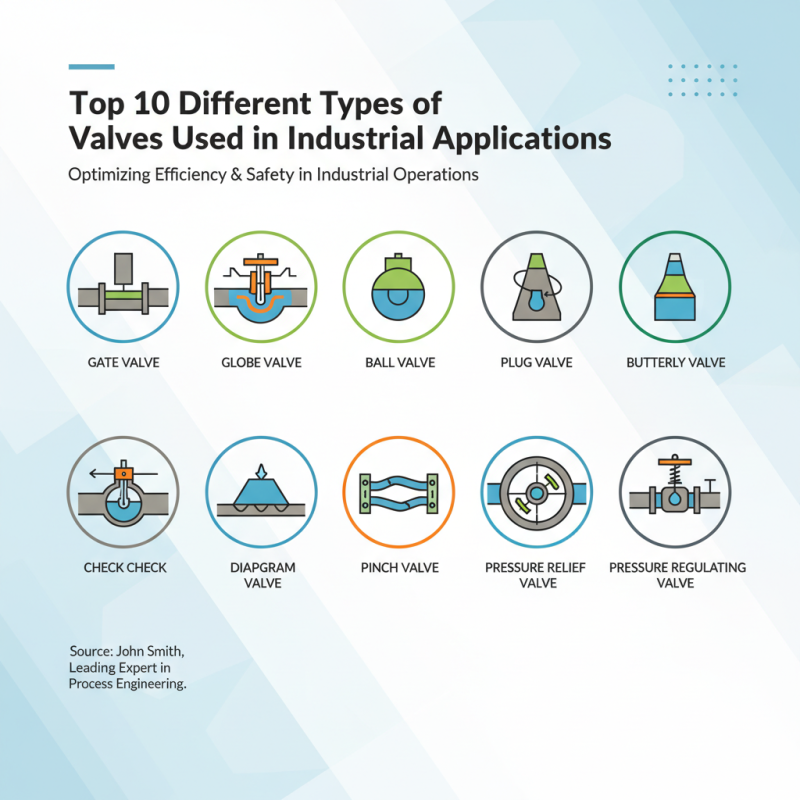
As we delve into the top 10 different types of valves used in industrial applications, it becomes evident that each type carries unique characteristics tailored to specific tasks. From gate valves facilitating on/off flow control to pressure-regulating valves ensuring system stability, the appropriate choice of valve is paramount. This overview will provide insights into how these different types of valves operate and their applications, underscoring the importance of making informed decisions in valve selection to foster efficiency and safety in industrial operations.
Top 10 Different Types of Valves Used in Industrial Applications

Overview of Industrial Valves and Their Importance

Industrial valves play a crucial role in the effective management of fluid control systems within various sectors, including oil and gas, water treatment, and manufacturing. According to a report by MarketsandMarkets, the global industrial valve market is projected to reach approximately $85 billion by 2025, driven by the increasing need for automation and maintenance of the aging infrastructure across industries. Valves are essential for regulating the flow, pressure, and direction of fluids, ensuring safety and efficiency in operations.


Moreover, the importance of valves extends to environmental sustainability. The growing emphasis on minimizing leakages and emissions has led to the development of advanced valve technologies, which not only enhance performance but also reduce operational costs. For instance, a study by the International Energy Agency indicated that improving valve efficiency could lead to energy savings of up to 20% in certain industrial processes. As industries continue to prioritize safety and sustainability, the role of industrial valves in facilitating these goals becomes increasingly significant.


Classification of Valves Used in Industrial Applications

Valves play a crucial role in various industrial applications, serving multiple functions such as regulating flow, controlling pressure, and managing fluid direction. The classification of valves used in industrial settings can be broadly categorized into several types, each designed for specific purposes. Common valve types include ball valves, gate valves, globe valves, check valves, butterfly valves, and several others, each with distinct features that make them suitable for different operational demands.

The global market for valves continues to expand, driven by increasing industrialization and the demand for efficient fluid management solutions. As of 2021, the ball valve segment alone was valued at approximately USD 12.18 billion, highlighting its significance in the industry. The Asia Pacific region holds a substantial share of this market, showcasing the area's growing manufacturing capabilities and infrastructural development. Additionally, emerging markets for specialized valves, such as explosion-proof and PTFE-lined valves, are expected to see significant growth, reflecting the diverse requirements across sectors like chemicals, oil and gas, and manufacturing. These trends emphasize the critical role of valve classification in optimizing industrial processes and enhancing operational efficiency.

Top 10 Different Types of Valves Used in Industrial Applications

Detailed Examination of the Top 10 Valve Types

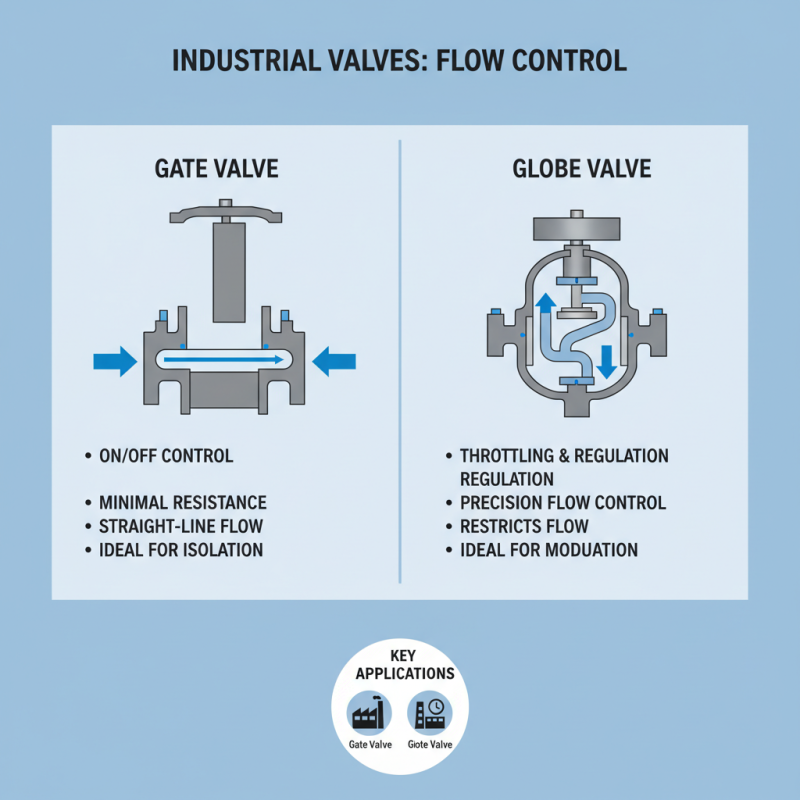
Valves are essential components in various industrial applications, serving to control fluid flow, pressure, and direction. Among the top ten types of valves, gate valves and globe valves stand out for their widespread usage. Gate valves are primarily used for on/off control, providing minimal resistance to fluid flow when fully opened. Globe valves, on the other hand, are designed for throttling fluids, offering precise flow regulation but with more pressure drop compared to gate valves. Their unique designs make them suitable for different operational requirements.

When selecting a valve type for industrial applications, consider the fluid characteristics, such as temperature and viscosity, as well as the required flow control precision. For example, butterfly valves are excellent for quick shut-off and are often used in water distribution systems, while ball valves provide a tight seal and are ideal for gaseous environments. Always ensure that the valve's material is compatible with the fluid to prevent corrosion and leaks.

Tips: Regular maintenance of valves is crucial to ensure their longevity and efficiency. Check for leaks and wear periodically, as well as properly lubricate moving parts. Additionally, ensure that the selection of valve types aligns with operational pressures and temperatures to optimize performance and safety.

Applications and Benefits of Each Valve Type

Top 10 Different Types of Valves Used in Industrial Applications

Valves play a crucial role in controlling the flow of fluids in various industrial applications, each type uniquely suited to specific needs. For instance, gate valves are ideal for on/off control; they provide minimal flow resistance when fully open, making them perfect for applications where a straight-line flow of fluid is desired. On the other hand, globe valves are excellent for throttling services due to their ability to regulate flow with precision, which is essential in processes requiring stringent control over fluid dynamics.

Butterfly valves are another popular choice, particularly in large-scale applications due to their lightweight design and quick operation. These valves are commonly used in water distribution systems and HVAC installations. In contrast, ball valves are known for their durability and ability to provide a tight seal, making them suitable for high-pressure applications across various industries, including oil and gas. Each valve type is tailored to meet distinct operational requirements, thereby enhancing efficiency and safety in industrial processes.

Future Trends in Industrial Valve Technology and Usage

The industrial valve market is witnessing significant growth driven by advancements in technology and the rising demand for smart control systems. The acidic gas valve market alone is projected to surge from $98.3 million in 2024 to $147.09 million by 2032, marking a 5.1% annual growth rate. This expansion is indicative of broader trends where industries increasingly prioritize automation and process optimization. The introduction of supportive government policies in China, aimed at fostering the development of intelligent control valves, has created a flourishing environment for innovation and market entry.

From 2018 to 2023, the scale of China's industrial valve manufacturing industry escalated from 75.63 billion yuan to 103.36 billion yuan, highlighting robust demand and progressive advancements in manufacturing capabilities. The capital flow into high-end valve manufacturing, such as the recent Series A financing round for a company specializing in advanced butterfly valve technology, further emphasizes the industry's shift towards sophisticated products that meet the needs of modern automated systems. As industries ramp up spending on automation, especially in process sectors that involve batching and precise mixing, the integration of intelligent manufacturing solutions is set to redefine operational efficiency and productivity.

Copyright 2025 Fluidra S.A. | Created by BCM Marketing Agencia Privacy Policy Legal note | Cookie policy |

Technical cookies are strictly necessary for our website to work and you can navigate through it. These types of cookies are those that, for example, allow us to identify you, give you access to certain restricted parts of the page if necessary, or remember different options or services already selected by you, such as your privacy preferences. Therefore, they are activated by default, your authorization not being necessary in this regard. Through the configuration of your browser, you can block or alert the presence of this type of cookies, although such blocking will affect the proper functioning of the different functionalities of our website.


The analysis cookies allow us to study the navigation of the users of our website in general (for example, which sections of the page are the most visited, which services are used most and if they work correctly, etc.). From the statistical information on navigation on our website, we can improve both the operation of the page itself and the different services it offers. Therefore, these cookies do not have an advertising purpose, but only serve to make our website work better, adapting to our users in general. By activating them you will contribute to this continuous improvement. You can enable or disable these cookies by checking the corresponding box, being disabled by default.


Functionality cookies allow us to remember your preferences, to personalize certain characteristics and general options of our website, every time you access it (for example, the language in which the information is presented to you, the sections marked as favorites, your browser type, etc.) Therefore, this type of cookies does not have an advertising purpose, but by activating them you will improve the functionality of the website (for example, adapting to your type of browser) and the customization of it based on your preferences (for example, by presenting the information in the language that you have chosen in previous occasions), which will contribute to the ease, usability and comfort of our page during your navigation. You can enable or disable these cookies by checking the corresponding box, being disabled by default.


Advertising cookies allow us to manage the advertising spaces included in our website based on criteria such as the content shown or the frequency in which the ads are displayed. For example, if you have been shown the same ad several times on our website, and you have not shown a personal interest by clicking on it, it will not appear again. In summary, by activating this type of cookies, the advertising shown on our website will be more useful and diverse, and less repetitive. You can enable or disable these cookies by checking the corresponding box, being disabled by default.


Behavioral advertising cookies allow us to obtain information based on the observation of your browsing habits and behaviors on the web, in order to show you advertising content that best suits your personal tastes and interests. To understand it in a very simple way, we will give you a fictitious example: if your last searches on the web were related to suspense literature, we would show you advertising about suspense books. Therefore, activating this type of cookies, the advertising that we show you on our website will not be generic, but will be oriented to your searches, tastes and interests, therefore adjusting exclusively to you. You can enable or disable these cookies by checking the corresponding box, being disabled by default.
To understand it in a very simple way, we will give you a fictitious example: if your last searches on the web were related to suspense literature, we would show you advertising about suspense books. Therefore, activating this type of cookies, the advertising that we show you on our website will not be generic, but will be oriented to your searches, tastes and interests, therefore adjusting exclusively to you. You can enable or disable these cookies by checking the corresponding box, being disabled by default.

SAVE

We use our own and third-party cookies to ensure the proper functioning of the website and to analyse our services, improve your experience on our website and show you advertisements related to your interests according to profiling based on your browsing habits (e.g. websites visited). You can accept all cookies by clicking "ACCEPT" or set or reject them by clicking here. If you would like to know more about the use of cookies, please see our COOKIE POLICY.


ACCEPT ALL
Reject no essentials