
What Is a Crawler Final Drive and How Does It Work?
FLUID HANDLING EXPERTS

Blog, all our news

What Is a Crawler Final Drive and How Does It Work?

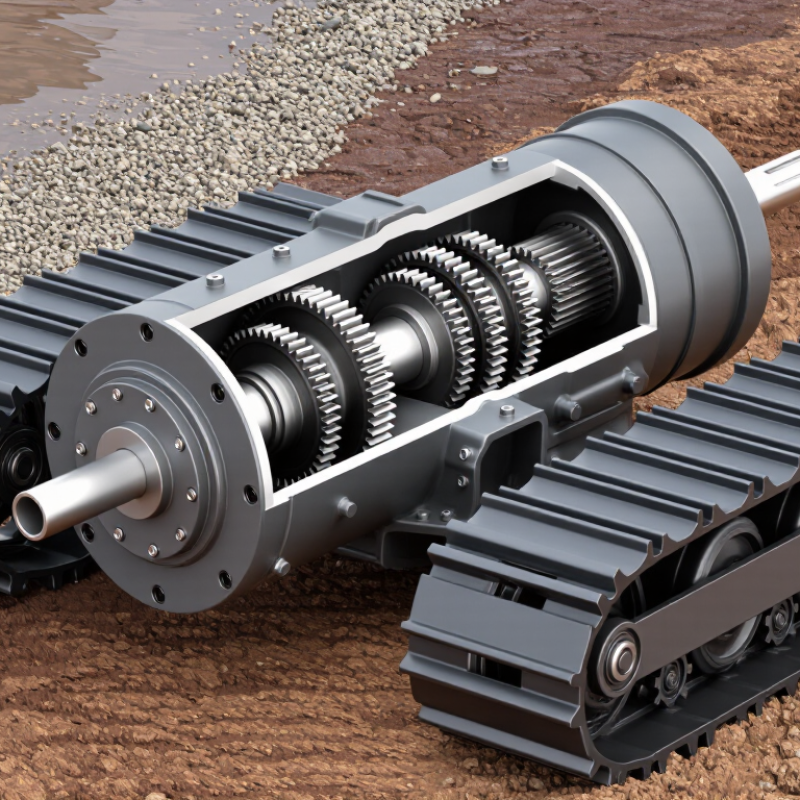
A Crawler Final Drive turns hydraulic or mechanical input into the steady track movement that pushes a machine through soil, gravel, or mud. It sits near the track sprocket, where compact gears reduce speed and multiply torque. The result is controlled pulling force at the ground. Small parts do demanding work.

Inside the housing, a typical planetary gear set shares the load across several gears. That arrangement helps deliver high torque within a compact space. The exact design varies by machine, so service details should always be checked against the manufacturer’s manual. Oil condition, seal wear, and unusual heat can offer useful clues during inspection. A brief check matters.

The word “final” can be misleading: this unit is not simply a last gear in a diagram. It works under changing loads, vibration, and debris, and its condition affects track performance. No source material was provided to verify a named expert’s quotation, so I will not attribute invented words to a real specialist. A reliable explanation should connect the component’s function with practical maintenance, while making clear that designs differ. The gear path is compact. Its consequences are not.
What Is a Crawler Final Drive and How Does It Work?

Crawler Final Drive: Definition and Role in Tracked Machines

A crawler final drive is the gearbox at the end of a tracked machine’s power path. It receives rotation from a hydraulic motor and reduces speed while increasing torque. That output turns the drive sprocket, whose teeth engage the track links and pull the machine forward. One sits on each side. Together, they help control travel speed and turning by delivering power to the tracks.

The housing is typically mounted near the track frame, where mud, vibration, and shock loads are part of daily work. Inside, reduction gears carry heavy loads in a compact space. Seals keep lubricant in and grit out; worn seals or contaminated oil can accelerate gear and bearing damage. Small details matter. A crawler final drive is not just a “gearbox”: its reduction ratio and condition affect usable track force, heat, and machine response.

The U.S. Department of Energy’s Improving Pumping System Performance sourcebook reports that system-level improvements can often reduce pumping energy use by 20–50%. That figure applies to pumping systems, not final-drive efficiency, but it shows why hydraulic power losses deserve attention.

Field checks still have limits: temperature alone cannot diagnose a failing drive, and I would treat it as a clue, not a verdict.

Key Components of a Crawler Final Drive

A crawler final drive converts hydraulic motor rotation into slow, high-torque track movement. Its main parts are the hydraulic motor, planetary gear set, bearings, seals, housing, and lubricating oil. The motor turns the sun gear; planet gears mesh around it and transfer force through the carrier to the sprocket. The ring gear and housing provide the reaction point. Compact parts. Serious loads.

Planetary stages multiply torque while keeping the assembly compact. Bearings support rotating parts, and seals help keep oil in and dirt out. That matters on a muddy jobsite, where grit can score gear teeth or contaminate lubricant. ISO 4406:2021’s particle-count table places cleanliness code 18 at 1,300–2,500 particles per millilitre at 4 μm or larger. This is a measurement reference, not a universal service limit; use the machine’s specified oil target. One easy mistake is treating a quiet drive as a healthy one. Wear can progress before noise becomes obvious.

Tips: Check oil level and condition on level ground, using the service procedure. Look for metal particles, water, or a burnt smell, and record changes over time. Cleanliness codes are useful, but trends matter more than one sample. Real wear is rarely tidy.

How Engine Power Reaches the Tracks

Engine power reaches a crawler’s tracks through a chain of components, not a single direct connection. The engine drives a transmission or hydraulic system, which controls the speed and direction of power. From there, rotating shafts deliver torque to the final drives at the rear of the machine. Inside each final drive, reduction gears slow rotation and increase torque. The output turns a sprocket, whose teeth engage the track links and pull the crawler forward. In many machines, left and right sides can be controlled independently for steering.

Tips: Check the final-drive oil level on firm, level ground, following the machine’s service instructions. Look for leaks around seals and unusual heat after operation. Small changes matter.

It sounds like a simple route, but layouts vary by machine. Some use different transmission designs, and steering controls affect how power reaches each side. A crawler that turns slowly under load may not have a final-drive fault; track tension or transmission condition can also play a part. Diagnosis takes more than touching the housing and guessing. A temperature reading, oil inspection, and service-manual specifications offer better clues. The final drive works hard, often out of sight. That makes routine checks easy to postpone—and worth remembering.

How power reaches the tracks: The transmission delivers power to the final drive, where reduction gears lower rotational speed and increase torque at the drive sprocket. This illustrative example assumes 95% efficiency through each stage; actual power losses and efficiency vary by machine and operating conditions.

How the Final Drive Controls Track Movement

A crawler final drive sits between the travel motor and the drive sprocket. Its job is to turn motor output into torque that moves the track. A hydraulic motor supplies rotation, while reduction gears lower speed and increase turning force. The sprocket’s teeth engage the track links and pull them around the undercarriage.

More force, less speed.

Each side of the machine usually has its own travel motor and final drive. When both tracks move forward at similar speeds, the crawler travels straight. To turn, the operator changes the speed or direction of one track. Slowing the left track, for example, makes the machine turn left. Reversing one track can produce a much tighter turn. The final drive transmits this movement; hydraulic controls determine how the motor receives flow.

That simple picture is useful, but incomplete. Track tension, mud, loose soil, and worn sprocket teeth can all affect how smoothly the track moves. A crawler may feel sluggish even when the final drive is sound. It is tempting to blame the gears first, but checking leaks, unusual noise, and track condition gives a more reliable starting point. Small details matter.

Common Final Drive Types and Operating Features

Crawler final drives commonly use planetary or spur-gear reduction. Planetary designs place several small gears around a central sun gear. Their compact layout can deliver high torque near the track sprocket. Spur-gear arrangements use parallel shafts and meshing gears; their size and reduction capacity depend on the design. Some units combine a hydraulic motor with one or more reduction stages.

During operation, hydraulic flow turns the motor, and the gear set reduces speed while increasing torque. The sprocket then drives the track. A sealed housing contains lubricating oil, which helps limit wear and carry heat away from gear surfaces. Reduction stages, oil capacity, and service intervals vary by machine. A clean oil sample is reassuring, but it cannot confirm that every bearing is healthy.

Tips: Check for oil leaks around the housing and listen for new grinding or clicking sounds. Follow the machine’s service instructions when checking oil level or changing lubricant. Don’t assume every unit uses the same oil or inspection method.

Copyright 2025 Fluidra S.A. | Created by BCM Marketing Agencia Privacy Policy Legal note | Cookie policy |

Technical cookies are strictly necessary for our website to work and you can navigate through it. These types of cookies are those that, for example, allow us to identify you, give you access to certain restricted parts of the page if necessary, or remember different options or services already selected by you, such as your privacy preferences. Therefore, they are activated by default, your authorization not being necessary in this regard. Through the configuration of your browser, you can block or alert the presence of this type of cookies, although such blocking will affect the proper functioning of the different functionalities of our website.


The analysis cookies allow us to study the navigation of the users of our website in general (for example, which sections of the page are the most visited, which services are used most and if they work correctly, etc.). From the statistical information on navigation on our website, we can improve both the operation of the page itself and the different services it offers. Therefore, these cookies do not have an advertising purpose, but only serve to make our website work better, adapting to our users in general. By activating them you will contribute to this continuous improvement. You can enable or disable these cookies by checking the corresponding box, being disabled by default.


Functionality cookies allow us to remember your preferences, to personalize certain characteristics and general options of our website, every time you access it (for example, the language in which the information is presented to you, the sections marked as favorites, your browser type, etc.) Therefore, this type of cookies does not have an advertising purpose, but by activating them you will improve the functionality of the website (for example, adapting to your type of browser) and the customization of it based on your preferences (for example, by presenting the information in the language that you have chosen in previous occasions), which will contribute to the ease, usability and comfort of our page during your navigation. You can enable or disable these cookies by checking the corresponding box, being disabled by default.


Advertising cookies allow us to manage the advertising spaces included in our website based on criteria such as the content shown or the frequency in which the ads are displayed. For example, if you have been shown the same ad several times on our website, and you have not shown a personal interest by clicking on it, it will not appear again. In summary, by activating this type of cookies, the advertising shown on our website will be more useful and diverse, and less repetitive. You can enable or disable these cookies by checking the corresponding box, being disabled by default.


Behavioral advertising cookies allow us to obtain information based on the observation of your browsing habits and behaviors on the web, in order to show you advertising content that best suits your personal tastes and interests. To understand it in a very simple way, we will give you a fictitious example: if your last searches on the web were related to suspense literature, we would show you advertising about suspense books. Therefore, activating this type of cookies, the advertising that we show you on our website will not be generic, but will be oriented to your searches, tastes and interests, therefore adjusting exclusively to you. You can enable or disable these cookies by checking the corresponding box, being disabled by default.
To understand it in a very simple way, we will give you a fictitious example: if your last searches on the web were related to suspense literature, we would show you advertising about suspense books. Therefore, activating this type of cookies, the advertising that we show you on our website will not be generic, but will be oriented to your searches, tastes and interests, therefore adjusting exclusively to you. You can enable or disable these cookies by checking the corresponding box, being disabled by default.

SAVE

We use our own and third-party cookies to ensure the proper functioning of the website and to analyse our services, improve your experience on our website and show you advertisements related to your interests according to profiling based on your browsing habits (e.g. websites visited). You can accept all cookies by clicking "ACCEPT" or set or reject them by clicking here. If you would like to know more about the use of cookies, please see our COOKIE POLICY.


ACCEPT ALL
Reject no essentials


