
What is Counter Balance Fork Truck and How Does It Work?
FLUID HANDLING EXPERTS

Blog, all our news

What is Counter Balance Fork Truck and How Does It Work?

The Counter Balance Fork Truck is a vital piece of equipment in warehouses and factories. It provides essential lifting capabilities for heavy loads. Understanding its function is crucial for operators and managers alike.

Counter Balance Fork Trucks operate by using a counterweight to stabilize the vehicle. This design allows it to lift and carry loads safely. However, the operator must be aware of weight limits and balance. Many accidents occur due to improper use.

Incorporating these trucks can boost productivity significantly. Yet, they require proper training and regular maintenance. Operators need to reflect on their experiences and grow. Awareness and knowledge about the Counter Balance Fork Truck lead to safer practices and better outcomes.
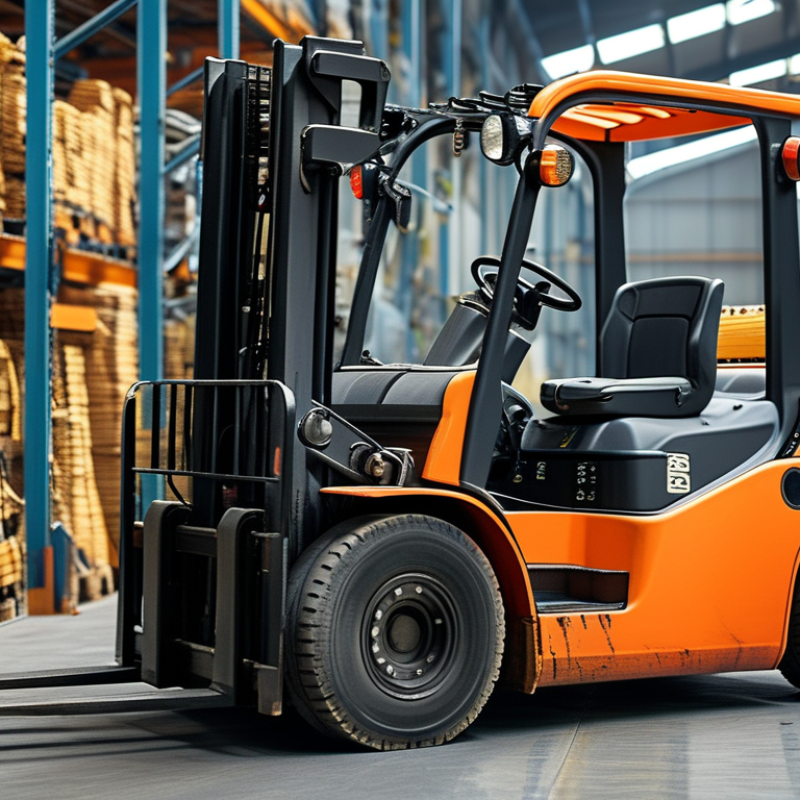
What is Counter Balance Fork Truck and How Does It Work?

What is a Counter Balance Fork Truck?

A counterbalance fork truck is a type of forklift that uses its weight to counteract the load it lifts. This design allows for enhanced stability and maneuverability. The main components include a mast, forks, and a counterweight at the rear. These trucks are often utilized in warehouses, large retail environments, and construction sites. Their versatility makes them invaluable for moving materials.

The operation of a counterbalance fork truck is straightforward. The operator positions the forks under the load and lifts it using hydraulic power. The counterweight prevents tipping, allowing the truck to navigate tight spaces. However, improper use can lead to accidents. It is crucial for operators to receive training. Even slight miscalculations can result in significant danger. Familiarity with load limits and proper handling techniques is vital for safety.

Maintaining a counterbalance fork truck is essential for its longevity. Regular checks on fluid levels, tires, and brakes should not be overlooked. Neglecting these aspects may cause breakdowns. Operators need to reflect on their routines. Are they inspecting the equipment thoroughly? An operator’s vigilance directly impacts workplace safety and efficiency. Investing time in maintenance and training pays off in the long run.

Counter Balance Fork Truck Usage Statistics

This chart displays the number of counter balance fork trucks operating in different warehouses. It highlights the variations in usage across various locations.

Key Components of a Counter Balance Fork Truck

A counter balance fork truck is essential in material handling. It consists of key components that contribute to its functionality and efficiency. The most prominent part is the forklift mast, which supports the load and allows vertical movement. It ensures that the load can be raised or lowered effectively, with some models capable of lifting up to 5,000 pounds.

Another crucial component is the counterweight. Positioned at the rear, it balances the truck while it handles heavy loads. This design prevents tipping and enhances stability. Reports indicate that about 45% of accidents involving forklifts stem from improper handling due to load imbalances. Thus, understanding how the counterweight works is vital for safe operation.

The drive system includes the engine and transmission, powering the forklift. Electric models are gaining popularity due to their reduced emissions. According to industry analyses, around 30% of businesses are switching to electric fork trucks to enhance workplace safety and sustainability. Operators must also check the controls, as they influence maneuverability and speed. Training on proper operation is critical. Inadequate training contributes to nearly 60% of forklift accidents.

How Counter Balance Fork Trucks Operate and Function

Counterbalance fork trucks are commonly used in warehouses and loading docks. These trucks operate on a simple yet effective mechanism. They have forks at the front and a weight at the back. This design helps them lift heavy loads without tipping over. The weight counteracts the load being lifted, providing stability during operation.

The operator sits within the vehicle, controlling the forks using a hydraulic system. This system allows for precise movements, essential for placing loads accurately. The visibility is good, enabling the operator to maneuver in tight spaces. However, operators must remain vigilant. Mistakes in handling can lead to accidents. Training is crucial for ensuring safety and efficiency.

While counterbalance trucks are versatile, they do have limitations. Their turning radius can be challenging in narrow aisles. Additionally, they require a flat surface for optimal performance. The weight distribution must be managed carefully to avoid instability. Overall, understanding their operation is vital for maximizing their effectiveness.

Advantages of Using a Counter Balance Fork Truck

Counterbalance fork trucks are essential in many warehouses and construction sites. They are designed to lift heavy loads efficiently. Their unique design balances weight, allowing operators to move items safely and swiftly. This feature helps increase productivity, especially in tight spaces where maneuverability is crucial.

One of the key advantages of using a counterbalance fork truck is its versatility. It can handle various lifting tasks, from pallets to bulky equipment. This flexibility is invaluable in industries with diverse inventory types. Additionally, these trucks can operate indoors and outdoors, making them suitable for various job sites.

Despite their many benefits, counterbalance fork trucks require skilled operators. Improper use can lead to safety hazards and accidents. Regular training and maintenance are necessary to ensure optimal performance. A lack of attention to these aspects can result in costly downtime. Investing in operator training enhances safety and efficiency.

Common Applications of Counter Balance Fork Trucks

Counterbalance fork trucks play a critical role in various industries. These machines offer versatile solutions for material handling. Their design enables operators to lift and transport heavy loads efficiently. This capability is vital in warehouses, construction sites, and manufacturing facilities. Data from the Material Handling Industry Association indicates that 90% of companies utilize these trucks for handling goods.

In a typical warehouse setting, counterbalance forklifts can maneuver in tight spaces. They can carry loads up to 5,000 pounds. This makes them ideal for stacking pallets and retrieving items from upper shelves. Their adaptability allows them to function in various roles, from loading and unloading trucks to moving inventory indoors and outdoors.

Despite their advantages, proper training is essential. Many operators may not fully grasp safety protocols. This oversight can lead to accidents. A report from the Occupational Safety and Health Administration shows that forklift accidents account for over 20,000 injuries each year. Ensuring operators understand the machine's capabilities and limitations can reduce these incidents significantly.

What is Counter Balance Fork Truck and How Does It Work? - Common Applications of Counter Balance Fork Trucks

Application Description Load Capacity (kg) Operating Environment
Warehousing Ideal for stacking and retrieving pallets in warehouse settings. 1500 - 5000 Indoor
Manufacturing Used to transport raw materials and finished goods within factories. 2000 - 6000 Indoor
Retail Efficient for moving large quantities of goods and displays. 1000 - 3000 Indoor
Construction Transporting materials on-site and offloading trucks. 2500 - 8000 Outdoor
Copyright 2025 Fluidra S.A. | Created by BCM Marketing Agencia Privacy Policy Legal note | Cookie policy |

Technical cookies are strictly necessary for our website to work and you can navigate through it. These types of cookies are those that, for example, allow us to identify you, give you access to certain restricted parts of the page if necessary, or remember different options or services already selected by you, such as your privacy preferences. Therefore, they are activated by default, your authorization not being necessary in this regard. Through the configuration of your browser, you can block or alert the presence of this type of cookies, although such blocking will affect the proper functioning of the different functionalities of our website.


The analysis cookies allow us to study the navigation of the users of our website in general (for example, which sections of the page are the most visited, which services are used most and if they work correctly, etc.). From the statistical information on navigation on our website, we can improve both the operation of the page itself and the different services it offers. Therefore, these cookies do not have an advertising purpose, but only serve to make our website work better, adapting to our users in general. By activating them you will contribute to this continuous improvement. You can enable or disable these cookies by checking the corresponding box, being disabled by default.


Functionality cookies allow us to remember your preferences, to personalize certain characteristics and general options of our website, every time you access it (for example, the language in which the information is presented to you, the sections marked as favorites, your browser type, etc.) Therefore, this type of cookies does not have an advertising purpose, but by activating them you will improve the functionality of the website (for example, adapting to your type of browser) and the customization of it based on your preferences (for example, by presenting the information in the language that you have chosen in previous occasions), which will contribute to the ease, usability and comfort of our page during your navigation. You can enable or disable these cookies by checking the corresponding box, being disabled by default.


Advertising cookies allow us to manage the advertising spaces included in our website based on criteria such as the content shown or the frequency in which the ads are displayed. For example, if you have been shown the same ad several times on our website, and you have not shown a personal interest by clicking on it, it will not appear again. In summary, by activating this type of cookies, the advertising shown on our website will be more useful and diverse, and less repetitive. You can enable or disable these cookies by checking the corresponding box, being disabled by default.


Behavioral advertising cookies allow us to obtain information based on the observation of your browsing habits and behaviors on the web, in order to show you advertising content that best suits your personal tastes and interests. To understand it in a very simple way, we will give you a fictitious example: if your last searches on the web were related to suspense literature, we would show you advertising about suspense books. Therefore, activating this type of cookies, the advertising that we show you on our website will not be generic, but will be oriented to your searches, tastes and interests, therefore adjusting exclusively to you. You can enable or disable these cookies by checking the corresponding box, being disabled by default.
To understand it in a very simple way, we will give you a fictitious example: if your last searches on the web were related to suspense literature, we would show you advertising about suspense books. Therefore, activating this type of cookies, the advertising that we show you on our website will not be generic, but will be oriented to your searches, tastes and interests, therefore adjusting exclusively to you. You can enable or disable these cookies by checking the corresponding box, being disabled by default.

SAVE

We use our own and third-party cookies to ensure the proper functioning of the website and to analyse our services, improve your experience on our website and show you advertisements related to your interests according to profiling based on your browsing habits (e.g. websites visited). You can accept all cookies by clicking "ACCEPT" or set or reject them by clicking here. If you would like to know more about the use of cookies, please see our COOKIE POLICY.


ACCEPT ALL
Reject no essentials


